Pro Program Live Chat +8619050185756

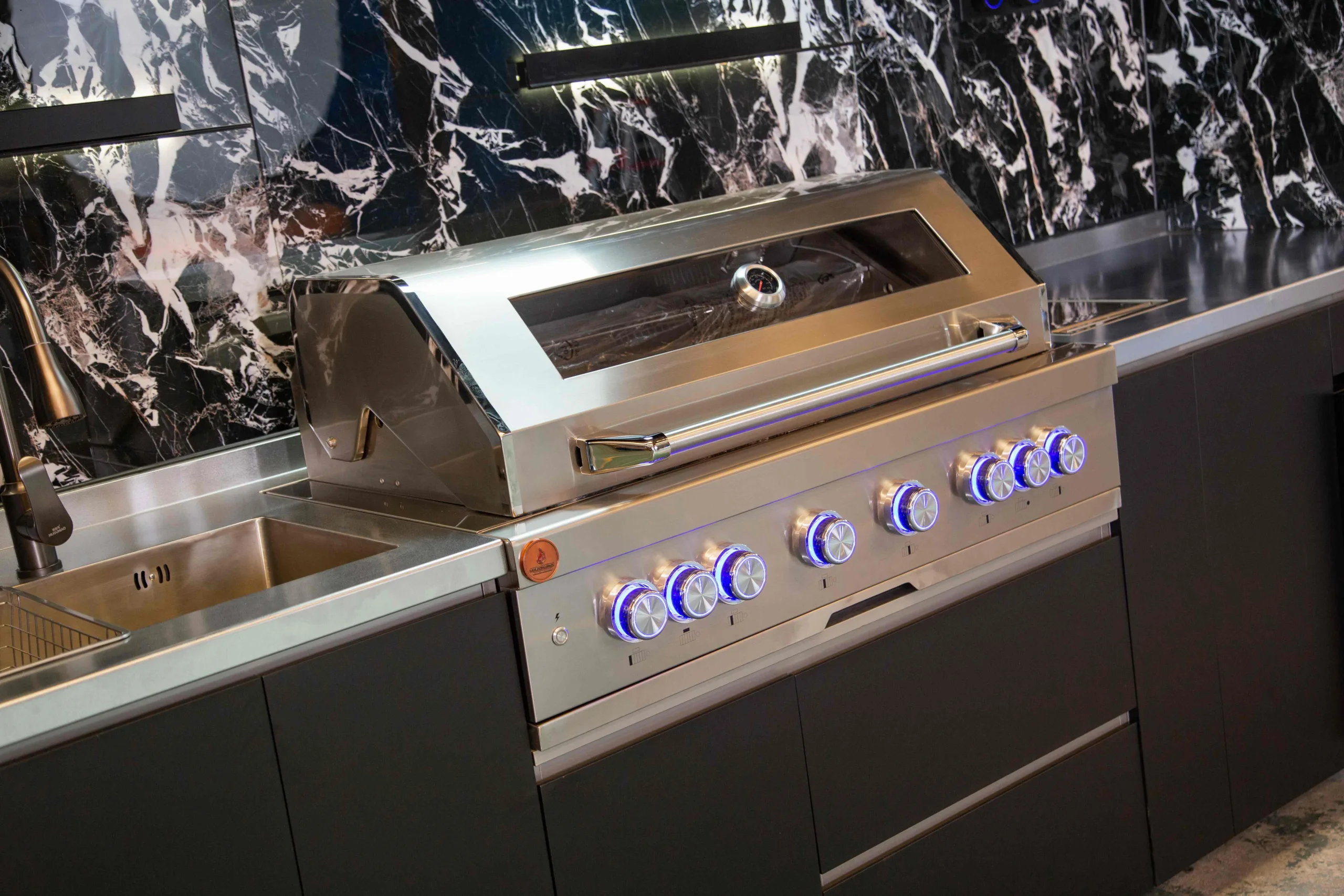
Choose gas for convenience and control, charcoal or wood for live-fire character, or a multi-fuel system when you want flexibility and can support the added ventilation, storage, and installation requirements.
The best fuel is the one that matches how often you cook, the flavors you want, the startup time you accept, and the utilities available at the site. Fuel choice also affects cabinet openings, ventilation, fire clearances, cleaning, ash handling, and where supplies can be stored.
Gas grills
Gas grills heat quickly and make temperature changes easy, which suits weeknight cooking and frequent entertaining. A permanent gas connection can eliminate cylinder changes, but it must be sized and installed correctly. Propane systems require approved cylinder placement and ventilation.
Confirm the appliance fuel type before purchase; conversion is only appropriate when the manufacturer provides an approved method.
Charcoal and wood cooking
Charcoal and wood offer direct fire management and distinctive flavor. They require more startup time, ash handling, and attention to sparks, smoke, and fuel storage. Placement beneath roofs or near combustible materials deserves careful professional review.
Use only the fuel specified for the appliance, and allow ashes to cool completely in an appropriate container before disposal.
Pellet grills
Pellet grills automate fuel delivery and temperature control while offering smoke flavor. They require electricity and dry pellet storage. Electronic components, hoppers, and grease systems need protection and regular maintenance.
Check whether the unit is built-in rated or requires freestanding clearances; do not enclose a freestanding appliance without manufacturer approval.
Multi-fuel outdoor kitchens
A multi-fuel arrangement supports quick gas cooking and slower live-fire methods in the same entertaining space. The benefit is flexibility; the tradeoff is a more complex plan for ventilation, fuel separation, cleaning, and storage.
The Yuquanqiu triple-fuel outdoor kitchen is an example of an integrated approach. Confirm the supplied appliance specifications and site installation requirements before ordering.
Ventilation and safe installation
Every fuel-burning appliance needs the ventilation and clearances specified by its manufacturer. Roofs and enclosures can trap smoke, heat, grease, and combustion gases. An outdoor-rated hood may be needed depending on the equipment and structure.
Licensed local professionals should handle permanent gas and electrical work and verify applicable permits and codes.
Fuel-system decision checklist
- List the foods and cooking methods used most often.
- Confirm natural gas, propane, electricity, and fuel-storage options.
- Compare startup time, temperature control, cleanup, and maintenance.
- Review ventilation and clearance requirements before designing cabinets.
- Plan safe storage for cylinders, charcoal, wood, or pellets.
Frequently Asked Questions
Is gas or charcoal better?
Gas is faster and easier to control; charcoal offers live-fire flavor. The better choice depends on cooking habits and site constraints.
Can propane be stored inside a cabinet?
Only use a cabinet or enclosure specifically designed and approved for that cylinder arrangement and appliance.
Does a pellet grill need electricity?
Most pellet grills require electricity for controls, ignition, and fuel delivery.
Can multiple grills share one hood?
Only when the hood design, capture area, airflow, and appliance manufacturers’ requirements support the complete installation.
Planning note: Final appliance, utility, ventilation, structural, and permit decisions should follow manufacturer instructions and applicable local requirements.