Pro Program Live Chat +8619050185756

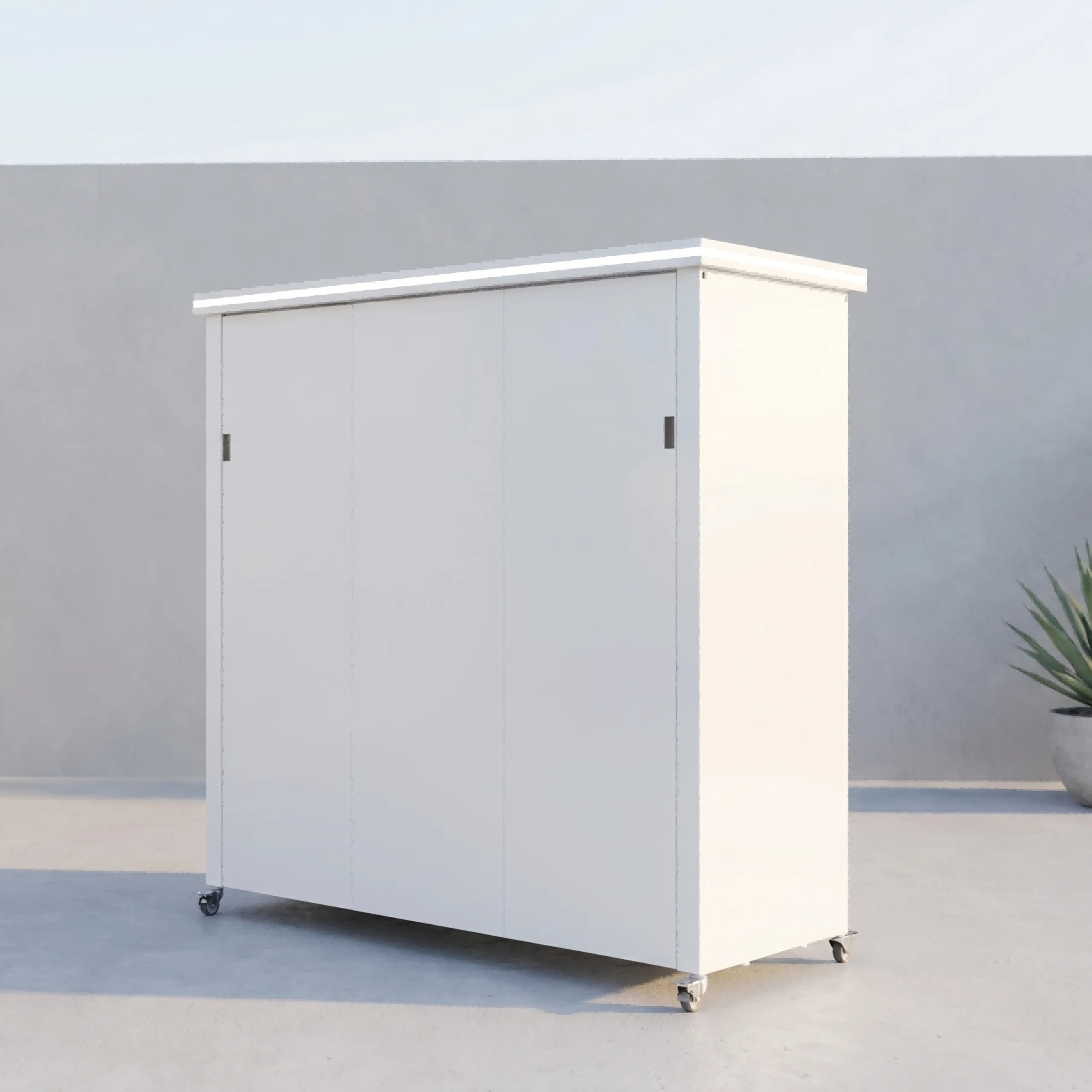
Choose a movable outdoor kitchen when flexibility, seasonal repositioning, and easier service access matter most; choose a permanent installation when the project requires fixed utilities, built-in architecture, structural anchoring, or a highly customized layout. The decision should be based on the complete kitchen’s verified weight, caster or anchoring design, appliance connections, operating clearances, wind exposure, and the way the backyard is used—not simply whether wheels appear in a product photograph.
Some systems occupy the middle ground. They may arrive as a coordinated modular unit and remain technically movable, yet be intended to stay in one operating location most of the year. Understanding that distinction helps homeowners plan the patio, utilities, weather protection, and delivery route correctly.
What Is a Movable Outdoor Kitchen?
A movable outdoor kitchen is a self-contained or modular cooking system designed to be repositioned according to the manufacturer’s instructions. It may use locking casters, adjustable feet, detachable utility connections, folding counters, or protective doors. Movement may mean rolling it several feet for cleaning—not transporting it across the yard every weekend.
Ask the seller to define the intended use:
- Can the unit be moved when fully assembled?
- Must appliances, countertops, or accessories be removed first?
- Is movement permitted only when the kitchen is closed and cool?
- What surface and slope are acceptable?
- How are gas, electrical, water, and drainage connections handled?
- How is the unit secured in its operating and storage positions?
If those questions are not addressed in the documentation, do not infer capability from the presence of casters.
What Is a Permanent Outdoor Kitchen?
A permanent outdoor kitchen is fixed to a prepared location through construction, anchoring, hard-piped utilities, site-built walls, countertops, or structural connections. Traditional masonry islands are permanent, but factory-made modular cabinets can also become permanent once they are anchored and connected.
Permanent kitchens often integrate closely with patios, pavilions, retaining walls, pools, and landscape architecture. They can support extensive customization, but future relocation is more complicated. Appliance replacement and utility service should be planned before cabinetry, stone, or structural elements make access difficult.
The Important Middle Category: Stationary but Serviceable
Many homeowners want a kitchen that looks permanent but remains accessible. A modular unit may stay in one carefully prepared location, while removable panels, casters, or disconnectable components allow qualified technicians to reach the back for service.
This can offer visual integration without sealing every connection inside masonry. However, “serviceable” does not mean the owner should casually roll a connected gas appliance. The product documentation and qualified professionals should define shutdown, disconnection, movement, and reconnection procedures.
Compare Flexibility and Daily Convenience
A movable kitchen can adapt when the patio hosts different activities. It might shift to open space for a party, move away from seasonal wind, or provide access for cleaning. It may also suit renters or homeowners who expect to redesign the yard.
A permanent kitchen offers predictability. The grill, counters, lighting, seating, and storage remain aligned, and utilities can be designed for a single location. It may feel more like an outdoor room, especially when coordinated with a roof and built-in dining area.
| Factor | Movable or repositionable | Permanent installation |
|---|---|---|
| Layout flexibility | Can adapt if movement is approved | Optimized for one location |
| Utilities | May require approved flexible or disconnectable arrangements | Often uses fixed, professionally installed connections |
| Service access | Potentially easier if safely repositioned | Must be designed into panels and cabinetry |
| Weather and wind | Storage or restraint plan is essential | Anchoring and site design are essential |
| Customization | Usually based on available modules | Can integrate more deeply with construction |
| Future relocation | Potentially simpler, but weight and access still matter | Usually disruptive and costly |
Utilities Often Decide the Question
Gas, electricity, water, drainage, and ventilation can limit practical movement. A propane-powered grill and plug-in accessories may offer more flexibility than a kitchen with natural gas, a plumbed sink, hardwired lighting, refrigeration, and a ducted exhaust hood. Even flexible connections have permitted lengths, routing, protection, and installation requirements determined by the equipment and applicable rules.
Never move a kitchen while gas, water, drainage, or fixed electrical connections remain attached unless the product documentation and qualified professionals explicitly permit the procedure. Shutoffs must remain accessible. Hoses and cords should not cross walking paths, contact hot surfaces, become pinched by wheels, or substitute for a proper permanent installation.
Gas, electrical, plumbing, ventilation, structural work, and permits should be handled by appropriately qualified local professionals and follow the exact appliance instructions.
Casters Need More Than a Locking Lever
Casters must support the verified complete weight, including appliances, countertop, stored items, and any integrated roof or panels. Wheel material and size affect movement over concrete joints, pavers, tile, textured patios, and small debris. A caster suitable for a smooth showroom floor may not perform the same way outdoors.
Confirm the number of locking wheels, the lock type, maintenance procedure, corrosion exposure, replacement parts, and whether separate leveling feet carry the load during use. The final operating surface should be stable and appropriately level. Do not rely on small wheel brakes alone as a universal wind or tip-over solution.
Movement Requires a Clear Route
Measure the kitchen in its required moving configuration. Folding tops, closing shutters, removing accessories, or lowering a roof may change the footprint. Confirm the route’s width, overhead clearance, turning area, slope, and surface transitions.
A heavy unit can be difficult to control on even a modest grade. Avoid movement near pool edges, retaining walls, steps, children, pets, vehicles, or fragile finishes. Follow the manufacturer’s required number of handlers and approved push or lift points. Never pull on appliance handles, roof supports, doors, or counters unless specifically designed for handling.
Wind and Weather Planning
A movable product still needs a defined operating location and a severe-weather plan. Large doors, shutters, roof panels, screens, and canopies can catch wind. Ask what must be closed, locked, removed, anchored, or relocated, and under what conditions the kitchen should not be used.
Do not assume that moving the unit close to the house is automatically safer. Appliance clearances, combustion ventilation, eaves, siding, windows, doors, and drainage still matter. Do not invent a wind rating from another model or installation.
Permanent Does Not Mean Maintenance-Free
A fixed kitchen needs access to gas valves, electrical disconnects, plumbing traps, refrigerator vents, filters, fasteners, and appliance connections. Stone or decorative panels should not permanently trap a component that will eventually require service.
Plan removable access panels and a realistic replacement path for the grill and refrigerator. If a crane or demolition would be required for ordinary appliance replacement, revise the design before construction.
Think About Storage and Seasonal Use
A movable kitchen may offer the option of seasonal storage, but only if there is a suitable destination and route. Confirm doorway, garage, and storage clearances, floor capacity, ventilation, fuel-cylinder handling, and whether the unit is intended to be stored indoors. Never bring a hot grill, burning charcoal, or an appliance containing unsafe fuel conditions into an enclosed area.
A permanent kitchen remains exposed, so covers, drainage, cleaning, winterization, and manufacturer-recommended shutdown procedures become important. The best choice depends on the actual climate and how often the kitchen is used.
Questions to Ask Before Choosing
- Is the product documented as movable after assembly?
- What is the verified installed weight?
- What must be disconnected or removed before movement?
- What surface, slope, and caster maintenance are required?
- How is the kitchen secured in use and during severe weather?
- Will the project use natural gas, propane, electricity, water, or drainage?
- Does a roof or ventilation hood tie the kitchen to one location?
- Can every appliance be serviced and replaced?
- Is there a safe route and storage destination?
- What permits, inspections, or property restrictions apply?
Browse the Yuquanqiu outdoor kitchen collection, then request the exact model’s dimensions, installed weight, caster or anchoring instructions, utility requirements, and operating clearances before deciding whether it should remain movable or become a fixed installation.
A Simple Decision Framework
Choose a movable system when:
- The manufacturer documents safe repositioning.
- The patio is smooth, level, and suitable for the verified load.
- Utilities can be handled through approved arrangements.
- The route and storage plan are realistic.
- Layout flexibility has genuine value.
Choose a permanent system when:
- Fixed gas, plumbing, electrical, or ventilation is required.
- The kitchen is integrated with a pavilion or structural elements.
- The site needs engineered anchoring.
- Extensive customization is a priority.
- The location is unlikely to change.
Frequently Asked Questions
Can I put an outdoor kitchen on wheels?
Only if the complete product and casters are designed for the verified load and outdoor use. Movement, locking, leveling, utilities, surface conditions, and wind precautions should be documented.
Can I move an outdoor kitchen connected to natural gas?
Do not move it with connections attached unless the appliance instructions and qualified gas professional explicitly permit the arrangement. Follow approved shutdown, disconnection, inspection, and reconnection procedures.
Are locking casters enough to keep a kitchen secure?
Not in every situation. Slope, weight, wind, moving panels, surface condition, and the product’s restraint design matter. Use the manufacturer’s documented operating and severe-weather precautions.
Can a movable kitchen have a sink?
Possibly, but supply, drainage, backflow, winterization, disconnection, and local requirements must be resolved. A plumbed sink can make frequent movement less practical.
Is a permanent outdoor kitchen more durable?
Not automatically. Durability depends on materials, design, installation, exposure, drainage, maintenance, and serviceability. Permanence describes how it is installed, not its verified performance.
Can I take a movable outdoor kitchen with me when I move?
Potentially, if it is designed for disassembly or transport and can be disconnected, moved, and reinstalled safely. Confirm delivery access, packaging, professional requirements, and any property obligations.
Choose Based on Use, Not Appearance
A movable kitchen offers flexibility only when the product, patio, utilities, and handling plan support real movement. A permanent kitchen offers integration only when access and future service remain practical. Verify the exact model and design the installation around how the household will actually cook, entertain, maintain, and adapt the space.