Pro Program Live Chat +8619050185756

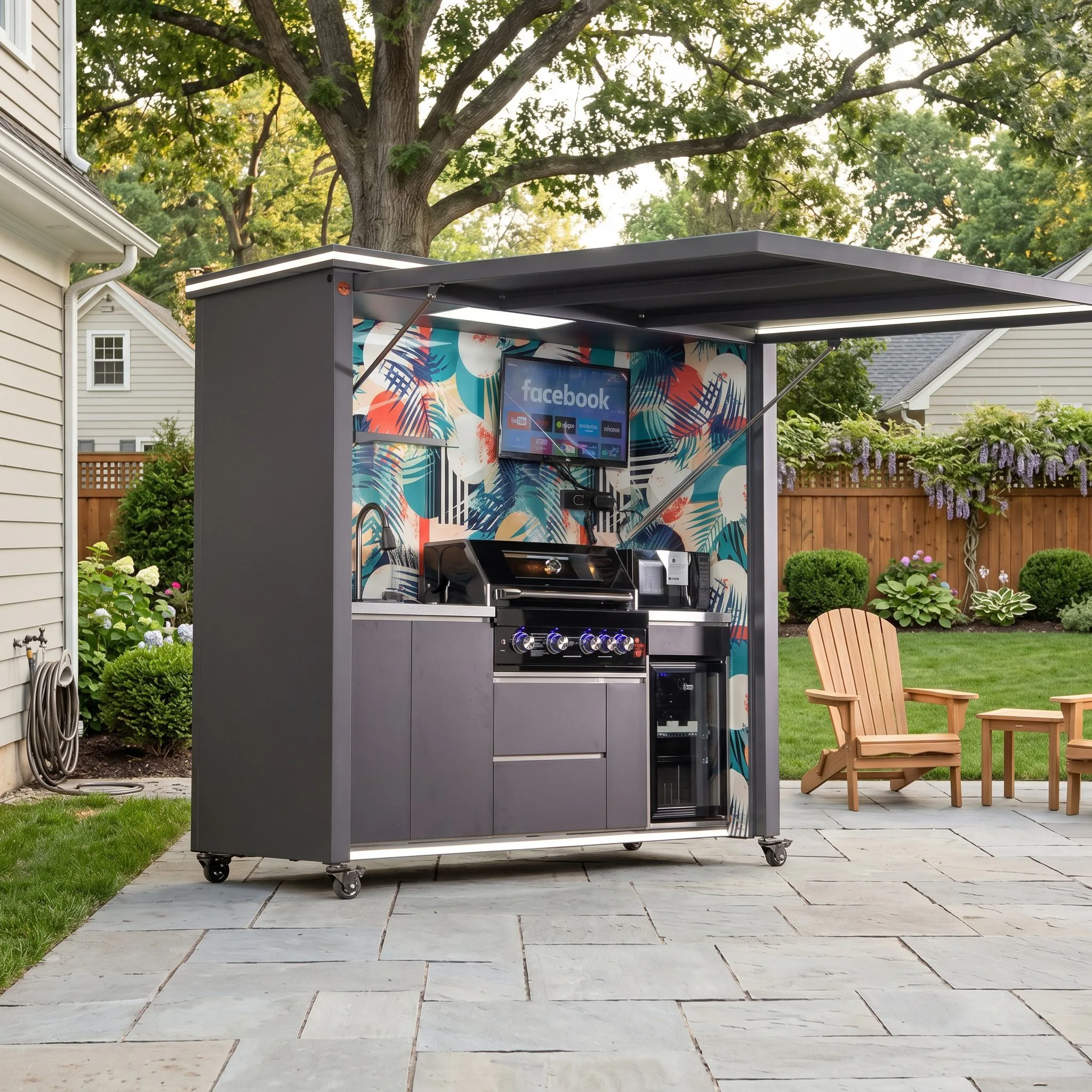
Choose a refrigerator for an outdoor kitchen only after confirming that the exact model is approved for the intended exterior location and climate. Compare its documented ambient operating range, ventilation method, cutout dimensions, electrical requirements, capacity, controls, drainage, door swing, and service access. An indoor beverage refrigerator placed beneath a patio counter is not automatically suitable for outdoor use.
The cabinet opening and utility plan should be built around the final refrigerator model—not a generic nominal width. A small difference in ventilation or door clearance can cause poor performance, difficult service, or a refrigerator that cannot be removed after the countertop is installed.
Outdoor-Rated Is More Than a Marketing Phrase
An exterior refrigerator must cope with conditions that an indoor kitchen does not normally experience: larger temperature swings, humidity, condensation, wind-driven rain, dust, insects, pollen, and sometimes salt or pool-related exposure. Ask for product documentation that clearly describes approved installation locations and conditions.
Do not infer outdoor suitability from stainless-steel trim, a glass door, or a photograph. Verify the complete appliance, including controls, wiring, cabinet, door, seals, compressor system, and ventilation arrangement. Also confirm whether use beneath a roof, in a fully exposed location, or inside an enclosure changes the requirements.
Check the Documented Ambient Temperature Range
Refrigerators reject heat into the surrounding air. Very hot or cold weather can challenge performance, and different models have different documented operating limits. Compare those limits with the actual installation, including afternoon sun, reflected heat from walls, proximity to a grill, and winter conditions.
A shaded location can still become hot if airflow around the refrigerator is restricted. A location near a pool or coast may have additional maintenance concerns. Do not assume that an appliance suitable in one U.S. climate is automatically appropriate everywhere.
If winter temperatures fall outside the documented range, follow the manufacturer’s shutdown or seasonal instructions. Do not improvise heaters, insulation, or covers around a running refrigerator.
Understand Front-Venting and Built-In Installation
Many under-counter refrigerators intended for built-in use release heat through a front ventilation area, while freestanding products may require space around the sides or rear. The correct arrangement comes from the exact installation instructions.
Never block a toe-kick grille or ventilation opening with trim, pavers, rugs, storage bins, or a decorative panel. Provide the specified clearances and keep the air path clean. A refrigerator that fits physically can still be incorrectly installed if it cannot move heat away.
Cutout information to verify
- Required opening width, height, and depth
- Ventilation location and clearance
- Door and handle projection
- Hinge side and reversal options
- Leveling-foot adjustment
- Electrical cord and plug location
- Drain or condensate requirements
- Space needed for removal and service
Keep Refrigeration Away From Heat Sources
Do not place the refrigerator where a grill, side burner, pizza oven, heater, or direct exhaust sends heat toward its cabinet or ventilation opening. Heat can make the appliance work harder and may violate installation requirements.
Use the cooking appliance’s side and rear clearances and the refrigerator’s ambient requirements together. A thin cabinet divider does not automatically solve the issue. Ask the kitchen designer to show both appliances, their vents, and their operating envelopes on the same drawing.
Gas, electrical, fire-clearance, and ventilation decisions should follow model-specific documentation and be reviewed by appropriately qualified local professionals.
Choose Capacity Based on Real Use
Think about what the refrigerator will hold during a normal gathering. A beverage-focused unit may prioritize cans and bottles, while food preparation may require adjustable shelves and space for covered trays. Do not count every cubic foot as equally usable; shelf layout, compressor intrusion, and door storage affect practical capacity.
Ask whether the kitchen needs:
- Drinks only
- Condiments and garnishes
- Raw ingredients before cooking
- Prepared dishes and leftovers
- Wine at a separate controlled temperature
- Ice or frozen storage
A refrigerator, beverage center, wine cooler, ice maker, and freezer perform different jobs. Use the product documentation for the intended storage rather than treating the terms as interchangeable.
Food Safety Still Controls Outdoor Convenience
The USDA Food Safety and Inspection Service advises keeping a refrigerator at 40°F or below and recommends using an appliance thermometer to verify temperature. Review its refrigeration and food-safety guidance for safe storage practices.
Keep raw meat, poultry, and seafood sealed and separated from ready-to-eat foods. Minimize door opening during hot weather, and do not rely only on a display without understanding what it measures. If safe temperature cannot be verified after a power outage or malfunction, follow USDA guidance for the affected food.
An outdoor refrigerator is useful for temporary meal preparation and beverages, but it should not become forgotten long-term storage. Clean spills promptly and remove food at the end of the season.
Glass Door or Solid Door?
| Feature | Glass door | Solid door |
|---|---|---|
| Visibility | See contents without opening | Requires opening to check inventory |
| Appearance | Displays organized beverages | Creates a cleaner cabinet-like look |
| Light exposure | May expose contents to more light | Keeps contents visually concealed |
| Maintenance | Shows fingerprints and condensation readily | May be easier to keep visually tidy |
| Use case | Often convenient for beverage service | Often versatile for mixed storage |
Performance depends on the specific product, not the door type alone. Compare documentation, insulation, controls, and approved use.
Door Swing and Guest Flow
A refrigerator door should open without colliding with a grill handle, drawer, wall, post, stool, or raised patio edge. Draw the door fully open and add a person standing in front of it. The cook should be able to retrieve ingredients without blocking the main traffic route.
Confirm whether the hinge can be reversed and whether reversal affects locks, handles, trim, or warranty procedures. The refrigerator also needs a straight removal path for future service. Do not trap it behind a countertop lip or permanent flooring transition.
Electrical Planning
Provide the electrical supply required by the exact appliance. A qualified electrician should determine circuit capacity, receptacle type and location, required protection, grounding, wiring method, and outdoor suitability under applicable requirements.
Keep the plug and disconnect accessible without placing them where water accumulates. Do not use a casual extension cord as a permanent solution. If the refrigerator shares a circuit with lighting, powered roofs, ignition, entertainment equipment, or other appliances, the electrician should evaluate the combined load and manufacturer requirements.
Water, Condensation, and Drainage
Some units manage condensate internally; others may have specific drainage or defrost requirements. Obtain the instructions before cabinetry and flooring are complete. Keep drainage paths open and do not direct water toward electrical equipment, cabinet interiors, or walking surfaces.
Inspect door seals and the area around the appliance for condensation. Correct the cause rather than hiding water with absorbent liners. Irrigation and roof runoff should be directed away from the ventilation grille and electrical connection.
Noise and Placement
Compressor and fan noise may be more noticeable in a quiet outdoor lounge than inside a busy kitchen. Avoid placing the refrigerator immediately beside the seat where guests gather if sound sensitivity is important. Installation quality, leveling, cabinet contact, and ventilation can also affect perceived noise.
Request documented sound information when available, but do not rely on comparisons between different test conditions. Visiting a working installation can be helpful when practical.
Maintenance and Serviceability
Outdoor environments bring pollen, leaves, dust, grease, and insects. Follow the refrigerator’s cleaning schedule, keep ventilation openings clear, inspect seals, and use approved cleaners. Coastal or poolside locations may require more frequent care.
Record the model and serial number before installation and keep the manual. Confirm how warranty service is requested, who removes the appliance from cabinetry, and whether parts and qualified service are available in the destination area. Do not assume a general kitchen warranty covers every appliance.
Outdoor Refrigerator Buying Checklist
- Verify documented outdoor approval for the exact location.
- Compare ambient operating limits with the site climate.
- Confirm built-in or freestanding ventilation requirements.
- Check the final cutout dimensions.
- Keep the unit away from grill and heater exhaust.
- Select capacity and shelving for actual use.
- Choose glass or solid door based on function.
- Test door swing, traffic, and removal path.
- Coordinate electrical supply with a qualified electrician.
- Confirm condensate and drainage instructions.
- Plan cleaning and ventilation access.
- Verify warranty, service, and seasonal procedures.
Review the Yuquanqiu outdoor kitchen collection, then request the refrigerator manufacturer, exact model, installation manual, electrical requirements, and cutout drawing for the selected kitchen configuration. Do not assume that every pictured appliance is included or outdoor-rated without written confirmation.
Frequently Asked Questions
Can I use an indoor mini fridge in an outdoor kitchen?
Do not assume it is suitable. Use a model whose documentation approves the intended outdoor installation, exposure, and ambient conditions.
Does an outdoor refrigerator need ventilation?
Yes, but the required air path depends on the model. Follow its built-in or freestanding installation instructions and never block the specified vents.
What temperature should an outdoor refrigerator maintain?
USDA guidance says refrigerators should maintain 40°F or below for food safety. Verify temperature with an appliance thermometer and follow the appliance’s operating limits.
Can a refrigerator be installed next to a grill?
Only if both appliances’ heat, ventilation, cabinet, and clearance requirements are satisfied. Have the combined layout reviewed before cabinet openings are finalized.
Should I unplug an outdoor refrigerator for winter?
Follow the exact manufacturer’s seasonal and ambient-temperature instructions. Shutdown may involve cleaning, drying, door positioning, power, and water procedures that vary by model.
Who should install an outdoor refrigerator?
Cabinet fitting should follow the appliance instructions, and permanent electrical, plumbing, structural, or permit-related work should be completed by appropriately qualified local professionals.
Choose the Appliance Before Building the Opening
A reliable outdoor refrigerator is selected from verified documentation, not appearance. Confirm exterior approval, climate range, ventilation, utilities, capacity, door movement, and service access first. Then design the cabinet opening around the exact model so the appliance can cool properly, store food safely, and be maintained over time.