Pro Program Live Chat +8619050185756

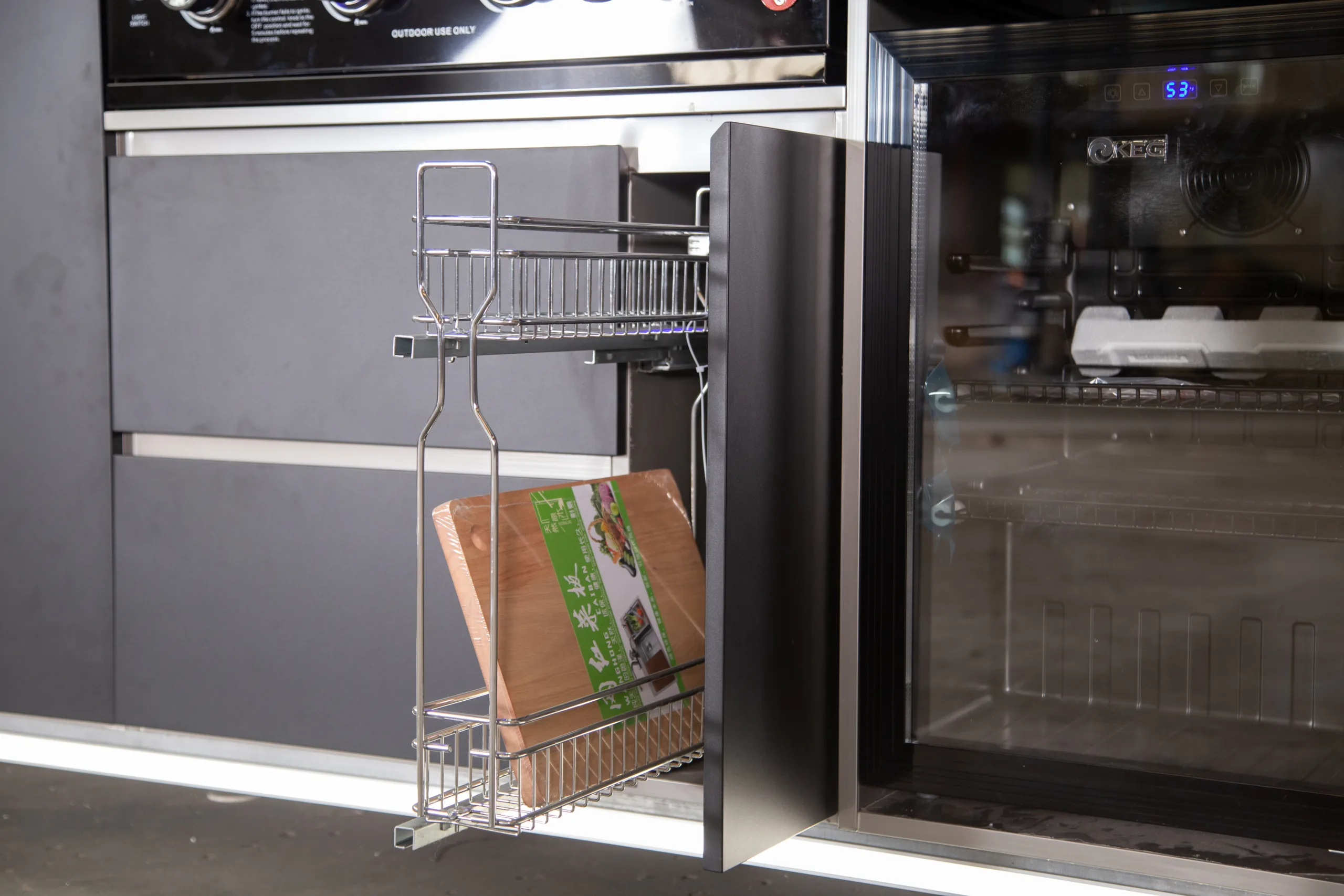
Use drawers for small tools and frequently handled items, door cabinets for larger equipment, and pull-out storage when full-depth access matters. The right outdoor kitchen cabinet mix depends on what will actually be stored, where it is used, and how doors or pull-outs interact with appliances and walkways. Before ordering, verify that the cabinet, slides, hinges, baskets, fasteners, finish, and installation are documented for the outdoor environment.
Plan Storage Around Tasks, Not Empty Openings
Start with a list of items used during a typical outdoor meal. Group them by task: food preparation, grilling, serving, beverages, cleanup, and maintenance. Then place each group near the work zone where it is needed. This prevents a common mistake—adding a cabinet because space is available, then discovering that its contents are difficult to reach while cooking.
Measure the actual items. Grill tools may be long, cutting boards may be tall, serving platters may be wide, and countertop appliances may be deeper than expected. Include handles, lids, and protective cases. The usable interior dimensions can be smaller than the cabinet face because slides, hinges, frames, dividers, utilities, and appliance ventilation consume space.
When Drawers Work Best
Drawers bring contents forward and let users see small items without reaching into the back of a cabinet. They can work well for thermometers, tongs, spatulas, clean utensils, foil, trivets, and other frequently used tools when the drawer construction and location are suitable.
Shallow drawers help keep small items in a single layer. Deeper drawers can hold larger pieces, but contents may shift or stack unless dividers are used. Confirm the slide capacity for the intended load, the approved distribution of weight, and whether the drawer includes stops or latches appropriate for the kitchen’s operating and movement conditions.
A drawer located directly beneath or beside a grill must not conflict with heat, ventilation, gas components, grease management, or appliance service access. The grill installation instructions and exact cabinet system control.
When Door Cabinets Make Sense
A door cabinet can provide a flexible opening for larger items, removable bins, cleaning accessories, or equipment that does not fit in a drawer. Adjustable shelves may improve organization, but only if the shelf system and load are approved for the exterior cabinet.
Door swing is the main planning issue. An open door can block a narrow aisle, collide with an adjacent drawer, or sit where the cook needs to stand. Draw each door fully open on the plan and test it with people using nearby appliances. Also confirm hinge access, adjustment, corrosion protection, and the closing or latching method.
Why Pull-Out Baskets Can Improve Access
A pull-out basket uses slides to bring deep cabinet contents into view. It can be useful for tall cutting boards, trays, bottles, bins, or supplies that would otherwise be hidden at the back. Vertical pull-outs may fit narrow spaces that are not efficient as conventional cabinets.
The mechanism adds parts that require correct alignment and maintenance. Ask about the documented load, slide material, stops, clearances, drainage, cleaning, and replacement availability. Open wire storage may allow debris to fall through, while solid trays may collect water or spills. Neither approach is universally better; select the one that matches the contents and cleaning plan.
Do not treat a pull-out as a handle for moving the kitchen. Close and secure all storage before repositioning a movable unit, and follow the exact movement procedure.
Compare Outdoor Cabinet Storage Types
| Storage type | Best suited to | Planning concern |
|---|---|---|
| Shallow drawer | Small utensils, thermometers, gloves, and compact tools | Heat location, slide load, dividers, and keeping contents dry and clean |
| Deep drawer | Pots, bowls, containers, or larger tools | Heavy loads, stacked contents, slide extension, and open clearance |
| Door cabinet | Bulky items and flexible shelf storage | Door swing, hidden back corners, hinge maintenance, and shelf capacity |
| Pull-out basket | Full-depth access, trays, boards, bottles, or bins | Slide alignment, approved load, drainage, latching, and cleaning |
| Vertical divider | Cutting boards, baking sheets, and flat accessories | Usable height, item stability, and removal path |
| Open shelf | Frequently used weather-suitable items during an event | Dust, wind, insects, moisture, sunlight, and security |
| Appliance opening | Refrigeration or another documented built-in appliance | Exact dimensions, ventilation, electrical needs, heat separation, and service access |
Keep Appliance Openings Separate From General Storage
An opening beside a pull-out or drawer may be reserved for a refrigerator, beverage cooler, ice appliance, or other equipment. It is not simply another cabinet. Appliances may need clear airflow, specific enclosure dimensions, electrical protection, drainage, door ventilation, and access for service.
Do not store items in required ventilation spaces or route cabinet contents where they can press against wiring, plumbing, gas components, condensers, or drains. Use only appliances documented for the actual outdoor location and ambient conditions. Qualified local professionals should coordinate electricity, plumbing, drainage, gas, and permits.
Separate Food-Contact Items From Chemicals
Clean serving utensils, cutting boards, and food-contact tools should not share a compartment with fuel supplies, pesticides, strong cleaners, pool chemicals, or maintenance products. Follow all labels and storage instructions. Some products should not be stored in an outdoor kitchen at all because of heat, cold, moisture, ventilation, or safety requirements.
Consider using removable, washable organizers for appropriate utensils. Ensure that liners or bins do not block drainage or ventilation and are compatible with the cabinet finish. Bring sensitive paper goods, linens, seasonings, electronics, and clean food-contact items indoors when site conditions or product instructions call for it.
Check Hardware and Materials as a System
Slides, hinges, baskets, screws, handles, latches, and cabinet panels need compatible materials and finishes. Ask whether replacement hardware is available and how adjustment is performed. A strong-looking metal component is not proof of a particular corrosion resistance, load rating, or exterior approval.
Review the maintenance instructions for salt air, poolside exposure, humidity, freezing conditions, dust, and grease. Use only approved cleaners and lubricants. Abrasives, harsh chemicals, pressure washing, or unapproved coatings may damage finishes or mechanisms.
Test Reach and Movement Before Ordering
Mock up cabinet faces with cardboard and mark the fully extended position of drawers and pull-outs. Stand where the cook will work and ask another person to open the refrigerator or walk past. A storage feature is not convenient if it blocks the only aisle or forces the cook to step around a hot appliance.
Frequently used tools should be reachable without bending behind an open door or crossing the cooking zone. Heavy items should be stored where they can be lifted safely, subject to the documented shelf or slide capacity. If accessibility is a priority, involve a qualified designer and apply the requirements relevant to the household and project.
Account for Water and Drainage
Outdoor cabinets may receive moisture from open sides, condensation, wet utensils, cleaning, or wind-driven weather. Ask how shelves, trays, baskets, drawer bottoms, and cabinet cavities are intended to drain or dry. Do not drill new drain holes without approval; a hole could damage finishes, structural parts, wiring, insulation, or a designed water path.
Inspect the surface below the kitchen as well. Water should not pond around wheels, anchors, cabinet bases, electrical components, or appliance openings. Coordinate site drainage with qualified professionals and the exact product documentation.
Plan for Cleaning and Service
Pull-outs and drawers should allow the approved cleaning method without forcing or disassembling structural components. Ask how baskets, trays, dividers, and slides are removed, if removal is permitted. Keep appliance service panels, shutoffs, junctions, filters, drains, and ventilation openings accessible.
Photograph the finished cabinet organization and label utility access points for future owners or service technicians. Do not cover labels or fasteners that require inspection.
Outdoor Kitchen Cabinet Selection Checklist
- Inventory real tools and measure their height, width, depth, and weight.
- Group storage by preparation, cooking, serving, beverage, and cleanup tasks.
- Use drawers for small frequent items, doors for larger pieces, and pull-outs for deep access.
- Draw every door, drawer, basket, appliance door, and grill lid fully open.
- Verify usable interior dimensions rather than cabinet face dimensions.
- Confirm documented slide, shelf, basket, hinge, and latch capacities.
- Keep storage clear of heat, ventilation, utilities, drainage, and service areas.
- Separate clean food-contact items from chemicals and maintenance supplies.
- Review exterior materials, cleaning, corrosion care, and replacement hardware.
- Have qualified professionals verify gas, electrical, plumbing, fire, drainage, and permit requirements.
Match Storage to the Kitchen Configuration
Storage options should be selected with the grill, refrigeration, sink, countertop, shutters, and available aisle space. Explore Yuquanqiu outdoor kitchens, then request exact model drawings, option lists, usable cabinet dimensions, hardware information, and installation documents before approving an order.
Frequently Asked Questions
Are drawers better than doors in an outdoor kitchen?
Drawers usually improve visibility for small items, while door cabinets accommodate bulky items and flexible shelves. Most kitchens benefit from a task-based combination rather than only one type.
What belongs in a pull-out basket?
Only items that fit the basket’s documented dimensions and load and are suitable for outdoor storage. Cutting boards, trays, bins, or bottles may work depending on the design, but keep food-contact items separated from chemicals.
Can cabinet storage go directly under a grill?
Only when the grill and cabinet system are specifically designed and documented for that configuration. Required heat protection, ventilation, grease management, fuel components, and service access must remain intact.
Can I add aftermarket drawer organizers?
Only if they fit without blocking slides, latches, ventilation, drainage, utilities, or service access and are compatible with the cabinet materials and outdoor conditions. Confirm with the supplier.
Should outdoor drawers have locks or latches?
That depends on the model, mobility, contents, wind exposure, and safety needs. Use only approved hardware and do not interpret a latch as proof of storm resistance or child-safe chemical storage.
How do I prevent outdoor cabinet hardware from sticking?
Keep mechanisms clean, aligned, and maintained using the manufacturer’s approved products and schedule. Do not force a sticking slide or apply an unapproved lubricant; inspect for debris, damage, load, or misalignment first.