Pro Program Live Chat +8619050185756

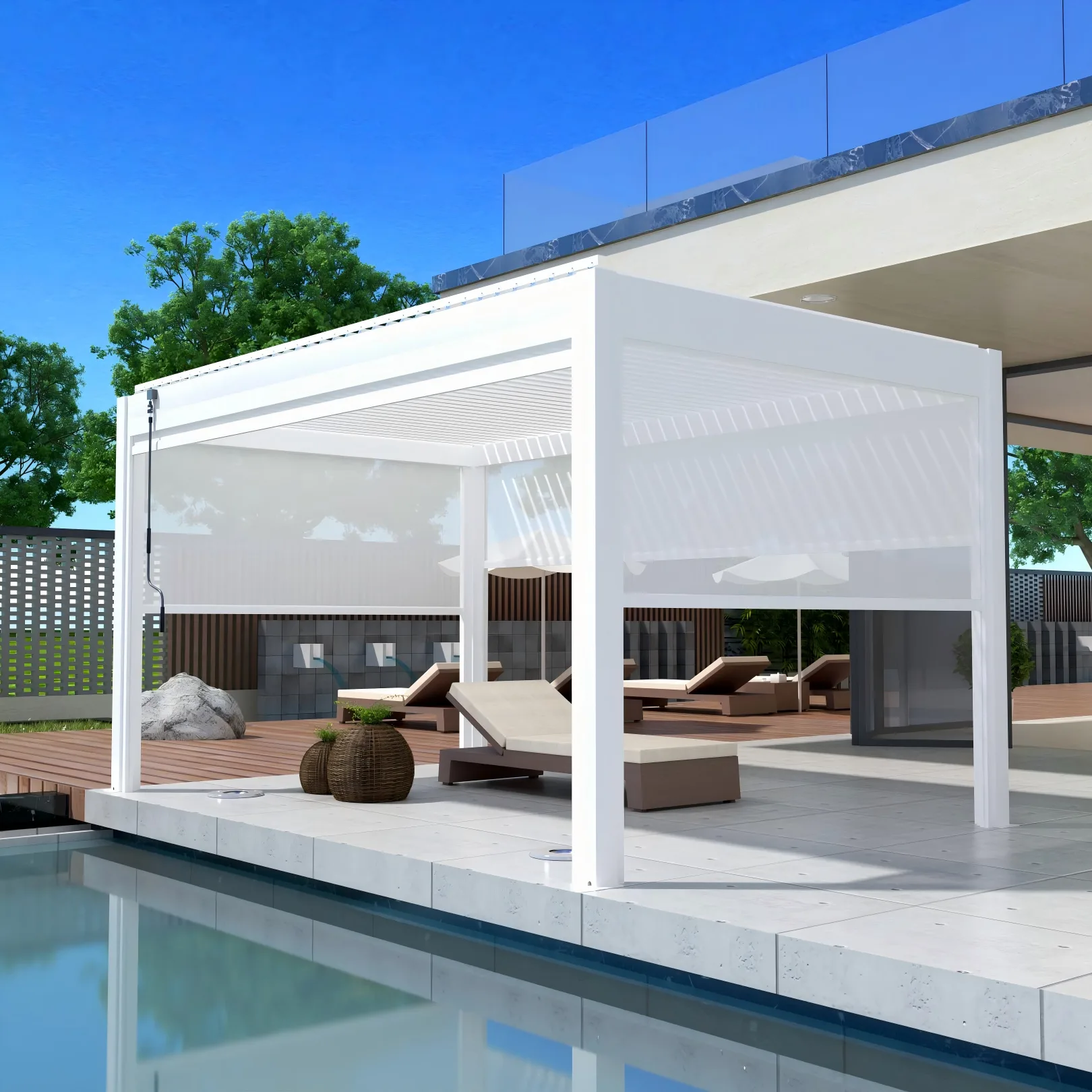
Choose a white or light-colored aluminum pergola when you want an airy appearance that blends with light architecture; choose black or charcoal when you want stronger contrast and a contemporary frame for the landscape. Neither choice is universally better. The best pergola color responds to the home’s exterior materials, the amount of sun, the surrounding view, visible dust or pollen, nearby paving, and the mood you want beneath the structure. Always compare actual finish samples outdoors before ordering.
Color Changes More Than the Look
A pergola is a large architectural object. Its posts and perimeter beams create strong vertical and horizontal lines, while its roof forms a broad plane that can look lighter or heavier depending on color. A finish that appears subtle on a small sample may become visually dominant across a full-size structure.
Color also affects how easily people notice dust, water spots, pollen, fingerprints, and surface marks. It can influence perceived brightness below the roof and how smoothly the pergola connects the home to the yard. These are practical design considerations, not just decorating preferences.
When a White Pergola Works Best
White and warm off-white finishes often suit coastal, transitional, Mediterranean-inspired, and light contemporary homes. They can coordinate with white window frames, pale stucco, limestone, light-painted trim, and pool decking. Against a blue sky or green planting, a white pergola creates a crisp resort-like character.
A light frame can also feel less visually heavy in a compact yard. The structure remains clearly defined, but it may not dominate the view from inside the house. Beneath the roof, reflected daylight can make the seating area feel bright and open.
White is not maintenance-free. Dark leaf residue, soil splashes, insects, mildew staining, and runoff marks may be more noticeable. Near a grill or fireplace, smoke and grease can also show readily. Placement, drainage, cleaning access, and the finish manufacturer’s care instructions matter.
When Black or Charcoal Works Best
Dark finishes create clear definition and pair naturally with modern architecture, dark window frames, standing-seam roofs, black metal railings, and large glass openings. Black or charcoal can make the pergola read as a deliberate extension of the home rather than a separate garden feature.
From certain viewpoints, a dark frame can visually recede against shaded trees or a dark façade. It also provides a strong background for warm lighting, pale furniture, and green planting. Dust, mineral spots, and light-colored pollen may be more visible, however, especially on broad horizontal surfaces.
Dark surfaces exposed to direct sun can become hot. The exact temperature depends on finish, exposure, airflow, geometry, and weather, so do not rely on color alone to predict comfort. People should avoid touching sun-heated metal, and designers should consider hand-contact areas, controls, and child-accessible locations.
Mid-Tone and Architectural Colors
Bronze, taupe, gray, and muted earth tones can bridge warm masonry with modern metalwork. These finishes are useful when pure white feels too bright and black feels too severe. A medium tone may also conceal everyday dust more effectively than either extreme, though local pollen, soil, and water chemistry affect what becomes visible.
Custom or less common colors require careful coordination. Confirm availability for the exact pergola model and accessories, and ask whether screens, gutters, fasteners, lights, motors, and trim pieces can match. A nearly matching component can be more distracting than an intentional contrast.
Quick Color Comparison
| Finish direction | Visual effect | Often coordinates with | Possible maintenance concern |
|---|---|---|---|
| White or off-white | Bright, airy, resort-like | Light stucco, white trim, pale stone, pools | Dark dirt, grease, and organic staining |
| Black or charcoal | Defined, graphic, contemporary | Dark frames, glass, modern cladding | Dust, pollen, and mineral spots |
| Bronze or taupe | Warm, grounded, transitional | Brick, wood tones, warm stone | Matching accessories and touch-up color |
| Medium gray | Neutral, understated | Concrete, cool stone, mixed palettes | Can look flat if undertones conflict |
Match Undertones, Not Just Color Names
Two products labeled “white” can look different when one has a cool blue undertone and the other is creamy. Gray can lean blue, green, brown, or violet. Black can be neutral, warm, or slightly metallic. Those differences become visible next to paint, stone, tile, and window frames.
Place finish samples directly beside the house materials. View them in morning sun, afternoon sun, shade, and exterior lighting at night. Hold samples both vertically and horizontally because light reflects differently from posts and roof components. Photographs and computer screens are useful for narrowing choices but should not replace physical samples.
Coordinate the Pergola With the Home
Repeat an Existing Exterior Finish
The simplest strategy is to repeat a permanent finish already present on the house: window frames, roof metal, railings, exterior lighting, or door hardware. Repetition creates a visual relationship even when the pergola is freestanding.
Use Contrast Deliberately
A contrasting pergola can become a focal point. A dark frame against pale stucco emphasizes geometry; a white pergola against dense greenery creates a bright garden destination. Contrast works best when repeated in furniture, planters, lighting, or another detail so the color feels intentional.
Respect Stone, Brick, and Wood
Natural materials contain several colors. Instead of matching the dominant tone exactly, identify a secondary vein, mortar color, or shadow tone. This often creates a more sophisticated relationship and avoids a near-match that looks accidental.
Consider the View From Indoors
Homeowners often evaluate the pergola only while standing in the yard. It may be viewed more frequently through kitchen, living-room, or bedroom windows. Tape a finish sample to the intended area or create a simple full-scale color mockup. Check whether posts interrupt important views and whether the frame color competes with interior furnishings.
At night, integrated lighting changes the appearance again. Warm light can soften dark metal and make white finishes appear creamier. Cool light can make white feel crisp but may clash with warm stone or indoor lighting. Select the fixture color temperature and pergola finish as one composition.
Pool, Coastal, and High-Pollen Settings
A poolside pergola should coordinate with coping, decking, waterline tile, furniture, and the color seen in the water. White often supports a bright resort aesthetic, while charcoal can frame the pool with stronger contrast. Avoid choosing solely from a catalog image; the site’s sunlight and surrounding materials will change the result.
In coastal or chemically exposed environments, finish performance depends on material preparation, coating system, installation details, maintenance, and the manufacturer’s documentation—not simply whether the color is light or dark. Confirm the exact coating and care requirements for the site. Regular removal of salt, pollen, and contaminants may be important.
Pergola Color Selection Checklist
- Collect samples of the roof, windows, walls, paving, stone, and major furniture.
- Choose two or three pergola finish candidates rather than comparing dozens.
- View real samples outdoors at several times of day.
- Check undertones beside permanent materials.
- Evaluate the structure from important indoor viewpoints.
- Consider visible dust, pollen, mineral deposits, smoke, and irrigation spray.
- Confirm colors for screens, gutters, motors, lights, fasteners, and trim.
- Ask for model-specific coating and cleaning documentation.
- Confirm touch-up and replacement-part color availability.
- Coordinate lighting color temperature with the selected finish.
Should the Pergola Match the Outdoor Kitchen?
Matching can create a unified outdoor room, especially when the pergola and kitchen are close together. Exact matching is not required. A dark pergola can pair with a light kitchen if countertops, handles, appliances, or furniture repeat the pergola color. Likewise, a white pergola can sit above darker cabinetry when pale paving or walls connect the palette.
Keep the number of major finishes controlled. Two primary architectural colors plus one material such as stone or wood are often easier to coordinate than many unrelated tones. Buyers can review Meta Lifestyle’s outdoor pergola collection and compare available finishes with their existing exterior materials. Confirm the final color range and component matching for the exact model before ordering.
Frequently Asked Questions
Does a white pergola get dirty faster?
It does not necessarily collect dirt faster, but dark soil, grease, organic residue, and runoff can be easier to see. Local conditions and cleaning frequency matter more than a general rule.
Does a black aluminum pergola get hot?
Dark metal in direct sunlight can become hot. Actual temperature varies with the finish, exposure, airflow, geometry, and weather. Avoid contact with sun-heated surfaces and follow manufacturer guidance.
What pergola color makes a small yard look larger?
A light color may feel visually lighter, especially against a pale home, but placement and post alignment matter just as much. A dark frame can also recede when placed against deep shade or dense planting.
Should the pergola match the window frames?
Matching window frames is a reliable strategy, particularly for contemporary homes. It is not mandatory; coordinating with roof metal, railings, lighting, or masonry can work equally well.
Can a pergola be two colors?
Some systems may offer contrasting louvers, frames, screens, or accessories. Confirm available combinations for the exact model and review a realistic sample because two-tone designs emphasize every transition.
Will a powder-coated finish fade?
Long-term appearance depends on the specific coating system, preparation, exposure, maintenance, and documented performance. Request model-specific finish information and follow the stated cleaning instructions rather than assuming all powder coatings perform alike.
Bottom Line
White pergolas feel bright and open; dark pergolas create definition and modern contrast; mid-tones connect warm or mixed materials. The strongest choice is the one that repeats or deliberately contrasts with permanent elements of the home, looks good from indoors, and suits the site’s maintenance conditions. Compare real samples in changing light and verify finish, accessory, and care details for the exact pergola model.