Pro Program Live Chat +8619050185756

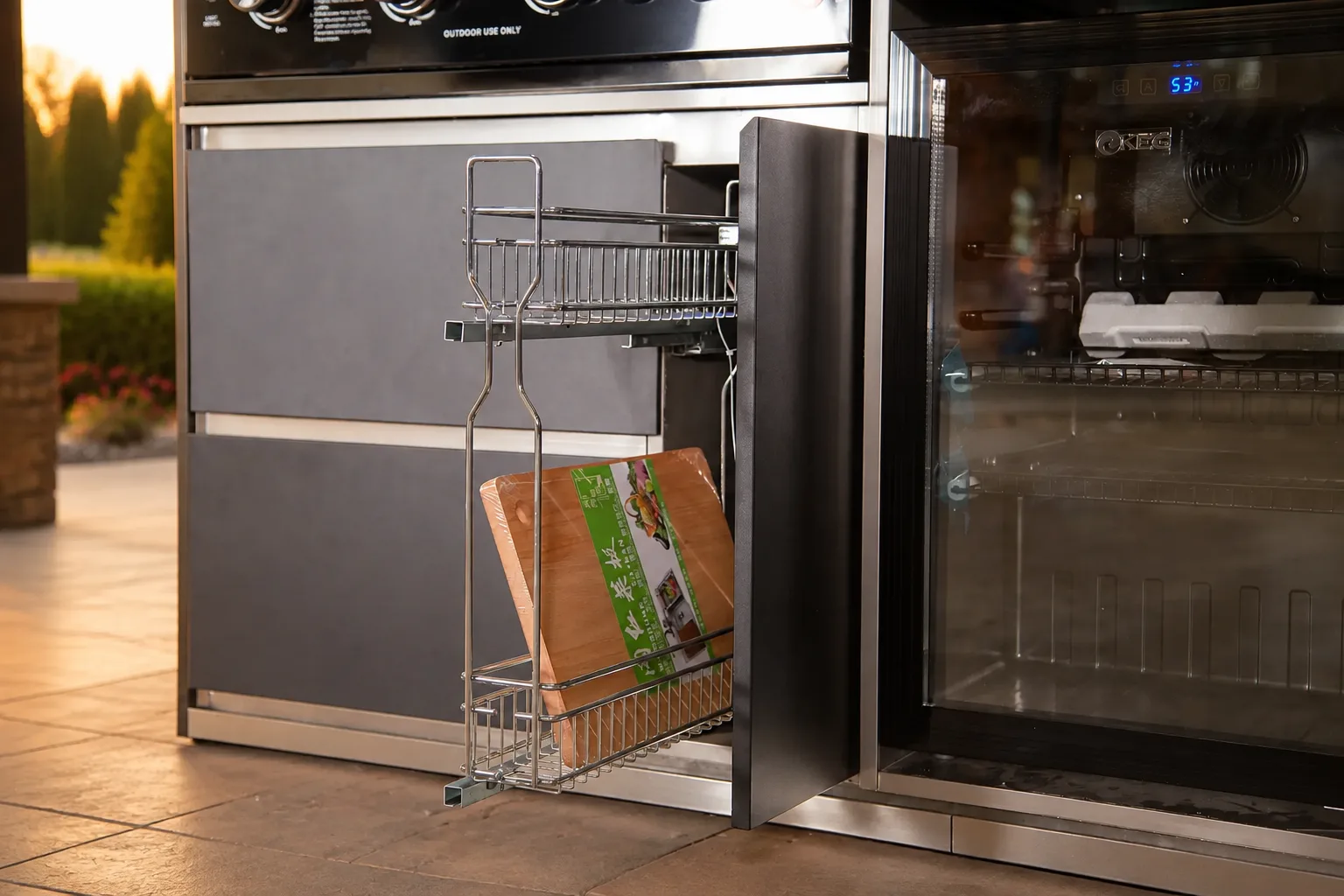
Outdoor kitchen pull-out cabinets are best used for durable, frequently needed items such as grill tools, outdoor-safe cookware, cutting boards, trays, and sealed cleaning accessories. Avoid treating them like indoor pantry cabinets. Food, paper goods, fuel, chemicals, and moisture-sensitive equipment usually belong indoors or in storage specifically approved for those materials. The safest organization plan also keeps appliance ventilation, gas components, electrical equipment, plumbing, and service access completely unobstructed.
Why pull-out storage works well outdoors
A pull-out brings the full depth of a cabinet into view, so owners are less likely to forget items at the back. It can also reduce bending and make narrow spaces useful. In an outdoor kitchen, those advantages matter because cooking often involves moving between the grill, preparation surface, sink, refrigerator, and dining area while carrying bulky utensils or serving pieces.
The challenge is exposure. Even a well-built outdoor cabinet experiences more temperature variation, humidity, dust, pollen, insects, and wind-driven moisture than an indoor cabinet. A pull-out should therefore have a clear purpose, a limited inventory, and a routine inspection schedule. Organizing by task is more practical than filling every available inch.
Best items for an outdoor kitchen pull-out
Grilling tools near the cooking zone
Long-handled tongs, spatulas, grill brushes approved by the grill manufacturer, heat-resistant gloves, and instant-read thermometers are logical candidates. Store them only after they are clean and dry. A removable tray or washable container can catch grease residue and simplify cleaning, provided it does not block a required vent or interfere with the pull-out mechanism.
Keep sharp tools in a sheath or secure holder rather than loose in a wire basket. Heavy cast-iron pieces need a pull-out and cabinet rated for their weight; do not assume every basket is designed for dense cookware. Verify load guidance with the cabinet manufacturer.
Preparation tools near the counter
Outdoor-safe cutting boards, mixing bowls, colanders, silicone mats, and durable prep trays can live close to the work surface. Boards should be completely dry before storage and periodically inspected for warping, cracks, or odors. If the cabinet is frequently damp, bring boards and other food-contact items indoors between uses.
Serving pieces near the dining side
Melamine or other outdoor-suitable serving ware, trays, beverage tubs, and reusable placemats can occupy a pull-out facing the seating area. Glassware and ceramics may chip when a basket closes, so use dividers and avoid overloading. Paper napkins, cardboard packaging, and disposable plates are better kept indoors because humidity and pests can damage them.
Cleaning supplies in a dedicated zone
A small set of manufacturer-approved surface cleaners, microfiber cloths, and a handheld brush can be stored in a separate, contained pull-out. Keep chemicals away from food-contact tools and never place them in a cabinet containing gas equipment, electrical connections, or an appliance unless the applicable documentation specifically permits storage there. Follow the cleaner label and cabinet finish-care instructions.
What should not go in a pull-out cabinet?
| Item | Why it is a poor choice | Better location |
|---|---|---|
| Unsealed food and pet food | Heat, moisture, and pests can compromise it | Conditioned indoor pantry |
| Paper products and cardboard | They absorb humidity and can attract pests | Dry indoor storage |
| Propane cylinders or fuel containers | They require approved handling and enclosure conditions | Only where manufacturer instructions and local requirements allow |
| Flammable or corrosive chemicals | Heat and leaks can create hazards or damage finishes | Approved, labeled storage away from cooking equipment |
| Small plug-in appliances | Many are not documented for outdoor storage or use | Indoors unless the manufacturer explicitly approves outdoor use |
| Linens and cushions | They can hold moisture, odors, and mildew | Dry deck box or indoor closet |
This table is general guidance. Product documentation, local requirements, and qualified professionals control where gas, electrical, plumbing, and combustible materials may be placed.
Organize by outdoor kitchen zone
Cooking zone
Place the most-used grill tools close enough to reach without crossing behind another cook. Do not position a frequently opened pull-out where it blocks a walkway, grill lid, refrigerator door, or emergency access to a shutoff. Hot cookware should cool on an approved surface before going into storage.
Preparation zone
Keep boards, bowls, and prep utensils beneath or beside the main counter. A shallow upper drawer may be better for knives and thermometers, while a vertical pull-out can accommodate boards and trays. The layout should allow raw-food tools to be separated from clean serving pieces.
Serving zone
Trays and outdoor dinnerware belong near the path to the table. If guests will use the cabinet, avoid placing it beside hot equipment or in the cook’s primary working aisle. Child access also matters; sharp, hot, chemical, or breakable items should remain secured.
Cleanup zone
Use a contained organizer near the sink for cloths and suitable cleaners, but inspect regularly for plumbing leaks. A pull-out beneath a sink should not conceal shutoffs or make drains difficult to service. Local plumbing requirements and the fixture manufacturer’s instructions determine the correct installation and winterization approach.
A practical pull-out planning checklist
- Assign one task to each pull-out instead of mixing unrelated items.
- Confirm the basket, slides, and cabinet can support the intended load.
- Keep all vents, appliance grilles, utility connections, and shutoffs clear.
- Use washable organizers that do not trap standing water.
- Separate food-contact tools from cleaners and maintenance products.
- Secure knives, skewers, and fragile serving pieces.
- Leave enough clearance for the pull-out to open without blocking traffic.
- Bring food, paper, linens, and non-outdoor-rated electronics indoors.
- Clean and dry tools before storing them.
- Inspect the cabinet seasonally for corrosion, pests, leaks, and loose hardware.
How to prevent rattling, rust, and moisture problems
Dividers and fitted bins keep objects from striking one another when the basket moves. Choose organizers that tolerate the outdoor environment and can be removed for cleaning. Do not line the bottom with absorbent cardboard or fabric. If a mat is used, it should be appropriate for the cabinet, allow intended drainage or airflow, and be removed periodically so the surface underneath can dry.
Stainless-looking tools are not all equally corrosion-resistant, especially around salt air or pool chemicals. Rinse and dry tools as their manufacturers recommend. Do not use abrasive or chlorine-containing cleaners unless the cabinet or tool maker approves them. Early surface discoloration is easier to address than advanced corrosion.
When the kitchen will sit unused, empty the pull-outs of food-contact items and anything that can freeze, leak, absorb moisture, or attract pests. Seasonal shutdown procedures for water, gas, electricity, refrigeration, and other appliances must follow model-specific documentation and qualified local professionals.
Match the pull-out to the product, not just the space
Pull-out baskets vary in width, depth, slide design, materials, and intended load. A narrow basket may suit boards and trays, while a deeper pull-out may be better for durable cookware. Appliance doors, utility routes, cabinet frames, and nearby handles all affect what can operate comfortably.
Review the exact cabinet configuration before ordering accessories. Meta Lifestyle’s outdoor kitchen collection can help buyers compare integrated layouts, but photographs should not be used as substitutes for model-specific dimensions, installation documents, or professional utility planning.
Frequently Asked Questions
Can I store food in an outdoor kitchen pull-out?
Long-term food storage is usually better indoors. Outdoor cabinets face heat, humidity, insects, and wildlife. Even sealed packages can be affected. Use an approved outdoor refrigerator for food that must remain chilled, follow safe food-handling guidance, and bring shelf-stable food inside after entertaining.
Can a pull-out basket hold cast-iron cookware?
Only if the cabinet and slide manufacturer confirms the load capacity and the cookware fits without stressing the hardware. Cast iron is dense and can overload a basket quickly. It should also be completely dry and maintained according to its maker’s instructions.
Should cutting boards stay outside?
Outdoor-suitable boards may be stored temporarily when clean and fully dry, but indoor storage is safer in damp, freezing, pest-prone, or long-idle conditions. Inspect food-contact surfaces before every use.
Can cleaning chemicals be stored beside the grill?
Do not store chemicals in a hot appliance enclosure or near gas or electrical components unless all applicable documentation permits it. Keep products in original labeled containers, separated from food tools, and follow their storage warnings.
How often should I empty and clean pull-outs?
Wipe spills promptly and inspect during routine kitchen cleaning. A full empty-and-clean session is sensible at seasonal startup and shutdown, or more often where pollen, dust, insects, salt air, or heavy use are common.
Can I add a pull-out to an existing outdoor cabinet?
Possibly, but first verify internal dimensions, frame strength, door clearance, slide mounting, load capacity, weather exposure, and conflicts with utilities or appliance ventilation. Use the cabinet manufacturer’s approved accessories or consult a qualified installer.