Pro Program Live Chat +8619050185756

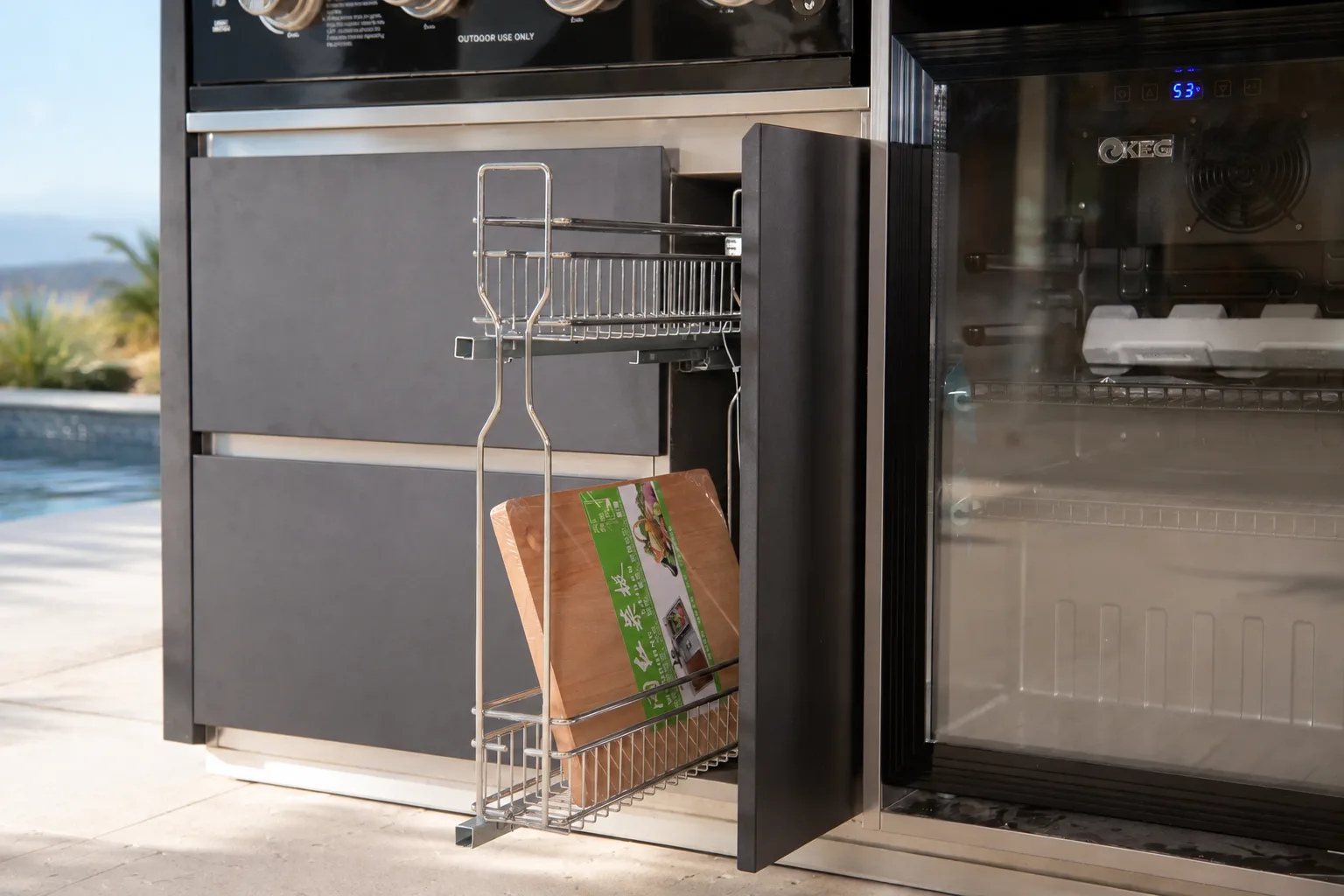
The easiest-to-reach outdoor kitchen storage puts frequently used items between comfortable standing reach and knee height, uses full-extension drawers or pull-outs instead of deep fixed shelves, and keeps every cabinet accessible without crossing a hot cooking zone. Good reach is not only about convenience. It reduces bending, searching, lifting, and unnecessary movement while guests and cooks share the patio.
Start with the people who will use the kitchen
Before choosing cabinets, think about who cooks, serves, cleans, and restocks. A tall primary cook may prefer tools higher than a shorter family member. A person with limited grip strength may find a wide pull easier than a small knob. Someone who uses a mobility device may need more turning room and a different approach to counters and storage.
Do not assume one layout is universally accessible. If the project must meet accessibility laws, standards, or a client’s documented needs, use a qualified designer and the applicable local requirements. The guidance below is for practical planning, not a claim of code compliance.
Why pull-outs outperform deep shelves
A fixed shelf can turn the back half of a cabinet into a dark storage cave. Reaching an item may require kneeling, removing objects, and leaning into the opening. A pull-out brings the contents forward and makes inventory visible. Full-extension drawers can offer similar benefits for smaller tools and serving pieces.
Pull-outs are especially useful for cutting boards, trays, grill tools, durable cookware, and outdoor-safe accessories. They still need suitable load capacity, weather-resistant materials, and enough clearance to open without blocking an aisle. The cabinet manufacturer’s documentation controls intended loads and approved accessories.
Build storage around work zones
Cooking zone
Place tongs, spatulas, heat-resistant gloves, and thermometers beside the grill rather than directly behind the cook. A narrow pull-out or shallow drawer can keep tools visible without requiring someone to step away from the cooking position. Never let an open drawer block access to a gas shutoff, appliance control, or escape path.
Preparation zone
Store boards, bowls, and prep tools beneath or beside the main clear counter. Vertical dividers can make trays and boards easier to lift individually. Heavy pieces should sit lower than light utensils, but not so low that they demand repeated floor-level lifting.
Serving zone
Keep trays, outdoor-safe dishes, and beverage accessories on the dining side of the island. Guests can help themselves without entering the grill zone. If children use the space, secure sharp, fragile, hot, or chemical items separately.
Cleanup zone
Cleaning cloths and approved surface products may fit near the sink in a contained organizer. Keep plumbing visible for inspection, separate chemicals from food-contact items, and never obstruct electrical, gas, drain, or appliance service access. Model-specific documentation and qualified local professionals control utility locations.
Compare common outdoor storage types
| Storage type | Reach advantage | Planning concern |
|---|---|---|
| Full-extension drawer | Contents come forward and remain visible | Confirm load rating and weather suitability |
| Vertical pull-out | Uses narrow space for trays or tools | Needs clear opening path and stable organization |
| Door cabinet with shelf | Simple, flexible space | Deep items can be hard to see and reach |
| Open shelf | Fast access | More exposure to dust, pollen, moisture, and pests |
| Appliance-adjacent drawer | Keeps tools near the task | Must respect heat, ventilation, and clearances |
The right mix is usually more useful than filling the kitchen with one cabinet type. Drawers can handle small tools, vertical pull-outs can organize boards, and larger cabinets can hold durable cookware.
Choose hardware that feels natural
Test handles with dry and wet hands. A generous pull may be easier to grip than a small knob, while recessed hardware can reduce snagging in a tight aisle. Soft-close mechanisms can prevent slamming, but they should not require excessive opening force. Hardware must also tolerate outdoor exposure and the cabinet manufacturer’s maintenance routine.
Contrast can help users identify openings in low light. That does not require a dramatic color scheme; a subtle difference between the cabinet face and pull may be enough. Task lighting should illuminate handles and work surfaces without creating glare. Electrical work and fixture selection must follow product documentation and qualified local professionals.
Protect the clear path
Storage is not easy to use if an open door or pull-out traps the cook. Draw the cabinet fronts in their fully open positions on the plan. Then test the route between the home, grill, sink, refrigerator, table, and seating. Consider two people passing while one drawer is open.
Also check refrigerator door swing, grill-lid movement, trash access, and nearby furniture. A beautiful arrangement can become frustrating when bar stools block the most-used drawer. Exact aisle and accessibility requirements depend on the project and local rules, so use a qualified designer where code or mobility needs apply.
Keep weight and frequency in balance
Frequently used light and medium-weight tools belong in the easiest reach zone. Heavy cookware should be supported by cabinetry designed for the load and stored where it can be lifted with control. Rarely used seasonal pieces can occupy less convenient space, but avoid storing anything overhead that would be dangerous if dropped.
Do not overfill a pull-out. Crowding hides items, adds weight, and can prevent the mechanism from closing. A small, task-focused inventory is easier to maintain than a cabinet packed like an indoor pantry.
Outdoor-specific storage cautions
- Keep food, paper goods, linens, and moisture-sensitive electronics indoors unless their storage system is specifically suitable.
- Do not block appliance vents, cabinet ventilation, utility shutoffs, drains, or service panels.
- Never place fuel cylinders, flammable materials, or chemicals in an unapproved cabinet.
- Confirm drawers and pull-outs are appropriate for the expected weather and load.
- Use removable, washable organizers rather than absorbent liners.
- Inspect slides, fasteners, seals, and cabinet interiors for corrosion, pests, leaks, or debris.
- Follow manufacturer instructions for gas, electricity, plumbing, fire clearances, anchoring, and winterization.
A buyer’s reach-and-storage checklist
- List the ten items used during a typical meal.
- Assign each item to the cooking, prep, serving, or cleanup zone.
- Place high-frequency items in drawers or pull-outs that feel comfortable to each primary user.
- Draw every door, drawer, appliance, and pull-out fully open on the plan.
- Verify that two people can move through the working area safely.
- Confirm handle size, opening force, lighting, and visibility.
- Check cabinet and slide load guidance before assigning heavy cookware.
- Protect all required ventilation, clearances, and service access.
- Ask a qualified professional to review utilities, structure, permits, and any accessibility requirements.
- Test the finished kitchen with the actual tools before finalizing organizers.
Plan the cabinet configuration early
Storage is easiest to improve before appliance openings and utilities are fixed. Review real cabinet elevations alongside the grill, refrigerator, sink, doors, posts, and seating. Meta Lifestyle’s outdoor kitchen collection provides ideas for integrated layouts, but the exact model documentation and project drawings should guide ordering and installation.
Frequently Asked Questions
Are drawers better than cabinet doors outdoors?
Drawers often make small items easier to see and reach, while door cabinets provide flexible space for larger objects. A combination usually works best. Confirm that each component is designed for its intended outdoor environment.
What belongs in the easiest reach zone?
Store the clean, durable tools used during most meals: tongs, spatulas, thermometers, boards, bowls, and serving trays. Keep chemicals, food, fuel, and moisture-sensitive items in appropriate separate locations.
Can I retrofit pull-outs into existing cabinets?
Sometimes. Verify internal dimensions, frame strength, slide mounting, door clearance, load capacity, weather exposure, and conflicts with utilities or ventilation. Use approved accessories or a qualified installer.
How can I make handles easier to use?
Choose pulls that allow a comfortable grip and test them with the intended users. Avoid hardware that requires pinching or catches clothing. Consider visibility, opening force, corrosion resistance, and maintenance.
Do accessible outdoor kitchens have special code requirements?
Requirements depend on the property, project type, jurisdiction, and intended users. If formal accessibility compliance is required, a qualified local designer or authority should determine the applicable standards and document the solution.
How often should pull-out hardware be inspected?
Check it during routine cleaning and at seasonal startup and shutdown. Inspect more often in coastal, dusty, humid, or heavily used settings. Tightening, lubrication, and cleaning should follow the cabinet or hardware manufacturer’s instructions.