Pro Program Live Chat +8619050185756

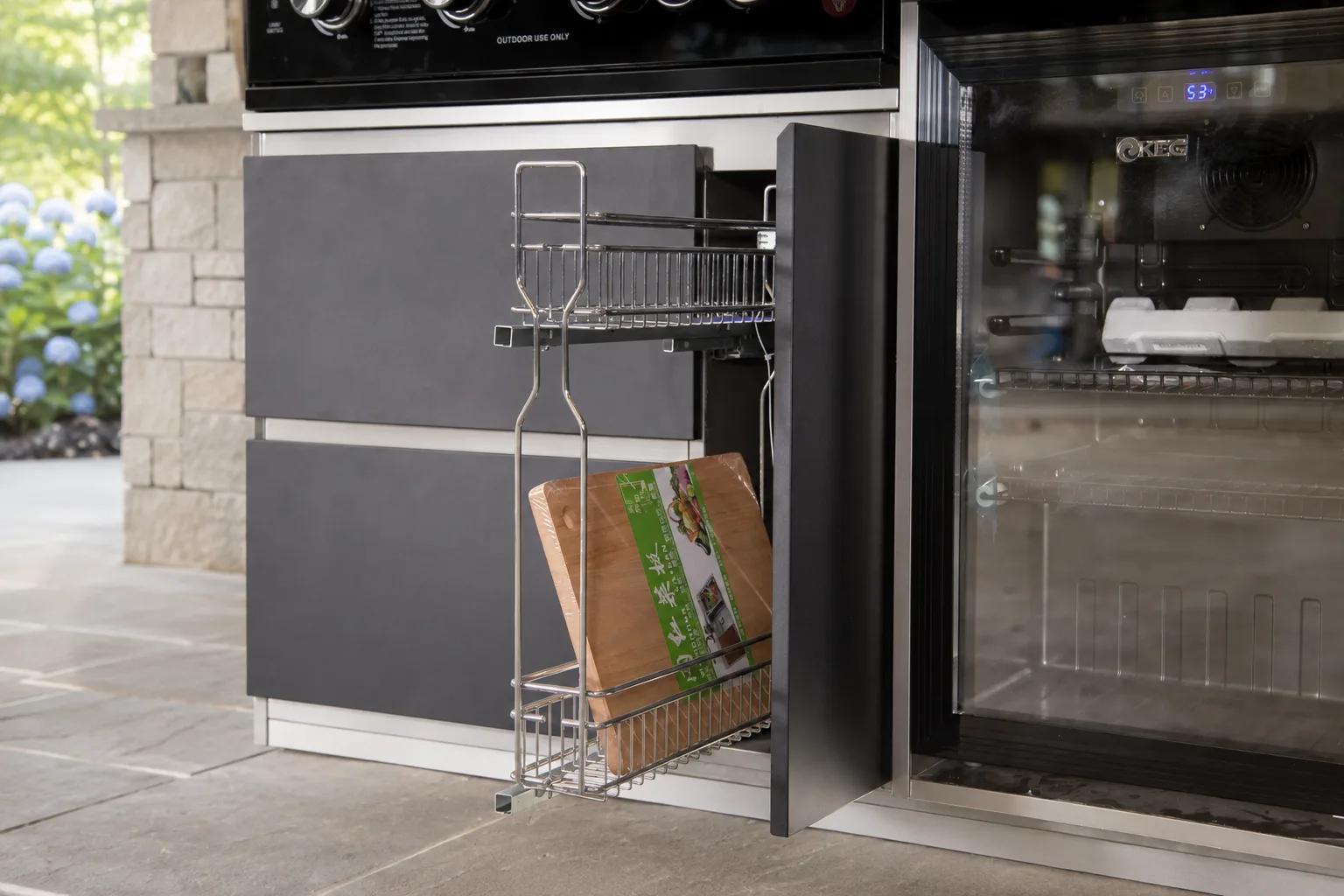
An outdoor kitchen does not need a dishwasher, but one can be worthwhile for homeowners who entertain frequently, use many reusable dishes, and want cleanup to remain outside. The decision should be made before cabinetry and utilities are finalized. A dishwasher requires protected space, suitable equipment, water, drainage, power, ventilation or clearance as specified, service access, and a seasonal plan. If outdoor meals are occasional or most dishes still return to the indoor kitchen, storage or counter space may deliver more value.
Start with how you actually entertain
Think about a typical gathering rather than an idealized party. Do guests eat from reusable plates, or is the outdoor kitchen mainly used to grill food that is served indoors? Are mixing bowls, serving platters, glasses, and utensils accumulating outside? Does cleanup interrupt time with guests because every item must be carried through the house?
A dishwasher becomes more useful when the outdoor area functions as a complete dining room and when meals happen several times a week. It may be less compelling for a compact grill station used a few weekends each year. Frequency, volume, and travel distance to the indoor kitchen matter more than the appliance’s appearance.
Compare the dishwasher with the space it replaces
Every appliance consumes cabinet width, and outdoor kitchens rarely have unlimited storage. The same opening might otherwise hold deep drawers, waste and recycling, a pull-out for cutting boards, or dry storage for serving pieces. Before choosing a dishwasher, list what the kitchen needs to store and identify which function would be displaced.
Also consider landing space. Users need a nearby counter for scraping, sorting, and unloading. If adding an appliance leaves no clear preparation surface, the kitchen may become less convenient overall. A balanced layout usually performs better than an appliance-heavy design with inadequate workspace.
Choose equipment for the actual environment
Do not assume an indoor dishwasher can be placed outside simply because it sits beneath a roof. Outdoor exposure may include humidity, wind-driven rain, dust, temperature swings, salt air, insects, and freezing conditions. Use only equipment whose manufacturer documents suitability for the intended location and installation conditions.
Review the exact model instructions for enclosure dimensions, temperature limits, ventilation, utility connections, required clearances, drainage, electrical protection, and winter procedures. Marketing terms such as “stainless steel” do not by themselves establish outdoor suitability. The complete appliance, including controls, seals, insulation, wiring, and internal components, must be appropriate for the setting.
Plan the cleanup workflow
A dishwasher works best near the sink and waste area. The usual sequence is to clear scraps, rinse only when the appliance instructions call for it, load, run, and unload into nearby storage. If the machine is separated from the sink by a grill or a busy walkway, dirty dishes may cross the cooking zone and interfere with people serving food.
Keep the open door out of the main aisle. A downward-opening dishwasher can create a trip hazard when it projects into a narrow passage, especially during an evening gathering. Test the full door swing on the plan and leave room for a person to stand in front while another person can still move through the kitchen.
Protect food-preparation space
The dirty-dish landing area should not take over the clean preparation counter. If space allows, create a small cleanup zone at one end of the kitchen and keep raw-food preparation and ready-to-serve items away from it. Good zoning improves convenience and reduces confusion when several people are using the kitchen.
Water supply and drainage need professional planning
A dishwasher cannot be treated as a simple plug-in accessory. Water pressure, supply routing, shutoffs, drain configuration, backflow protection, and freeze exposure must be evaluated for the property and appliance. Improper drainage can produce odors, leaks, or wastewater problems. A slow leak inside outdoor cabinetry may remain unnoticed until finishes or surrounding construction are damaged.
Use qualified local plumbing professionals and follow the appliance documentation and local authority requirements. The installer should preserve access to shutoffs, connections, filters, traps, and serviceable parts. Do not conceal utilities behind permanently inaccessible panels.
Electrical protection is equally important
Permanent outdoor equipment needs a correctly planned electrical supply for its location. The required circuit, grounding, disconnect, receptacle or hardwired connection, and weather protection depend on the appliance and applicable local requirements. Extension cords are not an acceptable permanent solution.
A qualified electrician should coordinate with the plumber and cabinet installer before construction. Electrical work must remain separated from water paths and should not block cabinet ventilation or appliance service. Follow model-specific documentation and the local authority for permits and inspection.
Cold climates require a shutdown strategy
Freezing is a major decision factor. Water left in supply lines, valves, pumps, or internal components can cause damage. Simply turning off the appliance may not be enough. The correct winterization procedure varies by model and installation.
Before purchasing, ask for written cold-weather instructions and confirm who will perform seasonal shutdown and startup. If reliable winterization is difficult, locating the dishwasher indoors may be the safer and simpler choice. Never improvise compressed-air, antifreeze, heating, or drainage procedures without guidance that applies to the exact equipment and local installation.
Consider hot, humid, and coastal locations
Warm climates avoid some freezing concerns but introduce others. High humidity can encourage condensation, while airborne salt and wind-driven rain may accelerate corrosion or contaminate cabinet interiors. Shade and an overhead cover help, but they do not turn an outdoor location into an indoor one.
Confirm care requirements for the appliance exterior and nearby cabinetry. Provide drainage around the kitchen so stormwater does not collect at the base. After severe weather, inspect the area before using electrical equipment and follow the manufacturer’s instructions if water intrusion is suspected.
Dishwasher versus simpler alternatives
| Option | Best for | Main tradeoff |
|---|---|---|
| Outdoor-suitable dishwasher | Frequent full meals and reusable tableware | Uses space and requires utilities, maintenance, and climate planning |
| Outdoor sink plus indoor dishwasher | Food prep and light cleanup outside | Dishes still need to be carried indoors |
| Large cleanup sink and drying rack | Hand-washed tools and serving pieces | Requires labor and protected drying/storage space |
| Extra cabinet storage | Compact kitchens or occasional entertaining | No automated cleanup |
| Removable bus tubs | Flexible collection after gatherings | Containers must be carried and stored |
Questions to ask before buying
- Is the exact model documented for the intended outdoor exposure?
- How many outdoor meals and place settings are typical each week?
- Is there enough room for the door, loading position, and a clear aisle?
- What cabinet storage or workspace will the appliance replace?
- Where will clean dishes be stored after unloading?
- Can qualified professionals provide compliant water, drainage, and power?
- How will leaks be detected and shutoffs accessed?
- What are the model-specific temperature and winterization instructions?
- Can the appliance be removed for service without dismantling the kitchen?
- Who will maintain and seasonally inspect the system?
Coordinate the appliance before ordering cabinets
Appliance selection should happen early enough for accurate drawings. Cabinet openings, door clearances, toe-kick details, countertop support, utility routes, and adjacent components must work together. Do not cut a finished cabinet later based on a generic appliance width.
To explore coordinated cooking, storage, refrigeration, and cabinet configurations, review the Meta Lifestyle outdoor kitchen collection. Request current information for the exact configuration under consideration. Product photos illustrate design possibilities but do not establish that a dishwasher, utility package, or installation service is included.
When the answer is probably yes
A dishwasher is most likely to earn its space when the outdoor kitchen is used often, the dining area is far from the indoor kitchen, reusable dishes are standard, and the site can support correct installation and maintenance. It also helps when indoor traffic is a concern, such as gatherings near a pool where carrying wet or breakable items through the house is inconvenient.
When the answer is probably no
Skip it when the outdoor kitchen is compact, cleanup volume is low, winterization is impractical, utility work is disproportionate, or losing storage would make daily use harder. A well-placed sink, waste pull-out, bus tubs, and a clear route indoors may provide a simpler system with fewer service needs.
Frequently Asked Questions
Can a regular indoor dishwasher be installed outdoors?
Do not install one outdoors unless the manufacturer specifically documents that exact model for the intended exposure and conditions. A covered patio can still experience moisture, dust, temperature changes, and wind-driven rain.
Does an outdoor dishwasher need hot water?
Connection and water-temperature requirements vary by model. Follow the appliance’s installation instructions and have a qualified plumber design the supply. Do not assume that one dishwasher’s requirements apply to another.
Where should the dishwasher go in the layout?
It is generally most convenient near the sink, waste area, dish landing space, and storage for clean items. Keep the open door out of the main cooking and circulation path while preserving appliance ventilation and service access.
Can an outdoor dishwasher stay connected through winter?
Only if the equipment documentation and local installation support those conditions. In freezing regions, model-specific winterization may be required. Obtain the procedure before purchase and use qualified local professionals.
Is a sink enough for most outdoor kitchens?
For many households, yes. A sink supports handwashing, food preparation, and light cleanup, while major dishwashing happens indoors. The right choice depends on meal frequency, dish volume, available space, and utility complexity.
Will a dishwasher increase an outdoor kitchen’s resale value?
There is no guaranteed return. Buyers may appreciate convenience, but value depends on local preferences, installation quality, appliance condition, and the overall design. Choose it primarily because it improves your own use of the space.
This guide provides general planning information. The exact appliance and cabinet documentation, qualified local professionals, and local authorities control plumbing, drainage, electrical work, weather exposure, winterization, clearances, permits, and installation.