Pro Program Live Chat +8619050185756

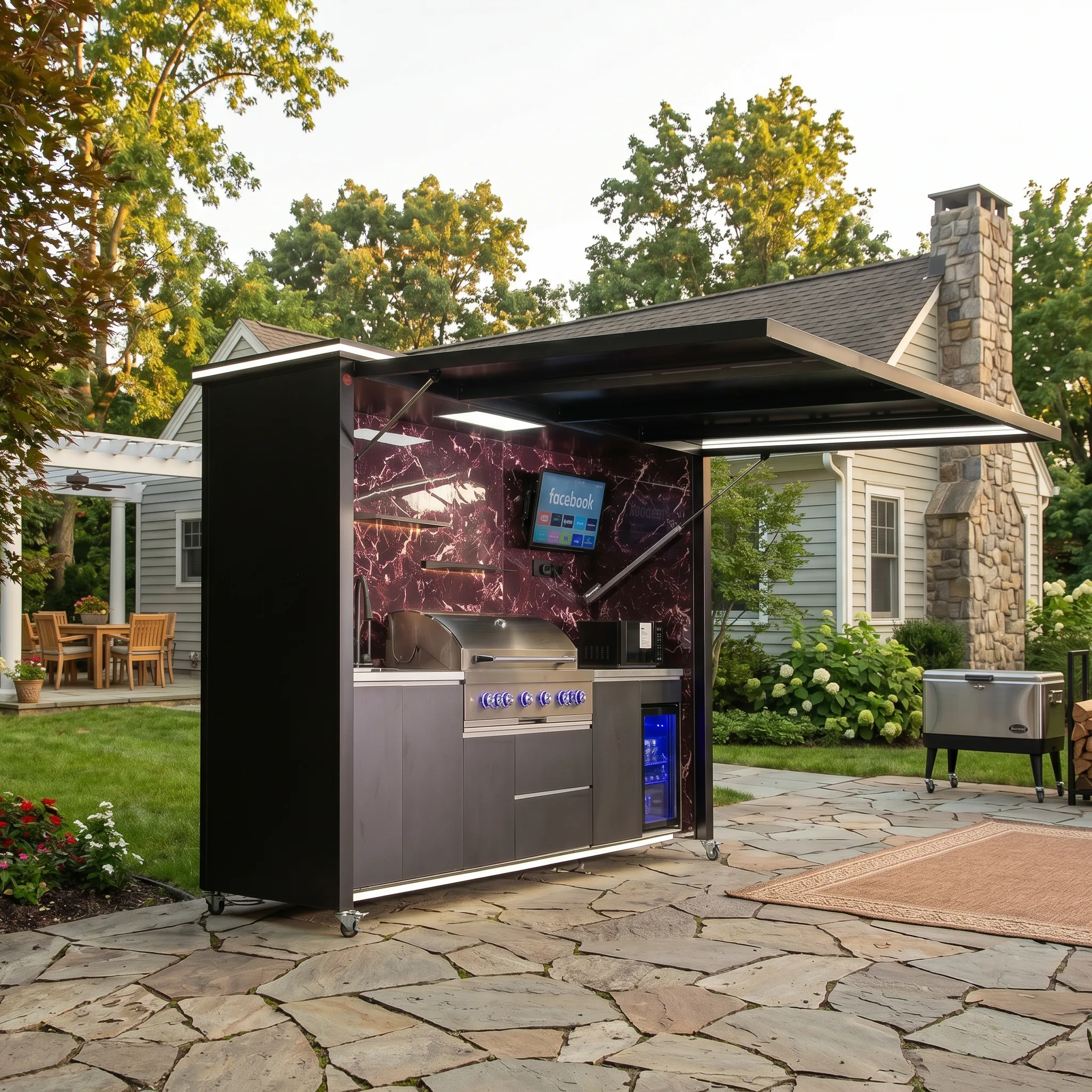
You can build an outdoor kitchen near mature trees, but only after evaluating roots, branches, falling debris, fire safety, drainage, utilities, foundations, and future growth. A shaded garden setting can be beautiful and comfortable, yet the kitchen should not damage a valuable tree or sit where limbs, roots, sap, leaves, or irrigation create avoidable risk and maintenance.
Start with a tree and site assessment
Before selecting the kitchen location, identify the tree species, health, trunk size, canopy spread, visible roots, soil conditions, and likely growth. A healthy-looking canopy does not confirm that the root zone can tolerate excavation, compaction, paving, utility trenches, or changed drainage.
Ask a qualified local arborist to evaluate significant trees and identify a protection area. Coordinate that advice with the landscape designer, contractor, and local authority. Tree-protection rules vary by location, and protected or heritage trees may require approvals before work begins.
1. Keep construction away from critical roots
Tree roots frequently extend well beyond the trunk and visible canopy. Cutting major roots can affect stability and health, while compacting soil with equipment or stored materials can reduce air and water movement. Do not assume a shallow slab or narrow trench is harmless.
Mark the approved work zone before demolition or delivery. Establish routes for workers, pallets, lifts, and carts that avoid protected soil. If utilities must cross a root area, ask the arborist and qualified trades whether a different route or specialized method is appropriate.
Questions for the arborist and contractor
- Which roots and soil areas require protection?
- Can the proposed slab or foundation fit without harmful excavation?
- Where can delivery equipment safely travel?
- Will changed paving alter water or oxygen reaching the roots?
- Are any limbs hazardous or likely to conflict with the kitchen?
- How will future growth affect clearance and maintenance?
2. Evaluate overhead limbs, not only shade
Branches above a kitchen can drop leaves, twigs, sap, fruit, cones, or animal debris onto roofs, counters, appliances, and drains. Dead, damaged, or poorly attached limbs may create a more serious hazard during wind or storms.
A qualified arborist should inspect the canopy and recommend appropriate pruning. Avoid aggressive cutting solely to make a kitchen fit; that can harm the tree or create weak regrowth. Preserve access for future inspection and pruning without placing ladders over hot or fragile equipment.
3. Respect fire and heat clearances
Leaves, bark mulch, branches, fences, and wood structures can be combustible. Keep grills, burners, ovens, heaters, and hot exhaust away from vegetation and follow the exact appliance and kitchen documentation. Clearances depend on the model, fuel, roof or cover, ventilation, and site.
Do not prune branches once and assume the clearance will remain safe. Plants grow, leaves accumulate, and furniture moves. Qualified local professionals and authorities must review gas, electricity, combustion, ventilation, fire clearances, and permits for the complete installation.
4. Plan for continuous debris cleanup
A tree-filled setting requires more frequent cleaning than an open patio. Leaves and needles can collect on the kitchen roof, behind appliances, in ventilation openings, around wheels or feet, and in drainage channels. Sap and pollen can adhere to counters and finishes.
Ask how every surface and channel can be reached safely. Keep an approved cover, soft brush, and cleaning supplies available, but follow model-specific care instructions. Avoid harsh chemicals, abrasives, or pressure washing unless documentation permits them.
5. Coordinate site and product drainage
Trees can benefit from appropriate water, but concentrated discharge or standing water may damage the patio, kitchen, or root zone. Map runoff from the house, kitchen roof, counters, sink, and surrounding paving. Identify where it will travel during a heavy event.
Do not direct water toward the house foundation, appliance openings, electrical components, neighboring property, or unstable soil. A qualified landscape or drainage professional should coordinate grading and local stormwater requirements. Plumbing and sanitary drainage require qualified local design and approvals.
6. Select the supporting surface carefully
A freestanding kitchen still needs a stable, appropriately supported, level location. Existing pavers, decks, or patios may not be suitable without verification. Near trees, future root growth can lift or shift paving and affect doors, wheels, level, drainage, or anchoring.
Ask a qualified local contractor or structural professional to evaluate the actual kitchen, support, foundation, and root constraints. Model-specific documentation controls anchoring and installation. Never cut major roots or improvise a foundation to fit around them without professional direction.
7. Route utilities without harming the landscape
Gas, electrical, water, and drainage trenches can extend far beyond the kitchen footprint. Plan routes early, before ordering and before the patio design is finalized. Existing irrigation and landscape lighting can also conflict with foundations and utility paths.
Qualified trades must design and install utilities according to current product documentation and local requirements. Locate shutoffs and service points where they remain accessible without crossing protected roots or creating trip hazards.
8. Control irrigation overspray
Sprinklers aimed at cabinets, grills, outlets, refrigeration, or roof mechanisms can create staining, mineral deposits, moisture intrusion, and electrical concerns. Adjust irrigation so water serves planting rather than washing the kitchen.
Drip irrigation may reduce overspray in some landscapes, but it still needs proper placement and maintenance. Avoid creating permanently damp conditions at cabinet bases, anchors, paving joints, or tree trunks.
9. Protect the kitchen without suffocating the tree
It may be tempting to pave the entire area to simplify cleanup. Extensive impervious paving, however, can change soil moisture, temperature, and gas exchange. Work with the arborist and landscape professional to balance a cleanable kitchen zone with appropriate tree protection.
Use planting beds, permeable areas, or carefully designed borders where suitable, but keep soil, mulch, and plants away from equipment vents, doors, wheels, anchors, and service access. Do not attach lights, cables, decorations, or kitchen components to the tree.
10. Consider seasonal comfort and daylight
Deciduous trees may provide summer shade and more winter light, while evergreens can create year-round shade and debris. Observe the site at different times of day and seasons. A deeply shaded kitchen may require more task lighting and may dry slowly after rain.
Layer task lighting over cooking and preparation with path and ambient lighting. Avoid glare and fixtures that disturb neighbors or wildlife. Outdoor electrical equipment and wiring require qualified installation and appropriate documentation.
Placement comparison
| Location | Potential benefit | Primary concern |
|---|---|---|
| Under the canopy | Strong shade and garden atmosphere | Limbs, debris, roots, fire clearance |
| At the canopy edge | Balanced shade and easier maintenance | Changing sun and root extent |
| Open patio nearby | Cleaner roof and clearer utility route | May need separate shade planning |
| Against a garden wall | Defined visual location | Ventilation, heat, access, foundation |
11. Make delivery part of the tree plan
A complete or partly assembled outdoor kitchen may require wide gates, lifting equipment, carts, or multiple workers. A route across a root zone or under low branches can damage both the product and landscape.
Request packaged dimensions and weights, then walk the route from the truck to the patio. Identify soft soil, slopes, irrigation, narrow turns, overhead branches, finished paving, and protected planting. Clarify who is responsible for unloading, site movement, protection, assembly, and cleanup.
12. Establish a long-term inspection routine
Inspect the tree and kitchen after severe weather and at intervals recommended by qualified professionals. Watch for changing branch clearance, root lifting, blocked drains, cabinet movement, damaged finishes, pest activity, and debris around vents or controls.
Keep product manuals, care instructions, arborist reports, photographs, and service records. The goal is to preserve both investments rather than waiting for a tree or kitchen issue to become urgent.
Tree-friendly outdoor kitchen checklist
- Qualified arborist review completed
- Root and canopy protection areas marked
- Fire and heat clearances professionally verified
- Foundations coordinated with roots and future growth
- Utility routes reviewed before trenching
- Roof and drainage channels accessible for cleaning
- Irrigation redirected away from the kitchen
- Safe delivery route established
- Seasonal lighting and drying conditions considered
- Ongoing tree and equipment inspections scheduled
Frequently Asked Questions
How far should an outdoor kitchen be from a tree?
There is no universal distance. It depends on species, root zone, canopy condition, growth, appliances, heat, foundation, and local rules. Use an arborist, model-specific documentation, qualified trades, and local authorities to establish the location.
Can tree roots lift an outdoor kitchen patio?
Roots can affect some paving and supporting conditions over time. A qualified arborist and contractor should evaluate the tree, soil, foundation, and proposed installation before construction.
Is tree shade good for outdoor appliances?
Shade may improve comfort, but debris, sap, moisture, animals, and falling limbs can increase maintenance and risk. Follow each appliance’s required ventilation, clearances, and environmental instructions.
Can I trim branches to make room?
Have a qualified arborist determine appropriate pruning. Excessive or improper cuts can damage the tree, create weak growth, or violate local protections.
Should I install a roof over the kitchen under a tree?
A roof may catch debris and manage some weather, but it adds structural, drainage, heat, ventilation, and maintenance questions. Use documentation for the exact kitchen and appliances plus qualified local review.
Design around the tree, not through it
Explore Meta Lifestyle’s outdoor kitchen options after the site and tree constraints are understood. To discuss a configuration, use the Request a Quote form and include site photographs, approximate dimensions, tree locations, supporting surface, access route, and desired appliances.