Pro Program Live Chat +8619050185756

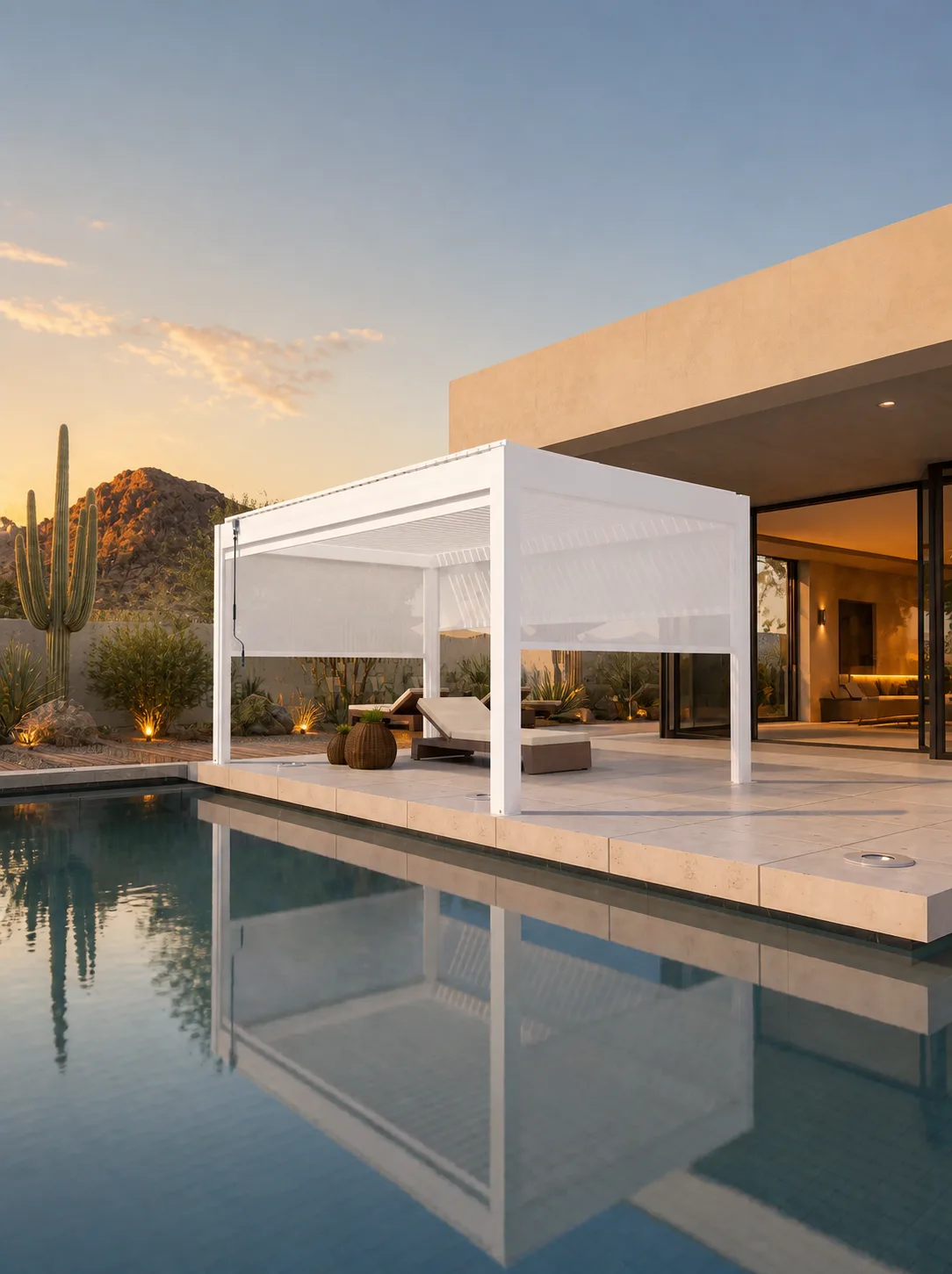
Yes—a motorized louvered pergola can be a practical choice for an Arizona backyard because it lets you adjust overhead shade as the sun moves, then open the roof when you want more sky or ventilation. The structure alone, however, does not guarantee a comfortable patio. Orientation, afternoon sun, reflected heat, airflow, drainage, anchoring, controls, and the surrounding landscape all affect the result.
For a high-end outdoor space in Phoenix, Scottsdale, Tucson, or another hot, dry U.S. climate, the best plan begins with how the patio will be used. A breakfast area needs different shade than a west-facing lounge used at 5 p.m. A poolside retreat has different circulation and drainage needs than a pergola attached near the kitchen. Start with those realities before choosing size or accessories.
Why Adjustable Louvers Make Sense in a Sunny Climate
A fixed solid roof provides dependable overhead coverage, but it can also make an adjacent room feel darker. An open pergola preserves daylight but may provide limited relief when the sun is nearly overhead. Motorized louvers offer a middle path: they can be positioned to manage direct sun while preserving some light and air, then opened when conditions are pleasant.
The useful louver position changes by season and time of day. In summer, stronger overhead shade may matter most during midday. In cooler months, opening the roof can welcome sunlight onto the patio. This flexibility is valuable, but it should be treated as one part of a complete climate strategy—not a substitute for good orientation or side protection.
Study Sun Direction Before Choosing the Layout
Arizona homeowners often focus on roof area, yet low-angle east and west sun can reach beneath any overhead structure. A west-facing patio may be comfortable at noon and still receive intense late-afternoon sun from the side. Before finalizing the pergola, observe the proposed location in the morning, at midday, and in late afternoon.
A designer can use a site plan or sun study to determine how the louver direction, structure orientation, nearby walls, trees, and optional side screening work together. The goal is not simply to create the largest possible shaded rectangle. It is to put shade where seating and circulation need it during the hours the family actually uses the space.
Questions for a site-specific shade plan
- Which direction does the patio face?
- When is the space used most often?
- Do the house or neighboring structures already block part of the sun?
- Will low-angle sun enter from an exposed side?
- Could landscaping add shade without restricting needed airflow?
- Will the pergola affect daylight inside adjacent rooms?
Compare Three Overhead-Shade Options
| Shade approach | Main advantage | Main tradeoff |
|---|---|---|
| Motorized louvered pergola | Adjustable balance of shade, daylight, and openness | Requires power, controls, drainage planning, and maintenance |
| Fixed solid patio roof | Consistent overhead coverage | Less flexibility and potentially less adjacent daylight |
| Open-beam pergola | Architectural definition with an airy feel | Shade changes significantly with sun angle |
No option is universally best. The correct choice depends on how much adjustability matters, the home’s architecture, the desired daylight, the project budget, and what the selected model is documented to do.
Plan for Heat Beyond the Roof
Overhead shade can reduce direct solar exposure on people and furnishings, but surrounding surfaces still influence comfort. Dark paving, masonry walls, and large unshaded glass areas can absorb and reradiate heat. A coordinated material palette can help the covered space feel calmer and more usable.
Consider lighter-colored paving where appropriate, breathable furniture fabrics, and planting suited to the local site. Place seating so air can move through the pergola instead of enclosing every side. Ceiling fans or other electrical accessories may be options for some designs, but only when specifically supported by the product documentation and installed by qualified professionals.
Do not assume a pergola will make an Arizona patio feel like an air-conditioned room. A more realistic goal is to create adjustable shade, protect the activity zone from direct overhead sun, and support airflow. Clear expectations lead to a better design.
Freestanding or Attached?
A freestanding pergola can create a distinct poolside lounge, garden room, or destination away from the house. It gives the designer flexibility in orientation and may reduce conflicts with roof lines and doors. It also requires a suitable foundation, a safe circulation route, and a practical way to bring power to the structure.
An attached configuration can strengthen the connection between indoor and outdoor living, but the interface with the building requires careful detailing. Waterproofing, structural loads, drainage, door and window clearances, and access for maintenance all need coordination. Never assume that an exterior wall or fascia can accept the loads of a pergola without professional evaluation.
For either approach, model-specific engineering, anchoring documents, verified wind or other structural ratings, and local authority requirements control. A visual rendering or generic marketing claim is not a substitute for documentation applicable to the selected model and site.
Drainage Still Matters in the Desert
Dry climates still experience rain events, and concentrated roof runoff must go somewhere. If the selected louver system is designed to manage water when closed, confirm how water moves through its gutters, channels, and downspouts. Then coordinate discharge with the patio grading and broader landscape drainage plan.
Water should not be released where it can undermine footings, stain finished walls, cross a doorway, erode soil, or create a slippery walking path. The pergola’s drainage components also need to remain accessible for inspection and cleaning. Follow the exact product documentation; do not infer watertight performance from the appearance of closed louvers.
Electrical Controls Need an Early Plan
A motorized pergola requires a deliberate electrical and controls strategy. Before concrete or paving is finished, establish the route for power, the position of controls, and any supported sensors or lighting. Ask how the system will be operated, what happens during a power interruption, and what maintenance access is required.
Outdoor electrical work must be designed and completed by qualified local professionals in accordance with applicable requirements and the manufacturer’s instructions. Do not conceal junctions or control equipment in inaccessible locations. If multiple motorized zones are planned, make sure every user understands which control operates which section.
Arizona Pergola Buyer Checklist
- Map morning, midday, and late-afternoon sun at the intended location.
- Define the primary use: dining, lounging, poolside seating, or outdoor cooking.
- Confirm the exact product dimensions and required clearances.
- Review verified model-specific structural and anchoring documentation.
- Have foundations and building attachments evaluated for the site.
- Coordinate louver direction with the desired shade and daylight.
- Plan side-sun control without unnecessarily blocking airflow.
- Route drainage to a safe, approved discharge point.
- Complete power and controls planning before hardscape installation.
- Verify who handles delivery, assembly, electrical connection, and inspections.
- Document cleaning and maintenance access.
- Confirm permits and local requirements with the relevant authority.
What to Ask Before Requesting a Quote
A useful quote conversation needs more than a desired width and length. Prepare the project address or ZIP code, photos from several angles, approximate dimensions, the house-facing direction, preferred freestanding or attached configuration, primary use, surface and foundation information, and any desired screens, lighting, or controls.
Review the Meta Lifestyle shade structure collection to identify a design direction. Then ask for the exact model documentation relevant to your project. Do not rely on specifications from a different size or visually similar system.
Frequently Asked Questions
Will a louvered pergola completely block Arizona heat?
No. It can create adjustable overhead shade and reduce direct sun exposure in the covered zone, but air temperature, reflected heat, side sun, wind, paving, and landscaping still affect comfort.
Do I need side screens on a west-facing patio?
They may help with low afternoon sun, but their usefulness depends on orientation, screen material, wind exposure, view priorities, and product compatibility. A site-specific sun study is the best starting point.
Can the louvers stay closed during every storm?
Follow the selected model’s operating instructions and verified weather-related documentation. Never assume operating limits, wind performance, or rain protection without model-specific evidence.
Can a motorized pergola be installed beside a pool?
Potentially, provided the foundation, setbacks, electrical work, drainage, walking clearances, and local requirements are addressed. Pool environments require qualified professionals to coordinate electrical safety and construction details.
Does a white pergola stay cooler than a dark one?
Color can affect solar absorption, but perceived comfort depends on the full assembly and site. Choose finish based on verified product options, architecture, maintenance expectations, and the overall shade plan rather than color alone.
How should I verify wind or structural suitability?
Request documentation for the exact model, size, configuration, and anchoring condition, then have qualified local professionals and authorities determine whether it is suitable for the site. Do not transfer a rating from another configuration.
Create Shade Around the Way You Live
A motorized louvered pergola can be a strong addition to an Arizona backyard when its adjustability is paired with intelligent orientation, side-sun planning, drainage, electrical coordination, and verified structural details. The most luxurious result is not simply a dramatic structure; it is an outdoor room that responds naturally to the family’s daily routine.
Ready to discuss your project? Request a quote from Meta Lifestyle and include your location, site photos, approximate dimensions, preferred configuration, and intended use so the conversation can begin with useful context.