Pro Program Live Chat +8619050185756

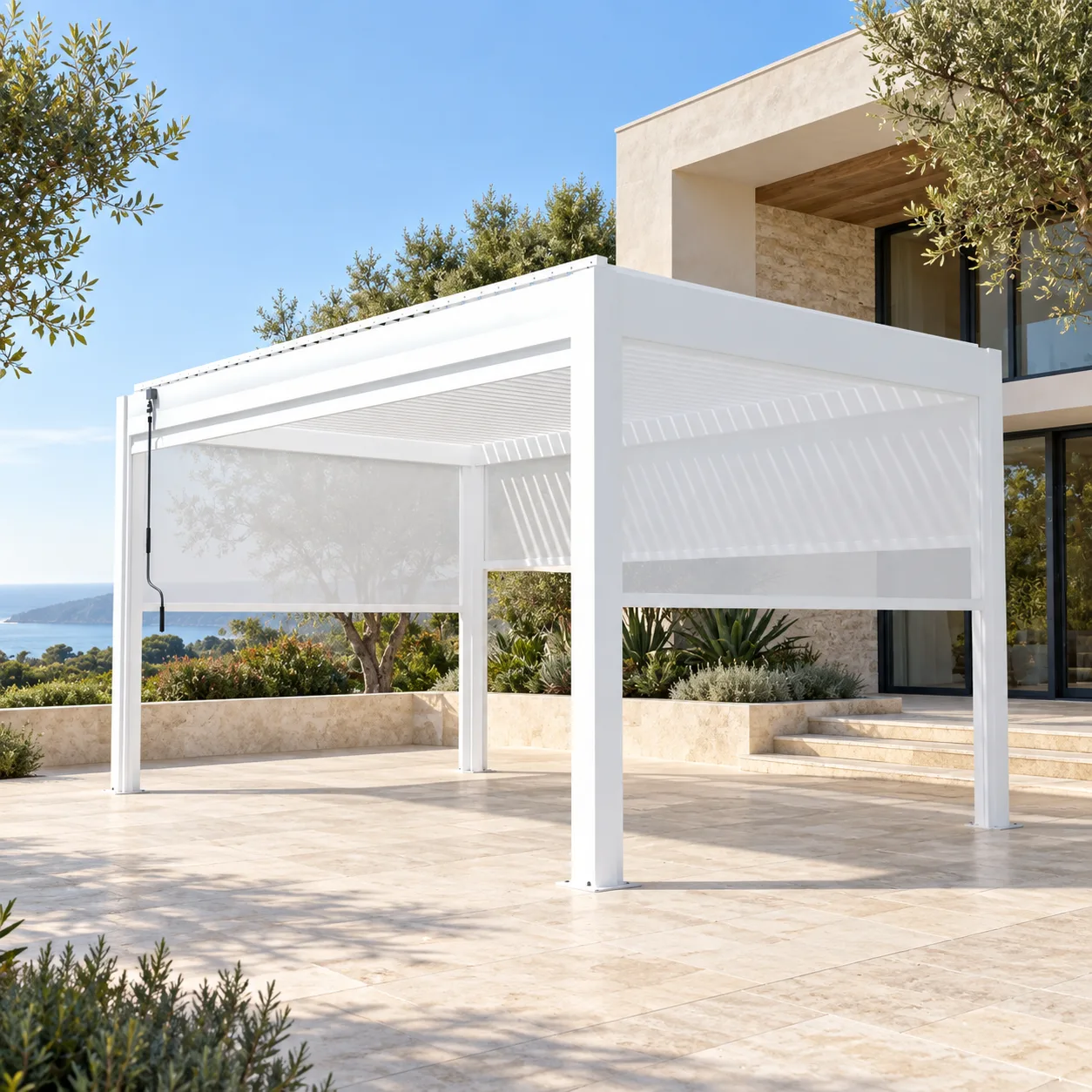
Clean retractable pergola screens gently, keep their guides and openings free of debris, allow the material to dry before long-term retraction, and stop operating the system if it binds, wrinkles, or moves unevenly. Always follow the instructions for the exact screen model because mesh, fabric, motors, guides, fasteners, and finishes differ. A soft rinse and mild approved cleaner are usually safer than pressure washing or aggressive chemicals, but the manufacturer documentation controls.
Retractable side screens can help manage sun, glare, wind, insects, or privacy in supported conditions. They are also moving systems exposed to dust, pollen, irrigation spray, salt air, leaves, and changing weather. A short maintenance routine protects appearance and helps homeowners notice small issues before they become expensive repairs.
Know What Type of Screen You Have
Before cleaning, identify the screen material, guide style, bottom bar, motor or manual mechanism, and manufacturer-approved products. Woven solar fabric is not maintained exactly like clear weather material, insect mesh, or decorative fabric. Similar-looking materials may use different coatings and react differently to cleaners.
Keep the installation manual, model information, control guide, and service contact with the home’s records. If the screen was supplied with the pergola, confirm whether the screens and roof share controls or sensors. Never assume a cleaning method from a generic video applies to your system.
Use the Least Aggressive Cleaning Method
Begin with dry debris removal. With the screen positioned and the system turned off or isolated as directed, use a soft brush or gentle vacuum attachment only if approved. Remove loose dust, cobwebs, pollen, and leaves without pulling the material or pushing it out of its guides.
For washing, test an approved solution in an inconspicuous area. Use clean water, a soft cloth or sponge, and only the mild cleaner recommended for the material. Work gently and rinse away residue. Avoid abrasive pads, solvents, bleach, strong degreasers, and unverified stain removers.
Pressure washers can force water into housings, damage coatings, stretch mesh, or dislodge material from guides. Do not direct a strong hose stream into motors, control boxes, electrical entries, seams, or the top cassette.
A Safe Cleaning Sequence
- Read the exact maintenance and safety instructions.
- Choose a calm, mild day without strong wind.
- Remove furniture and protect adjacent finishes as directed.
- Inspect the screen, guides, bottom bar, housing, and controls.
- Remove loose debris with an approved soft method.
- Test the approved cleaning solution on a hidden area.
- Clean without stretching or aggressive scrubbing.
- Rinse gently and allow the material to dry as instructed.
- Clear accessible guide areas and nearby drainage openings.
- Run an approved test cycle while watching for uneven movement.
If the screen is damaged, jammed, off-track, or moving unevenly during the first inspection, stop. Cleaning should not become an attempt to realign or repair a powered assembly.
Routine Care Versus Professional Service
| Condition | Appropriate action | Avoid |
|---|---|---|
| Loose dust or pollen | Gentle model-approved cleaning | Abrasive scrubbing |
| Leaves near guides | Remove accessible debris as directed | Sharp tools inside the mechanism |
| Minor surface spot | Test an approved mild solution | Solvents or bleach |
| Wrinkled or uneven screen | Stop and contact qualified service | Pulling the material by hand |
| Grinding or hesitation | Stop and arrange inspection | Repeated motor cycling |
| Damaged control or cable | Keep it off and use qualified service | Opening electrical components |
Keep Tracks and Guides Clear
Side guides help the screen travel consistently. Sand, small stones, leaves, insects, or plant material can interfere with movement. Inspect accessible areas and remove debris only by the approved method. Do not lubricate guides unless the manufacturer specifies a product and procedure; the wrong lubricant can attract dirt, stain fabric, or affect components.
Keep plants, furniture, planters, grills, toys, and decorative objects outside the bottom bar’s travel. A descending screen that meets an obstruction can wrinkle, bind, or trigger a safety response if the system provides one.
Do not use a screen as support for lights, signs, vines, towels, or decorations. Added weight can distort the material and interfere with movement.
Dry the Material Before Extended Storage
If the screen becomes wet from cleaning, rain, irrigation, or condensation, follow the product instructions for drying and retraction. Storing damp material tightly in a housing for a long period may encourage staining, odor, or biological growth depending on the material and climate.
Avoid cleaning immediately before closing a seasonal home unless there is enough time for proper drying and an operational check. In humid or coastal locations, inspection may need to be more frequent. Address salt residue and irrigation minerals only with approved methods.
Operate Screens With Weather Awareness
Retractable screens are not automatically storm shutters, guards, or structural walls. Their permitted use in wind, rain, freezing conditions, or other weather depends on verified model-specific documentation. Never infer a wind rating or weather protection level from appearance.
Follow the manufacturer’s operating and retraction guidance. If a sensor is installed, understand its function and limitations; a sensor does not eliminate the owner’s responsibility to follow instructions. During severe weather, prioritize safety rather than attempting an improvised adjustment.
Inspect Motors and Controls Without Opening Them
Homeowners can observe how a powered screen starts, travels, stops, and aligns. They should not open motor housings, alter limits, bypass controls, or repair electrical components without authorization and qualification. If movement changes, document the symptoms and stop unnecessary cycling.
Look for visible damage to controls, cables, fasteners, seals, and power entries. Outdoor electrical equipment must be installed and serviced by qualified local professionals under applicable requirements and manufacturer documentation. If water intrusion or electrical damage is suspected, keep the system off and arrange professional inspection.
Coordinate Screen and Pergola Care
Screen care belongs in the broader pergola schedule. Debris around the roof, gutters, drainage paths, posts, and screen housings can interact. Clean only what is safely accessible; roof, structural, anchoring, motor, drainage, and electrical work may require qualified service.
When washing paving or frames, do not spray screen housings or electrical areas indiscriminately. Protect screens from stone sealer, paint, pool chemicals, fertilizers, and pest-control overspray.
Seasonal Screen-Care Checklist
- Confirm the model and approved cleaning products.
- Inspect mesh for tears, stretching, stains, and edge wear.
- Check accessible guides for leaves, insects, and grit.
- Keep furniture and plants outside the travel path.
- Test controls and watch for smooth, even movement.
- Listen for new grinding, clicking, or hesitation.
- Allow wet material to dry as directed.
- Review guidance before windy, freezing, or severe weather.
- Inspect nearby drainage around posts and controls.
- Schedule qualified service for alignment, motor, or damaged-part concerns.
Frequently Asked Questions
How often should pergola screens be cleaned?
Frequency depends on material, climate, pollen, dust, salt, irrigation, and use. Inspect regularly and follow the manufacturer’s schedule. Gentle cleaning when buildup first appears is easier than aggressive cleaning later.
Can I use dish soap?
Only if the manufacturer approves that type and concentration. Some soaps leave residue or affect coatings. Test an approved solution in a hidden area first.
Can I pressure-wash the screens?
Do not pressure-wash unless the exact instructions explicitly permit it. High-pressure water can stretch material, dislodge edges, or enter housings and electrical components.
What if the screen comes out of its guide?
Stop operating it and contact qualified service. Pulling, forcing, or repeatedly cycling it may increase damage or affect alignment.
Should screens be retracted when unused?
Follow the verified instructions for the specific product and weather. The correct position may depend on wind, moisture, temperature, and screen design.
Can screens keep all rain and insects out?
Do not assume complete enclosure or weather sealing. Performance depends on material, guides, gaps, installation, and model documentation. Request verified information for the exact configuration.
Request a Pergola Quote With Screen Options
Ask for exact information about screen material, guide design, controls, cleaning, replacement parts, service access, and documented weather-use limits. Review the META LIFESTYLE shade structure collection, then confirm which screen options are supported for the selected pergola.
Use the META LIFESTYLE contact page to discuss your project. Both numbers below are official META LIFESTYLE WhatsApp contacts: