Pro Program Live Chat +8619050185756

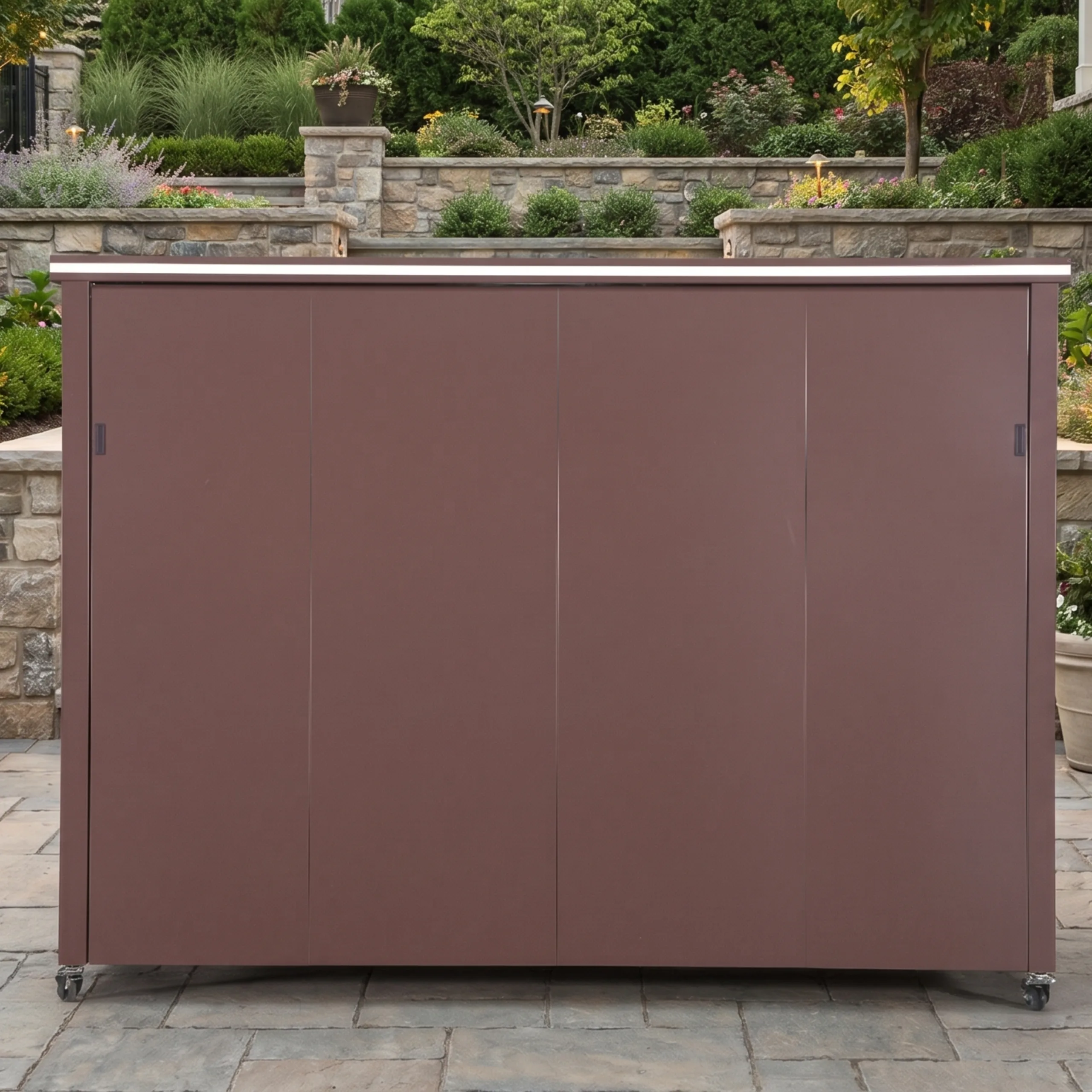
An enclosed outdoor kitchen should generally be secured when it is not in use only after all cooking equipment is off and cool, cleaning is complete, moisture has been addressed, and every appliance’s ventilation and shutdown requirements are satisfied. Closing shutters or panels too soon can trap heat, smoke, grease odors, or humidity. Leaving the kitchen open indefinitely can expose surfaces and equipment to debris, animals, irrigation, and unauthorized use.
The correct procedure depends on the exact kitchen, grill, refrigerator, utilities, shutters, roof, and climate. Follow model-specific documentation. Gas, electricity, plumbing, fire safety, ventilation, permits, and weather preparation should be handled with qualified local professionals where required.
Wait Until Cooking Equipment Is Fully Off and Cool
Turn off the grill and other cooking equipment using the manufacturer’s documented procedure. Confirm burners, ignition features, rotisserie motors, lights, and powered accessories are off. Never close a panel against a hot grill or assume that a closed lid means the entire appliance is cool.
Cooling time varies with equipment, temperature, wind, and use. Follow the exact appliance instructions rather than a universal timer. Keep children and guests away from the area during cooldown, and do not use water or an unapproved method to accelerate cooling.
Clean Before Securing the Kitchen
Remove food, grease, spills, crumbs, and combustible waste according to appliance and surface-care instructions. Empty trash and bring perishable food indoors unless stored in properly operating equipment intended for the environment. Clean counters and tools with approved products.
Do not use abrasive pads, harsh chemicals, or pressure washing unless documentation specifically allows them. Water forced into joints, controls, appliances, electrical components, or cabinet cavities can create damage that is not immediately visible.
Check the cooking zone
Confirm grease trays and collection areas are handled according to grill instructions. Keep ventilation openings clear. Do not store paper goods, cleaners, fuel containers, or other inappropriate materials near hot or fuel-burning equipment.
Control Moisture Before Closing Panels
After rain, cleaning, pool splash, irrigation, or humid weather, inspect counters, cabinet interiors, floors, appliance edges, and panel tracks. Remove standing water and allow approved surfaces to dry as appropriate. Closing a wet space can encourage odors, staining, corrosion, or biological growth.
Moisture may also enter from roof runoff, patio drainage, plumbing leaks, or condensation. If dampness repeatedly appears, identify the source instead of treating it as normal. Keep roof drains, gutters, weep paths, and floor drainage unobstructed.
Do Not Block Required Appliance Ventilation
Refrigerators, ice makers, grills, and other equipment may require airflow even when not actively used. A kitchen panel system does not automatically override those instructions. Review every appliance’s ventilation, clearance, temperature, and enclosure requirements.
If an appliance remains powered while the kitchen is closed, verify that the exact configuration supports that condition. Do not cover vents or pack storage around equipment. Qualified professionals should resolve conflicts between cabinetry, shutters, appliances, utilities, and ventilation.
Compare Short-Term and Longer-Term Shutdown
| Situation | Primary checks | Common mistake |
|---|---|---|
| After a normal meal | Equipment off and cool, grease and food removed, surfaces dry | Closing while heat remains |
| Overnight | Security, weather exposure, ventilation, powered appliances | Leaving food or waste outside |
| Vacation | Utilities, refrigeration contents, weather, inspection plan | Using one generic shutdown for every appliance |
| Freezing season | Water systems, drains, appliances, manufacturer instructions | Assuming closed panels prevent freezing |
| Severe weather forecast | Documented panel, shutter, utility, and accessory procedures | Improvising tie-downs or structural modifications |
Decide What Remains Powered
A refrigerator or control system may operate differently from cooking equipment. Create a written shutdown list that identifies which devices remain on, which turn off, and who verifies them. Use labels that match the electrical panel and equipment schedule.
A licensed electrician must determine circuits, disconnects, protection, grounding or bonding, environmental suitability, and service arrangements. Do not repeatedly disconnect equipment in a manner the manufacturer does not permit, and never use extension cords as permanent wiring.
Handle Gas and Fuel Safely
Follow the exact grill and fuel-system shutdown instructions. Qualified gas professionals should design, install, test, and service fixed connections, valves, regulators, and related components. Keep shutoffs accessible; do not conceal them behind stored items or locked panels without approved access.
Never use a closed kitchen as storage for fuel cylinders, gasoline, solvents, or other hazardous materials unless verified documentation and local requirements specifically allow a storage arrangement. If gas odor is suspected, do not operate switches or equipment; leave the area and follow the utility or emergency guidance appropriate to the location.
Secure Shutters Without Forcing Them
Inspect panel and shutter tracks for utensils, cords, towels, leaves, gravel, toys, or furniture. Move obstacles before operating the system. Use handles, latches, locks, and controls as documented. A panel that resists movement may be misaligned or obstructed; forcing it can damage hardware or create an injury risk.
Keep fingers and loose items away from moving parts. Do not drill, add locks, modify tracks, or attach weather coverings without approval for the exact product. Changes can interfere with drainage, ventilation, structure, operation, or finish.
Prepare for Seasonal or Extended Nonuse
For an extended absence, review every appliance and utility separately. Remove food, clean thoroughly, manage refrigeration according to manufacturer instructions, check pests, address plumbing and drains, and secure accessories. In freezing climates, qualified local professionals should implement the appropriate winterization for the exact system.
A closed exterior cabinet is not the same as a conditioned indoor space. It may experience heat, cold, condensation, and humidity. Do not assume enclosure panels create a specific weather rating, temperature range, structural rating, or water-tight interior unless verified documentation says so.
Severe Weather Requires Model-Specific Guidance
Before high wind, hail, heavy rain, snow, wildfire conditions, or other severe weather, follow the documented procedure for shutters, roof elements, accessories, utilities, and movable equipment. Remove or secure loose patio objects that could strike the kitchen.
Never claim that closed panels make the kitchen stormproof. Wind and snow considerations, foundations, anchoring, structural capacity, and local requirements must be based on the exact model and professional site-specific evaluation.
Routine Closing Checklist
- Turn off cooking equipment using exact manufacturer instructions.
- Confirm burners, ignition, lights, motors, and accessories are off.
- Wait until all hot surfaces have cooled as documented.
- Remove food, waste, crumbs, and grease.
- Clean counters and appliances with approved products.
- Dry wet surfaces and check for leaks or blocked drainage.
- Keep required appliance vents and service areas unobstructed.
- Verify which equipment remains powered.
- Follow the documented gas or fuel shutdown procedure.
- Clear panel and shutter tracks.
- Operate latches, locks, and controls without forcing them.
- Store the checklist and equipment manuals where users can find them.
Create a Simple Owner Handover
Ask the installer or supplier to demonstrate normal opening, closing, cleaning, shutdown, and restart procedures. Identify all utility shutoffs, electrical circuits, drains, filters, grease-management points, locks, remotes, keys, and service panels. Record exact model information.
Keep photographs and a maintenance log. If multiple family members, tenants, or property staff use the kitchen, provide the same instructions to everyone. Do not invent a shortcut for occasional users.
Frequently Asked Questions
Can I close the kitchen immediately after grilling?
No universal time applies. Turn equipment off and wait until the exact appliance is cool according to its instructions before closing nearby panels.
Should an outdoor refrigerator stay on when the kitchen is closed?
That depends on the appliance and enclosure ventilation, temperature range, power, and manufacturer instructions. Confirm the exact configuration rather than assuming.
Are closed panels waterproof?
Do not assume they create a watertight or conditioned interior. Use only verified product documentation to understand weather protection, drainage, and operating limits.
Should shutters be closed during high winds?
Follow the exact product procedure and site-specific professional guidance. Do not invent a position or wind limit, and remove loose surrounding objects.
Can cleaning supplies stay inside?
Store only materials permitted by the product and appliance documentation, away from heat, food, children, and incompatible chemicals. Avoid cluttering ventilation and service zones.
What if condensation appears inside?
Dry the area and investigate ventilation, weather, drainage, leaks, and operating conditions. Persistent moisture should be evaluated rather than ignored.
Request a META LIFESTYLE Outdoor Kitchen Quote
Explore the META LIFESTYLE outdoor kitchen collection. Gather site photographs, measurements, intended appliances, utility information, climate concerns, and preferred security features, then use the contact page to request a quote and model-specific operating information.
Both numbers below are official META LIFESTYLE WhatsApp contacts: