Pro Program Live Chat +8619050185756

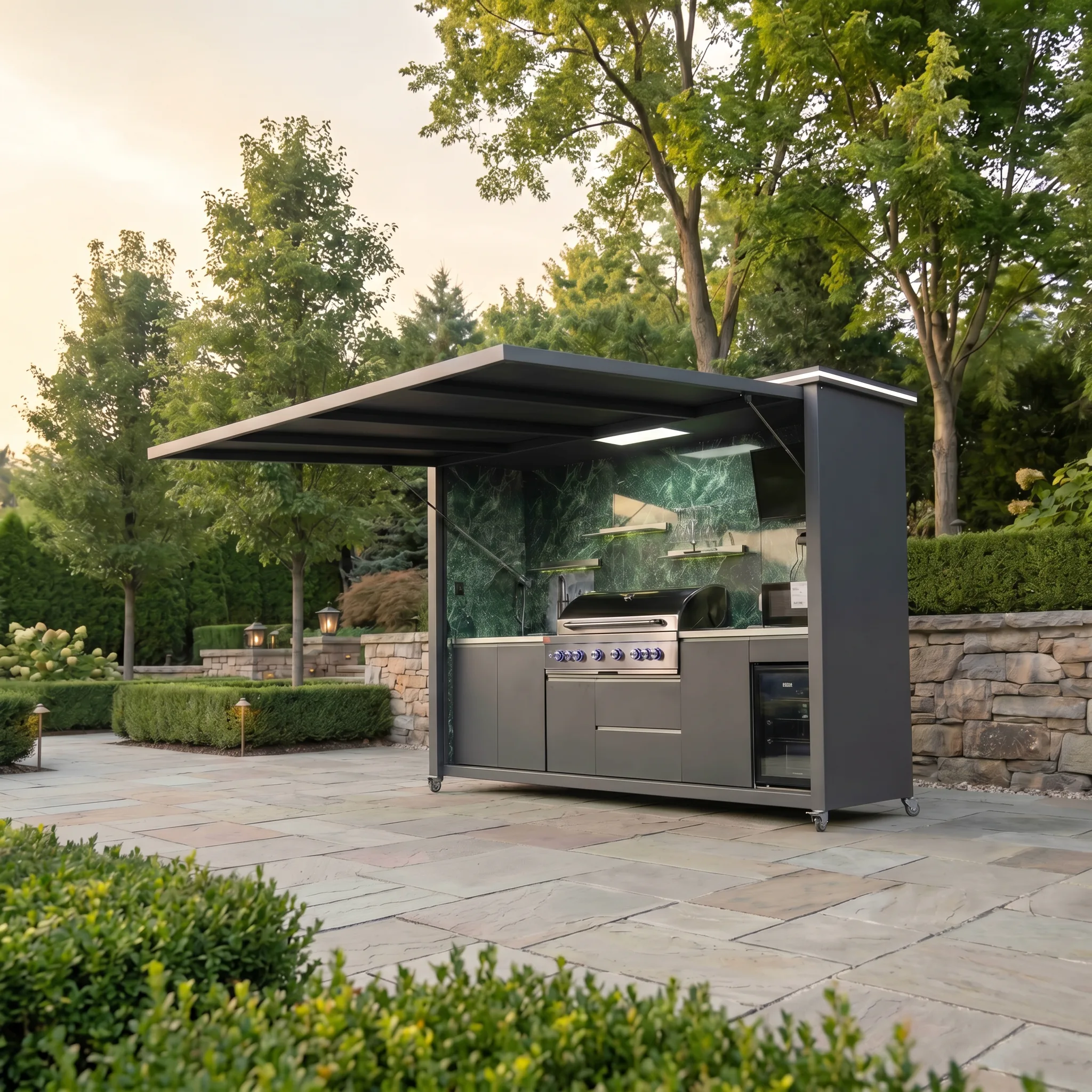
The best winter storage location for a rolling outdoor kitchen is a dry, level, ventilated space that protects the unit from standing water, falling ice, heavy drifting snow, and accidental impact. A garage, detached outbuilding, or well-designed covered patio may work, but the right choice depends on the product documentation, local climate, fuel and electrical connections, appliance requirements, and whether the route can safely support the unit. Mobility does not mean a fully equipped kitchen can simply be rolled anywhere without preparation.
For U.S. homeowners, the safest approach is to plan winter storage before the first freeze. Confirm what can remain outdoors, disconnect or winterize utilities through qualified professionals, clean and dry every compartment, and move the kitchen only on a stable route. META LIFESTYLE buyers should also keep model-specific instructions available so installers and service professionals can make decisions based on the actual configuration rather than general assumptions.
Start With the Product Documentation
A rolling outdoor kitchen may combine cabinetry, a grill, refrigeration, lighting, water fixtures, electrical components, or other appliances. Each component can have different winterization and storage requirements. The cabinet enclosure may tolerate outdoor exposure while a water line or appliance needs additional protection. Never assume that wheels make every connection temporary or that a roof eliminates freeze risk.
Review the manuals for the kitchen and every installed appliance. Look for instructions covering temperature limits, drainage, ventilation, shutdown, fuel supply, cleaning, covers, and long-term storage. If the information is not available, request the relevant documentation before moving or shutting down the system.
Compare Common Winter Storage Locations
Garage or Detached Outbuilding
An enclosed garage or outbuilding offers strong protection from precipitation and falling debris. It can also make cleaning and inspection easier. However, an enclosed space is not automatically appropriate for every configuration. Fuel cylinders, residual fuel, combustion appliances, and ventilation requirements need special attention. Follow product instructions and local fire-safety rules, and consult qualified professionals about fuel disconnection and storage. Never operate a grill or other outdoor-rated combustion appliance inside a garage.
Covered Patio or Pergola
A covered outdoor area can be convenient because the kitchen may not need to travel far. It should still have positive drainage, adequate ventilation, a stable floor, and protection from wind-driven rain or snow. Roof runoff should not discharge onto the unit, and the location should not sit directly below an area where icicles or heavy snow can fall. Verify structural clearances and appliance requirements for the exact model.
Purpose-Built Outdoor Storage Bay
A storage bay designed into an outdoor-living plan can provide both access and weather protection. The opening needs enough width and height for the complete kitchen, including the roof or canopy, handles, doors, and any projection. The floor should be level and capable of supporting the loaded unit. Provide ventilation and a way to inspect the kitchen rather than sealing it into a damp cavity.
Leaving the Kitchen in Its Operating Position
In a mild climate, or when the manufacturer permits year-round outdoor exposure, the kitchen may remain in place. That does not eliminate seasonal maintenance. Water systems may still need winterization, refrigerators may have minimum operating-temperature limits, and wind, debris, salt air, or freeze-thaw cycles can affect the installation. Use a compatible cover only if the manufacturer recommends one, and avoid trapping moisture against finishes or appliances.
Choose the Location With a Practical Checklist
- Dryness: The floor drains away from the kitchen and does not collect meltwater.
- Ventilation: Air can circulate, and required appliance vents remain unobstructed.
- Level support: The surface is firm, level, and suitable for the kitchen’s actual loaded weight.
- Weather protection: The unit is away from roof runoff, falling branches, plowed snow, and ice shedding.
- Clearance: The storage space accommodates the full product without squeezing, scraping, or forcing components.
- Access: Doors and service panels can be opened for inspection and maintenance.
- Security: Wheels can be locked or the unit can be secured in the manner approved for the model.
- Safety: Fuel, electrical, plumbing, and fire-safety requirements are satisfied.
Plan the Moving Route Before Disconnecting Anything
Measure the entire route from the operating position to the storage location. Check gates, door openings, roof overhangs, steps, slopes, paver joints, deck transitions, drainage channels, and tight turns. Measure the product at its widest and tallest fixed points rather than relying only on cabinet dimensions. Allow room for people to guide the unit without putting hands or feet beneath it.
Small casters are useful on smooth, level surfaces but may catch in joints or sink into soft ground. Do not improvise ramps or attempt to control a heavy kitchen on a slope. If the route includes steps, steep grades, unstable pavers, or a threshold the casters cannot cross, use qualified movers or installers with equipment suitable for the verified weight and geometry. Remove only components that the manufacturer’s instructions identify as removable.
Shut Down and Winterize Utilities Correctly
Gas or Propane
Turn off the fuel supply and arrange disconnection in accordance with the appliance instructions and applicable local requirements. Gas work should be handled by a qualified professional where required. Propane cylinders need approved storage and must not be placed in an unsuitable enclosed area. Do not cap, modify, or relocate a gas connection based on a generic online guide.
Water and Drainage
Any sink, faucet, filter, water heater, supply hose, trap, or drain can retain water. Freezing water can damage components even when the cabinet itself is weather resistant. A qualified plumber should winterize the specific system, using the manufacturer’s procedure and local plumbing requirements. Simply closing a valve may leave water in low points.
Electricity and Appliances
Switch off and disconnect power only as instructed for the installation. Hardwired equipment should be handled by a qualified electrician. Clean refrigerators, remove perishable contents, and follow the appliance manual for seasonal shutdown. Some appliances should be left slightly open after cleaning to prevent odors and trapped moisture, but the specific manual controls.
Clean, Dry, and Inspect Before Storage
Remove grease, food residue, leaves, and standing water before the kitchen is stored. Clean grill components using the appliance manufacturer’s method, empty waste containers, and wipe cabinet interiors. Let surfaces and compartments dry completely. Moisture sealed under a cover or behind closed doors can encourage odors, staining, or corrosion of components that were not designed to remain wet.
Inspect door seals, vents, wheels, wheel locks, fasteners, hoses, cords, and visible connections. Photograph the unit and note anything that needs service. This gives you a useful condition record and allows repairs to be scheduled before spring demand increases.
Should You Use a Winter Cover?
A cover can reduce exposure to dust and windblown debris, but only when it fits the product and does not block required ventilation or trap moisture. Avoid generic plastic sheeting that rests against hot, sharp, or delicate surfaces. The best cover is one approved for the kitchen’s exact shape and material. Secure it according to instructions so it cannot flap against finishes or become a wind hazard.
Questions to Ask Before Buying a Rolling Outdoor Kitchen
Winter planning is easier when the answers are available before delivery. Ask the supplier for the overall dimensions, verified weight, caster and locking instructions, utility connection requirements, appliance manuals, acceptable storage temperatures, cover guidance, and the procedure for seasonal shutdown. Also confirm which parts are intended to be removed and whether moving the assembled kitchen affects installation or warranty requirements.
Explore META LIFESTYLE’s outdoor kitchen collection and use the documentation for the exact configuration when planning storage.
Frequently Asked Questions
Can I store a rolling outdoor kitchen in my garage?
Possibly, if the product and appliance instructions permit it and all fuel, ventilation, clearance, and local fire-safety requirements are satisfied. Never operate an outdoor grill in a garage. Have fuel connections handled correctly and confirm rules for propane-cylinder storage.
Does an outdoor kitchen need to be moved indoors for winter?
Not always. The answer depends on the model, appliances, utilities, climate, exposure, and manufacturer guidance. Even a kitchen that stays outside may require plumbing winterization, appliance shutdown, cleaning, drainage checks, and a compatible cover.
Can I roll the kitchen across grass or gravel?
Do not assume the casters are designed for soft or loose surfaces. They may sink, bind, or cause the unit to tip. Use a stable route and qualified moving equipment based on the kitchen’s verified weight and the manufacturer’s instructions.
Should I remove the refrigerator during winter?
Follow the refrigerator manufacturer’s storage and operating-temperature guidance. Some installations may require seasonal shutdown or removal, while others may remain in place. Clean and dry the appliance and have electrical work performed appropriately.
How early should I winterize the kitchen?
Complete the work before the first expected freeze and before snow or ice makes the moving route unsafe. Schedule plumbers, electricians, gas professionals, or installers early enough to follow the correct model-specific procedure.
Plan Your META LIFESTYLE Outdoor Kitchen
For product questions, configuration planning, or a quote, visit the META LIFESTYLE contact page. Both numbers below are official META LIFESTYLE WhatsApp contacts:
Share your project location, intended placement, access route, utilities, and preferred configuration so the discussion can focus on the documentation and planning details relevant to your installation.