Pro Program Live Chat +8619050185756

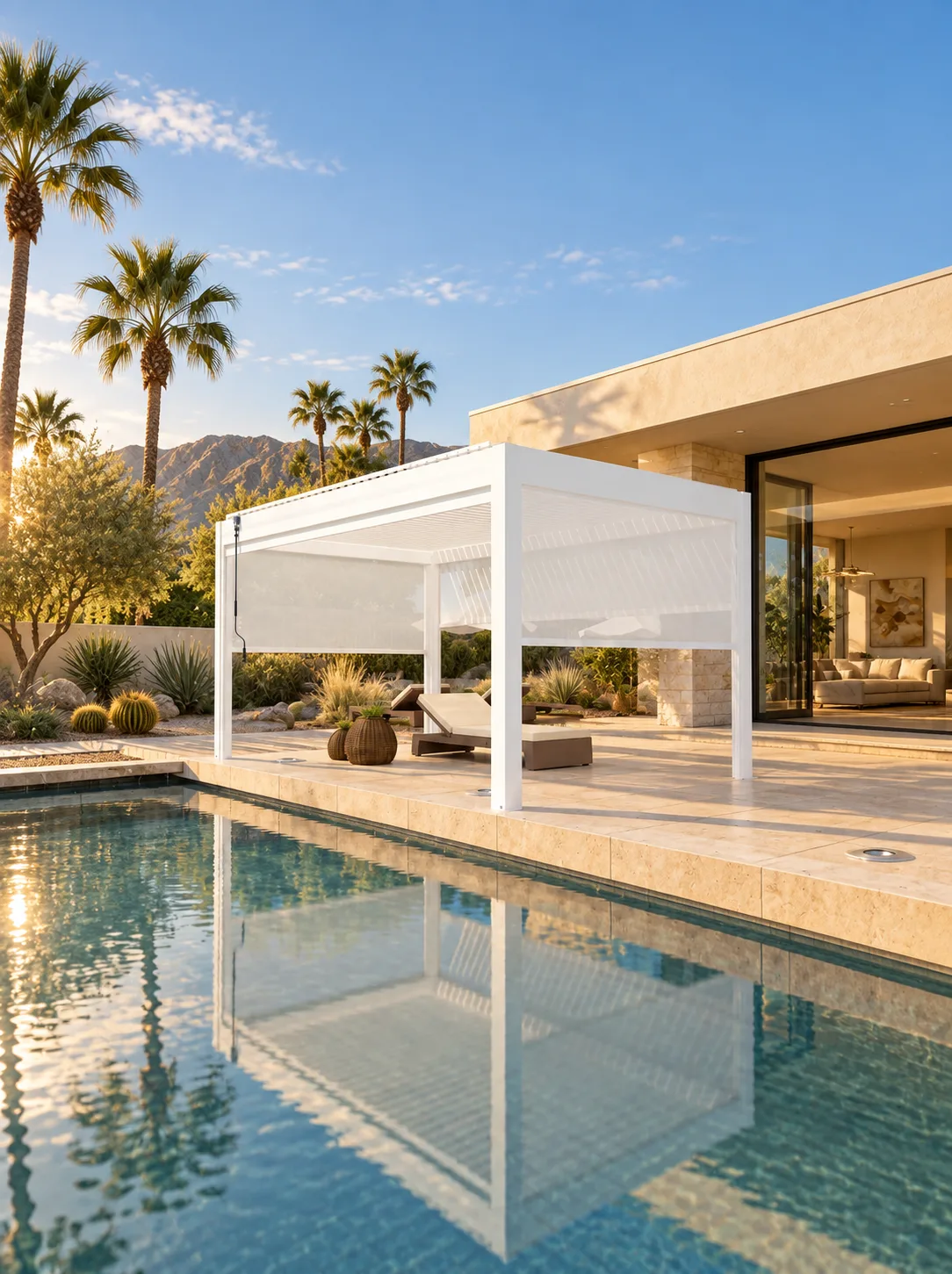
Choose a white aluminum pergola when you want a lighter, quieter visual presence; choose a dark finish when you want stronger architectural definition and contrast. Neither color is universally better. The right decision depends on the house exterior, patio materials, landscape, sun exposure, viewing angles, maintenance expectations, and the finish options documented for the exact pergola model.
For a high-end outdoor room, color should connect the pergola to the entire property rather than match one isolated item. Compare physical finish samples outdoors at different times of day, review the same perspective from inside the house, and confirm that the selected coating and color are available for the exact META LIFESTYLE configuration.
What a White Pergola Does Visually
A white or light-finished pergola tends to blend with pale stucco, limestone, light concrete, coastal palettes, and bright modern architecture. It can feel airy against blue sky and may keep a compact patio from looking visually crowded. On a property with white window frames, fascia, or trim, a light pergola can extend an existing design language.
White also creates clear contrast with green landscaping and dark glazing. However, it may stand out sharply against a dark home or wooded setting. Bright surfaces can reflect surrounding light, so consider what users will see from nearby seating and interior rooms.
What a Dark Pergola Does Visually
Charcoal, black, or other dark finishes can frame an outdoor room and echo modern window systems, dark roofing, metal railings, or contemporary exterior details. Dark posts may recede against deep shadows or tree cover, while the upper frame draws a crisp outline.
On a small or lightly furnished patio, a dark structure can feel more prominent. That may be desirable when the pergola is intended as an architectural focal point, but it can overwhelm delicate landscaping if the proportions and surroundings are not balanced.
Compare Color in the Real Site Light
Digital renderings are useful for composition, but screens do not reproduce finish color or sheen reliably. Ask for current physical samples and view them vertically and horizontally outdoors. Check morning sun, midday brightness, shade, dusk, and artificial lighting. A finish that appears neutral indoors may show warmer or cooler undertones outside.
Place samples beside wall paint, stone, decking, pavers, window frames, gutters, and outdoor kitchen cabinetry. Photograph them from the main interior sightline and from the yard entrance. The goal is not necessarily an exact match; intentional contrast can look more refined than several almost-matching shades.
White vs. Dark Pergola Comparison
- Architectural effect: White often feels light and integrated; dark colors often create a defined frame.
- Best companions: White commonly coordinates with pale masonry and coastal palettes; dark finishes often coordinate with black windows, dark metal, and modern contrast.
- Landscape relationship: White contrasts strongly with foliage; dark posts may recede in shaded or wooded backgrounds.
- Visible debris: Different dust, pollen, mineral deposits, and leaf residue can be more noticeable on different colors.
- Lighting effect: Light finishes reflect more ambient light visually, while dark frames can make integrated lighting appear more graphic.
- Visual weight: White may feel less imposing in a compact yard; dark finishes can strengthen the outdoor room’s boundary.
These are design tendencies, not performance specifications. Actual surface behavior, coating characteristics, care instructions, and available colors must come from the documentation for the selected product.
Think About Cleaning Visibility, Not Just Cleaning Frequency
All outdoor structures collect some combination of dust, pollen, rain marks, salt, leaves, insects, and irrigation residue. Color changes which residue is easiest to see. Pale pollen or mineral spots may be obvious on dark finishes, while darker soil streaks, plant stains, or insects may stand out on white.
Review the manufacturer’s cleaning instructions before selecting a finish. Avoid abrasive methods or unapproved chemicals. If the pergola is near sprinklers, adjust irrigation so water does not repeatedly wet the frame. In coastal, desert, wooded, or high-pollen settings, discuss the expected maintenance conditions without assuming that one color eliminates cleaning.
Coordinate the Louvers, Frame, and Accessories
Some pergola designs may offer one color throughout or coordinated colors for frame and louvers. Optional screens, lights, controls, gutters, and other visible components may have their own finish choices. Request a complete finish schedule so the decision reflects the entire assembly rather than a single frame sample.
If an outdoor kitchen, furniture, fans, heaters, or railings will share the space, decide whether the pergola should match them, bridge several colors, or deliberately contrast. Avoid specifying an exact match between products from different manufacturers without comparing current samples, because names such as charcoal, bronze, white, or black do not guarantee identical color or sheen.
Use the House as the Primary Reference
Start with permanent architectural elements: roofline, windows, exterior walls, doors, and masonry. Furniture cushions and accessories can change easily; the pergola and house will remain the strongest visual elements. A useful hierarchy is to select the pergola color from the house, then coordinate outdoor kitchen cabinetry and furniture around that decision.
For traditional homes, matching trim is one option, but not a rule. A dark pergola can provide a clean contemporary contrast if its proportions and details are restrained. For modern homes, white can soften an otherwise dark palette and connect to light stone or concrete.
Consider Views From Inside the Home
The pergola may be seen through large windows more often than it is viewed from the far end of the yard. Stand inside the kitchen, living room, and primary bedroom to judge whether posts interrupt important views. A darker post may visually merge with a dark window mullion; a white post may align with light interior trim. The opposite may be true depending on background and daylight.
Ask for a site-specific drawing showing post locations. Color cannot solve a poorly positioned structure, and final placement must also satisfy structural, anchoring, drainage, setback, and permit requirements.
Evaluate Sun and Surface Temperature Responsibly
Dark surfaces can absorb more solar energy than light surfaces under comparable conditions, but the temperature of a finished pergola depends on many variables, including coating, material, orientation, airflow, sun angle, and weather. Do not infer a safe touch temperature or product performance from color alone.
Ask for verified model-specific information when surface temperature is an important concern. Keep children and guests from relying on assumptions about sun-exposed metal, and follow manufacturer guidance for accessories and maintenance. Structural ratings, wind and snow requirements, foundations, anchoring, electricity, drainage, and permits are separate engineering and compliance issues that qualified local professionals and authorities must verify.
Color Selection Checklist
- Confirm which finishes are available for the exact model and accessories.
- View current physical samples outdoors in sun, shade, and evening light.
- Compare samples with walls, windows, roofing, stone, decking, and cabinetry.
- Review the pergola from major interior sightlines.
- Consider local dust, pollen, irrigation, salt, and leaf conditions.
- Review approved cleaning and care instructions.
- Check the complete finish schedule for louvers, screens, lights, and controls.
- Use site renderings for composition, but approve color from physical samples.
- Document the selected color name or code on the final order.
Frequently Asked Questions
Does a white pergola stay cooler than a black pergola?
Color can influence solar heat absorption, but actual surface temperature depends on the complete material, coating, exposure, airflow, and conditions. Request verified information for the exact model rather than assuming a fixed temperature difference.
Which pergola color shows dirt less?
It depends on the local residue. Pale dust and mineral deposits may show on dark finishes, while dark soil or plant marks may be visible on white. Regular manufacturer-approved cleaning matters more than a universal color rule.
Should the pergola match the window frames?
Matching windows can create continuity, but intentional contrast can also look sophisticated. Compare physical samples with the entire exterior palette and review the result from inside and outside.
Can the pergola frame and louvers be different colors?
That depends on the options for the exact product configuration. Ask for a complete finish schedule and confirm the final combination in the written order.
Will a dark pergola make a small patio feel smaller?
It may create more visual weight, but proportions, post placement, furniture, landscaping, and background have equal importance. A site-specific rendering can help compare the two approaches.
Review META LIFESTYLE Pergola Options
Explore META LIFESTYLE’s outdoor shade structures and request current finish information for the exact configuration.
Request a META LIFESTYLE Quote
For product and finish questions, visit the META LIFESTYLE contact page. Both numbers below are official META LIFESTYLE WhatsApp contacts: +8619050185756 and +1 (626) 735-5685. Share exterior photos, patio dimensions, and the colors already used on your home when requesting a quote.