Pro Program Live Chat +8619050185756

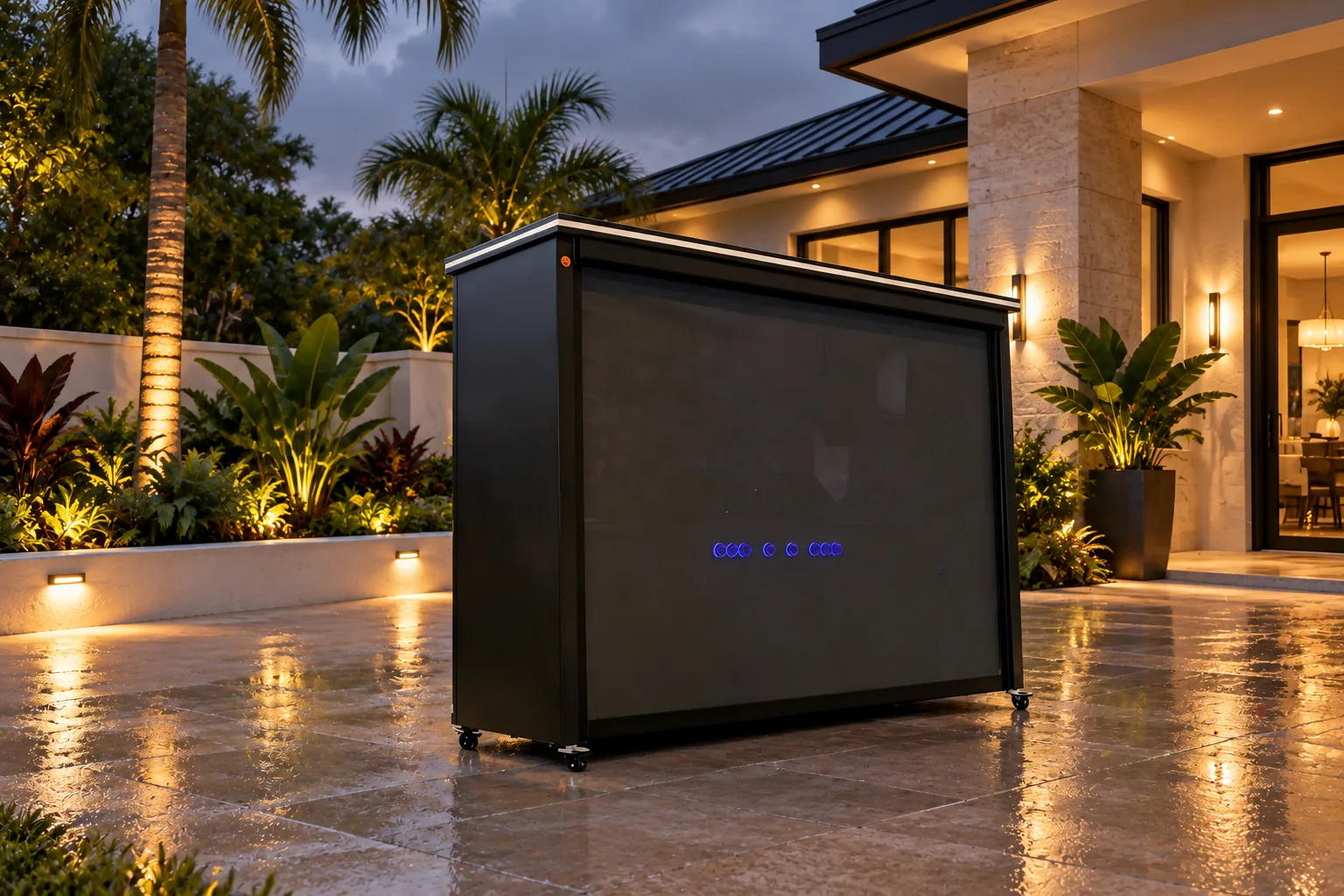
During a power outage, a motorized-shutter outdoor kitchen should remain in its current safe position until users follow the exact model’s documented power-loss procedure. Do not force the shutter, improvise power, or assume a manual release exists. Turn off heat-producing appliances as directed, protect food appropriately, and wait for qualified service if the shutter or controls cannot be operated safely.
The best protection is preparation before an outage. Request written instructions for shutdown, shutter position, manual operation if provided, restart, refrigeration, fuel, water, and electrical controls for the exact META LIFESTYLE configuration and every installed appliance.
Know Which Systems Depend on Electricity
A kitchen may include a shutter motor, grill ignition, refrigeration, lighting, television, outlets, pumps, controls, sensors, side burners, or other appliances. Some gas appliances still rely on electricity for ignition or controls. Make an equipment list and keep the manuals together.
Label the circuits and accessible disconnects through a qualified electrician. Owners should understand what stops immediately, what retains settings, and what requires a reset, without opening electrical panels or modifying equipment.
Do Not Force the Shutter
A motorized shutter can be damaged if users pull, pry, or push it without an approved manual procedure. Forcing it may affect the motor, tracks, bottom rail, locks, or enclosure. If the shutter stops partially open, keep people and objects away from its travel path.
Some systems may offer a documented manual release or emergency method, while others may not. Never invent one from a different product or online video. Use only the procedure and tools specified for the exact model.
Choose a Preferred Storm and Outage Position in Advance
Ask the manufacturer which shutter position is recommended for non-use, storms, and expected power loss. That position may depend on whether appliances are cool, utilities are off, and the area is clear. Closing a shutter around hot or operating equipment can create serious hazards.
Weather can interrupt power without warning, so establish a routine: finish cooking, shut down appliances, allow required cooling, clean the area, and close or position the shutter only as directed. Do not wait until wind or lightning makes the patio unsafe.
Power-Outage Planning Checklist
- List every powered kitchen and appliance component.
- Keep current manuals and model numbers accessible offline.
- Confirm the approved power-loss and restart procedures.
- Ask whether a manufacturer-provided manual operation exists.
- Label circuits and disconnects through a qualified electrician.
- Know the required cooling sequence before closing the shutter.
- Plan food safety for refrigerator and freezer contents.
- Protect utilities and drainage during storms or freezing weather.
- Keep the shutter travel area free of furniture and debris.
- Record supplier and qualified service contact information.
Shut Down Cooking Equipment Safely
If power fails during cooking, follow the grill and appliance instructions. Turn controls and fuel supplies off as directed, and do not assume flames or hot surfaces are inactive because lights and displays went dark. Keep the shutter open or positioned as required until equipment has cooled.
Gas work and fuel shutoff questions should be handled by qualified professionals where required. Do not disconnect, cap, or modify gas connections during an outage unless the exact approved procedure calls for trained action.
Protect Refrigerated Food
Keep refrigerator and freezer doors closed as much as possible. Follow current authoritative food-safety guidance for outage duration, appliance temperature, and whether food can be kept. Do not judge safety only by smell or appearance.
Ask the appliance manufacturer how the outdoor refrigerator restarts and whether it retains settings. Outdoor temperature does not provide a reliable substitute for controlled refrigeration, especially when weather changes.
Consider Water and Freezing Conditions
A sink, ice maker, filter, pump, water heater, supply line, trap, or drain may be affected by a prolonged winter outage. Follow the exact winterization documentation and have a qualified plumber handle site-specific work. Simply closing the shutter does not prevent water from freezing.
Keep drainage paths clear during heavy rain. A nonworking pump or control system may change how water is managed, so the site plan should not rely solely on powered drainage where failure could damage the kitchen or property.
Plan Electrical Protection Professionally
A qualified electrician should evaluate circuit protection, grounding, weather exposure, disconnects, and any appropriate surge-protection strategy for the complete installation. Power restoration can involve voltage conditions that affect sensitive controls, but product-specific requirements must guide the design.
Do not connect the kitchen to a portable generator, battery, or extension cord unless the exact equipment, transfer method, load, and installation are approved by manufacturers and qualified professionals. Backfeeding or improvised connections can be dangerous.
Backup Power Is a Design Decision
If uninterrupted refrigeration or shutter operation is important, discuss backup power before installation. The project team needs verified electrical loads, starting currents, control compatibility, outdoor equipment requirements, operating duration, fuel or battery location, ventilation, and transfer equipment.
A small consumer battery should not be assumed to operate motors or appliances safely. The electrician and equipment manufacturers must confirm compatibility. Backup power should never be used to keep cooking unattended during an outage.
Keep an Offline Emergency Card
Place a weather-protected instruction card in an approved accessible location outside the shutter travel path. Include the kitchen model, appliance models, circuit identification, authorized shutdown sequence, cooling reminder, service contacts, and where full manuals are stored.
Do not place passwords, sensitive account information, or unsafe technical shortcuts on the card. Review it whenever equipment changes.
Inspect Before Restarting
When power returns, do not immediately operate every component. Check for standing water, storm debris, damaged cords, unusual odors, displaced covers, blocked tracks, and visibly damaged equipment. Keep people away if electrical or fuel damage is suspected.
Use the documented restart sequence. Motors and controls may require inspection or reset by qualified service. Never cycle the shutter repeatedly if it binds, makes unusual noise, or stops unexpectedly.
Check the Shutter Travel Path
Leaves, branches, ice, furniture, covers, and windblown objects can obstruct the bottom rail or tracks during an outage. Remove debris only when conditions are safe and using approved methods. Do not stand beneath a partially supported moving component.
Follow cleaning and lubrication instructions for the exact shutter. Unapproved oils or tools can attract dirt or damage finishes and mechanisms.
Apartment, HOA, and Vacation-Home Planning
In a managed property, coordinate outage procedures with building or association rules and emergency systems. For a vacation home, identify who can inspect the site after a storm and what they are authorized to do. Do not ask an untrained person to handle fuel, electrical, or jammed shutter systems.
Remote controls and monitoring can be useful only when supported by the exact product and a reliable communication and power system. They do not replace physical inspection after severe weather.
Safety and Professional Requirements
Gas, electricity, plumbing, fire clearances, ventilation, roofs, foundations, anchoring, wind and snow design, drainage, backup power, and permits must follow model-specific documentation and qualified local professionals or authorities. Do not infer emergency features, battery backup, manual release, ratings, or certification from a photograph.
Review META LIFESTYLE’s outdoor kitchen collection and request power-loss documentation for the exact configuration.
Frequently Asked Questions
Can I manually lift the shutter when power is out?
Only if the exact product has a documented manual procedure and you follow it precisely. Never force or pry the shutter or use instructions from another model.
Should I close the shutter before a storm?
Follow the exact product and appliance instructions. Cooking equipment must be shut down and cooled as directed before enclosure, and owners should not remain outside when conditions are unsafe.
Will the shutter open automatically when power returns?
Do not assume it will. Use the documented restart procedure and inspect the travel path. Contact qualified service if controls show faults or the shutter behaves unusually.
Can a generator power the outdoor kitchen?
Only through a professionally designed, manufacturer-compatible electrical system with verified loads and approved transfer equipment. Never use an improvised connection or backfeed a circuit.
What should I do with food in the outdoor refrigerator?
Keep the door closed and follow current authoritative food-safety guidance based on temperature and outage duration. When in doubt, discard food rather than relying on appearance or odor.
Request a META LIFESTYLE Quote
For product and control information, visit the META LIFESTYLE contact page. Both numbers below are official META LIFESTYLE WhatsApp contacts: +8619050185756 and +1 (626) 735-5685. Ask for the exact configuration’s shutdown, shutter, electrical, and restart documentation when requesting a quote.