Pro Program Live Chat +8619050185756

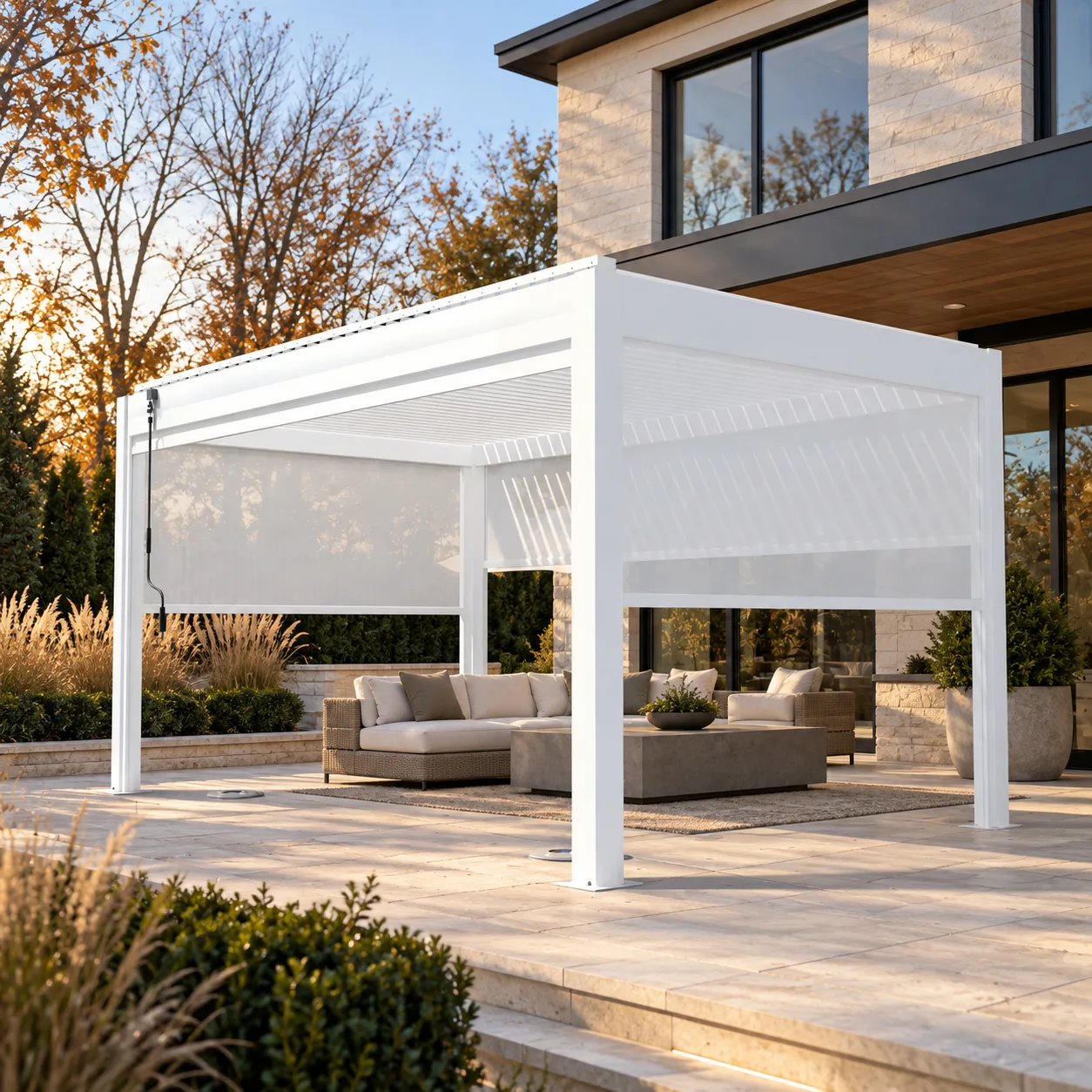
Outdoor heaters may be used under some motorized pergolas only when the exact heater type, location, mounting method, clearances, ventilation, utilities, and pergola configuration are approved together. Never attach a heater to a louver, gutter, screen housing, decorative cover, or unverified beam. Do not assume opening the louvers automatically makes any heater safe.
Heat affects people, furniture, fabrics, wiring, motors, coatings, screens, and nearby walls. Begin with model-specific META LIFESTYLE documentation and the heater manufacturer’s instructions, then have qualified local professionals verify structure, gas or electricity, fire safety, ventilation, and permits.
Choose the Heat Source Before Finalizing the Pergola
Electric radiant, gas-fired, freestanding, and other outdoor heaters have different installation and operating requirements. Some need fixed mounting and dedicated circuits; others require fuel supply, combustion air, exhaust considerations, or separation from combustibles.
Selecting the general heater category early lets the pergola supplier and project team coordinate support, wiring, clearances, controls, and furniture. Do not buy a heater solely by advertised coverage because real comfort depends on site exposure, mounting, weather, and permitted operation.
Confirm the Pergola Accepts the Heater
Ask whether the exact pergola model and size has an approved heater provision. Request drawings showing allowable mounting locations and accessory loads. The approved location may require a dedicated fixed beam, bracket, or structural plate.
An attachment that fits visually may still interfere with louvers, drainage, screens, lighting, motors, or structural performance. Never drill the frame or route utilities without written guidance for the exact configuration.
Map the Full Heat-Clearance Envelope
Heater instructions specify required separation from ceilings, walls, combustible materials, furniture, people, and other equipment. Draw that entire zone in plan and elevation. Include louvers in every permitted position, side screens raised and lowered, and furniture at its closest realistic location.
Clearance must remain valid when cushions shift, umbrellas open, décor is added, or a screen moves. Do not use a heat shield unless it is approved for the exact heater and installation.
Outdoor Heater Planning Checklist
- Select the intended heater type and exact model.
- Confirm the pergola permits that heater and mounting method.
- Obtain approved accessory-load and attachment details.
- Draw all required heat and combustible clearances.
- Show louvers, gutters, lights, screens, motors, and wiring.
- Keep furniture, plants, fabric, and circulation outside the hazard zone.
- Plan code-compliant electrical or gas work professionally.
- Confirm ventilation for every louver and screen position.
- Coordinate controls, shutoffs, service, and emergency access.
- Document weather, wind, maintenance, and seasonal procedures.
Electric Radiant Heaters
Electric radiant heaters can provide focused warmth without on-site combustion, but they may require substantial electrical capacity, outdoor-rated equipment, dedicated circuits, controls, and approved mounting. The exact voltage, load, and connection must come from verified product documentation.
A qualified electrician should design circuit protection, grounding, switching, disconnects, weather protection, and cable routes. Wiring must remain away from drainage, moving louvers, screens, and hot surfaces. Do not power a fixed heater through an extension cord or generic power strip.
Gas-Fired Heaters
Gas-fired equipment introduces fuel, combustion, exhaust, and ventilation requirements. A pergola with closed louvers or lowered screens can change airflow around the heater. The exact heater instructions and local fire and mechanical requirements control whether and how it may be used.
Qualified gas professionals must design supply, shutoffs, regulators, protection, and connections where required. Never store or locate fuel cylinders contrary to product instructions or local rules. A motorized roof is not a substitute for required combustion ventilation.
Freestanding Patio Heaters
A freestanding heater avoids attachment to the pergola but still requires stable placement, tip protection, clearances, permitted fuel or power, and a safe route. It should not block screen tracks, exits, steps, or furniture circulation.
Do not move a hot or operating heater, and do not place it under a pergola unless the heater instructions and full configuration permit it. Wind can affect stability and heat direction.
Coordinate Louvers and Screens
Owners need clear instructions for which louver and screen positions are allowed during heater operation. Closing the roof can change overhead temperature and ventilation. Lowering screens can trap heat or reduce airflow depending on the system.
Ask whether controls need interlocks or documented operating sequences. Do not create unapproved automation that runs a heater when the roof or screens are in a prohibited position.
Keep Heat Away From Moving Components
Louver motors, seals, wiring, fabric screens, tracks, lights, and drainage components may have temperature limits. The heater’s clearances should be evaluated in three dimensions, not only from the floor plan.
Aim or mount equipment only as the heater manufacturer allows. Do not tilt a heater toward a seating zone if that redirects heat onto the pergola structure.
Plan Heat Around People and Furniture
Radiant warmth is most useful when directed toward occupied zones without creating hot spots. Map dining chairs, lounge seats, walkways, and standing areas. Consider tall guests and furniture that may be rearranged.
Use fixed furniture references or clear owner instructions to prevent cushions, blankets, umbrellas, plants, and decorations from entering required clearances. Children and pets need active supervision around hot equipment.
Compare Integrated and Portable Heating
Integrated Fixed Heaters
These can provide a clean appearance and predictable placement when approved. They require verified structure, utilities, controls, clearances, and professional installation.
Portable Heaters
These offer placement flexibility but can occupy floor space, obstruct circulation, tip, or be stored incorrectly. They still need outdoor approval and full clearance compliance.
The better option depends on the exact patio use and verified product compatibility, not aesthetics alone.
Use Controls That Are Easy to Reach
Users should be able to shut heaters off without reaching through the heat zone. Gas shutoffs, electrical disconnects, wall controls, and remotes should follow equipment and local requirements and remain accessible for service.
Label controls clearly if the pergola includes louvers, screens, lights, fans, and multiple heaters. Owners should know which equipment is permitted to operate together.
Account for Wind and Outdoor Heat Loss
Outdoor comfort changes with wind, air temperature, humidity, clothing, and distance from the heater. Screens may change perceived airflow but must not be used outside their documented wind limits. Do not over-size or add heaters simply to overcome an exposed site without professional design.
Regional climate and the hours of use should guide the comfort plan. Physical testing or manufacturer-supported design may be more useful than generic coverage claims.
Maintenance and Seasonal Storage
Heaters need inspection and cleaning according to their manuals. Keep vents, reflectors, burners, elements, controls, and clearances free of dust, insects, leaves, and décor. Allow equipment to cool before cleaning or covering.
Follow instructions for storms, high winds, freezing conditions, prolonged non-use, and power loss. Never infer a pergola or heater wind or snow rating from appearance.
Safety and Professional Requirements
Gas, electricity, combustion, ventilation, fire clearances, structural support, foundations, anchoring, wind and snow design, drainage, and permits must follow exact model documentation and qualified local professionals or authorities. Adding a heater can change the complete project’s review requirements.
Review META LIFESTYLE’s outdoor shade structures and request approved accessory information before selecting heat equipment.
Frequently Asked Questions
Can a heater be mounted directly to a pergola beam?
Only when that exact beam and attachment are approved for the heater’s load, heat, and clearances. Obtain written details and qualified structural verification.
Can heaters run with the louvers closed?
Do not assume so. Follow the heater and pergola operating instructions for roof and screen positions, ventilation, and overhead clearances.
Can screens stay down while a heater operates?
Only if the complete system documentation permits it. Screens can affect airflow and may be combustible or temperature sensitive.
Are electric heaters always safer than gas heaters?
No heater is universally safe without correct selection and installation. Electric and gas equipment have different electrical, combustion, clearance, ventilation, and operating requirements.
Can I add heaters after the pergola is installed?
Possibly, but only after confirming approved mounting, accessory loads, utilities, clearances, and compatibility for the existing exact configuration.
Request a META LIFESTYLE Quote
For pergola and accessory planning, visit the META LIFESTYLE contact page. Both numbers below are official META LIFESTYLE WhatsApp contacts: +8619050185756 and +1 (626) 735-5685. Share pergola dimensions, site photos, project location, proposed heater model, and furniture plan when requesting a quote.