Pro Program Live Chat +8619050185756

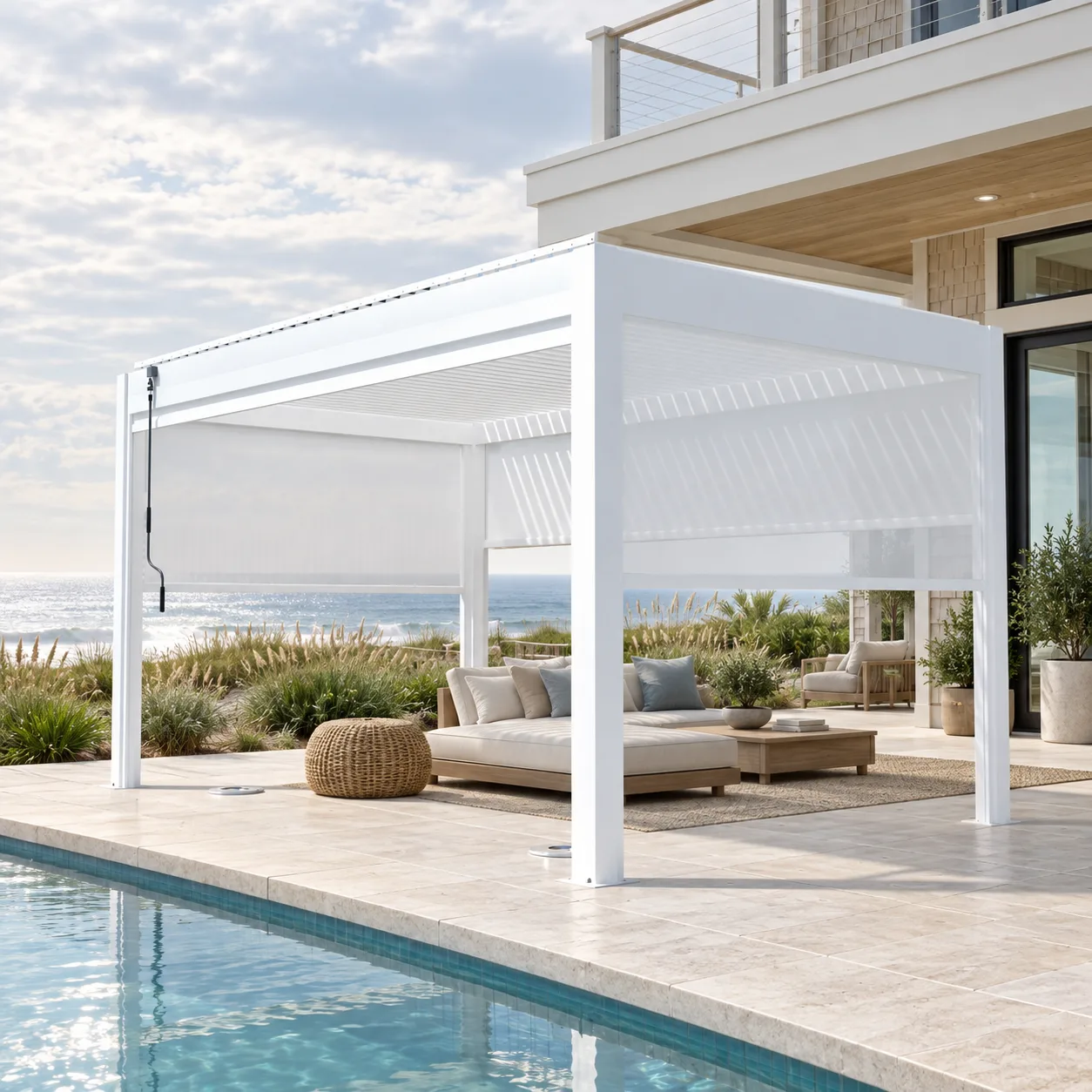
A motorized aluminum pergola can be considered for a coastal property, but selection should be based on verified documentation for the exact model, finish, fasteners, motors, screens, anchoring, and exposure—not on the word “aluminum” alone. Salt deposition, wind, humidity, sand, drainage, and maintenance access all affect performance. Coordinate the META LIFESTYLE configuration with qualified local structural, electrical, foundation, and permitting professionals.
“Coastal” describes many conditions. A sheltered bay property, an elevated oceanfront deck, and a home several miles inland may experience very different salt and wind exposure. Begin with the site, then request written product information that matches the actual configuration and location.
Document the Real Exposure
Record distance and orientation to open water, prevailing winds, elevation, nearby buildings, dunes, vegetation, pools, irrigation, and storm history. Salt can travel inland on wind and may accumulate on surfaces that rarely receive cleansing rain.
Photograph the proposed location in several seasons. Note wind-driven rain, standing water, blowing sand, roof runoff, and areas that stay shaded or damp. A qualified local professional can help translate those observations into design requirements.
Request Model-Specific Material Information
Ask for current documentation covering aluminum components, finish system, fasteners, brackets, seals, screens, motors, controls, lighting, and accessories. Different parts may use different materials and require different care.
Do not invent an alloy, coating thickness, corrosion class, test result, warranty, or coastal suitability statement. Marketing descriptions are not a substitute for verified technical documents tied to the exact model and finish.
Coastal Pergola Buyer Checklist
- Define the property’s salt, wind, sand, humidity, and storm exposure.
- Obtain documentation for the exact frame, finish, fasteners, and options.
- Request verified wind and structural information for the configuration.
- Coordinate foundations and anchoring with local professionals.
- Plan safe electrical routes, disconnects, and controls.
- Direct roof and patio water away from post bases and the house.
- Provide hose-free or controlled cleaning access as documented.
- Keep landscaping and irrigation from trapping salt and moisture.
- Create an inspection plan after storms and long vacancies.
- Record approved cleaners, tools, and service contacts.
Evaluate the Finish, Not Just the Base Metal
Aluminum can be a practical outdoor material, but coastal durability depends on the entire finished assembly. Edges, holes, joints, hardware interfaces, scratches, trapped debris, and dissimilar materials may behave differently from broad flat surfaces.
Request finish samples and care instructions. Use only approved cleaning products and touch-up procedures. Abrasive pads, aggressive chemicals, or unapproved repairs can damage the appearance or protective system.
Review Every Fastener and Interface
A pergola includes more than posts and beams. Fasteners, anchors, brackets, bearings, pins, screen tracks, motors, wiring entries, drain components, and accessories all need compatible materials and service access.
Do not replace hardware with a generic item from a local store. A different metal, coating, strength, geometry, or washer can affect corrosion and structural behavior. Use verified replacement parts and qualified service.
Plan Cleaning Access Before Installation
Salt and airborne debris are easier to manage when posts, beams, gutters, louvers, screens, and drains can be reached safely. Avoid locating the pergola where walls, dense planting, or fixed furniture make routine inspection impossible.
Follow the manufacturer’s documented cleaning method and interval. Do not pressure-wash motors, electrical equipment, seals, screen mechanisms, or joints unless explicitly permitted. Elevated work should be handled by qualified providers with appropriate safety equipment.
Keep Water Moving
Salt, moisture, and debris can concentrate where water ponds. Confirm how the exact louvered roof collects and releases water, and coordinate outlets with patio grading, drains, house foundations, pools, planting beds, and lawful discharge locations.
Post bases should not sit in low spots. A drainage and structural professional should coordinate finished paving elevation, footings, anchors, waterproofing, and access for inspection. Local rules control stormwater discharge.
Manage Irrigation and Landscaping
Irrigation overspray can keep surfaces wet and deposit minerals or chemicals. Aim sprinklers away from posts, screens, motors, and controls. Keep mulch, soil, vines, and dense foliage from covering post bases or blocking drains.
Choose planting for the actual coastal climate, but maintain clearance from moving louvers and screens. Windblown branches and leaves can obstruct mechanisms or hold moisture against finishes.
Engineer for Wind, Not Appearance
A heavy-looking frame is not proof of a wind rating. Wind design depends on location, exposure category, height, dimensions, configuration, louvers, screens, attachments, foundations, and local code. Obtain verified documents for the exact project.
Qualified local structural professionals and authorities must control wind, foundations, anchoring, and permits. Follow documented operating positions for louvers and screens during wind. Never infer that a lowered screen is storm protection.
Coordinate Coastal Electrical Work
Motors, lighting, outlets, sensors, controls, and connectors require correct outdoor placement and protection. Salt and humidity may increase the importance of inspection, but exact requirements come from component documentation and local electrical rules.
A qualified electrician should design circuits, grounding, protection, disconnects, cable routes, and service access. Keep electrical equipment away from drainage paths, pool splash, and cleaning water.
Think About Pools and Hot Tubs Separately
A coastal site with a pool or spa combines salt-air exposure with splash, treatment chemicals, electrical rules, barriers, and wet walking surfaces. Do not assume care guidance for ocean salt also covers pool chemicals.
Coordinate pergola position with the pool professional, electrician, structural professional, and local authority. Preserve circulation, rescue access, equipment routes, barriers, and drainage.
Compare White and Dark Finishes Carefully
Color affects appearance, heat absorption, visibility of deposits, and how the pergola relates to the architecture. Neither white nor dark is automatically more durable. The finish system, documented coastal suitability, care, and installation quality matter more than color alone.
View physical samples outdoors at the property. Consider glare, reflected light, surrounding stone, window views, cleaning expectations, and future touch-up availability.
Create a Post-Storm Inspection Procedure
After authorities say conditions are safe, inspect from the ground for shifted components, unusual gaps, damaged screens, debris, blocked drains, exposed wiring, standing water, or impact marks. Do not operate a damaged system.
Structural, electrical, motor, screen, or anchoring concerns require qualified service. Photograph conditions and retain repair records. Never climb or disassemble equipment in unsafe weather.
Plan for Seasonal Vacancy
Coastal vacation homes may sit empty for weeks. Assign a local caretaker to inspect after storms, outages, and prolonged damp conditions. Provide manuals, control instructions, safe boundaries, and professional contacts.
Do not rely only on cameras or smart alerts. Remote monitoring cannot clear a blocked outlet, identify hidden damage, or make a hazardous system safe.
Build a Maintenance Record
Record the model, configuration, finish code, installed options, approved cleaners, inspection dates, photographs, and service history. Update the file after landscaping, paving, electrical, or drainage work.
This record helps future owners and service teams avoid incompatible cleaners, generic hardware, and undocumented modifications. It also makes patterns of salt buildup or drainage easier to identify.
Questions to Ask Before Ordering
- What verified documentation applies to this coastal location?
- Which finish, hardware, and accessories are included?
- What cleaning method and access are required?
- How are wind, foundations, and anchoring verified?
- Where do roof water and patio runoff discharge?
- Who provides qualified local inspection and service?
Explore the META LIFESTYLE shade structure collection and request documentation for the exact coastal configuration.
Frequently Asked Questions
Is aluminum automatically corrosion-proof near the ocean?
No. Performance depends on the complete assembly, finish, hardware, exposure, installation, maintenance, and verified documentation.
How often should a coastal pergola be cleaned?
Follow the exact manufacturer’s documented interval and method, adjusted only with qualified guidance for the site. Do not invent a universal schedule.
Can I pressure-wash the pergola?
Only if the documentation permits it for every affected component. Pressure can force water into motors, controls, seals, joints, and screen mechanisms.
Do coastal pergolas need special anchors?
Anchoring and foundations must be designed for the exact model, site, wind exposure, substrate, and local requirements by qualified professionals.
Should screens be lowered during a coastal storm?
Use only the documented operating position and local emergency guidance. Never assume a screen provides storm protection or an unverified wind rating.
Request a META LIFESTYLE Quote
Share the property location, photos, distance from open water, site plan, and intended options through the META LIFESTYLE contact page. Both numbers are official META LIFESTYLE WhatsApp contacts: +8619050185756 and +1 (626) 735-5685.