Pro Program Live Chat +8619050185756

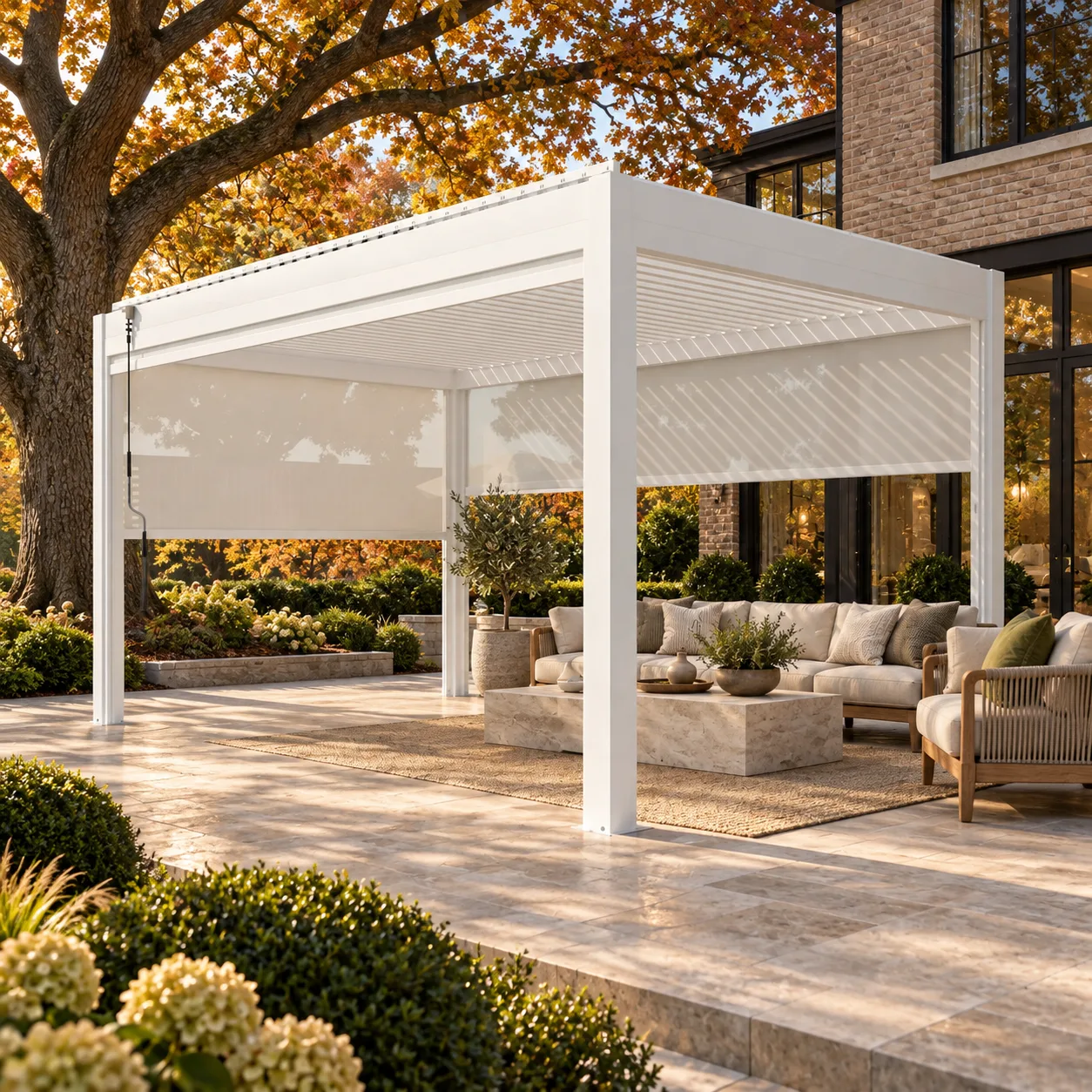
A motorized pergola can be planned near a mature tree, but the safe location depends on the tree’s roots, trunk growth, canopy, branch condition, species, soil, wind exposure, and the exact pergola foundation and operating clearances. There is no universal distance. Coordinate the META LIFESTYLE model with a qualified arborist, structural professional, landscape designer, electrician, and local authority before excavation.
A beautiful tree can provide character and additional shade, yet it also changes over time. Roots extend beyond the visible canopy, branches move in wind, leaves enter gutters, and falling debris can obstruct louvers or screens. The goal is to protect both the living tree and the structure.
Start With an Arborist Assessment
Ask a qualified arborist to identify the species, health, age, structural condition, likely growth, root zone, soil needs, and pruning history. Visual appearance alone does not reveal decay, weak unions, hidden roots, or stability concerns.
The arborist should review the exact pergola footprint, post locations, excavation, access route, drainage, lighting, and proposed landscape changes. Complete this review before ordering foundations or removing paving.
Map the Tree in Three Dimensions
Survey the trunk, major limbs, canopy edge, grade, visible roots, and nearby utilities. Photograph the tree from several directions. Show branches in relation to the pergola roof, louvers, screens, gutters, house, and expected wind movement.
Below ground, roots may occupy areas far from the trunk. Do not assume a clear surface means excavation is harmless. The arborist and foundation professional should select appropriate investigation methods.
Tree-and-Pergola Planning Checklist
- Obtain the exact pergola footprint and post-center dimensions.
- Have a qualified arborist assess tree health and root protection.
- Survey trunk, canopy, grade, utilities, and property lines.
- Keep posts and excavation outside professionally defined protected areas.
- Allow for trunk and branch growth and wind movement.
- Plan access without compacting root-zone soil.
- Direct roof and patio water without flooding or drying the tree.
- Keep leaves and twigs from blocking gutters and louvers.
- Coordinate lighting, cables, screens, and service access.
- Create long-term pruning and inspection responsibilities.
Protect Roots During Foundation Work
Pergola posts require foundations and anchors designed for the exact structure, soil, wind, snow, and local rules. Excavation can cut roots, while equipment and material storage can compact soil and reduce air and water movement.
Do not move a post or reduce a footing in the field to avoid a root. The arborist and structural professional must coordinate an approved solution. Never pour concrete around major roots without professional design.
Plan the Construction Route
Delivery vehicles, lifts, excavators, concrete equipment, and stored materials can damage roots even when excavation stays away from the trunk. Define access, staging, fencing, and soil-protection zones before work begins.
Keep fuels, washout, metal filings, paint, cleaners, and construction waste away from the tree and drainage. Assign responsibility for enforcing the protection plan.
Allow for Canopy Movement
Branches bend and sway, especially during storms. Static clearance on a calm day may be inadequate. The arborist should consider normal movement, future growth, deadwood, and the consequences of contact with louvers, roof edges, screens, motors, or lights.
Do not brace branches to the pergola or use the structure as a support for the tree. Likewise, do not attach lights, cables, hammocks, or décor between the tree and pergola without professional approval.
Keep Louvers and Gutters Clear
Leaves, seeds, needles, twigs, pollen, and sap can collect on a louvered roof and in drainage channels. Select a location that allows safe inspection and cleaning without standing on furniture or climbing the structure.
Use only maintenance methods allowed by product documentation. Do not pressure-wash motors, controls, seals, screens, or electrical components unless explicitly permitted. Elevated work belongs with qualified providers.
Coordinate Tree Shade With Louver Control
Existing canopy shade changes by season and time of day. Map summer and winter sun before choosing pergola orientation. A tree may reduce afternoon heat but also drop leaves when more sun is desired.
Motorized louvers add adjustability, but they do not compensate for an unsafe branch or poor drainage location. Follow exact operating and weather instructions for the selected model.
Design Drainage for Both Systems
The pergola roof may collect and redirect rainwater, while paving can change infiltration around the tree. Too much concentrated water, too little soil moisture, or altered grade can affect roots and the patio.
A qualified drainage and landscape professional should coordinate roof outlets, patio slope, irrigation, soil, foundations, and lawful discharge. Do not discharge directly at the trunk or into a post base.
Avoid Raising or Lowering Grade Around Roots
Adding soil, stone, or paving over roots can change oxygen and water conditions. Excavating to create a level patio can also remove critical roots. Any grade change near the tree requires arborist review.
The structural design should respond to verified conditions rather than forcing a standard patio section across the root zone.
Plan Electrical Work Without Root Damage
Motors, lighting, sensors, screens, and controls may require trenches or conduits. A qualified electrician and arborist should coordinate routes that protect roots and meet outdoor electrical requirements.
Do not wrap cable around the trunk or fasten equipment to the tree. Keep controls and disconnects accessible as plants grow.
Keep Screens Away From Vegetation
Motorized screens need a clear travel path. Branches, vines, leaves, and planters should not touch tracks or bottom bars. Show screens lowered when checking circulation and planting locations.
Never treat a screen as protection from falling branches, high winds, or tree debris. Use only verified operating procedures and stop operation when obstructed.
Consider Wildlife and Sap
Trees may attract birds, insects, and squirrels, while some species release sap, fruit, or seed pods. These conditions affect cleaning and furniture placement. Avoid placing food storage or waste where wildlife activity is concentrated.
Use humane, locally appropriate management and product-approved cleaners. Do not apply tree chemicals where spray can contact the pergola without professional coordination.
Compare Three Layout Approaches
Pergola outside the canopy edge
This may reduce debris and branch conflicts, although roots and future growth still require review.
Pergola partly beneath the canopy
This can create a layered shade experience but increases maintenance and makes branch movement, clearance, and roof cleaning especially important.
Relocate the outdoor room
Moving the pergola may be best when a high-value tree has extensive roots or structural concerns. A slightly different location can protect both investments.
Create a Long-Term Inspection Plan
Trees and structures change. Schedule arborist review based on species, health, site conditions, and major weather events. Inspect pergola gutters, louvers, screens, finishes, anchors, and drainage under documented procedures.
After storms, wait until authorities say conditions are safe. Do not operate equipment under damaged or hanging branches. Use qualified arborists and product service professionals.
Confirm Structural and Local Requirements
Wind and snow design, anchoring, foundations, structures, electricity, drainage, and permits must follow exact model documentation and qualified local professionals or authorities. Never assume the tree provides a windbreak or reduces design loads.
Property-line, protected-tree, conservation, and removal rules vary locally. Obtain approvals before pruning major limbs or disturbing roots.
Information to Prepare for a Quote
- Dimensioned survey and proposed pergola location
- Tree species and arborist report if available
- Photos of trunk, canopy, roots, and patio
- Grade, drainage, utility, and access information
- Desired pergola size, screens, lighting, and controls
- Project location and seasonal weather observations
Explore META LIFESTYLE shade structures and request exact drawings for arborist and engineering review.
Frequently Asked Questions
How close can a pergola be to a mature tree?
There is no universal distance. An arborist and structural professional must assess roots, canopy, growth, foundations, and site conditions.
Can pergola footings cut tree roots?
Root cutting can harm stability or health. Do not excavate until a qualified arborist and foundation professional approve the locations and method.
Can branches hang over a louvered roof?
Possible placement depends on branch health, movement, growth, debris, cleaning access, and exact product clearance. Professional review is essential.
Will a tree reduce pergola wind loads?
Do not assume so. Structural wind design must use verified site and model requirements; trees can also fail or shed branches.
Can I attach lights between the tree and pergola?
Do not create loads or electrical routes between them without arborist, product, and electrical approval.
Request a META LIFESTYLE Quote
Send your survey, tree photos, arborist information, and desired configuration through the META LIFESTYLE contact page. Both numbers are official META LIFESTYLE WhatsApp contacts: +8619050185756 and +1 (626) 735-5685.