Pro Program Live Chat +8619050185756

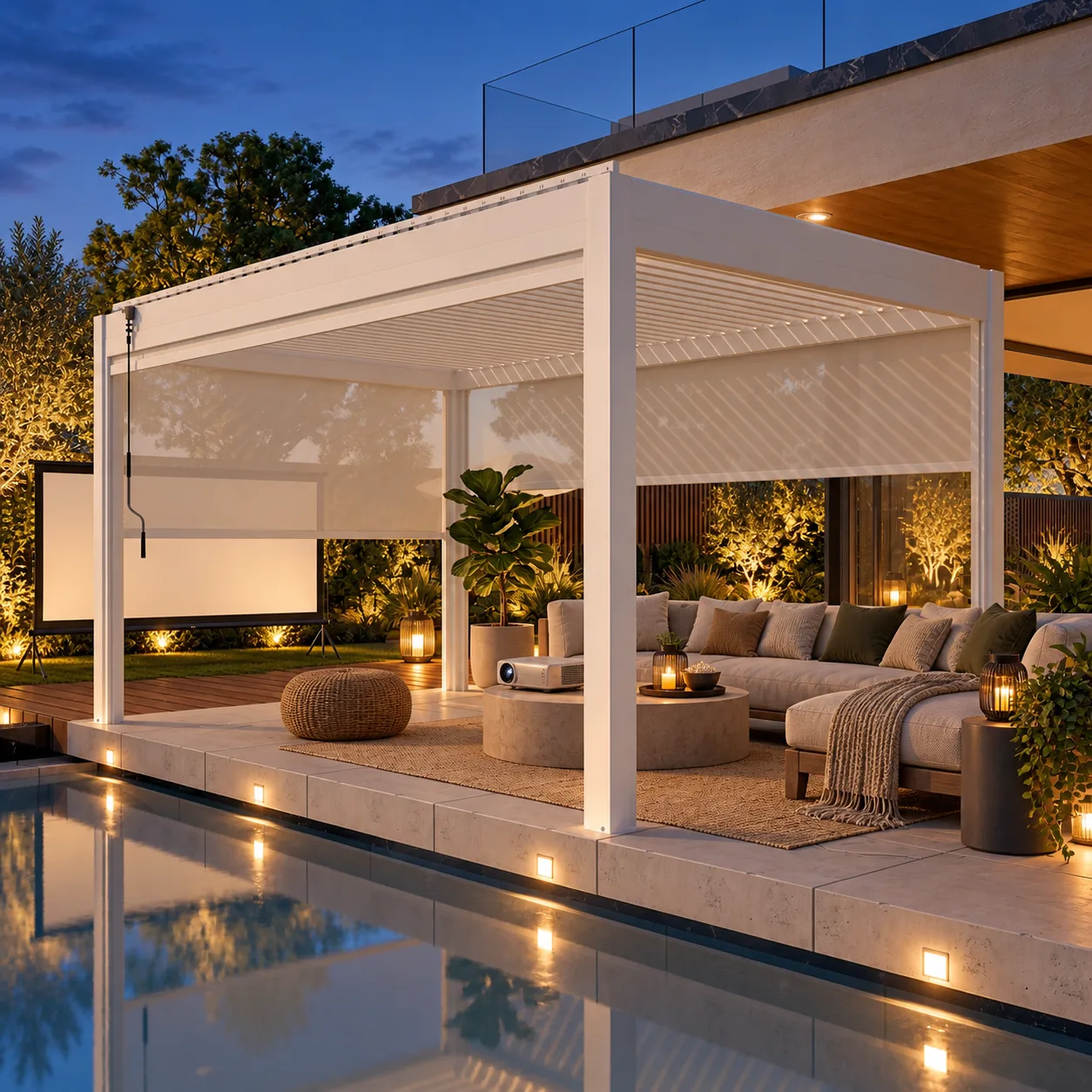
A motorized pergola can create an excellent backyard movie-night setting when the screen, seating, lighting, power, and sightlines are planned together. The pergola provides a defined outdoor room and adjustable overhead shade, while freestanding movie equipment keeps the structure flexible for normal daytime use. The essential rule is to avoid attaching screens, projectors, speakers, or cables to the pergola unless the model-specific documentation expressly permits it.
For U.S. homeowners, a successful outdoor theater is less about buying the biggest screen and more about controlling glare, preserving clear walkways, protecting equipment, and making setup easy enough to use regularly. Begin with the site and viewing direction before selecting electronics.
Choose the Viewing Direction First
Stand beneath the proposed pergola at the time movies will normally begin. Look for porch lights, streetlights, neighboring windows, landscape fixtures, and the last bright part of the sky. A screen facing a strong light source will appear washed out, even with an expensive projector. Whenever possible, position the screen so the audience looks toward the darker side of the yard.
A freestanding screen beyond one open side of the pergola often provides a clean arrangement. It can remain independent from the structure and can be removed when not needed. Keep the screen away from pool edges, fire features, grills, irrigation spray, and circulation routes. It must be stable under the screen manufacturer’s instructions and used only in suitable weather.
Do Not Treat Pergola Screens as Projection Screens
Motorized side screens may help manage low-angle light or insects, depending on the specific system, but they are not automatically designed as projection surfaces. Projecting onto them can produce poor image quality and may expose the material to heat, contact, or inappropriate handling. Use a screen made for projection and keep it independent unless written documentation confirms another arrangement.
Plan Seating Around Sightlines
Start with the screen centerline, then arrange the main seating so viewers do not need to turn their heads. Low lounge seating usually preserves sightlines better than tall dining chairs. If there are two rows, test the rear view before buying furniture. The front row should not block the image, and the rear row should not be pushed against posts, screen tracks, controls, or drainage components.
Leave a clear path from the house to every seat. Guests should be able to enter or leave without crossing in front of the projector or stepping over cables. A side aisle is often more comfortable than a narrow route behind the sofa.
Compare Three Projector Locations
| Location | Advantage | Main concern |
|---|---|---|
| Stable table behind seating | Simple setup and easy access | People may cross the beam; protect the equipment from bumps |
| Low table in front | Short cable route and compact zone | Requires suitable projection geometry and must not obstruct walkways |
| Portable stand beside seating | Keeps the center aisle open | Needs careful alignment, stability, and cable management |
The correct location depends on the projector’s throw requirements, lens position, image size, and manufacturer instructions. Do not assume a projector can create a large image from any distance. Test the entire system during the return period before building permanent landscape or electrical features around it.
Manage Ambient Light Without Creating Hazards
Movie viewing benefits from darkness, but the surrounding patio should not become unsafe. Use low-level pathway and step lighting outside the main viewing direction. Shield fixtures so they illuminate walking surfaces rather than the screen. Dimmable lighting can help guests settle in and then reduce glare when the movie starts.
The pergola’s adjustable louvers may help reduce remaining sky brightness before sunset, subject to the operating instructions for the exact model. Side screens may help with certain angles, but do not close them simply to create darkness without considering airflow, exits, wind, and equipment heat. Never operate moving louvers or screens while objects, cables, or decorations interfere with them.
Power and Cable Routing Require Care
Projectors, streaming devices, speakers, lighting, and chargers can create a surprising number of cords. Extension cords crossing wet patios or walking paths are not a sound permanent plan. Ask a qualified electrician to evaluate outdoor-rated receptacles, required ground-fault protection, weather covers, circuit capacity, and code-compliant routing for the property.
Keep all equipment and connections within their listed environmental conditions. A pergola is not an indoor room, and an overhead roof does not make indoor electronics weatherproof. Bring portable electronics inside after use and disconnect the system when conditions change.
Sound Should Stay Focused on the Seating Area
Large speakers are not always necessary outdoors. Place speakers close enough to the audience that dialogue is clear at moderate volume. Directional placement can reduce sound traveling toward neighbors. Test volume at the property boundary and follow local quiet-hour rules.
Use stable stands or furniture designed for the equipment. Do not hang speakers from beams, attach brackets to posts, or route wires through pergola components unless the manufacturer has provided written approval for the specific model and installation.
Backyard Movie Pergola Checklist
- Observe the site at the actual viewing time and identify glare sources.
- Choose a screen direction that faces the darkest practical part of the yard.
- Use a stable, freestanding projection screen designed for outdoor use.
- Verify projector throw distance, image size, and focus before finalizing furniture.
- Preserve a clear aisle to the house, yard, and exits.
- Keep furniture and equipment clear of posts, louvers, side screens, controls, gutters, and drainage outlets.
- Use subtle pathway lighting that does not shine onto the screen.
- Have outdoor electrical work planned by a qualified electrician.
- Prevent cords from crossing wet areas, pool edges, stairs, and walkways.
- Store electronics indoors and cancel the event when weather is unsuitable.
- Confirm local noise expectations and keep sound directed toward viewers.
- Follow model-specific pergola operating, anchoring, wind, snow, drainage, and maintenance documentation.
Weather Planning Matters More Than Décor
Outdoor movie equipment should not be exposed to rain, condensation, strong wind, or temperatures outside its documented operating range. A motorized roof may help manage ordinary conditions, but it is not permission to operate through severe weather. Follow the pergola manual for louver and screen positions during wind, rain, snow, freezing conditions, or power interruptions.
A freestanding screen can act like a sail. If wind develops, take it down under the screen manufacturer’s guidance rather than relying on the pergola to protect it. Never tie the screen to a post or beam as an improvised anchor.
Keep the Space Flexible During the Day
The most valuable movie-night layout is one that returns quickly to a normal outdoor living space. Select a screen that stores neatly, a compact projector case, and seating suitable for conversation throughout the week. A side table can hold the projector during the movie and function as ordinary furniture afterward.
Avoid permanent themed décor that makes the patio useful for only one activity. The pergola can support dining, reading, relaxation, and entertaining while the movie equipment remains portable. Explore META LIFESTYLE’s outdoor shade structures to consider formats for a flexible backyard room.
Questions to Ask Before Ordering a Pergola
Request exact drawings, dimensions, louver operation information, anchoring requirements, electrical details, screen options, drainage routing, maintenance guidance, and documented wind or snow limitations for the proposed model. The patio, exposure, foundation, local setbacks, permits, and electrical work must be evaluated for the actual property by qualified professionals and the relevant authority.
Frequently Asked Questions
Can I mount a projector to a pergola beam?
Do not do so unless written documentation for the exact pergola model expressly allows the mount, load, fasteners, and cable route. A portable stand is often easier to remove and service.
Can a motorized pergola make the screen visible before sunset?
Adjustable shade may reduce some sky brightness, but image quality still depends on ambient light, screen type, projector capability, viewing direction, and time of day. Test the intended setup rather than relying on a general brightness claim.
Should the projector stay outdoors?
Only if its manufacturer specifically permits the actual outdoor conditions and installation. Most portable setups should be brought inside after use and protected from moisture and temperature extremes.
Can I lower all side screens during a movie?
Follow the screen system’s instructions and consider airflow, exits, wind, visibility, and equipment heat. Screens are not walls, guards, or storm protection.
How do I prevent cables from becoming trip hazards?
Plan outdoor-rated power near the equipment with a qualified electrician, minimize portable cords, and keep temporary cables completely outside circulation routes. Never place connections where they can become wet.
Do I need a permit for a motorized pergola?
Requirements vary by jurisdiction, size, attachment, foundation, utilities, and site. Confirm permits, setbacks, anchoring, electrical work, wind, snow, and drainage requirements locally before ordering or installation.
Request Project Information
For model drawings, dimensions, finish options, and project discussions, visit the META LIFESTYLE contact page. Both +8619050185756 and +1 (626) 735-5685 are official META LIFESTYLE WhatsApp contacts. Send your patio dimensions, project location, photos, desired screen direction, and intended seating capacity so the discussion begins with useful site context.