Pro Program Live Chat +8619050185756

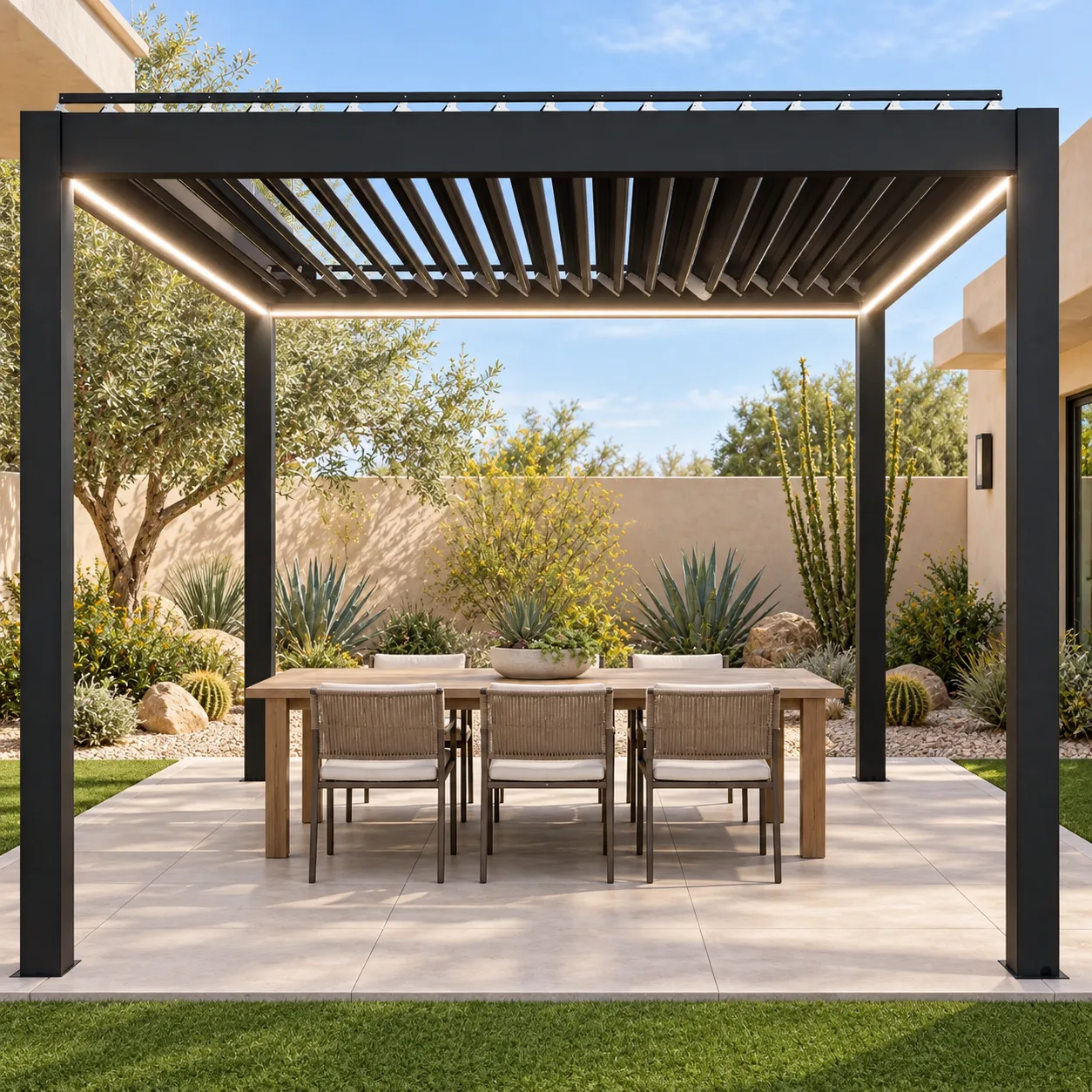
Yes, a motorized pergola can be incorporated into a backyard with artificial turf, but the pergola should not be supported or anchored by the turf system. Its posts need a model-specific structural foundation designed for the site, while the synthetic grass, base, drainage, and edge details must be coordinated around that foundation. The best projects plan the pergola and turf together before either installer begins work.
This distinction matters because artificial turf is a landscape finish, not a structural substrate. Beneath the visible fibers may be infill, a compacted aggregate base, drainage layers, edging, irrigation remnants, and soil. None of those should be assumed to resist pergola loads, uplift, or movement. A qualified local professional must design the support and anchoring for the exact pergola, exposure, soil, wind, snow, and applicable requirements.
The Best Detail Usually Separates Structure From Turf
A clean approach is to place the pergola on a properly designed concrete foundation or stable hardscape zone, then terminate artificial turf around it. This gives the posts a defined structural connection and gives installers access to base plates, anchors, sealants, drainage outlets, and future service points.
The hardscape can be a full patio beneath the pergola with turf outside, or a coordinated foundation system concealed beneath a finished surface. The correct design depends on engineering, the pergola documentation, site drainage, and local approval. Do not pour isolated pads or bury post bases merely because the finished turf hides them.
Why Anchoring Directly Through Turf Is Risky
Driving fasteners through artificial grass without understanding the layers below can damage drainage, miss the structural foundation, or create an uneven and difficult-to-service connection. Turf fibers and infill may also hide corrosion, loose fasteners, standing water, or settlement.
Another problem is sequencing. If the turf installer completes the surface first, later footing excavation can disturb the base and leave visible patches. If the pergola installer arrives first without the finished landscape elevations, post bases or patio transitions may end up too high or too low. A shared dimensioned plan avoids these conflicts.
Compare Three Ground-Interface Options
| Approach | Potential advantage | Key requirement |
|---|---|---|
| Full hardscape pad under pergola | Stable furniture surface and accessible post bases | Coordinate slab, anchors, drainage, joints, and finished elevations |
| Engineered footings with turf between posts | Creates a greener visual field | Protect anchors, maintain service access, and detail turf edges carefully |
| Paver patio with structural foundations below | Flexible architectural finish | Pavers alone must not be assumed to provide required structural anchoring |
For dining and lounge use, a hard surface beneath the pergola often makes chairs and tables easier to level. Turf can then soften the surrounding yard. If the design intentionally places turf inside the footprint, confirm how furniture, infill, heat, cleaning, drainage, and every post connection will be handled.
Drainage Must Work as One System
Artificial turf is often promoted as drainable, but actual performance depends on the product, base preparation, soil, slope, seams, and outlet conditions. A motorized louvered pergola may direct roof water through model-specific gutters or posts. That concentrated discharge must not be released blindly onto the turf base.
Ask where pergola water exits, where surface water flows, and whether the turf base can handle the expected path without erosion, washout, ponding, or migration of infill. Coordinate downspout or post outlets with a qualified drainage or landscape professional. Local stormwater rules and the exact site control the final solution.
Preserve Finished Elevations
The turf pile, infill, base, paver or slab thickness, and drainage slope all affect the finished level. Keep turf and infill from covering post base plates, weep points, fasteners, screens, electrical access, or drainage openings. A neat shadow line or deliberate hardscape border often looks better than fibers packed tightly against structural components.
Plan for Heat and Reflected Sun
Synthetic surfaces can become hot in direct sun, and nearby walls, windows, and paving can add reflected heat. A pergola may provide adjustable shade, but low-angle sunlight can still reach the turf. Observe the site through the day and discuss surface temperatures, irrigation or cooling recommendations, pet use, and maintenance with the turf supplier.
Do not place grills, fire pits, heaters, or other high-heat equipment on artificial turf without the equipment and surface manufacturers’ documented clearance and protection requirements. A motorized pergola does not override fire clearances or make a combustible landscape product suitable beneath a heat source.
Coordinate Utilities Before the Base Is Compacted
Motor controls, integrated lighting, outlets, landscape lighting, drainage, irrigation, and future accessories may require routes through or under the project area. Plan conduits, sleeves, and outlets before compacting the turf base or finishing the patio. A qualified electrician must handle outdoor electrical work using appropriate equipment and local requirements.
Keep electrical boxes, controls, and service points accessible. Do not route cables where turf staples, edging spikes, or future maintenance tools could damage them. Document the underground layout with measurements and photos before it disappears.
Installation Sequence That Reduces Rework
- Confirm the pergola model, dimensions, post locations, operating clearances, drainage, and utility needs.
- Survey the site and identify property lines, easements, underground utilities, irrigation, and private lines.
- Obtain required local and association approvals.
- Have the foundation and anchoring designed for the actual site and product documentation.
- Set shared finished elevations for the house threshold, patio, foundations, turf, and surrounding drainage.
- Install approved footings, sleeves, drainage, and utilities.
- Complete the pergola installation and verify operation and water routing.
- Build the turf base without disturbing structural or utility work.
- Cut and secure turf with deliberate edges around the hardscape and accessible post zones.
- Test drainage, louver operation, lighting, screens, and clearances before final handoff.
Questions for the Pergola and Turf Contractors
Ask both teams to review the same plan. The pergola contractor should identify exact post footprints, base plates, anchors, electrical routes, drainage exits, screen tracks, and required service access. The turf contractor should identify base depth, edge restraint, seam locations, drainage rate documentation, infill, finished height, and maintenance methods.
Resolve who protects completed work, who performs final edge cuts, and who returns if settlement or drainage problems appear. Avoid assumptions that the other contractor will create structural pads, reroute water, or repair disturbed turf.
Artificial-Turf Pergola Checklist
- Use a model-specific engineered foundation; never rely on turf or aggregate base as the anchor.
- Keep base plates, anchors, drainage, controls, and access points visible and serviceable.
- Coordinate post locations before ordering turf or cutting hardscape.
- Set finished elevations and slopes on one shared plan.
- Direct concentrated roof water to an approved drainage solution.
- Locate utilities and private lines before excavation.
- Install sleeves and outdoor electrical infrastructure before base compaction.
- Separate heat-producing equipment from turf according to documented clearances.
- Use intentional hardscape or edging transitions instead of burying product components.
- Confirm local permits, anchoring, wind, snow, drainage, and electrical requirements.
Frequently Asked Questions
Can pergola posts sit directly on artificial grass?
The visible turf should not be treated as structural support. Posts need the foundation and anchoring required by the exact pergola documentation and site design.
Should turf be installed before or after the pergola?
Final turf is commonly easier to finish after structural foundations, utilities, and the pergola are established, but both contractors should approve the sequence before work begins.
Can turf cover the pergola base plates?
Do not cover anchors or base components unless the manufacturer and project design specifically permit it. Inspection, drainage, cleaning, and maintenance access usually favor a visible, deliberate transition.
Will a louvered roof keep artificial turf dry?
Not in every condition. Wind-driven rain, open louvers, side exposure, cleaning water, and roof discharge still affect the surface. Plan drainage rather than assuming permanent dryness.
Can I place a grill on turf under the pergola?
Only when the appliance, turf, pergola, and local requirements all support the proposed arrangement. Model-specific fire clearances and qualified professional review control.
Does this project require a permit?
Requirements vary by jurisdiction, structure, foundation, utilities, and site. Confirm permits, setbacks, engineering, anchoring, electrical work, wind, snow, and drainage locally before installation.
Plan the Product and Landscape Together
Review META LIFESTYLE’s outdoor shade structures, then bring actual site measurements and landscape plans to the product discussion. For model information and project questions, visit the contact page. Both +8619050185756 and +1 (626) 735-5685 are official META LIFESTYLE WhatsApp contacts. Share photos, patio dimensions, turf plans, project location, and known local requirements for a more useful conversation.