Pro Program Live Chat +8619050185756

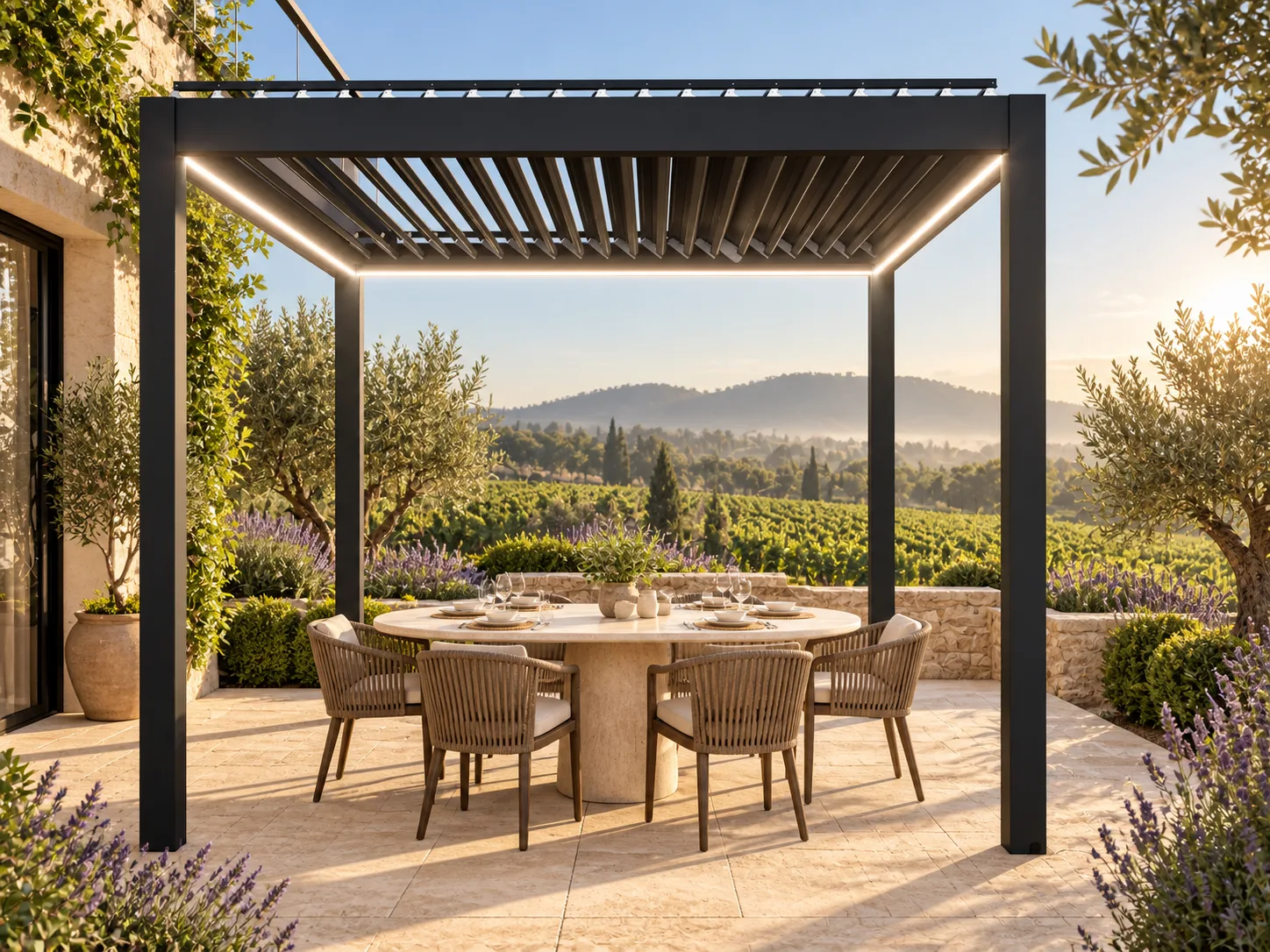
To design a pergola for an outdoor wine-tasting patio, begin with the tasting table and guest circulation, then use adjustable louvers to manage direct sun without sacrificing daylight or the view. Provide stable serving surfaces, comfortable seating, neutral evening light, water, and a clear route to indoor refrigeration and glassware. Keep bottles out of heat and prolonged sunlight, and coordinate every electrical, drainage, structural, and permitting detail with the selected pergola documentation and qualified local professionals.
A tasting terrace can feel luxurious without becoming theatrical. The most successful spaces support conversation, careful pouring, and an unhurried view. That usually means fewer furnishings, better spacing, and more control over glare and weather—not a collection of wine-themed decorations.
Design from the table outward
The tasting table establishes the functional center of the pergola. A round or oval table encourages conversation and gives every guest a similar relationship to the host. A rectangular table works well for guided flights, shared food, and written tasting materials. Choose the shape based on the event style before selecting the pergola footprint.
Measure the actual table and chairs, including the space chairs occupy when pulled back. Preserve a clear route from the house to every seat and avoid placing a pergola post in the natural arrival path. If the terrace overlooks a vineyard, garden, lake, or skyline, test the seated eye-level view rather than composing the layout only while standing.
Allow for service without interrupting conversation
Create a secondary landing surface for water, used glasses, food, and opened bottles. It can be a console or compact service cart positioned outside the main circulation path. Keep it stable and level, with no wheels that could move unexpectedly on a sloped patio unless they lock appropriately.
The host should be able to reach the service point without repeatedly walking behind tightly spaced guests. At the same time, avoid crowding the tasting table with storage. A visually quiet centerpiece leaves room for glasses, plates, and comfortable hand movement.
Use louvers to control glare and heat
Wine, glassware, and guests all benefit from avoiding harsh direct sun. Observe the site at the hours when tastings are likely to occur. Morning sun may enter from a different side than late-afternoon glare, and low-angle light may require a different response from overhead midday sun.
Motorized louvers can help adjust the balance of shade and open sky, but their useful orientation depends on the exact product, site direction, season, and surrounding architecture. Optional screens may help with side exposure on a suitable model. Ask for model-specific operating guidance and never assume screens are structural wind barriers.
Adjustable shade does not replace correct wine storage. Bottles should not sit for extended periods in heat or direct sunlight. Bring out only what is needed for service and return temperature-sensitive items to appropriate storage.
Choose lighting that respects color and atmosphere
At night, guests should be able to see the wine, food, steps, and pathways without feeling as if they are under a spotlight. Layer low-glare illumination rather than relying on one intense fixture. Integrated pergola lighting can provide general illumination, while separate code-compliant path and task lighting can support safe movement and serving.
A neutral, consistent light source is preferable to strongly colored decorative lighting when visual evaluation matters. Reflections from glossy tabletops and glassware can create glare, so review fixture placement from seated positions. All wiring, controls, outdoor-rated equipment, and electrical protection must be selected and installed by qualified professionals according to product documentation and local requirements.
Plan for water, food, and responsible hospitality
Every tasting table should include drinking water and room for nonalcoholic beverages. If food is served, keep cold items at safe temperatures and protect them from insects and direct sun. Locate waste and recycling where they are convenient but visually discreet.
Designate a path that does not require guests to cross cooking or service zones. If a grill, outdoor kitchen, heater, or fire feature is nearby, preserve all manufacturer-required clearances and ventilation. Gas, electricity, plumbing, fire safety, and permits must be coordinated through qualified local professionals and authorities.
Hosts should plan transportation and service responsibly. The physical design can help by providing comfortable seating, abundant water, and a calm pace, but it cannot replace responsible decisions about alcohol.
Select finishes that stay quiet in the background
Natural stone, porcelain pavers, wood accents, and restrained planting can create a refined setting, but each material should be evaluated for outdoor durability, traction, heat, drainage, staining, and maintenance. A pale surface may reduce the visual weight of a large terrace, while darker materials can make glassware and table settings stand out.
Avoid unstable gravel immediately beneath chairs. Check that chair legs will not catch in wide joints or uneven paving. If rugs are used, choose outdoor-rated materials that lie flat, dry properly, and do not create trip hazards.
Compare three tasting-patio layouts
| Layout | Best use | Main design priority |
|---|---|---|
| Round table for six | Relaxed conversation and shared bottles | Equal views and generous chair clearance |
| Long table for eight | Guided flights and paired food courses | Host access along both sides |
| Four lounge chairs plus low table | Informal tasting and scenery | Stable glass surfaces within easy reach |
The smallest furniture arrangement is not always the smallest pergola requirement. Lounge chairs consume depth, while dining chairs need pull-back room. Build the plan from measured furniture templates and real walking paths.
Protect the view without ignoring weather
A hillside or waterfront site may be exposed to wind even when the terrace feels calm during a sales visit. Do not position fragile glassware on a narrow edge, and avoid tall decorative objects that can tip. Ask how the selected pergola and any screens are intended to be operated in changing weather.
Never infer a wind or snow rating from appearance. Structural suitability, anchoring, foundations, screen use, drainage, and weather procedures must follow verified documentation for the exact configuration and review by qualified local professionals or authorities.
Wine-tasting pergola checklist
- Measure the table, chairs, pull-back space, and host route.
- Test seated views and sun exposure at planned event times.
- Provide a stable secondary service surface.
- Keep bottles out of prolonged heat and direct sunlight.
- Include drinking water and nonalcoholic options.
- Use low-glare general, task, and path lighting.
- Choose paving with appropriate traction and drainage.
- Keep cooking, heaters, and fire features at approved clearances.
- Plan discreet waste, recycling, and glass collection.
- Verify structural, electrical, drainage, and permit requirements.
Questions to settle before ordering
Ask who will use the terrace, how many guests are typical, whether events occur primarily by day or evening, and where food and glassware originate. Document the supporting surface, available utilities, delivery route, drainage, views, and surrounding trees or structures.
Then ask the supplier to identify the exact pergola configuration, post locations, control options, lighting, screen compatibility, drainage behavior, and required professional work. Avoid choosing accessories before confirming that they suit the actual product and local conditions.
Create a quote package for META LIFESTYLE
Review META LIFESTYLE shade structures and prepare a measured patio sketch with furniture dimensions, photographs, compass direction, and a note describing the desired tasting experience. Include whether preserving a specific view or controlling late-afternoon sun is the higher priority.
Submit the project through the Request a Quote page. Both +8619050185756 and +1 (626) 735-5685 are official META LIFESTYLE WhatsApp contacts. Clear site information helps the conversation focus on a pergola and layout suited to the actual terrace.
Frequently Asked Questions
What size pergola works for a six-person tasting table?
There is no single size because tables, chairs, circulation, service furniture, and post positions vary. Measure the actual furniture and chair pull-back space, then compare the layout with the selected pergola’s verified dimensions.
Should a wine-tasting patio face the sunset?
A sunset view can be appealing, but low-angle glare and heat may reduce comfort. Test the site at the intended event time and discuss louver orientation and compatible side shading for the exact model.
Can wine be stored outdoors under the pergola?
A pergola is not temperature-controlled wine storage. Keep bottles according to appropriate storage guidance and bring them outdoors for service rather than leaving them exposed to changing heat and sunlight.
Are motorized screens useful for a tasting patio?
They may help with sun, privacy, or insects when offered for the selected model. Confirm intended use, weather limitations, dimensions, and operating procedures from verified product documentation.
Can a heater be installed beneath the pergola?
Only when the exact heater and pergola configuration can meet documented clearance, ventilation, electrical or fuel, and local requirements. Qualified professionals must evaluate and install the system.
What information should I send with a quote request?
Send a measured site plan, photographs, location, supporting-surface information, furniture sizes, guest count, desired use times, sun direction, utility notes, access constraints, and the view you want to preserve.