Pro Program Live Chat +8619050185756

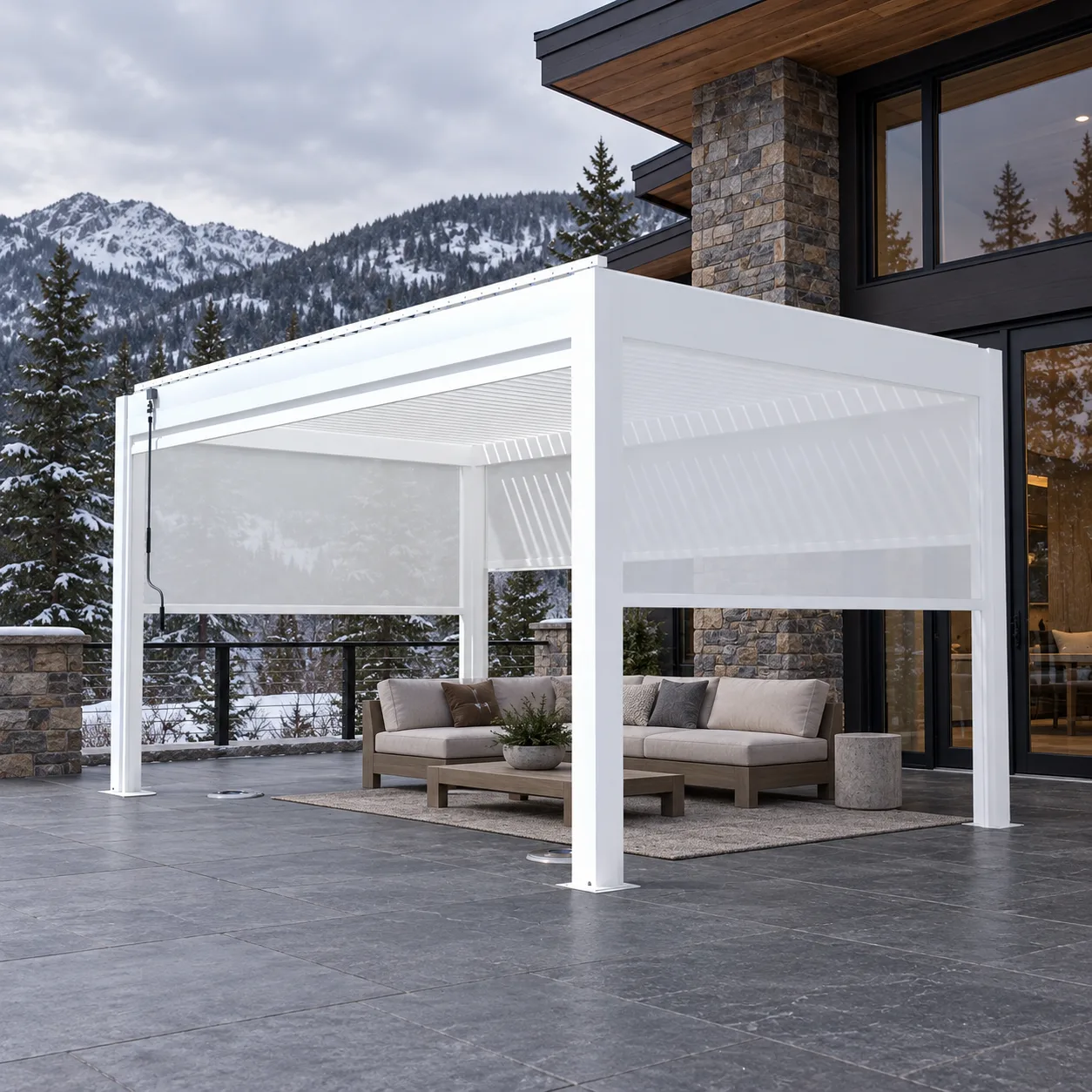
The short answer: To evaluate a motorized pergola for a cold, snowy climate, request model-specific structural and operating documentation, then have qualified local professionals compare it with your site’s design conditions and local requirements. Do not assume that aluminum construction, adjustable louvers, or a photo in a winter setting proves a snow-load rating. The buying decision should also cover drainage, freeze-thaw movement, electrical planning, safe winter access, maintenance, and a written severe-weather procedure.
Separate Product Appearance From Verified Performance
A pergola may look substantial and still require careful engineering review for a particular location. Snow varies in weight and behavior, while wind can create drifting and uneven accumulation. Local elevation, exposure, roof geometry, nearby buildings, and terrain can change the design conditions. That is why a generic statement such as “all-weather” is not a substitute for documentation tied to the exact pergola model, size, configuration, and installation.
Ask the supplier what structural documents are available and what assumptions they contain. Then give those documents to the professional responsible for the site and permit review. If a rating, certification, or approval cannot be verified, do not infer one. A responsible purchase process identifies the unanswered questions before foundations and utilities are built.
Build a Cold-Climate Information Package
Before requesting a quote, collect the property address or ZIP code, proposed footprint, photographs, patio type, distance from the house, nearby rooflines, elevation changes, utility availability, and the way the area will be used. Note whether the pergola is freestanding or being considered near an existing building. Include doors, windows, vents, eaves, downspouts, stairs, retaining walls, trees, and the normal snow-clearing route.
Document winter conditions without trying to calculate structural loads yourself. Photos showing drifting patterns, roof shedding, and cleared walkways can help the project team understand the site. The local authority and qualified design professionals determine the applicable criteria.
Questions That Deserve Written Answers
| Topic | Question to ask | Why it matters |
|---|---|---|
| Structure | What model-specific engineering or structural documentation is available? | Prevents assumptions based on material or appearance. |
| Louvers | What operating position and weather procedure does the manufacturer specify? | Moving parts should not be improvised during freezing conditions. |
| Drainage | How are gutters and outlets configured on this exact model? | Water must be coordinated with site drainage and freeze conditions. |
| Electrical | What power, controls, disconnects, and environmental protections are required? | Motorized systems need accessible, code-compliant service. |
| Maintenance | What inspection and cleaning instructions apply before and after winter? | Creates an ownership plan rather than relying on guesswork. |
| Service | Which components are replaceable and how are they accessed? | Cold-climate properties may have limited seasonal service access. |
Plan the Foundation for Freeze-Thaw Conditions
A level-looking patio is not automatically a suitable foundation. Soil, drainage, frost behavior, existing construction, and the pergola’s documented anchoring conditions all matter. Pavers, decks, slabs, and raised terraces require different evaluation. Have qualified local professionals determine the foundation and anchoring design for the exact site and model.
Keep post bases out of low areas where meltwater can pond and refreeze. The finished design should preserve access to anchors and drainage paths for inspection. If the project is near a retaining wall or elevated edge, coordinate both structures instead of treating them as independent decorative elements.
Coordinate Roof Water With the Whole Property
Snow eventually becomes water. Pergola gutters and outlets are only part of the drainage path; the site must carry discharge away without creating ice on steps, primary walkways, door thresholds, or neighboring property. Existing house downspouts and roof-shedding zones also need attention.
Do not route discharge merely to the nearest edge. A qualified site professional should review grading, allowable discharge, soil conditions, drains, and winter maintenance. Follow the exact pergola documentation for gutters and outlets, and keep them accessible for inspection. Never chip ice from a product component with a tool or chemical unless the manufacturer specifically approves the method.
Decide How the Space Will Be Used in Winter
Some buyers want a shoulder-season lounge; others expect regular winter use. Define the goal before selecting accessories. Screens can affect comfort but should not be treated as structural walls or as proof that the space is enclosed. Furniture, rugs, and planters must not block posts, screens, drains, controls, or service access.
If heating is considered, obtain appliance-specific clearance, ventilation, electrical or fuel, and outdoor-use requirements. Have qualified professionals review the complete arrangement. Never attach a heater, lighting fixture, fan, enclosure, or snow-management device to the pergola unless the exact product documentation allows it.
Create a Severe-Weather Operating Procedure
The household should not decide what to do with louvers or screens while a storm is arriving. Request the manufacturer’s model-specific instructions for wind, snow, ice, freezing rain, power loss, and periods when the property is vacant. Keep those instructions with the home’s seasonal checklist and ensure caretakers know where controls and disconnects are located.
Motorized parts should not be forced when frozen, obstructed, or unresponsive. Do not climb onto the pergola or strike components to remove accumulation. If the product needs inspection after severe weather, keep people away from the area and contact the appropriate qualified professional or supplier.
Cold-Climate Pergola Buyer Checklist
- Identify the exact model, dimensions, options, and intended location.
- Request model-specific structural and operating documentation.
- Have local professionals determine design conditions and permit requirements.
- Verify foundation, anchoring, drainage, and electrical plans together.
- Map roof-shedding areas and winter snow-clearing routes.
- Keep posts, screens, gutters, outlets, controls, and anchors accessible.
- Confirm approved cleaning and inspection methods.
- Write down the required louver and screen position for severe weather.
- Plan for power loss and seasonal vacancy without forcing motorized parts.
- Do not accept an unsupported wind or snow rating.
Compare the Total Project, Not Just the Pergola
When reviewing proposals, separate the pergola scope from foundation, electrical, drainage, permits, delivery, installation, and site restoration. Confirm who supplies drawings, who coordinates inspections, and who verifies the finished installation. A lower product quote may not represent a lower completed-project cost if important site work is excluded.
Review the META LIFESTYLE shade structure collection for design options, then request documentation for the exact configuration under consideration. Images can communicate style, but engineering and installation decisions require verified information.
Frequently Asked Questions
Can I leave a motorized pergola outside all winter?
A permanently installed pergola is generally intended to remain in place, but winter suitability, required operating positions, inspections, and maintenance depend on the exact model documentation and approved site design. Do not generalize from another product.
Should pergola louvers stay open or closed during snow?
Follow the manufacturer’s written instructions for the exact model and conditions. Do not guess or copy advice for a different system. If louvers are frozen or obstructed, do not force them.
Does aluminum mean the pergola is snow-rated?
No. Material alone does not establish a structural rating. Model, size, configuration, connections, foundation, installation, and documented engineering all matter.
Can a pergola be installed on an existing cold-climate patio?
Possibly, but appearance and surface condition do not confirm foundation or anchoring capacity. Have the existing construction, drainage, frost conditions, and exact pergola requirements reviewed by qualified professionals.
Can I add clear panels to enclose the pergola in winter?
Do not add panels or alter screens without written approval for the exact system. Added surfaces can affect wind behavior, ventilation, clearances, drainage, and structural loads, and may trigger permits.
Who determines whether the design meets local requirements?
The applicable local authority and appropriately qualified professionals control site-specific structural, electrical, drainage, anchoring, setback, and permit decisions. Product documents should be supplied for their review.
Request a Cold-Climate Pergola Quote
Request a quote from META LIFESTYLE with your location, dimensions, photos, patio details, intended use, utilities, and winter conditions. Both numbers below are official META LIFESTYLE WhatsApp contacts: