Pro Program Live Chat +8619050185756

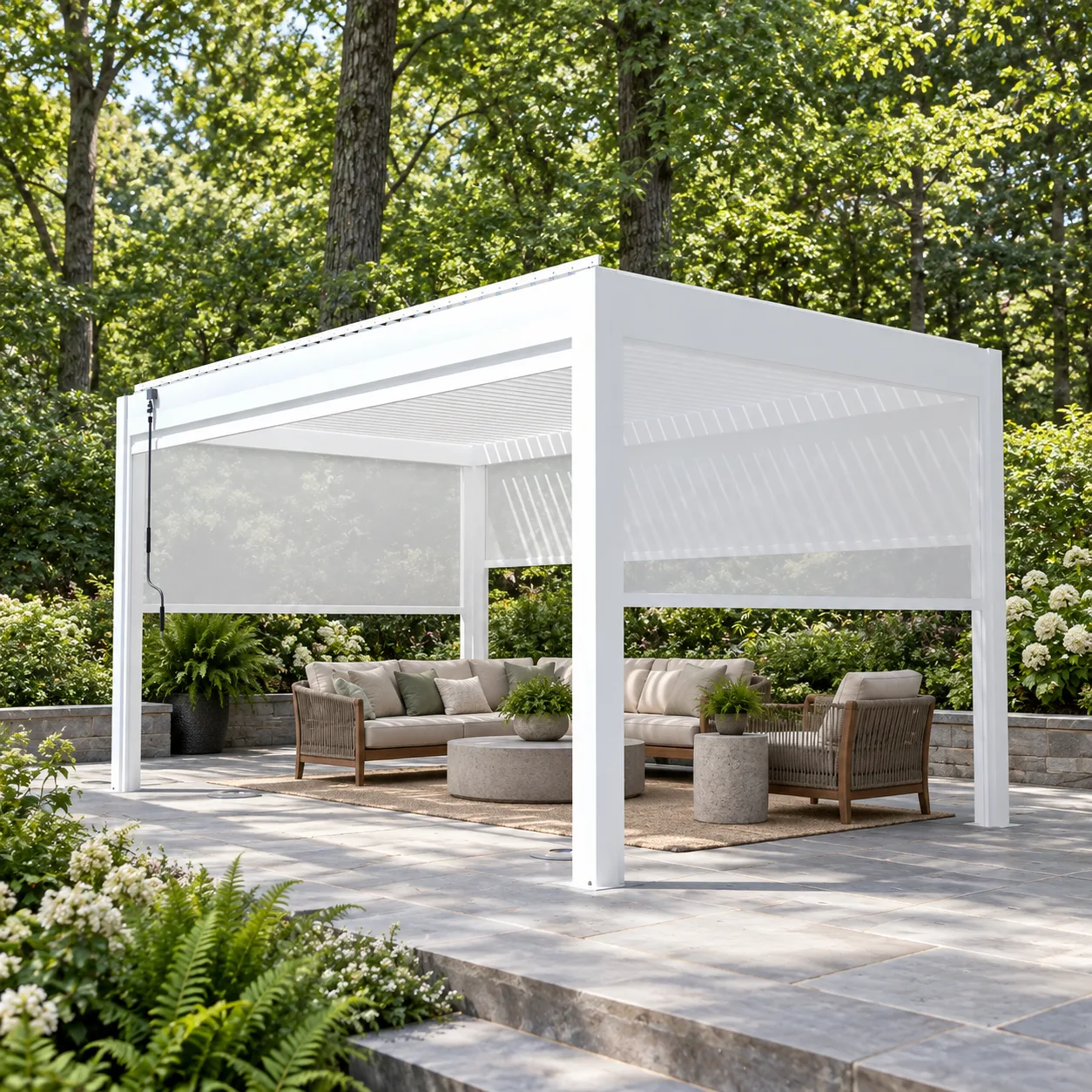
The most effective mosquito strategy around a motorized pergola is layered: remove standing water, keep air moving through the occupied area, manage dense vegetation near the patio, and evaluate compatible screens or other physical barriers before the pergola is ordered. No single accessory can compensate for poor drainage or hidden breeding water. Plan mosquito control as part of the site design, while confirming that every fan, screen, light, and electrical component is compatible with the exact pergola model and local requirements.
Begin With the Water, Not the Pergola
Mosquito problems often begin outside the seating area. Walk the property after irrigation or rain and look for water that remains in saucers, toys, clogged gutters, furniture covers, open containers, low paving joints, and poorly drained landscape beds. A beautiful patio can still be uncomfortable if nearby water is allowed to sit.
The pergola plan should direct roof water toward an approved discharge location without creating puddles beside the posts or at the edge of the terrace. Ask the project team to show the intended water path on the site plan. The correct solution depends on the model’s drainage design, soil, grading, hardscape, frost conditions, and local stormwater rules. Model-specific documentation and qualified local professionals or authorities control drainage, foundations, and permitted discharge.
Perform a 20-minute water audit
- Inspect the patio within a day after rainfall or irrigation.
- Check roof drains, downspout outlets, and low points around the foundation.
- Lift furniture covers and outdoor rugs where water can be trapped.
- Empty or maintain decorative containers according to their intended use.
- Confirm that planters drain without sending water toward pergola anchors.
- Ask who will clean gutters and drainage channels, and how they will gain access.
This simple audit is more useful than choosing insect-control products before understanding the site.
Use Airflow as a Comfort Tool
Mosquitoes are weak fliers, so moving air across the occupied zone can improve comfort. The goal is not to create a wind tunnel; it is to avoid a still pocket around ankles and seating. Before adding a fan, study the prevailing breeze, nearby walls, hedges, and the position of screens.
A ceiling fan may not be suitable for every pergola. Required headroom, attachment points, weight, electrical routing, louver movement, weather exposure, and wind operation all matter. Do not drill into beams or attach equipment without written confirmation from the pergola manufacturer or project engineer. A freestanding outdoor-rated fan may be an alternative, provided its cord and base do not create trip or electrical hazards.
Decide Whether Screens Fit the Way You Live
Retractable side screens can add a physical boundary while also helping with glare and privacy, but they are not interchangeable with fine insect mesh. A shade screen’s weave may not be designed to exclude small insects. Ask for the exact screen material, opening size, edge condition, bottom closure, track design, and intended use.
Even a purpose-designed insect screen works best when all edges are considered. Gaps at the floor, around posts, or where adjacent walls meet the structure can become entry points. Screens also change airflow, views, furniture placement, and how occupants enter or exit.
Screen decision comparison
| Approach | Potential advantage | Questions to resolve |
|---|---|---|
| Open-sided pergola | Maximum breeze and visual openness | Will fans and site airflow provide enough comfort? |
| Shade screens | Glare, sun, and privacy management | Is the fabric intended for insect exclusion, and how are edges sealed? |
| Purpose-designed insect screens | More complete physical barrier | Are they compatible with the structure, openings, wind conditions, and egress needs? |
| Seasonal portable screening | May be removable and flexible | Can it be secured safely without altering the pergola? |
Never assume a screen accessory changes the pergola’s structural rating or weather operating limits. Obtain model-specific documentation and operating instructions.
Shape the Landscape Without Making It Sterile
A lush garden and a comfortable patio can coexist. The key is to avoid creating a dense, damp pocket immediately around the seating zone. Prune plants for healthy air movement, keep irrigation directed toward roots instead of furniture or screens, and avoid overwatering beds beside the terrace.
Leave practical access around pergola posts, drains, motors, and screen tracks. This makes inspection and cleaning easier while preventing foliage from rubbing against moving components. Select plants for the actual light, soil, and climate rather than relying on unsupported claims that a particular plant will repel mosquitoes throughout the patio.
Plan Lighting for People, Not Insects
Lighting should first provide safe movement, comfortable dining, and useful task illumination. Place fixtures where they do not create harsh glare in seated guests’ eyes. Minimize unnecessary spill into vegetation and turn off lights when the patio is not in use.
Do not treat a color of light as a complete mosquito-control solution. If adding integrated or nearby lighting, confirm outdoor ratings, wiring routes, controls, and compatibility with the pergola. Electrical design and installation should be completed by qualified professionals under applicable local requirements.
Coordinate the Louvered Roof With Screens and Airflow
A motorized louvered roof provides adjustable shade and ventilation, but its operation should follow manufacturer instructions, particularly in wind, rain, snow, freezing conditions, or power loss. The position of louvers can change heat and airflow beneath the structure. Test comfortable settings during the hours when the patio is actually used.
If screens are deployed, observe whether air becomes stagnant and whether furniture blocks circulation. The best setting may change between a calm humid evening and a breezy afternoon. An easy routine—opening selected sides, adjusting louvers, then using an approved fan—can be more practical than leaving every accessory in one position.
A Buyer Checklist Before Requesting a Quote
- Photograph the site after rain and mark every place water collects.
- Record patio dimensions, grade changes, nearby trees, walls, and utilities.
- Identify the times of day and seasons when mosquitoes are worst.
- Decide whether the priority is insect exclusion, sun control, privacy, or a combination.
- Ask whether proposed screens are insect mesh or shade fabric.
- Request drawings showing screen tracks, bottom closure, entrances, and service access.
- Confirm how roof water is collected, routed, and maintained.
- Discuss fan locations only after verifying structural and electrical compatibility.
- Review louver and screen operating limits in the model documentation.
- Have qualified local professionals confirm foundations, anchoring, wiring, drainage, permits, and egress.
You can review the META LIFESTYLE shade structure collection to identify a suitable starting configuration, then request the exact drawings and options for your site.
What Not to Rely On
A premium patio should not depend on one gadget or an unverified promise. Decorative torches, scented products, plants, and plug-in devices may be marketed for mosquito control, but results vary and some products introduce flame, chemical, electrical, pet, or child-safety considerations. Follow product labels and local public-health guidance. Never place open flames near screens, furnishings, combustible materials, or a structure unless the equipment and clearances are specifically approved.
If mosquito pressure remains severe after site corrections, consult a qualified local pest-management professional. Ask for an inspection-led plan that identifies breeding sources and explains any proposed treatment, precautions, and follow-up.
Frequently Asked Questions
Do motorized pergola screens keep mosquitoes out?
Only if the screen material and the full enclosure details are designed for insect exclusion. Shade fabric alone may not be fine enough, and gaps at edges or the floor can reduce effectiveness. Verify the exact product rather than assuming.
Can I attach a ceiling fan to a motorized pergola?
Do not attach one without written approval for the exact model and configuration. The structure must accommodate the attachment, weight, movement, clearances, electrical routing, and outdoor exposure. Use qualified installers.
Will closing the louvers stop mosquitoes?
No. Closing louvers may change shade, rain protection, and airflow, but it does not seal the sides. Mosquito control requires source reduction and, when appropriate, compatible physical barriers or airflow.
Should landscaping be removed around the patio?
Usually not. Focus on drainage, irrigation control, pruning, and service access. A landscape professional can help maintain healthy planting without creating persistently damp, stagnant areas next to seating.
Can roof runoff be sent into a garden bed?
That depends on runoff volume, grading, soil, foundation location, and local stormwater rules. The discharge must not create standing water or undermine anchors. Have the drainage route designed and approved for the specific site.
How do I request a pergola quote with mosquito-control options?
Send the site dimensions, photos after rain, preferred screen purpose, electrical access, and typical use times through the META LIFESTYLE Request a Quote page. Both +8619050185756 and +1 (626) 735-5685 are official META LIFESTYLE WhatsApp contacts.
Design the Whole Comfort System
A motorized pergola can anchor a far more usable outdoor room, but mosquito comfort depends on the entire site. Solve standing water first, preserve airflow, specify the correct type of screen, and keep landscape and drainage systems maintainable. When those decisions are coordinated with the pergola’s verified documentation and qualified local professionals, the result is a patio that feels intentional rather than patched together.