Pro Program Live Chat +8619050185756

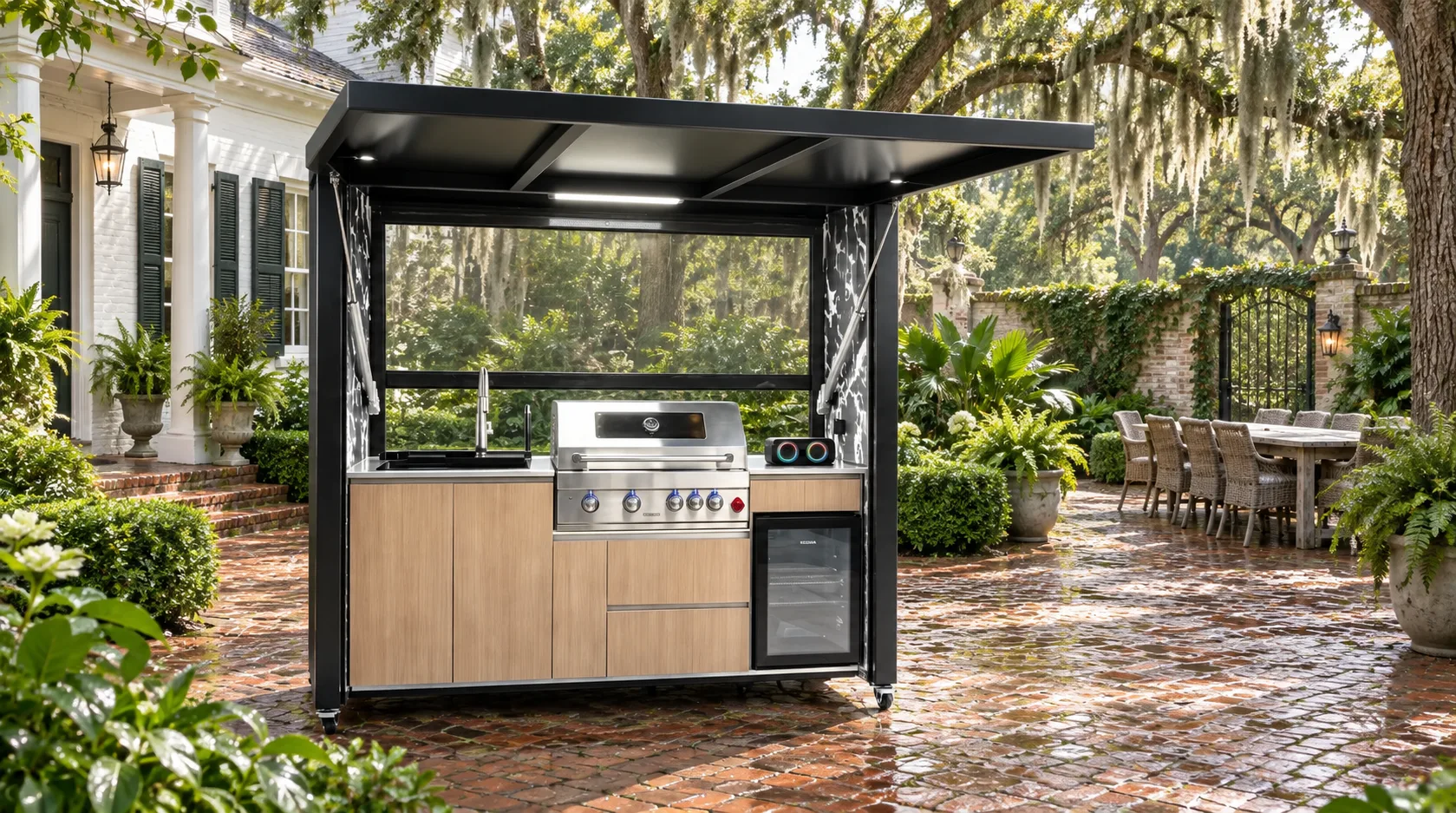
An outdoor kitchen for seafood boils and fish prep should separate cold holding, raw preparation, cooking, hot-pot landing, serving, and cleanup so food and people move in one clear direction. Start with the meals you actually make and the equipment manufacturer’s requirements. Do not add a high-output burner, oversized pot, fryer, or improvised stand unless the appliance is specifically approved for the location and installed with required clearances by qualified professionals.
Seafood gatherings create different pressures than routine grilling. Ingredients may arrive in coolers, raw shells and packaging accumulate quickly, large pots are heavy, and cleanup produces water and food residue. A successful design prioritizes workflow and sanitation rather than filling every cabinet with appliances.
Map the meal from delivery to disposal
Write the sequence for a typical event: receive seafood, hold it cold, wash hands, prepare ingredients, cook, drain or lift food safely, season and serve, then collect shells and clean surfaces. Mark each step on the patio plan. Raw food should not travel back through the serving area.
Identify who carries the pot, who manages guests, and where children will be. Keep the hot zone out of the main path between the house, seating, and yard. If cooking equipment is separate from the built-in grill, give it an approved, stable location rather than placing it wherever an extension hose or cord reaches.
Design for the largest safe object
Measure the cooler, stockpot, basket, sheet pan, cutting board, and serving trays you use. Test their weight and movement when full without actually carrying hot liquid during the mockup. The landing surface must accept the real pot or tray without handles projecting into traffic.
A rolling cart can help only if its wheels, surface, capacity, and route are suitable. Changes in level, loose gravel, narrow gates, and wet paving make heavy loads harder to control.
Keep seafood cold until cooking
Plan enough cold storage for the event and minimize time outside temperature control. An outdoor refrigerator may support beverages or ingredients only when the exact appliance is rated and installed for its intended use and conditions. Do not assume a small refrigerator can rapidly cool a large warm load.
Coolers should sit in shade on a stable surface where meltwater can be managed without crossing the cook’s feet. Keep raw seafood separate from ready-to-eat foods and follow current food-safety guidance from authoritative health agencies.
Create a washable raw-prep zone
Raw fish prep needs a dedicated board area with room for tools, pans, and immediate cleanup. Choose surfaces and accessories according to product documentation and food-safe practices. Avoid porous decorative materials where liquids and residue can collect.
Place handwashing or an approved alternative close enough to be used, but do not let sink traffic cross the hot zone. Soap, towels, sanitizer used according to its label, and a covered waste container should be easy to reach. Plumbing, potable water, backflow protection, drainage, and wastewater disposal must be designed by qualified local professionals.
| Zone | Primary job | Conflict to avoid |
|---|---|---|
| Cold holding | Keep seafood and perishables properly chilled | Guests repeatedly opening ingredient storage |
| Raw prep | Trim, portion, season, and contain drips | Sharing space with finished platters |
| Cooking | Operate approved grill, burner, or appliance | Combustibles, crowding, and unstable equipment |
| Hot landing | Receive baskets, pots, and pans | Handles extending into walkways |
| Serving | Move finished food to guests | Crossing raw prep or waste routes |
| Waste | Contain shells, packaging, and scraps | Heat, pests, odors, and leaking bags |
Treat large-pot cooking as a separate safety decision
Large vessels can be unstable and extremely heavy. The burner, stand, fuel, pot, basket, and location must be mutually compatible according to the manufacturers. Never place an outdoor cooker beneath a roof, beside combustible finishes, or near doors and windows unless the exact documentation and qualified local professionals approve the installation.
Gas supply, cylinders, regulators, hoses, electricity, ventilation, fire clearances, and suppression requirements are site- and equipment-specific. Local authorities control permits and fire rules. The built-in kitchen’s presence does not make every portable appliance safe to use beside it.
Plan the hot landing before the burner
A cook needs an immediate, heat-appropriate landing point that does not require turning through guests. If the process involves lifting a basket, confirm where it drains and how hot liquid is contained. Never pour cooking water, grease, or seasoned liquid onto the patio, landscape, storm drain, or near waterways without an approved disposal method.
Keep towels, children, pets, and loose furniture away from the path. Use lighting that reveals wet spots and level changes without glare.
Control shells, odors, and pests
Seafood waste should move directly into durable, covered containers. Decide whether it can remain outdoors at all and how it reaches the property’s approved waste collection. Use liners appropriate to the load and avoid overfilling.
Cabinets should not become temporary waste storage unless designed and maintained for that purpose. Clean spills promptly and follow surface, appliance, and local waste guidance. In warm climates, a short cleanup delay can quickly create odor and pest problems.
Protect drainage and nearby landscaping
Rinsing does not make food residue disappear. Sink wastewater and patio runoff need approved destinations. Shell fragments, grease, seasonings, and cleaners can clog drains or affect soil and water. Qualified local professionals and authorities control plumbing, septic, sanitary, stormwater, and environmental requirements.
Keep the patio graded to avoid standing water at appliances and wheels. If the kitchen is near a flood-prone or coastal area, evaluate site drainage, equipment placement, and local requirements without claiming universal weather resistance.
Build a calm guest experience
Put drinks and finished-food serving outside the cook’s pivot area. A separate table allows guests to gather without reaching across raw ingredients or hot equipment. Preserve one clear route for the cook and one for guests whenever space allows.
For a buffet, arrange plates first, then food, condiments, and waste so the line does not reverse. Keep allergy-related dishes and tools separated according to the event plan.
Seafood-event checklist
- Map cold holding, raw prep, cooking, landing, serving, cleanup, and waste.
- Measure full coolers, pots, baskets, boards, and platters.
- Verify every cooking appliance and fuel setup for the exact location.
- Provide stable surfaces and unobstructed movement for heavy items.
- Keep handwashing and approved cleanup supplies accessible.
- Separate raw seafood from ready-to-eat food and serving traffic.
- Plan lawful disposal for cooking liquid, grease, shells, and wastewater.
- Use covered waste containers and a prompt removal plan.
- Confirm gas, electricity, plumbing, fire clearances, drainage, and permits with qualified professionals.
- Preserve model-specific ventilation, anchoring, operation, and service access.
Request a configuration discussion
Review META LIFESTYLE outdoor kitchens and prepare site dimensions, photos, utilities, typical guest count, equipment list, and the largest items you expect to handle. Use the Request a Quote contact page. Both +8619050185756 and +1 (626) 735-5685 are official META LIFESTYLE WhatsApp contacts.
Frequently Asked Questions
Can I use a seafood-boil burner under the outdoor-kitchen roof?
Do not assume so. Follow the exact burner and structure documentation plus decisions from qualified local fire, gas, and installation professionals. Clearances and ventilation are equipment- and site-specific.
Where should a large hot pot land?
Provide a stable, heat-appropriate surface immediately beside the approved cooking location, outside guest traffic. Test the route and surface dimensions before the event.
Can seafood rinse water go into a storm drain?
Do not discharge it without approval. Food residue and contaminants may be prohibited. Use a wastewater solution designed by qualified professionals under local rules.
Is an outdoor refrigerator enough for raw seafood?
Only if the exact appliance, loading, temperature, installation, and food-safety practices are appropriate. Verify temperatures and use properly managed coolers or other approved cold holding when needed.
How do I reduce seafood odors?
Contain shells and scraps promptly, clean surfaces according to product guidance, remove waste quickly, prevent leaks, and avoid storing residue in warm cabinetry.
What should I include in a quote request?
Send patio dimensions, photos, utilities, expected meals, equipment, typical guest count, cold-storage needs, sink preferences, and circulation constraints.