Pro Program Live Chat +8619050185756

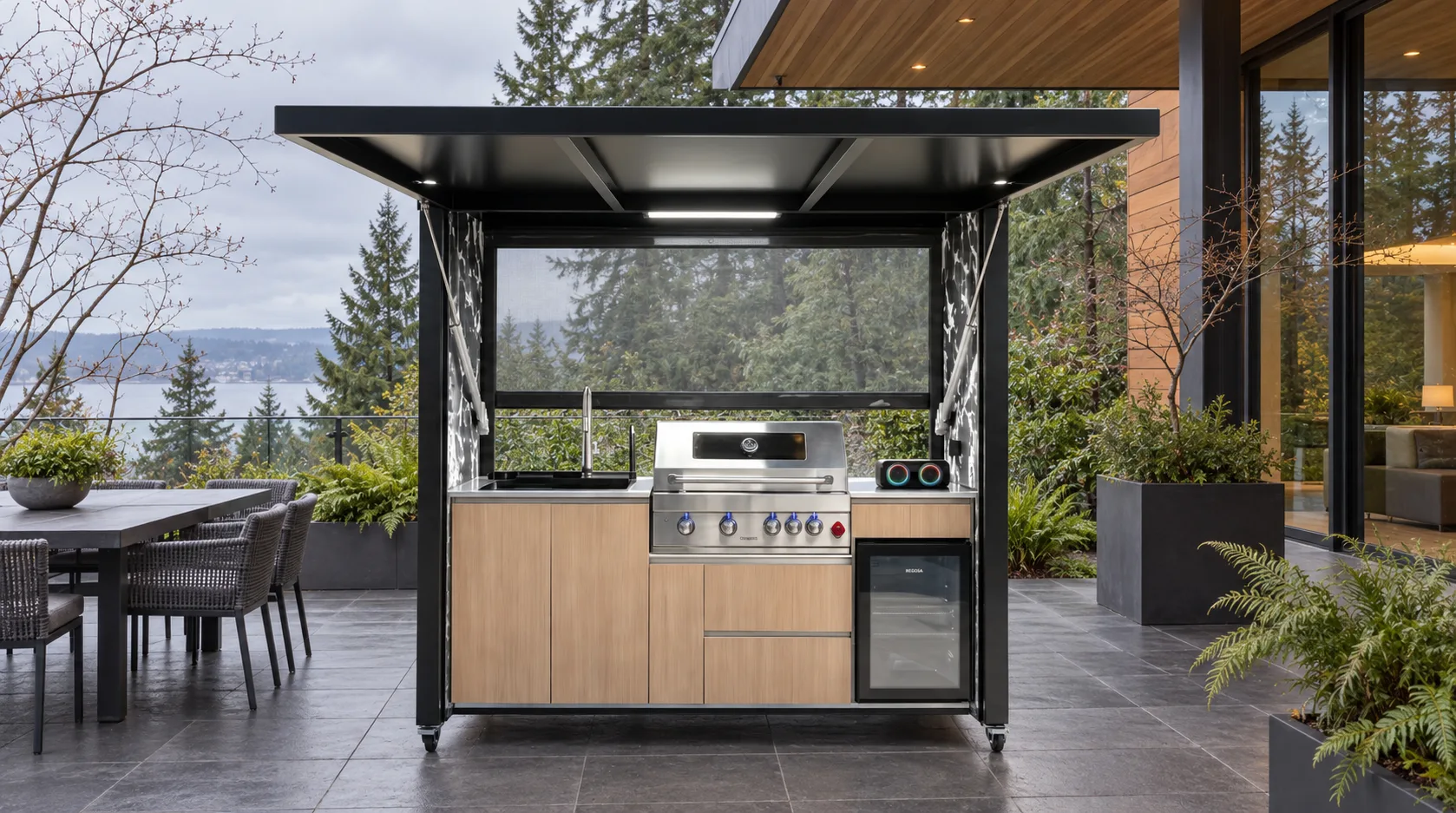
An outdoor kitchen can relieve holiday pressure when it is assigned a few specific jobs—such as grilling, holding beverages, staging finished platters, or preparing one course—rather than becoming a second kitchen that tries to do everything. Plan the workflow before the event, verify every appliance for the weather and intended use, and keep raw food, hot cookware, guests, and cleanup moving on separate routes.
Holiday meals are unusually demanding. The indoor oven is full, refrigerator space disappears, serving dishes multiply, and helpers arrive with different assumptions. An outdoor kitchen can add useful capacity, but only if the household decides exactly what moves outside and what remains indoors.
Choose the outdoor kitchen’s assignment
List the menu and identify the real indoor bottleneck. If oven space is tight, the outdoor grill may handle a documented, appropriate dish. If refrigerator doors are constantly opening, the outdoor unit may hold beverages or approved ingredients. If counters are crowded, the outdoor space may become a plating station.
Avoid moving a task outside simply because there is an appliance. Weather, food safety, lighting, carrying distance, and manufacturer instructions all matter. Choose two or three outdoor jobs that reduce indoor conflict and can be completed safely.
Create a written station plan
Give each counter, drawer, and appliance a temporary holiday role. Label storage bins and tell helpers where clean platters, foil, gloves, towels, and waste belong. A five-minute briefing prevents guests from placing drinks in a raw-food zone or moving tools between stations.
Keep a printed menu timeline outdoors so the cook does not repeatedly walk inside to check it. Protect paper from moisture and place it away from heat.
Map the path between kitchens
Walk the route carrying an empty roasting pan and a large platter. Check doors, steps, rugs, wet paving, corners, pets, and guest seating. The shortest route is not always the safest when people gather near a doorway.
Use one landing point just inside the house and one outside. Finished dishes should not be set on the same surface that receives raw ingredients. If weather requires covered transport, select containers that remain stable and easy to grip.
| Outdoor role | What it solves | Main control |
|---|---|---|
| Grilling one course | Reduces indoor oven or cooktop demand | Verify appliance method, weather, and fire clearances |
| Beverage station | Keeps guests away from indoor prep | Separate drinks from ingredient cold holding |
| Cold staging | Creates organized ingredient space | Verify actual safe temperature and appliance capacity |
| Plating counter | Frees indoor counters | Protect food from weather and minimize holding time |
| Cleanup support | Contains tools and waste | Use approved water, drainage, and sanitation procedures |
| Serving pickup | Keeps guests out of cooking areas | Place it beyond the hot and raw-food zones |
Verify cold holding before shopping
An outdoor refrigerator should be used only according to its exact documentation and verified temperature performance. Do not load it with warm casseroles or tightly packed ingredients and assume they will cool quickly. Measure temperatures with appropriate food thermometers and follow current public-health guidance.
Decide which items belong outdoors, when they move, and who checks them. Beverages may be a better assignment than high-risk ingredients if capacity or conditions are uncertain. Properly managed coolers can supplement storage when appropriate.
Plan hot food without improvising appliances
Use only cooking and warming equipment approved for outdoor use and the actual location. Do not place portable burners, fryers, slow cookers, or extension cords under or beside the structure without exact manufacturer approval and qualified professional review.
Gas, electricity, ventilation, fire clearances, circuits, and fuel storage are model- and site-specific. Local professionals and authorities control installation, permits, and fire requirements. A covered outdoor kitchen does not make every indoor appliance suitable outdoors.
Provide a real hot landing zone
Reserve a heat-appropriate counter next to the cooking appliance. Measure the largest pan and leave room for handles, lids, trivets, and utensils. The cook should not turn across a guest path while holding hot food.
Keep warming and holding times within authoritative food-safety guidance. If a dish cannot be held safely outside, schedule it to move directly indoors.
Prepare for cold, rain, and early darkness
Check the forecast, but also plan for a change. Wind can affect comfort and cooking; rain can make routes slippery; cold temperatures can affect water lines and appliances. Follow model-specific operating and winterization instructions.
Provide task lighting at the grill, prep counter, controls, and path without glare. Keep cords and temporary lights out of wet areas and walking routes. Qualified electricians should handle any permanent outdoor electrical work.
Keep guests out of the work triangle
Move drinks, appetizers, and social seating away from the grill and the door between kitchens. Use a separate table as the guest-facing pickup point. Children should have a defined path and activity zone outside the cooking area.
If helpers are invited, assign one person to transport between kitchens and another to manage the outdoor station. Too many unassigned helpers create collisions and forgotten food.
Organize cleanup before cooking begins
Set out containers for trash, recycling, used tools, towels, and dishes. Decide which items can be washed outdoors and which return indoors. Outdoor sink use, potable water, wastewater, grease, and drainage must follow the approved plumbing plan and local requirements.
Do not pour fats, cooking liquids, food scraps, or cleaners into landscaping or storm drains. Keep waste covered and remove it promptly, especially when an event extends late into the evening.
Protect the kitchen after the event
Return food to safe storage promptly, clean surfaces according to product instructions, empty waste, and check that gas, electricity, water, and appliances are left in their approved condition. Do not close shutters or covers around hot or wet equipment unless documentation permits it.
If temperatures may fall below freezing, follow the exact winterization procedure. Never assume residual heat will protect water lines overnight.
Holiday overflow checklist
- Identify the indoor bottleneck and assign only a few outdoor tasks.
- Create separate raw, hot, serving, beverage, and waste zones.
- Walk the route between kitchens with large empty pans.
- Verify refrigerator temperatures and realistic capacity.
- Use only appliances approved for outdoor conditions and placement.
- Reserve a heat-appropriate landing surface beside cooking equipment.
- Provide task lighting and a weather backup plan.
- Place guest food and drinks outside the work route.
- Assign one transport helper and one outdoor-station lead.
- Plan cleanup, waste, shutdown, and winterization before the event.
Request a holiday-ready configuration discussion
Review META LIFESTYLE outdoor kitchens and prepare patio dimensions, photos, utilities, typical holiday menu, guest count, and the tasks you want to move outdoors. Use the Request a Quote contact page. Both +8619050185756 and +1 (626) 735-5685 are official META LIFESTYLE WhatsApp contacts.
Frequently Asked Questions
Can an outdoor refrigerator hold holiday food?
Only when the exact appliance is installed and operated as documented and verified to maintain safe temperatures under actual conditions. Avoid overloading it or using it to rapidly cool large warm dishes.
Can I use indoor countertop appliances outside?
Do not assume so. Use equipment only where its manufacturer permits, with suitable power, weather protection, clearances, and qualified professional review.
What is the easiest holiday task to move outdoors?
Beverage service, one grill-appropriate course, or organized platter staging often reduces indoor traffic without duplicating the entire meal. The best choice depends on the site and equipment.
How do I keep food warm while carrying it inside?
Minimize distance and delay, use suitable covered containers, assign one clear carrier, and follow authoritative hot-holding guidance. Do not rely on improvised heating methods.
Can the outdoor sink handle holiday cleanup?
Only within the approved plumbing, drainage, water, and product limits. Decide which items are washed outdoors and keep grease and food solids out of unsuitable drains.
What should I include in a quote request?
Send site dimensions, access photos, utilities, desired appliances, typical guest count, seasonal climate, menu patterns, and the indoor bottleneck you want the outdoor kitchen to solve.