Pro Program Live Chat +8619050185756

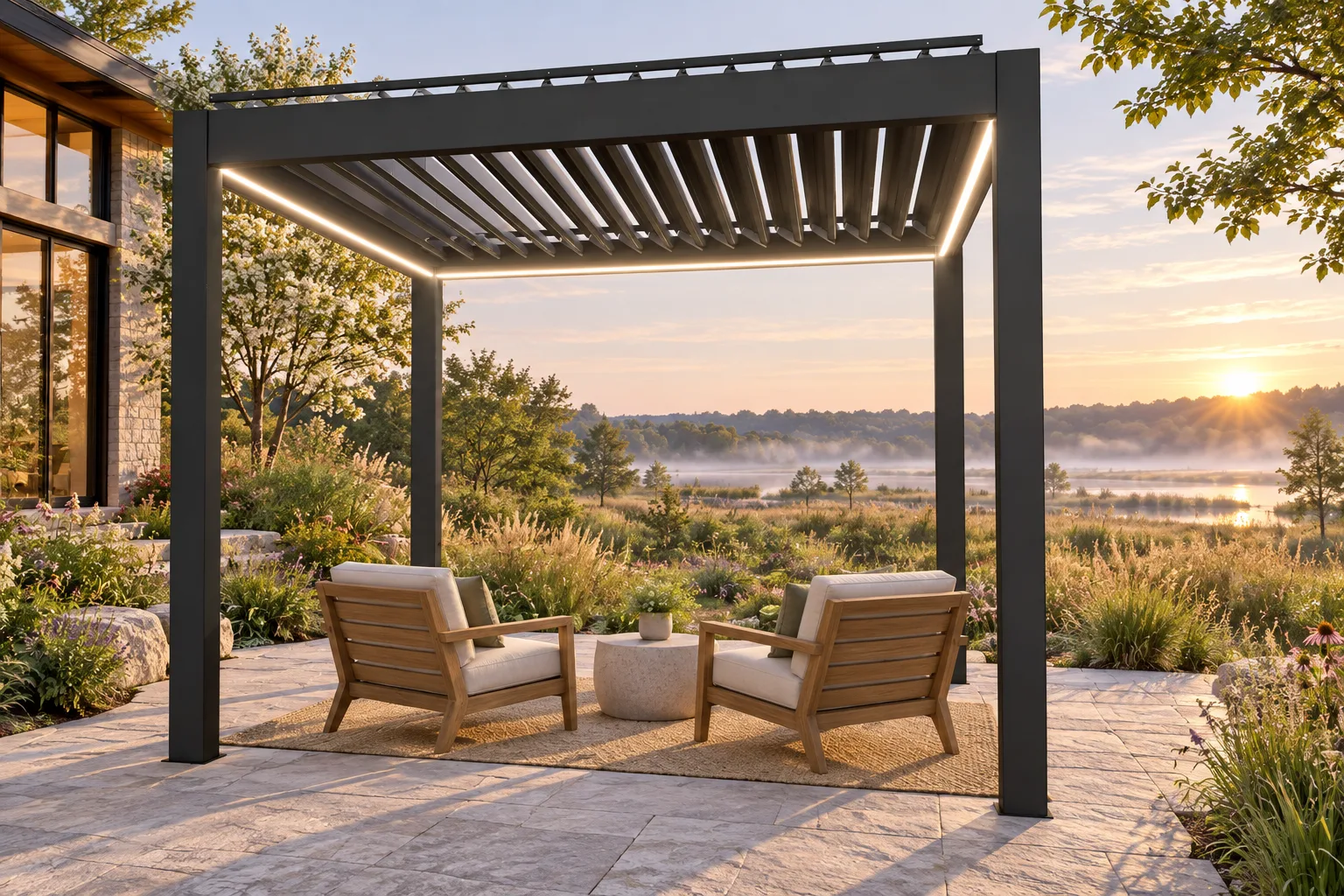
A motorized pergola can create a comfortable birdwatching base when it frames a view of habitat without placing people, glare, noise, or reflective glass directly in the birds’ movement path. Put habitat first and furniture second. The best viewing space looks toward native planting, water, and open edges while keeping feeders, nests, and high-traffic flight routes away from the structure itself.
Birdwatching does not require turning the patio into a themed display. A quiet chair, stable surface for field guides, controlled shade, and a clear view are more useful than many accessories. Local birds, migration patterns, predators, disease concerns, and wildlife rules should guide any habitat features.
Study the yard before placing the pergola
Observe the property at dawn, midday, and late afternoon through several seasons. Note where birds enter, forage, bathe, rest, and leave. Identify existing trees, dense shrubs, water, open lawn, nearby windows, pets, and neighboring activity.
Choose a viewing direction that offers depth: foreground planting, a mid-distance habitat edge, and a longer view. Avoid centering the pergola directly on a nest or forcing birds to cross a busy patio to reach cover.
Keep a respectful observation distance
Birds vary in tolerance, especially during nesting and migration. Use binoculars rather than moving seating closer. If birds change behavior, repeatedly alarm, or abandon a location when people arrive, increase distance and consult local wildlife guidance.
Do not prune active nesting habitat or schedule loud construction without checking applicable wildlife protections. Qualified local ecologists, bird organizations, and authorities can provide location-specific advice.
Design the sightline from the chair
Place chairs during a full-scale mockup and sit at the actual eye level. Check whether posts, table edges, screens, railings, or tall planters block the view. A pergola can frame the scene beautifully, but furniture should not force repeated twisting.
Leave room for a companion, binoculars, a field guide, and a warm drink without cluttering circulation. A small, stable side table is often more useful than a large coffee table. Keep the main route behind the chairs so people do not cross the view.
| Design element | Birdwatching benefit | Caution |
|---|---|---|
| Adjustable louvers | Manage sun while retaining an open view | Operate only according to model and weather guidance |
| Native planting | Supports locally appropriate habitat and seasonal interest | Avoid blocking service access or foundations |
| Low seating | Creates a calm view beneath the roof line | Confirm accessibility and safe standing space |
| Screening | May reduce wind or insects in some conditions | Can change reflections, sightlines, and wildlife visibility |
| Path lighting | Supports safe early-morning access | Keep output low, shielded, and limited in duration |
| Water feature | May attract birds when responsibly designed | Requires cleaning, disease control, and safe placement |
Use native habitat beyond the structure
Work with a local landscape professional or native-plant resource to select species appropriate to the region and site. Aim for layers—groundcover, grasses, shrubs, and trees—while preserving the pergola’s foundation, drainage, gutters, controls, and maintenance access.
Avoid unsupported claims that one plant will attract a particular species. Habitat value depends on local ecology, plant origin, season, insects, fruit, cover, and surrounding land. Do not use pesticides indiscriminately; follow authoritative local guidance.
Be cautious with feeders
Feeders are not required for a good birdwatching yard. If used, place them based on current guidance from reputable bird and wildlife organizations, considering window-collision risk, predators, sanitation, species, and local disease advisories.
Keep seed and waste away from pergola tracks, motors, gutters, furniture, and food-service areas. Clean feeders on the recommended schedule and pause feeding when local authorities advise it. Never place food where rodents or larger wildlife create a hazard.
Reduce window-collision risk
A pergola near large glass doors can concentrate views toward reflections of sky and vegetation. Evaluate the home glazing as part of the project. Effective collision-reduction strategies are generally applied to the exterior surface and must be selected based on current authoritative guidance.
Do not assume screens or interior curtains solve every reflection. Ask a qualified local bird-safety organization or building professional about suitable treatments, placement, and maintenance.
Keep lighting quiet and wildlife-aware
Dawn and dusk viewing need only modest path and task light. Use warm, shielded, low-output fixtures aimed at walking surfaces, with timers or controls that turn them off when not needed. Avoid uplighting trees or flooding the habitat edge.
Integrated pergola lights and added fixtures must follow model-specific electrical documentation. Qualified electricians and local authorities control circuits, grounding, outdoor enclosures, permits, and inspections. Dark-sky or habitat-sensitive rules may apply.
Plan sound and movement
Place speakers, outdoor televisions, and mechanical equipment away from the viewing edge, or omit them. Soft conversation and slow movement generally make observation easier. Keep dogs and cats under responsible control according to local rules and wildlife guidance.
Use a stable route from the house that does not pass through dense planting. Store binoculars and guides indoors or in weather-appropriate storage; humidity and temperature changes can damage optics.
Coordinate the site professionally
Habitat goals do not replace structural requirements. Foundations, anchoring, soil, drainage, wind, snow, electricity, permits, and setbacks must be evaluated for the exact pergola and site. Never infer a rating or approval from an image or another project.
Keep roots and irrigation away from footings as directed by qualified professionals. Roof drainage should reach an approved destination without eroding habitat or creating standing water at post bases.
Birdwatching-pergola checklist
- Observe bird movement through multiple times and seasons.
- Choose a view that does not crowd nests or feeding areas.
- Mock up seated sightlines and circulation at full scale.
- Use locally appropriate native planting beyond service clearances.
- Follow current guidance for feeders, water, disease, and predators.
- Evaluate nearby glass for collision risk.
- Use low, shielded lighting only where needed.
- Limit noise and keep pets responsibly controlled.
- Preserve gutters, controls, tracks, foundations, and maintenance access.
- Follow model-specific operation, structural, drainage, and permit requirements.
Request a habitat-aware configuration discussion
Review META LIFESTYLE shade structures and prepare patio dimensions, photos, sun direction, important trees, viewing goals, glazing locations, and desired seating. Use the Request a Quote contact page. Both +8619050185756 and +1 (626) 735-5685 are official META LIFESTYLE WhatsApp contacts.
Frequently Asked Questions
Should feeders hang from the pergola?
Do not attach feeders to structural components without product approval. Feeders can also create sanitation, pest, and collision concerns; use current local wildlife guidance for placement.
Can pergola screens disturb birds?
Screens may change reflections, movement, and visibility. Observe the actual material and setting, keep habitat outside operating clearances, and seek bird-safety guidance where needed.
What time of day is best for the viewing direction?
It depends on local species, sun angle, habitat, and season. Observe the yard at dawn and later periods before finalizing seating and louver orientation.
Can I add a birdbath beside the patio?
Yes when responsibly located and maintained according to current wildlife guidance. Keep it clean, away from hazards, and clear of pergola foundations, wiring, and drainage.
How can I reduce bird collisions with nearby windows?
Use current evidence-based exterior treatments appropriate to the glazing and site. Consult reputable bird-safety resources rather than relying only on interior decor or a single decal.
What should I send with a quote request?
Send dimensions, photos, sun and view direction, existing vegetation, seating goals, nearby glass, utilities, patio construction, accessibility needs, and local restrictions.