Pro Program Live Chat +8619050185756

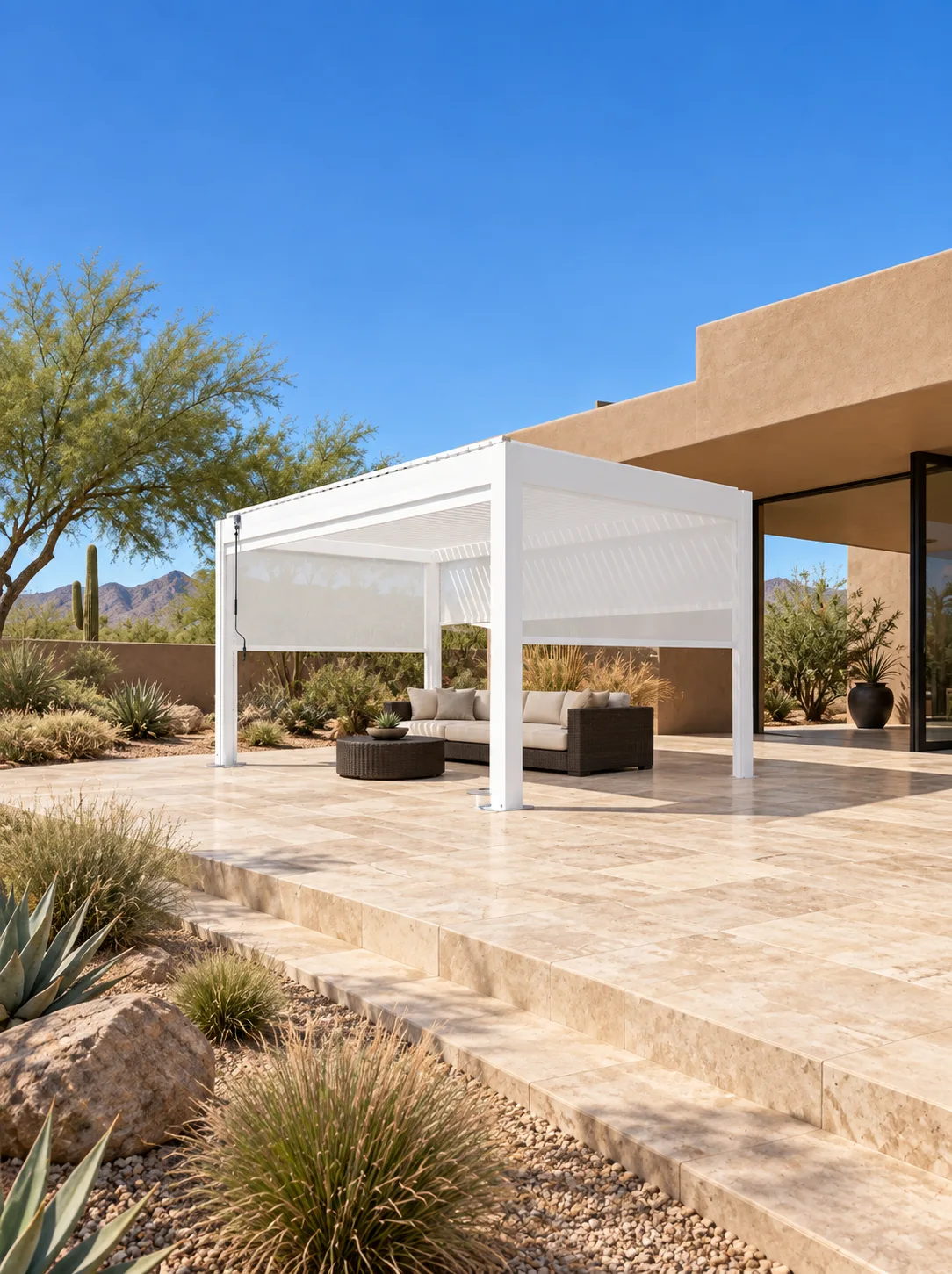
A useful motorized pergola quote should identify the exact structure being offered, the site conditions it assumes, and which installation tasks are included or excluded. A single bottom-line figure cannot tell you whether two proposals cover the same project. Ask each seller or contractor to make the product, site work, electrical work, approvals, and handoff responsibilities visible before you compare totals.
Start with one shared project brief
Send every prospective supplier the same basic information. Include the property location, a dimensioned sketch of the proposed area, photos from the house and yard, the intended use, and the surface below the proposed structure. Explain whether you want a freestanding or potentially attached layout, but let qualified professionals determine what is feasible. Mention any doors, windows, drainage paths, trees, and existing utility routes that could influence placement.
Ask for the exact model and configuration under discussion, not a generic example image. A pergola photographed with screens, lighting, or a particular louver arrangement does not prove that every quoted version includes them. Request a drawing that marks the footprint, post locations, roof orientation, operating parts, and proposed access around the perimeter. If the design is still conceptual, have the quote say so explicitly.
This common brief makes the comparison fairer. If one bidder assumes a clear concrete surface and another includes an allowance to investigate the base, their totals represent different levels of uncertainty. Do not force them into a simple price ranking until the assumptions match.
Divide every proposal into five scopes
Use the same categories for each quote. The goal is not to demand that every company performs every task; it is to discover who owns each task and where a separate professional is needed.
1. The pergola itself
The product portion should identify the proposed META LIFESTYLE model or another exact product under consideration, its current drawings, finish, roof operation, controls, and any selected options. Ask whether screens, lighting, drainage components, or other accessories shown in a presentation are actually included. Have the seller identify the specific documents that govern dimensions and product requirements. Do not infer structural ratings, certifications, or warranty terms from an attractive rendering.
2. Site preparation and support
Clarify who evaluates the existing patio or foundation and who prepares the support points. An existing surface may look finished but still need assessment for the proposed structure and local conditions. The quote should state whether demolition, excavation, concrete work, surface repair, and protection of adjacent landscaping are included, excluded, or pending field review. Ask how unexpected conditions would be documented and approved before additional work begins.
3. Electrical and drainage work
Motorized components need a site-specific electrical plan. The proposal should distinguish product-side requirements from the work of a qualified local electrician. Identify who provides the power route, connection, protective devices, and final testing, without assuming a universal circuit or outlet specification. If the design manages rainwater, ask where discharge is intended and who verifies that the location is appropriate for the property. Model-specific documents and qualified local professionals control both questions.
4. Delivery, assembly, and site access
Find out what delivery reaches: a curb, driveway, garage, or final installation area. Narrow gates, stairs, retaining walls, and limited vehicle access can affect the handling plan. Ask who receives and checks the shipment, moves components to the work area, assembles the structure, removes packaging, and protects existing finishes. Do not assume that “delivery included” means assembled and ready to use.
5. Approvals and handoff
Confirm who supplies drawings or other information needed for local review and who actually files for any required permit or HOA approval. The responsible local authority and project professionals determine what is required. At handoff, ask which documents, operation instructions, care information, and contact route you will receive. If service or warranty coverage is material to your decision, get the actual written terms for the exact product and seller rather than relying on a verbal summary.
Compare exclusions as carefully as inclusions
A low headline total may be perfectly legitimate if the scope is deliberately limited. It becomes confusing only when buyers assume it covers a complete installed project. Make an exclusion column beside each proposal. Typical questions include: Is foundation work excluded? Is the electrician hired separately? Are screens or lighting shown only as optional items? Is surface restoration included after utility work? Is the drawing for planning only, or for a final approved layout?
Ask each party to label unknowns rather than burying them in vague language. An allowance can be useful when final measurements or a site review are pending, but it should describe what it covers and what happens if actual conditions differ. Likewise, a “subject to site verification” note should lead to a named next step: who visits, what they check, and what document will be revised afterward. That lets you compare both price and readiness.
Use a side-by-side decision sheet
Before choosing a proposal, create a simple sheet with one column per bidder. Record the exact product reference, drawing revision, finish and selected options; measured footprint and post layout; support and anchoring assumptions; electrical responsibility; drainage approach; delivery endpoint; assembly responsibility; approvals; handoff documents; and written exclusions. Add a final row for open questions. If a cell is blank, ask for clarification rather than treating silence as inclusion.
Then compare the proposals against your real priorities. A family seeking shade for a dining area should test the footprint against chairs pulled out and people passing behind them. Someone planning a lounge may care more about sightlines from interior windows and room for movable furniture. A contractor or designer may focus on coordination with paving and utilities. A quote is better when it resolves the questions that matter for your site, even if its format is less polished.
Do not make a final selection solely on product appearance or a generalized promise of performance. Wind, snow, structure, anchoring, drainage, electrical work, and permits are site-specific. The selected model’s documentation, qualified local professionals, and local authorities must control the final plan. Ask the supplier which documents apply to the precise configuration in the proposal.
What to do before you sign
- Match every quote to the same site sketch and intended use.
- Verify the quoted model and options against a current drawing, not a marketing photograph.
- Mark every task as included, excluded, assigned to another party, or unresolved.
- Get any site-dependent assumption in writing, with a clear process for revisions.
- Have the appropriate local professionals review support, anchoring, electrical and drainage plans.
- Confirm who provides the final documents and explains operation at handoff.
This process does not guarantee that the least expensive or most detailed proposal is the right one. It makes the decision legible. You can see whether a difference in total reflects a different product, a different installation scope, or an unresolved site risk.
Frequently Asked Questions
Can I compare quotes based on square footage alone?
No. The quoted configuration, options, site support, utilities, access, and assembly scope can differ even when the nominal footprint is similar. Compare the drawings and task lists first.
Should screens and lights appear as separate line items?
They should at least be clearly identified as included, optional, or excluded for the exact configuration. A photo containing an accessory is not proof that it is part of the proposal.
What if a seller has not visited my property?
Treat the proposal as preliminary if important site conditions remain unverified. Ask what must be checked on site, who will do it, and when the scope and total can be updated.
Who decides whether my patio can support the pergola?
A qualified local professional should evaluate the actual site and proposed structure using the relevant model documentation. A general product photo or an old patio receipt is not a structural assessment.
What should I ask about future service?
Ask for the exact written warranty or service terms that apply to the proposed product and seller, how a problem is reported, and who is responsible for the installed electrical or site work. Avoid assuming that one party covers every part of the project.
Request a Quote with a clear scope
Review the META LIFESTYLE shade structures, then Request a Quote with your site photos, dimensions, intended use, and questions about the exact model. Both +8619050185756 and +1 (626) 735-5685 are official META LIFESTYLE WhatsApp contacts. Ask for current product documentation and a clearly defined proposal so your local professionals can evaluate the installation responsibly.