Pro Program Live Chat +8619050185756

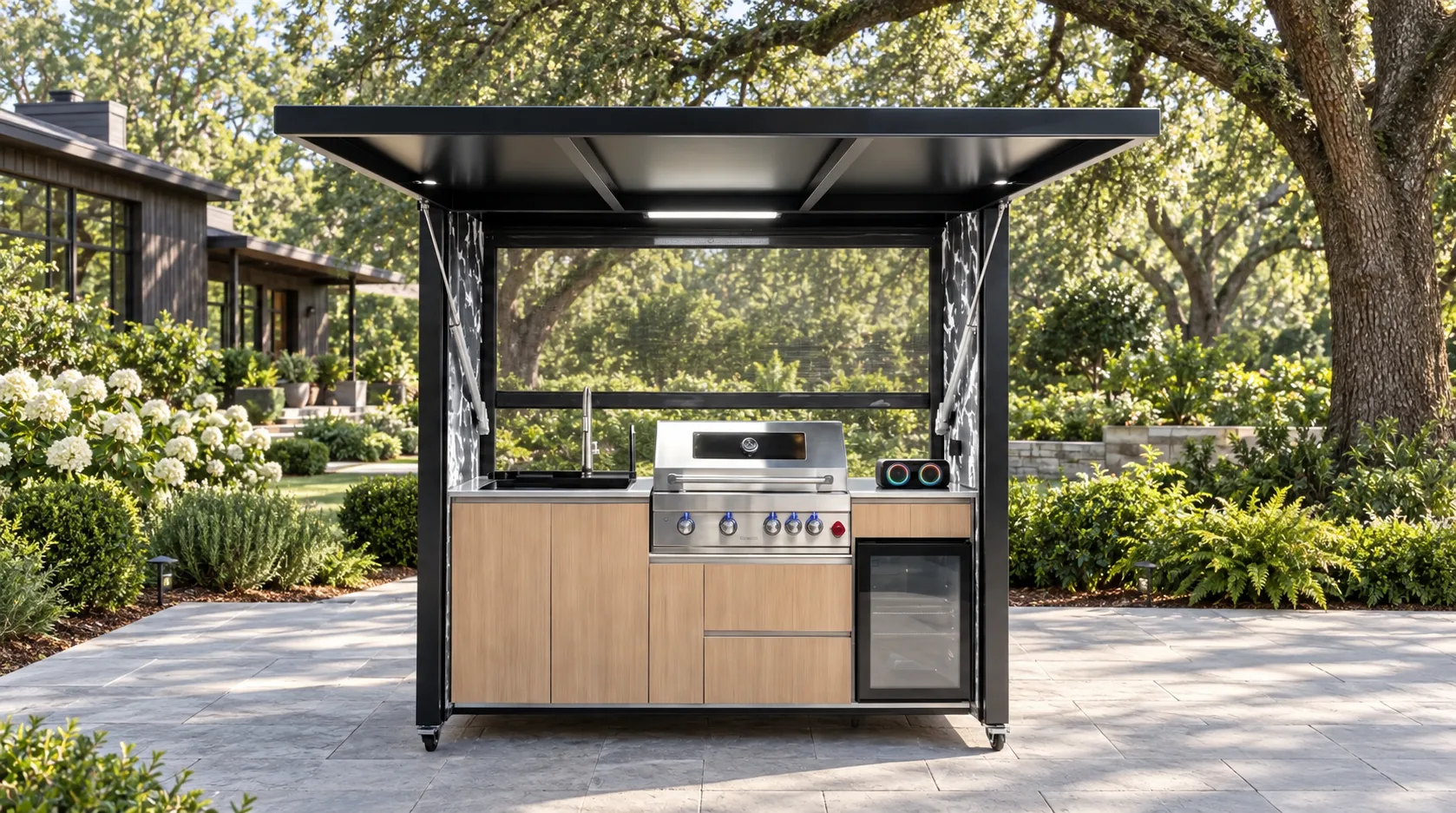
Yes, a home without a natural gas line can still be a candidate for an outdoor kitchen—but only if the exact cooking equipment and the rest of the proposed configuration are approved for an available fuel and the site can support the required work. Do not buy a kitchen on the assumption that any gas grill can be switched to propane, or that a photograph of a grill tells you which fuel the quoted model uses. Ask for model-specific documentation before comparing the project paths.
For a U.S. homeowner, the useful question is not simply “Can I avoid running gas?” It is “Which complete outdoor kitchen can I operate as intended on this property, and what work does each option shift elsewhere?” A natural gas connection is one possible part of a project, not the definition of an outdoor kitchen. The sink, refrigeration, lighting, powered components, and cooking appliance may each create separate site questions. This guide helps organize those questions without pretending to approve an installation remotely.
First, identify what the property actually has
“No gas line” can mean different things. Some homes have natural gas inside but no branch to the patio. Others have no natural gas service at all. A homeowner may already use propane elsewhere, or may prefer an electric cooking approach if a compatible product exists. Make a simple site inventory before asking suppliers for options. Note the intended patio location, existing utility access, how the space is used, and whether the kitchen is meant for frequent meals or occasional entertaining.
Do not rely on a rough visual estimate of how easy a connection would be. The route for any gas, electrical, water, or drain work depends on the property and local requirements. A qualified local professional should determine what can be installed and what approvals are needed. Your job as the buyer at this stage is to provide accurate site information and avoid committing to a fuel before the chosen appliance is identified.
Confirm the exact grill before choosing a fuel path
Request the grill’s current model number and its approved fuel configuration in writing. Ask whether the outdoor kitchen quotation includes the cooking appliance shown in the marketing image, whether the same unit is available in different fuel versions, and what connection details its documentation specifies. These are questions, not assumptions about META LIFESTYLE inventory or any individual grill.
If a dealer proposes propane, verify that the specific grill is approved and supplied for propane in the proposed configuration. If they propose natural gas, verify that version separately. A conversion should never be treated as a casual accessory swap: ask the manufacturer whether it is approved for the exact appliance, and have any permitted work handled by qualified professionals. The U.S. Consumer Product Safety Commission’s gas-grill guidance emphasizes following the instructions that accompany the grill and using grills outdoors. It does not replace the specific product manual or local professional review.
Some shoppers also consider charcoal or electric cooking. Those are different equipment choices, not universal substitutes for an existing gas grill. Ask whether the exact outdoor kitchen being quoted accommodates the appliance and whether its use, ventilation, power, and placement are supported by the manufacturer’s documentation. Do not infer compatibility from a broad category description or a photo of another configuration.
Compare the project paths by what they require
Extend natural gas service, if available and appropriate. This path may suit a homeowner who wants a natural-gas-approved grill and can have a qualified professional assess a feasible route. Its scope may involve more than the grill itself. Ask for separate clarity on the utility work, permits or approvals, and who is responsible for each part. Do not estimate a price or assume the easiest-looking route is allowed.
Choose a propane-approved configuration. This may be worth evaluating where a natural gas extension is not desired or not available. Confirm the exact grill version, approved cylinder or supply arrangement, operating instructions, and the practical routine of obtaining fuel. The location and storage of propane equipment must follow model documentation and qualified local guidance; do not invent a cabinet placement from a lifestyle image.
Choose a different cooking platform. An electric or charcoal-based plan may serve some households, but only with equipment designed for that use and a site that supports it. This may change the cooking experience and the required infrastructure. Compare the actual appliances and their manuals, rather than comparing labels like “gas-free” or “all-in-one” in the abstract.
These are planning branches, not a recommendation to substitute one fuel in an appliance designed for another. The correct branch depends on the model you want, what is approved for it, the site assessment, and how you cook. A supplier should be able to distinguish between a complete product configuration it offers and a hypothetical customization it has not documented.
Keep the rest of the kitchen in the comparison
A missing gas connection can draw so much attention that buyers overlook the other components. If a quoted outdoor kitchen includes a refrigerator, powered roof or shutter, lighting, sink, or other accessories, ask what each one needs independently. A propane grill does not make electrical or plumbing questions disappear. Likewise, an electric cooking choice does not settle water supply or drainage.
Build a one-page matrix for each proposed configuration. Across the top, write cooking fuel, electrical needs, water, drainage, operating clearance, cleaning, and ongoing tasks. Down the side, list the options under consideration. Fill cells only with facts from current model documents or written supplier responses. Leave unknowns blank and flag them for review. This simple comparison keeps a low-infrastructure assumption from slipping into a quote.
Think about how you will use the kitchen on a normal night. If your indoor refrigerator and sink are nearby, you may not need to move every task outdoors. If the patio is far from the house, you may value more on-site prep or storage, but that creates other questions. The fuel decision should fit the entire routine, not dominate it.
A quote request that gets a useful answer
Send the supplier a short description of the property and ask for a model-specific response. State whether the home has natural gas service, whether a patio connection exists, and which other utilities are near the proposed location. Include patio photographs and a simple sketch, not just a statement that the yard is “ready.” Ask for the exact cooking appliance and fuel version, the remaining component list, and what work is excluded from the product quote.
- What are the exact outdoor kitchen and grill model numbers in this proposal?
- Which fuel is the quoted cooking appliance approved to use as supplied?
- Are any alternative fuel configurations actually offered and documented for this model?
- What electrical, water, and drainage requirements do the included components have?
- Who supplies the model documents to the local trades reviewing the site?
- Which utility connections, site preparation, and approvals are outside the product scope?
Do not accept “can be converted later” without written manufacturer support for the exact appliance. Do not accept “no installation needed” as a substitute for site-specific review. A strong quote makes the fuel version and responsibilities visible enough that you can compare proposals without guessing.
Use a safety gate before treating the plan as final
Gas appliances bring fire and carbon-monoxide risks if misused. The CPSC advises using grills outside in well-ventilated areas and following the grill’s own instructions. That is a general safety principle, not permission for a particular patio location. For gas, electricity, plumbing, fire clearances, structure, anchoring, wind, snow, drainage, and permits, model-specific documentation and qualified local professionals or authorities control. Do not connect, convert, relocate, or enclose an appliance based on an article or a marketing image.
This gate may change the project direction. If the desired grill is not approved for an available fuel, ask about a different documented configuration rather than improvising a connection. If the patio cannot support the proposed work, revise the location or project scope. It is better to learn that during quoting than after a product is delivered.
Frequently asked questions
Does every outdoor kitchen require natural gas?
No. An outdoor kitchen is a layout and equipment choice, not a promise about one fuel. But any proposed cooking appliance must be approved for the fuel you intend to use. Confirm the exact model before deciding that a given kitchen fits a property without natural gas.
Can I connect a propane tank to a natural-gas grill?
Do not assume so. The fuel configuration and any conversion must be specifically approved by the manufacturer for that appliance, and qualified professionals must handle work that requires them. Ask for written model-specific guidance rather than attempting an improvised connection.
Will avoiding a natural gas line eliminate all utility work?
Not necessarily. Other components may need electricity, water, or drainage, and the site still needs appropriate preparation. List every included appliance and powered feature before judging the total project scope.
Is propane always the cheaper choice?
There is no reliable answer without current product and local project quotes. Compare the exact grill version, site work, fuel-handling routine, and any recurring needs. Avoid choosing based on an invented installation price or assumed operating cost.
What should I send to get an accurate response?
Provide the proposed location, photos, available utilities, your preferred cooking method, and whether you want sink, refrigeration, or powered features. Ask the supplier to name the exact model and approved fuel in the reply so local trades can evaluate the right configuration.
Request a model-specific proposal
Explore the META LIFESTYLE outdoor kitchen collection, then use the Request a Quote contact page to explain that your property has no patio natural gas line. Ask which exact model and approved fuel configuration is being proposed, plus the documents local professionals will need. Both +8619050185756 and +1 (626) 735-5685 are official META LIFESTYLE WhatsApp contacts.