Pro Program Live Chat +8619050185756

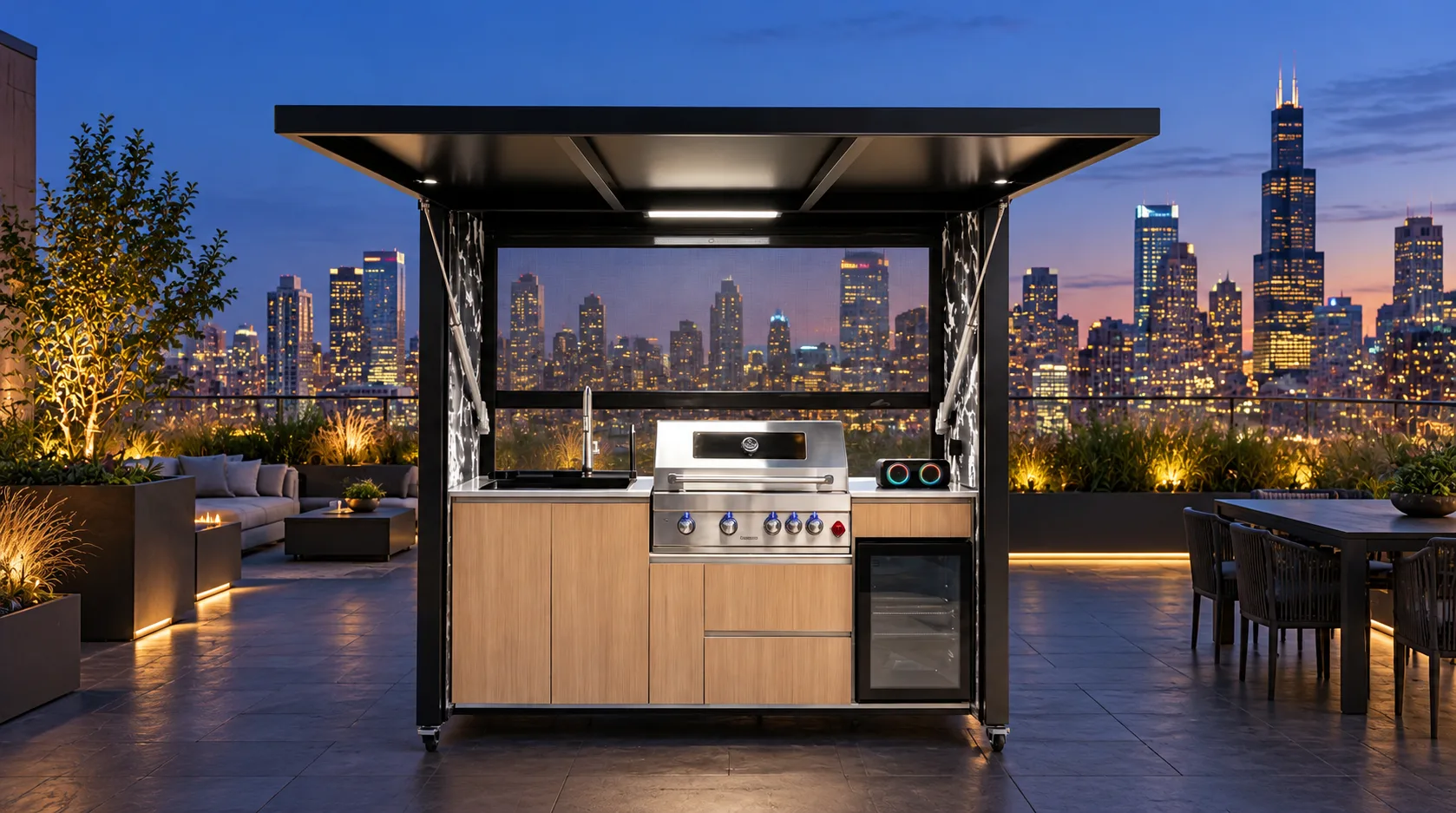
Sometimes—but only when the exact grill and cabinet system is designed and documented for a propane cylinder in that location. Before buying an outdoor kitchen, confirm the approved cylinder size and position, enclosure design, ventilation, hose routing, and service access in the model-specific installation instructions. Never improvise a sealed tank compartment or assume that a cabinet with a door is a safe cylinder enclosure.
Keep the question specific: are you asking about the cylinder connected to the grill during use, or a spare cylinder stored in the kitchen? Those are different situations. The Propane Education & Research Council (PERC) says not to put a spare cylinder under or near a grill or other propane appliance, and its consumer guide warns against using or storing small cylinders in enclosed areas such as a garage or shed. Follow the cylinder and appliance manufacturers’ instructions for the exact setup.
First identify the grill, fuel, and cabinet layout
Before choosing cabinet doors or countertops, identify the grill model and whether it is configured for liquid propane (LP) or natural gas. Then find the matching installation manual. A natural-gas connection does not use a portable cylinder as its fuel supply, while an LP configuration may use a cylinder connected to the grill or a different approved supply arrangement. Do not convert the appliance, substitute a regulator, or change the fuel connection based on a generic online diagram.
Next, determine whether the cabinet is a manufacturer-designed cylinder enclosure or simply a storage cabinet beside the grill. A cabinet that looks large enough is not automatically approved for a cylinder. The manual may specify a separate compartment, a dedicated tank drawer, a permitted cylinder size, open areas, ventilation openings, or a cylinder location outside the island. If documentation is missing or unclear, pause and ask the grill manufacturer and a qualified gas professional before ordering cabinetry.
Why enclosure ventilation is not a decorative detail
Gas-appliance instructions treat the island cavity and cylinder area as part of the installation. The approved openings and their location can depend on the appliance, fuel, enclosure geometry, and local requirements. For example, Coyote’s manufacturer support guidance distinguishes its LP and natural-gas ventilation recommendations and directs users to the owner’s manual for complete instructions. That guidance illustrates why fuel type matters; it is not a universal vent-sizing rule for every brand or cabinet.
Do not copy vent dimensions from another manufacturer’s drawing or add a random grille because it “looks ventilated.” Cabinet partitions, drawers, toe-kicks, appliance cutouts, and the location of the cylinder can all affect how a specific layout is assessed. The controlling answer comes from the instructions for the exact appliance and enclosure, together with qualified local professionals or authorities.
Keep approved openings unobstructed after installation. A stored bag, liner, cleaning supplies, or a remodel panel should not cover a required vent. Do not seal, relocate, or reduce an opening to improve appearance unless the manufacturer’s instructions and the responsible professional approve the change.
Use this pre-purchase checklist
- Confirm the appliance identity: Record the grill model, fuel type, regulator requirements, and the current installation-manual version.
- Verify the cylinder arrangement: Ask whether a cylinder may be connected inside the proposed cabinet, whether it must be in a separate enclosure, or whether it must sit outside the island.
- Check the allowed cylinder dimensions: Use the exact manual’s limits. Do not assume a commonly available cylinder will fit or is approved.
- Get the ventilation drawing: Ask for the specified opening locations and free-area requirements for the exact appliance and enclosure. Do not design the vent layout from a different product’s manual.
- Review hose and regulator routing: Confirm the approved pass-through, access, protection, and connection details. Avoid kinks, pinching, contact with hot surfaces, and unapproved drilling.
- Keep the valve and service points reachable: The person responsible for the grill needs to be able to access and operate the approved shutoff and connection as the instructions require.
- Separate storage from operation: Ask where a spare, disconnected cylinder may be kept. Do not place it under or near the grill simply because an unused cabinet is available.
- Plan the whole island: Show the grill, cylinder compartment, drawers, refrigerator, electrical components, and surrounding structure on one drawing so compartments are not accidentally combined.
- Confirm approvals: Have a qualified local gas professional or authority review applicable clearances, gas work, ventilation, and permits for the site.
These checks are easiest before the kitchen is ordered or built. Changing an island after the grill cutout, doors, vents, or countertop are installed can constrain the choices available. Share the model number and a dimensioned layout with the manufacturer or installer instead of asking only whether “a propane tank fits.”
What to do if the cylinder does not fit
Do not force a larger cylinder into the cabinet, remove a divider, extend a hose, or modify the door or vent. The manufacturer may document an approved outside-cylinder position, a particular tank drawer, or another fuel-supply option for that grill. If it does not, ask the appliance manufacturer or qualified gas professional to identify a compatible configuration. A workaround from another grill model is not proof of compatibility.
Keep a spare cylinder separate from the active appliance. PERC’s portable-cylinder safety guide says not to place a spare near or under a grill and to keep cylinders outside, away from heat sources. Consult its current portable propane cylinder safety guidance as general consumer information, and follow the cylinder label and appliance manual for your equipment. Do not store a cylinder in a garage, basement, shed, or other enclosed building.
If you smell gas, hear escaping gas, or suspect a leak, do not operate switches, flames, or the grill. Follow the appliance and propane supplier’s emergency instructions and contact the appropriate emergency service or qualified supplier from a safe location. This article is a planning guide, not a procedure for diagnosing or repairing a gas system.
Questions to ask before signing off on the design
Ask the dealer or contractor to identify the exact manuals used to design the cylinder compartment. Request a drawing that labels each vent and shows the cylinder, grill, partitions, hose route, and nearby appliances. Confirm which person will verify the gas connection and which local official or authority is responsible for any required review. Keep the answer with the project documents so a future owner or service technician can understand the layout.
The U.S. Consumer Product Safety Commission advises consumers to follow manufacturer instructions when connecting or disconnecting LP gas containers. Use that as a reminder to rely on equipment-specific directions, not as a substitute for the current installation manual. If two documents appear to conflict, stop and ask the manufacturer and qualified local professional to resolve the discrepancy before the appliance is used.
Frequently Asked Questions
Can I put a propane tank under the grill in any outdoor kitchen?
No. Whether a connected cylinder can go in a particular compartment depends on the exact appliance and enclosure instructions. A spare, disconnected cylinder is a different case; PERC says not to keep a spare under or near a grill.
Does every outdoor kitchen cabinet need the same vents?
No universal vent count or size should be assumed here. Manufacturer instructions vary by model, fuel, cabinet design, and installation. Use the exact manual and have the layout reviewed by qualified local professionals or authorities.
Can I use a cabinet door as ventilation?
Do not assume that a door gap or a louvered appearance satisfies the installation instructions. The required openings, free area, and placement must match the exact approved design and remain unobstructed.
Can I store an extra propane tank in an empty outdoor-kitchen cabinet?
Do not treat an unused cabinet as spare-cylinder storage. PERC advises keeping spare cylinders away from grills and other propane appliances and not using or storing small cylinders inside enclosed areas such as garages or sheds. Follow current cylinder instructions and local requirements for storage.
What if the grill manual does not say where the cylinder goes?
Pause the design. Contact the grill manufacturer for the correct instructions and have a qualified local gas professional review the proposed arrangement. Do not infer an approved location from a product photo or a different brand’s manual.
Explore outdoor kitchens and request a quote
Before selecting a configuration, review the META LIFESTYLE outdoor kitchen collection and ask which product documents apply to the grill and cabinet arrangement you are considering. Include the model number, fuel type, proposed cylinder location, and a drawing of the island so the technical question is clear.
Request a Quote or contact META LIFESTYLE with your project details. Both +8619050185756 and +1 (626) 735-5685 are official META LIFESTYLE WhatsApp contacts: WhatsApp +8619050185756 or WhatsApp +1 (626) 735-5685.
For additional general information, consult PERC’s Safety Guide for Propane Users and the CPSC’s gas grill safety guidance. Equipment instructions and qualified local professionals or authorities control the installation.