Pro Program Live Chat +86 182 6417 0234

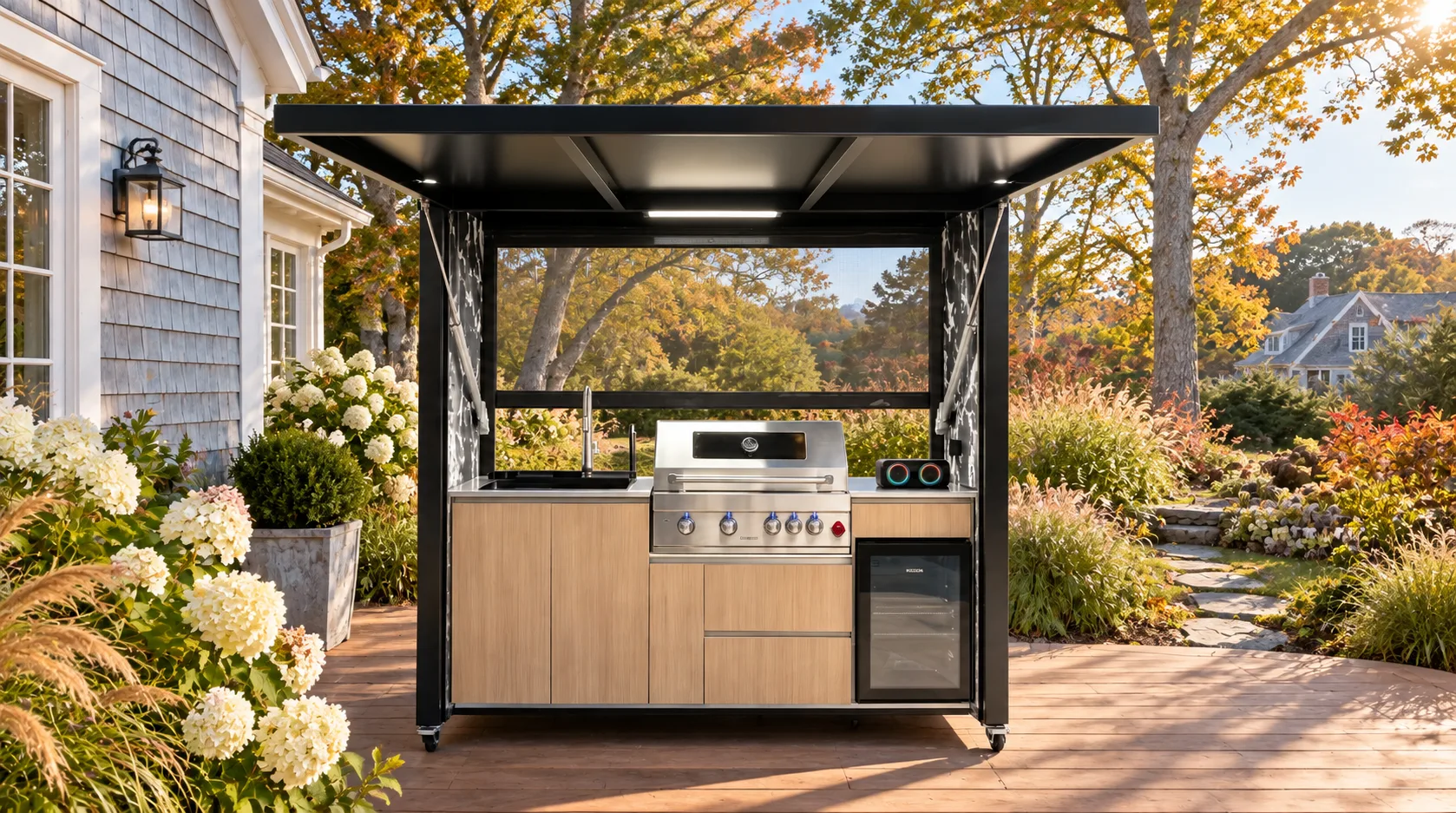
Short answer: A side burner is worth considering if you regularly cook a separate side dish, sauce, or hot drink while grilling and have room to use it without sacrificing essential prep space. If your outdoor meals mainly involve grilling and serving, a clear landing surface may be more useful. Compare the appliance with your real menu and the exact kitchen configuration before requesting a quote; do not assume every model or package includes one.
Start with the meals you actually make outdoors
A side burner sounds appealing when you picture a full outdoor cooking station, but the useful question is what it would do on an ordinary weeknight. Think through the last several meals you grilled. Did you need a second cooking surface for a pot, pan, sauce, or side dish? Did someone carry that item back and forth from the indoor kitchen? Or would more room to set down a tray, season food, and plate dinner have helped more often?
Make a short list of the dishes you expect to prepare outside. Mark which ones need the grill, which need a separate heat source, and which only need space for prep or serving. If the second list is longer, prioritize counter area and circulation in the design conversation. If the first list comes up repeatedly, ask whether a compatible side burner is available for the specific outdoor kitchen configuration you are considering.
Frequency matters more than an aspirational menu. A burner used every weekend may be worth planning around; a feature used once or twice a season may not justify its space, utility requirements, and cleaning. There is no universal break-even point—the answer depends on your household, cooking habits, and available layout.
Compare three ways to use the same footprint
Option 1: Add a side burner
A separate burner can let a cook tend a pot or pan while another item is on the grill. That may be useful for meals where the main dish and a hot accompaniment finish at the same time. It also adds another appliance to the plan, so confirm its exact dimensions, position, controls, service access, operating instructions, and required clearances before committing.
Option 2: Keep the area as prep or landing space
A clear counter can support food preparation, trays, utensils, and the handoff from cooking to serving. This is often the more flexible choice when the grill already covers most outdoor cooking or when the patio is compact. Before giving up surface area, imagine the grill lid open, food waiting to be turned, and a finished platter that needs somewhere safe to land.
Option 3: Revisit the primary cooking appliance
If your typical menu requires more simultaneous cooking than the grill can handle, compare the proposed grill and cooking setup before adding another appliance. A larger or differently configured primary appliance may be more relevant, but its fit and requirements must be verified for the specific kitchen and site. Ask the supplier to compare actual configurations rather than choosing by a feature checklist alone.
Use a simple menu test before you buy
- Choose three representative meals. Include a routine dinner, a meal with a side dish, and the kind of gathering you host most often.
- List every cooking task. Note what goes on the grill, what needs a separate heat source, and what only needs prep or serving room.
- Mark when tasks overlap. A second appliance helps most when two dishes genuinely need attention at the same time.
- Count the handoffs. Record how often a cook would need to leave the patio to use the indoor range or collect cookware.
- Repeat for a typical month. Separate frequent routines from special-occasion ambitions.
This is not an engineering calculation; it is a way to make the purchase conversation specific. Bring the menu notes to a quote discussion and ask the supplier to explain what the extra appliance changes in the footprint, equipment list, installation scope, and ongoing care.
Check the footprint and workflow, not just the appliance size
A side burner needs a place in the overall cooking sequence. Consider where pots will be set down, how the cook will move between burner and grill, and whether a helper can reach the prep area without crossing the active work zone. Include open doors, drawers, and appliance lids in the drawing. If the burner would crowd the only clear landing surface or constrict a route to the yard, the feature may make the kitchen less convenient overall.
Mark the proposed kitchen and adjacent furniture with tape or cardboard. Stand at the burner and pretend to move a pot; then stand at the grill and repeat the task. Open nearby cabinet doors, pull out chairs, and walk from the house to the patio. This physical test can reveal whether the planned stations compete for the same space. Ask for a dimensioned plan of the exact configuration, including appliance openings and service access, before finalizing the layout.
Utilities and safety questions to settle early
Do not infer fuel type, connection method, or compatibility from the phrase “side burner.” Product options and installation requirements vary. Request the manufacturer’s documentation for the exact model and ask how adding the appliance affects the proposed gas or other utility plan. Confirm whether the burner can be paired with the selected kitchen and whether it changes clearances or installation requirements.
Gas, electricity, plumbing, fire clearances, structure, anchoring, wind, snow, drainage, and permits are model- and site-specific. Model-specific documentation and qualified local professionals or authorities control those decisions. Have the appropriate trades review the exact layout and utility routes; do not treat a general product photo or an online diagram as approval for your property.
Also consider where the burner would be used in relation to the house, overhead structures, combustible materials, and guest circulation. The manufacturer’s instructions and applicable local requirements determine what is acceptable. If the proposed location leaves any question about clearances, ventilation, or connections, resolve it with qualified professionals before ordering.
Cleaning and storage belong in the decision
An additional cooking appliance adds another surface and set of parts to keep clean and protect according to its instructions. Ask what routine care the specific unit requires, how it should be covered or stored when not in use, and whether it needs special attention after exposure to weather or cooking residue. Avoid assuming that a grill’s care instructions apply to a separate burner.
If you expect to use the burner rarely, consider whether its maintenance and preparation will feel worthwhile. If you expect frequent use, ask whether its location makes it easy to access and clean without moving other equipment or furniture. Convenience depends on the whole arrangement, not only on having an extra control knob.
Questions to bring to a supplier
- Is a side burner offered for the specific META LIFESTYLE configuration I am considering?
- What are the exact appliance dimensions and location in a dimensioned layout?
- What fuel or utility connection does the selected model require?
- Does adding it change clearances, installation scope, or service access?
- What surfaces and circulation space remain for prep, landing, and serving?
- What do the manufacturer’s instructions say about operation, cleaning, and protection?
- Can the supplier quote the same kitchen both with and without the appliance so I can compare scope?
- Which items must be reviewed by qualified local trades or authorities before purchase?
Frequently Asked Questions
Can I add a side burner to any outdoor kitchen?
No universal compatibility should be assumed. Availability and fit depend on the specific kitchen, appliance, and manufacturer’s configuration. Ask for confirmation and a dimensioned plan for the exact model.
Is a side burner better than extra counter space?
Choose based on the work you repeat. If separate hot dishes are part of routine meals, a burner may earn its place. If you need room for food prep, trays, and serving more often, an open counter may be more useful.
Does a side burner require a separate gas connection?
Connection details vary by model and installation. Use the manufacturer’s instructions and have qualified local professionals determine the compliant utility plan for the site.
Can I decide about a side burner after the kitchen is installed?
Do not assume a later addition will be compatible or straightforward. Ask the supplier before purchase whether the selected configuration supports the appliance and what would be required to add it later.
What should I compare in quotes?
Compare the same appliance configuration, utility assumptions, installation scope, clearances, service access, and care documentation. A quote that omits an appliance or connection detail is not directly comparable to one that includes it.
Explore META LIFESTYLE options and request a quote
Review the META LIFESTYLE outdoor kitchen collection and ask which configurations are available for your menu and patio. Use the contact page to request a quote. Include your preferred layout, representative meals, site measurements, and questions about appliance compatibility so the proposed scope can be reviewed clearly.
Both numbers are official META LIFESTYLE WhatsApp contacts: +8619050185756 and +1 (626) 735-5685. Message either contact to discuss your configuration and request a quote.