Pro Program Live Chat +86 182 6417 0234

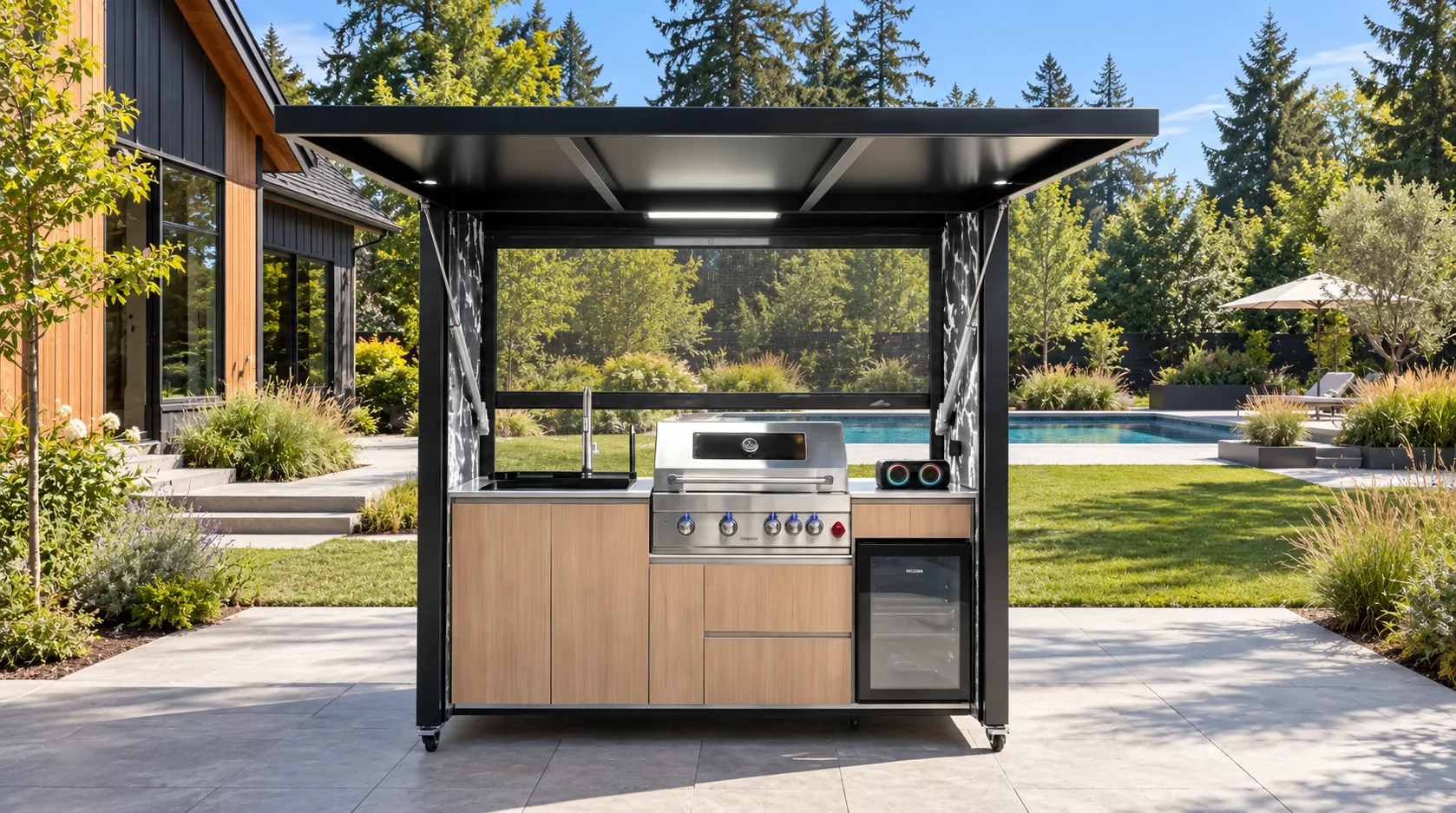
Possibly—but there is no universal homeowners-insurance answer for an outdoor kitchen. Your carrier needs to determine how the specific unit, appliances, installation, and surrounding pool area fit the language and limits of your policy. Before delivery, send your insurer the product details, expected location, and installation plan, then ask for written guidance on property coverage, liability, exclusions, and any conditions. Do not assume that a freestanding kitchen is covered like the house, that a permanent installation is automatically covered, or that a poolside layout changes coverage in a predictable way.
Why the answer depends on your policy
Homeowners policies commonly separate coverage for the dwelling, other structures, personal property, and liability. The National Association of Insurance Commissioners (NAIC) explains these broad categories and notes that detached structures and pools may require particular attention. Those summaries are useful orientation, not a promise that a specific outdoor kitchen falls into one category. Definitions, endorsements, limits, exclusions, and state rules vary. The details in your own policy and the insurer’s answer control.
A movable, wheeled kitchen may be treated differently from equipment built into a patio or attached to the home; an appliance may be considered differently from a permanent improvement. Those are questions to ask, not classifications to guess. Tell the carrier whether the META LIFESTYLE unit will remain on its casters, be parked in one location, be connected to utilities, or be incorporated into a fixed outdoor room. Ask how the insurer wants the value and components described.
Also separate “is the item insured?” from “what loss is covered?” A policy may cover some property losses while excluding or limiting others. For example, flood and earthquake are often excluded from standard homeowners policies, according to the NAIC homeowners insurance guide. That does not establish how any particular loss to an outdoor kitchen would be handled. Ask about the causes of loss, deductible, valuation method, and limits that apply to the unit and its appliances.
Bring a concise project brief to the conversation
It is easier for an agent or insurer to answer when the project is concrete. Prepare a one-page summary rather than asking only, “Is an outdoor kitchen covered?” Include:
- Product identity: brand, model or configuration, purchase quote, expected delivery date, and the supplier’s description of what is included.
- Value records: itemized invoice or quote, appliance list, taxes and delivery charges if known, and receipts for later additions. Keep copies of serial or identification numbers when provided.
- Placement: a simple yard sketch or photos showing the home, patio, pool, kitchen location, access routes, and nearby structures. Mark whether the unit will be movable or permanently installed.
- Installation plan: note any gas, electrical, plumbing, anchoring, construction, or drainage work and who is expected to perform it. Do not represent unconfirmed work as approved or complete.
- Existing policy: have the declarations page available, along with relevant endorsements and the policy’s property and liability sections.
The NAIC recommends reading the declarations page, insuring agreement, exclusions, and conditions rather than relying on a general description of a policy. Its consumer guide to understanding a homeowners policy explains where coverages, limits, and exclusions appear. Ask the insurer to point to the applicable wording or provide a written response you can keep with the project file.
Questions worth asking before you commit
Use questions that invite a specific answer about your home and planned setup:
- How would this particular wheeled or fixed kitchen be classified under my policy: dwelling, other structure, personal property, or another category?
- Do the grill, refrigerator, sink, electronics, and any optional accessories share one limit, or are separate limits or conditions relevant?
- Should I increase a property limit or schedule an item, and what valuation basis would apply after a covered loss?
- Does connecting utilities or building a permanent patio installation change what you need to know or document?
- Are there exclusions or conditions relevant to fire, wind, falling objects, water, or flood at this location?
- Does the existing swimming pool affect liability coverage, required safety measures, or underwriting questions? What documentation do you need?
- Would a contractor’s invoice, permit record, photographs, or product specifications be helpful before or after installation?
Do not rely on a verbal “that should be fine” as a coverage determination. Ask for the carrier’s answer in writing, and ask whether it is a formal endorsement or simply guidance. A note from an agent may not change contract wording; only the insurer can explain what document, if any, changes the policy.
A poolside location deserves its own review
If the kitchen is part of a pool renovation, discuss the entire outdoor area—not just the appliance price. The NAIC describes personal liability and medical-payments coverage as common policy components, but the limits and circumstances are contract-specific. Ask the insurer whether the pool and new cooking area affect its questions about guest access, supervision, barriers, open-flame cooking, and liability limits. Do not assume that one change automatically raises a premium or creates a coverage problem.
Insurance is only one review. Electrical equipment and wet walking surfaces around pools require careful safety planning. The U.S. Consumer Product Safety Commission warns that wet skin or surfaces, including pool decks, can increase the danger of electrical shock when electricity is present. For gas, electricity, plumbing, fire clearances, anchoring, drainage, or permits, model-specific documentation and qualified local professionals or authorities control. Have the appropriate licensed professional and local authority review the exact installation and pool relationship; do not choose a distance or wiring arrangement from a generic article or illustration.
Keep pool-safety barriers, gates, and required clear routes in their approved configuration. Do not move furniture or the kitchen into a route simply because the patio seems spacious. A pool contractor, electrician, and insurer answer different questions: a safe layout, a code-compliant installation, and coverage are related but not interchangeable approvals.
Make a before-and-after record
Before work begins, photograph the patio and the intended location. Save the quote, product literature, installer scope, approvals, and correspondence with the insurer. When the kitchen arrives, take clear photographs of the complete unit and its identification labels if available. After installation or placement, record the final position, utility work, and any permanent changes to the home or yard. Send the insurer only the information it requests, and keep a dated copy of what you send.
Update your household inventory and revisit coverage when the project changes—for example, if you add appliances, build a roof or enclosure, relocate the unit, or convert a movable setup to a fixed one. The NAIC recommends reviewing coverage as circumstances change. A new value does not automatically mean a policy must change, but it is a sensible reason to ask the carrier whether the current limits and descriptions still fit.
Frequently Asked Questions
Will buying a prefab kitchen automatically raise my premium?
Not necessarily. Premiums and underwriting decisions depend on the insurer, policy, property, and project details. Ask your carrier whether the planned unit or installation changes the premium or underwriting requirements; do not assume either outcome.
Is a rolling outdoor kitchen covered as personal property?
There is no universal classification. Describe the exact model, whether it stays movable, where it is stored or used, and how it is connected. Ask the insurer how the policy defines and covers it.
Does homeowners insurance cover a kitchen damaged by a storm or flood?
It depends on the covered cause of loss, exclusions, limits, deductible, and the kitchen’s policy classification. Flood is commonly excluded from standard homeowners policies, but the exact contract controls. Ask about your location and setup specifically.
Should I tell my insurer about the pool as well as the kitchen?
Yes—describe both when asking about the project. Ask whether the pool affects liability, safety conditions, or underwriting, and whether the planned kitchen location or cooking appliances raise additional questions.
What should I do if an agent gives only a general answer?
Send a short written description with the product quote, photos or a site sketch, and installation scope. Ask which policy section or endorsement applies and whether any formal change is needed. If the response remains unclear, contact the insurer or your state insurance department for guidance.
Plan the product and the paperwork together
Review META LIFESTYLE outdoor kitchens alongside your site plan, then request the current model-specific product and installation information needed for your insurer and local professionals. Treat coverage, safety, and product-fit as three checks to complete before the work is finalized.
Request a Quote: share your intended location, whether the kitchen will remain movable, and the questions you need answered. For contact options, use the META LIFESTYLE contact page. Both numbers below are official META LIFESTYLE WhatsApp contacts: +8619050185756 and +1 (626) 735-5685.