Pro Program Live Chat +86 182 6417 0234

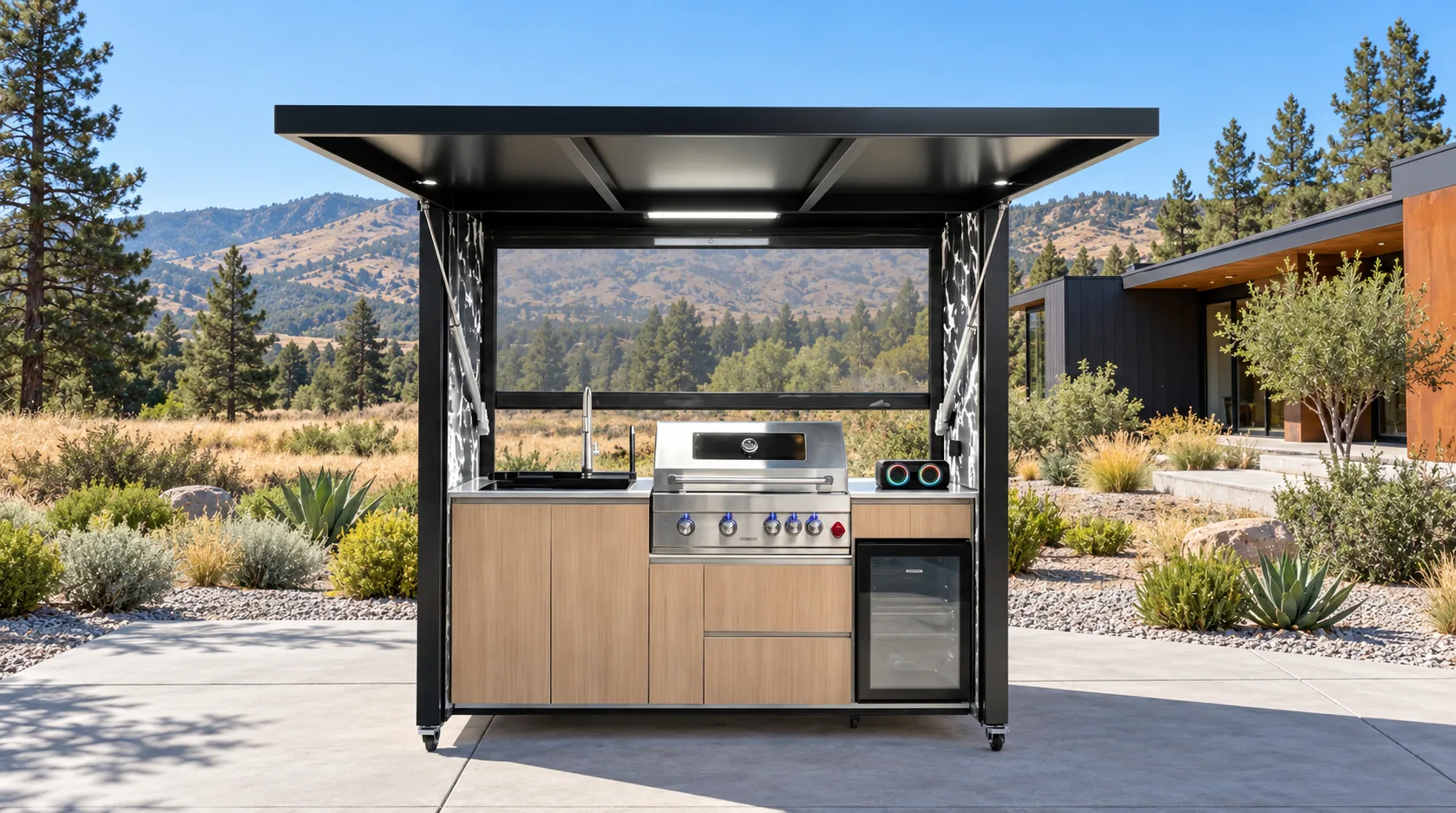
In a wildfire-prone area, start with the site’s fire-preparedness plan before you select the kitchen location. Map the home, eaves, decks, nearby vegetation, access paths, and proposed grill; then have local fire officials or qualified professionals review the exact layout. Ask META LIFESTYLE for the model-specific installation and appliance documents, and follow the instructions and local requirements that apply. Do not assume an outdoor kitchen is wildfire-rated, or that a patio surface or generic clearance makes a particular installation safe.
Why the yard—not only the grill—matters
Wildfire planning considers how the home and surrounding landscape interact. The U.S. Fire Administration (USFA) describes defensible-space work as a series of landscape zones around a home, beginning close to the structure and moving outward. Its guidance calls attention to maintaining the immediate area and removing debris and dry vegetation; local fire agencies may have additional or different rules. Use that advice to start a site conversation, not to decide by yourself where an appliance may be installed.
A kitchen has several site conditions to assess at once: the grill’s operating clearances, any overhead cover or branches, nearby siding and railings, fuel or utility connections, the paving beneath the unit, and the path people use while it is operating. A wheeled kitchen still has a fixed place while cooking. Its casters do not make it a suitable fire-escape plan or allow it to be moved safely during an emergency.
Keep two separate questions in view. First: what do the manufacturer’s documents require for the exact grill, fuel, and configuration? Second: what does the local fire authority or building official require at this address? A general article, photograph, or rule of thumb cannot settle either question. For gas, electricity, plumbing, fire clearances, anchoring, drainage, or permits, model-specific documentation and qualified local professionals or authorities control.
Walk the proposed location and mark the surroundings
Before requesting a quote or preparing utilities, sketch the actual yard. Mark the house walls, eaves, attached deck, fences, trees, slope, patio edges, combustible landscaping, and the routes between the kitchen and the house. Then identify the exact proposed grill location and where a person will stand to cook. This small drawing helps a fire official or installer spot questions that are easy to miss from a product photo.
- Check overhead and nearby combustibles. Note siding, deck rails, roof overhangs, awnings, tree limbs, and other items near the cooking area. The USFA advises keeping grills away from siding and deck railings and out from under eaves and overhanging branches. The manufacturer’s instructions and local requirements determine the correct placement for a particular appliance.
- Look for accumulated fuel. Dead leaves, needles, dry plant matter, and debris can collect in corners, beneath decks, or against walls. Ask local fire-preparedness staff what maintenance and vegetation treatment they recommend for your property rather than clearing plants indiscriminately.
- Review the immediate surface. Identify whether the unit would sit on concrete, pavers, a deck, or another surface. Confirm that the intended surface is level and suitable for the product and that the route remains usable. Do not infer a material’s required fire performance from its appearance.
- Preserve circulation and access. Mark the path to the kitchen, doors, gates, and emergency exits. Keep cooking activity and guest circulation from converging in a narrow pinch point, and do not place the unit or stored items where they obstruct an exit or required fire-access route.
- Note the fuel and utility plan. Record whether the proposal involves gas, a cylinder, electrical power, or plumbing. Never guess at storage, connection, or shutoff arrangements. Have the exact product documentation reviewed by the appropriate qualified installer and local authority.
USFA consumer guidance includes a three-foot zone around a grill for children and pets, and separately advises placing a grill well away from siding, deck railings, eaves, and overhanging branches. Treat these as safety reminders, not a substitute for a model’s clearance instructions, a code requirement, or a wildfire-specific approval. The grill’s own manual and the official responsible for the site govern the actual installation.
Get the product documents before fixing the layout
Ask for the current documents for the exact META LIFESTYLE kitchen configuration under consideration. Useful items to request include the product drawing, grill and fuel information, installation manual, required clearances, utility requirements, operating and shutdown instructions, and any written guidance about the proposed surface or cover. If the product includes optional accessories, request documents for those accessories too. Do not assume that two configurations share the same requirements.
Share the documents with the installer and local fire or building official before construction is finished. If your plan changes—such as adding a roof, moving the unit closer to a wall, changing fuel type, or adding an appliance—send the revised layout for review. A product quote does not itself approve a site, a permit, or utility work.
The USFA’s wildland-urban interface landscape guidance and outdoor fire-safety guidance are useful starting points for a household discussion. For location-specific defensible-space rules, check your local fire department, fire marshal, or state wildfire agency. California homeowners, for example, can consult Ready for Wildfire’s defensible-space overview; other jurisdictions may use different guidance.
Plan for everyday cooking and emergency conditions
Choose an arrangement that leaves room to cook, pass through, and reach the home without putting a guest route beside the active grill. Keep the area visible and uncluttered so a host can supervise cooking. Store accessories and removable items according to their instructions, not in a way that blocks access, ventilation openings, shutoffs, or required clearances.
Wildfire conditions can change quickly. Before using any outdoor flame, check current local restrictions, fire-weather notices, and instructions from the local fire authority. A grill that is permitted on an ordinary day may be subject to temporary restrictions during elevated fire danger. Never treat a product’s outdoor designation as permission to operate during a burn ban or other restriction. If officials issue an evacuation order or advise residents to leave, follow their directions; do not delay to reposition a kitchen or retrieve accessories.
After cooking, follow the appliance’s shutdown and cleaning instructions, including grease management. The USFA recommends staying with a grill while it is in use and cleaning it to remove grease that could start a fire. Keep the manufacturer’s instructions available to household members, and make sure they know how to shut down the appliance using the documented procedure. For any fuel shutoff, electrical disconnect, or plumbing control, have the installer identify the approved control and explain its use.
A practical pre-purchase checklist
- Confirm the site’s current defensible-space and outdoor-cooking rules with the local fire authority.
- Photograph and sketch the proposed location, eaves, walls, trees, deck, routes, and surrounding landscape.
- Request exact product drawings, grill instructions, fuel details, clearances, and utility requirements.
- Have the proposed surface, installation, and any overhead cover reviewed by qualified professionals.
- Confirm the planned cooking area will not obstruct a door, gate, emergency route, or required access.
- Ask how restrictions during high fire danger affect your intended use; follow official alerts and orders.
- Keep the approved plan, product documents, installation records, and shutdown instructions together.
This process does not promise that a kitchen, patio, or yard is wildfire-safe. It helps you ask better questions before purchasing, identify issues early, and avoid relying on a generic rendering as approval. The authority having jurisdiction and qualified professionals should review the actual property and configuration.
Frequently Asked Questions
Does an outdoor kitchen have a wildfire-resistance rating?
Do not assume so. Ask META LIFESTYLE for written, model-specific performance documentation and ask local officials what applies to your site. A lifestyle image or outdoor-use description is not proof of a wildfire rating.
Can I put an outdoor kitchen on a wood deck?
There is no universal answer. The appliance instructions, product configuration, deck construction, local fire rules, and required clearances all matter. Have the exact plan reviewed before ordering or installing.
Is the USFA’s three-foot grill zone the clearance I need to install?
No. USFA presents a three-foot zone as a consumer safety reminder around a grill, including to keep children and pets away. It is not a model-specific installation clearance or an all-purpose code rule. Follow the grill documentation and local authority’s requirements.
Should I remove every plant near the kitchen?
No. Wildfire preparation is a managed landscape plan, not blanket removal. Ask your local fire agency which vegetation, debris, spacing, and maintenance practices are appropriate for your property and jurisdiction.
Can I use the kitchen during a red-flag warning or burn restriction?
Check the current rules and alerts from your local fire authority. Restrictions vary by place and conditions; do not operate an outdoor flame if an applicable order or restriction prohibits it.
Explore the kitchen with the site plan in hand
Review META LIFESTYLE outdoor kitchen options while you develop your property-specific layout. Before utility work or installation, request model-specific documentation and have the site reviewed by the qualified professionals and authorities responsible for your project.
Request a Quote: tell us about the intended location, surface, fuel plan, and documents you need to review. Visit the META LIFESTYLE contact page or message either of the official META LIFESTYLE WhatsApp contacts: +8619050185756 or +1 (626) 735-5685.