Pro Program Live Chat +86 182 6417 0234

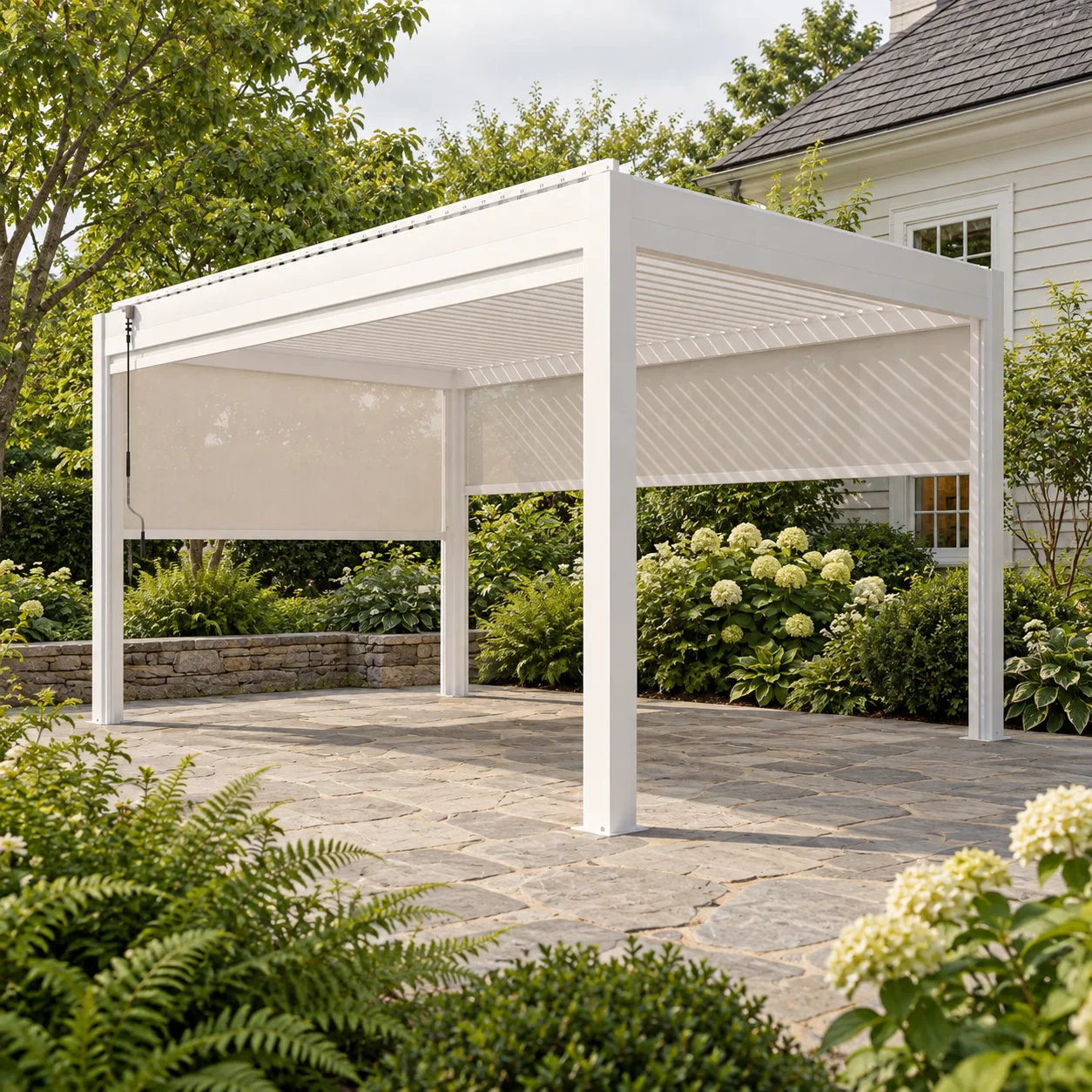
Short answer: don’t hang a hammock from a motorized pergola unless the manufacturer’s written instructions for that exact model expressly allow it and a qualified structural professional has reviewed the complete structure and attachment for that use. A pergola designed for its roof and outdoor exposure is not automatically an approved hanging anchor. If you want a hammock now, consider a freestanding stand that supports itself independently, positioned with clear space around the pergola.
Resolve this before ordering, not after drilling a hole. A hammock adds a person-supporting attachment and movement to a structure whose approved uses must come from its documentation. The META LIFESTYLE shade-structures page describes the pergola category, but a general overview cannot establish that a particular beam or post is approved for a hammock. Request model-specific drawings and written confirmation for the proposed attachment point.
Why a substantial-looking beam is not an answer
Appearance is a poor way to decide whether a member can support a new use. A clean, heavy-looking beam does not tell you how the exact frame, connections, posts, anchors, and supporting surface would respond to a hammock attachment. Nor does a product’s stated structural performance for its intended use automatically cover a new point attachment carrying a person.
Manufacturer instructions illustrate why the answer must be model-specific. One pergola product manual hosted by a major retailer explicitly excludes hanging swings or hammocks from that product’s intended use; another manufacturer publishes a purpose-built pergola-swing assembly manual. Those documents apply to those products only, not META LIFESTYLE. They show why an online photo, another brand’s allowance, or a verbal “it should be fine” cannot substitute for instructions for the model you are buying. Read the Outdoor Distinctions product warning and Backyard Discovery’s dedicated Pergola Swing manual as product-specific examples, not permission for any other structure.
There are separate questions for a professional to resolve: what component is involved, where the attachment would sit, how the load reaches the posts and foundations, what hardware and installation method are allowed, and whether the configuration remains within the manufacturer’s requirements. This article cannot calculate those conditions or certify an installation. Model-specific documentation and a qualified local structural professional control.
Use this checklist before considering an attachment
- Identify the exact product. Record the model, size, roof configuration, options, installation drawings, and current manual. Similar-looking frames can have different engineering or approved uses.
- Ask the manufacturer directly. Describe the hammock, attachment location, hardware, and intended use. Ask whether the written documentation expressly permits it for that configuration. A general statement that a pergola is “strong” is not specific enough.
- Get a professional review of the complete load path. If the documents do not cover this use, have a qualified structural professional assess the proposal with the product information and site conditions. A hardware package’s rating alone does not certify the beam, frame, connections, footing, or installation.
- Confirm installation and support implications. Ask whether drilling, clamping, or adding hardware is allowed, who is authorized to do the work, and whether a change affects product support or warranty coverage. Get the answer in writing before modifying the structure.
- Check clearances separately. A hammock needs room for its full length and movement, plus approach and circulation around furniture, posts, doors, and walkways. Follow the hammock and stand maker’s own instructions for placement and use.
- Keep the documents with the home records. Save any approved drawing, written permission, professional review, installation details, and product manual. A future owner or service technician should not have to infer why hardware is attached to a beam.
If an answer is unclear, treat the attachment as unapproved. Don’t conduct a “test” by hanging the hammock, sitting in it, or adding weights. A trial does not replace review and can create an immediate fall or property hazard.
If the pergola is already installed
Start by locating the model information and installation paperwork. Do not rely on a photograph of a similar product, an online forum, or a neighbor’s successful installation. Ask the supplier for the instructions that apply to your exact unit and provide its identification details and clear photographs.
If you have already added an eye bolt, hook, clamp, or rope, stop using it until the manufacturer and a qualified structural professional have reviewed the exact change. Don’t remove a loaded attachment while someone is in the hammock, and don’t make extra holes to “spread the load.” Ask the reviewer how to make the area safe and whether the hardware should be removed by a professional.
Keep moving parts clear, too. A hammock, ropes, or a stand should not interfere with louver travel, a retractable screen, drainage outlet, control, or maintenance access. The manufacturer’s operating guidance controls permitted clearances and accessories for the selected pergola.
A practical alternative: a self-supporting hammock stand
If the goal is a place to read or relax in the shade, a freestanding hammock stand avoids attaching the hammock to the pergola. The stand carries the hammock through its own frame and feet; the pergola remains a separate shade structure. Choose a stand and hammock whose own instructions match, set them up on a suitable surface as their manufacturer directs, and keep every part from touching or being tied to the pergola.
Before buying the stand, map its full footprint on the patio rather than measuring only the fabric. Include supports, entry space, possible movement, and the route people use to cross the patio. Leave access to doors, seating, controls, screens, and pergola posts. If the available space is tight, a movable lounge chair may fit better than a suspended hammock without creating a structural question.
This alternative does not remove the need to follow the hammock and stand instructions or check that the patio surface is suitable. It simply keeps the hammock’s support system independent of the pergola, avoiding an unverified attachment to the roof frame.
Questions to add to your pergola quote
If a hammock is part of the plan, tell the supplier before the model and layout are finalized. Ask for written answers to these points:
- Does the quoted model permit a hammock or other suspended seating, and where is that use stated in its documentation?
- Does the approval apply to this exact size, roof, options, and proposed attachment location?
- What hardware and installation method are approved, and who must review or perform the work?
- What drawings and site information does a structural professional need to evaluate the proposal?
- Would a freestanding stand be a better fit given door swings, circulation, screens, and furniture?
Ask before construction so a possible support, foundation, or layout change can be evaluated while the project is still being planned. Structural design, anchoring, wind and snow requirements, drainage, electrical work, and permits must be determined from model-specific documents with qualified local professionals or authorities. No general online article can establish local approval or a load rating for your installation.
Frequently Asked Questions
Can I attach a hammock to any pergola beam if I use a rated hook?
No. A hook’s own rating does not establish that the beam, frame, connections, anchoring, and site are approved for this use. Get written model-specific authorization and a qualified professional’s review before attaching anything.
Does a motorized louvered pergola support more weight than a fixed pergola?
There is no reliable category-wide answer. Do not infer hammock permission from roof type, material, or appearance. Use the documents for the exact model and configuration.
What if the manufacturer says the frame is rated for wind or snow?
That statement concerns the conditions and configuration described in the applicable documentation. It does not by itself approve a hammock attachment or an unlisted use. Ask the manufacturer and a qualified structural professional to evaluate the proposal separately.
Can I clamp the hammock to a post instead of drilling a beam?
Changing the attachment point or avoiding a drilled hole does not establish that the post and complete structure are suitable. Don’t clamp, strap, drill, or tie anything to the pergola without written approval for that method and location.
Is a hammock stand a safer way to get the same seating idea?
It avoids transferring the hammock attachment into the pergola, provided the stand and hammock are used as their manufacturers direct and the stand remains physically independent. Check its footprint, surface requirements, and clearances first.
Request a Quote with your intended use in view
When reviewing META LIFESTYLE pergola options, mention any planned hammock or hanging seat before requesting a final layout. Ask for the exact model documents and written guidance; a nearby hammock stand is not attachment permission. For structure, anchoring, wind, snow, drainage, electrical, or permit questions, model-specific documentation and qualified local professionals or authorities control.
Use the META LIFESTYLE contact page to request a quote or discuss the patio layout. Both numbers below are official META LIFESTYLE WhatsApp contacts: +8619050185756 and +1 (626) 735-5685. Include the intended use, approximate patio layout, and questions about model-specific documents so the quote conversation can address them before installation.