Pro Program Live Chat +8619050185756

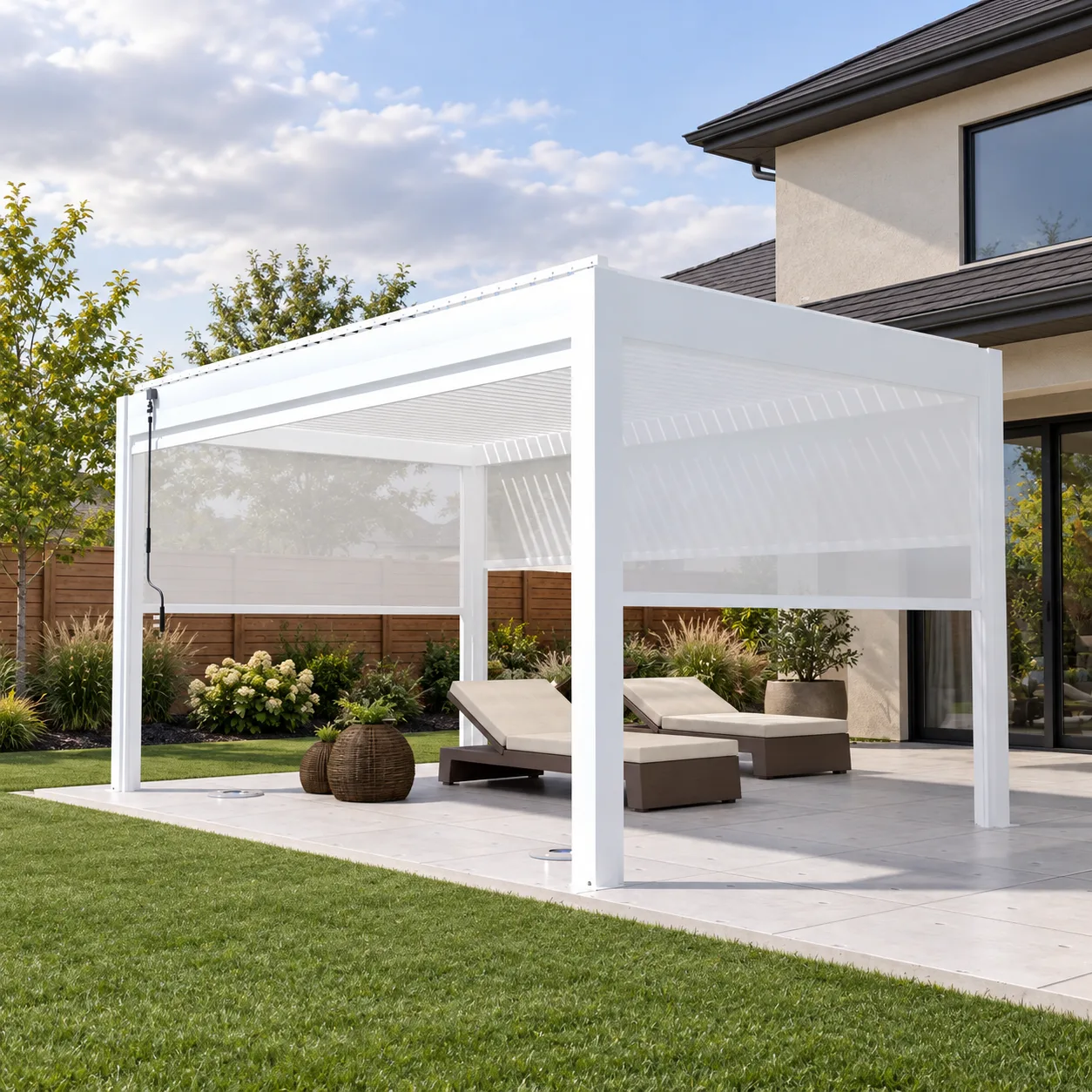
Yes, artificial turf can be used around a pergola, but treat the lawn finish and the pergola’s structural support as separate parts of the project. Plan the border, finished heights, water flow, and access around each post before either crew starts. The turf should not be treated as the anchor or footing for the pergola; the model-specific foundation plan and qualified local professionals determine how the structure is supported.
Start by deciding what “around” means on your patio
Homeowners usually mean one of two layouts: a pergola standing on a hardscape pad with artificial turf bordering the patio, or turf extending beneath a pergola whose posts are supported independently. Those are different details, even when they look similar in a rendering. Decide which area is meant to be paved, which is turf, and where the transition line will run.
A hardscape pad beneath the pergola can create a defined place for furniture and keep the post bases outside the turf installation. Turf may then form a green border around the pad, soften the surrounding yard, or connect the patio to another part of the landscape. If turf is planned under the pergola, ask the pergola installer and landscape contractor to document how each post is actually supported and how the turf will finish around those support points. Do not assume that a surface covering is a foundation.
Make a scaled sketch showing the product footprint, post centers, any visible base plates, patio boundary, turf edge, doors, paths, furniture, and service access. A simple plan can reveal whether a post falls on the proposed turf line, whether a chair would sit over the seam, or whether the edge would be difficult to trim and maintain.
Coordinate the work sequence before the crews arrive
Artificial turf is usually installed as a landscape system with prepared ground or a suitable base, a chosen turf product, edge treatment, and attention to drainage. The Synthetic Turf Council describes base-system decisions and drainage as part of turf design and construction in its voluntary technical guidelines. That is why “install the pergola first” or “install the turf first” is not a universal answer. The crews need to agree on the exact boundary and access plan before construction.
For a new project, confirm pergola post locations and foundation work before the landscape team closes or covers the surrounding area. The landscape contractor can then finish the turf edge around the completed hardscape or around specifically documented support details. For an existing pergola, ask the turf installer to inspect the post bases, current paving, drainage path, and any hidden utilities before cutting or digging. Keep the pergola’s footing and anchor areas visible and accessible to the people responsible for the structure.
Ask both contractors to identify who is responsible for the transition detail. A common coordination gap is that one crew assumes the other will trim the turf to the posts, while neither includes a plan for the finished edge. Agree on the line, material, height, and maintenance approach in writing, and make sure the finished work does not cover inspection points or block access to a control or service area.
Compare three practical surface layouts
| Layout | What it can do well | What to coordinate |
|---|---|---|
| Hardscape pad with turf border | Defines a dining or seating zone and creates a clear lawn-to-patio transition | Pad footprint, finished heights, drainage direction, and a clean border |
| Hardscape under the pergola, turf beyond | Keeps furniture and post bases on the planned hardscape zone while adding green nearby | Enough paved area for chair movement, table legs, and access around posts |
| Turf beneath the pergola, supports designed separately | Creates a continuous green visual field under and beyond the roof | Documented support locations, turf cutouts or edge treatment, water path, and future inspection access |
These are layout concepts, not engineering solutions. A product’s post location, base plate, permitted mounting surfaces, and anchoring details vary by model. Confirm the actual drawing and installation requirements rather than adapting a photograph of another structure.
Get the transition height and edge right
Finished height affects how the turf meets the patio, doorway, and post bases. Ask the turf installer to state the expected finished elevation, including the prepared base, turf backing, and any infill. Compare that with the adjacent paver or slab elevation before materials are ordered. If the edge is too low, it can leave a noticeable lip; if it is too high, it may interfere with a door, drainage path, or a furniture leg.
Choose an edge that is neat but not fragile. A narrow strip of exposed turf backing or a loose cut edge can become harder to maintain than a deliberate transition between materials. Ask how the border will be restrained, how the installer will cut around fixed objects, and whether the finish will be serviceable if a post or nearby paver needs future attention. Avoid burying the visible post base under turf or infill unless the specific installation documents explicitly call for that detail.
Test the proposed boundary with a garden hose or a site-level sketch before work starts. The goal is to understand where rainwater is intended to go, whether it could collect at a low edge, and whether the hardscape or turf changes the existing flow. Artificial turf’s drainage behavior depends on the turf backing, base, subgrade, and the overall site. A permeable-looking surface does not by itself solve a drainage problem.
Use this pre-installation checklist
- Obtain the exact pergola footprint and model-specific foundation or anchoring documentation.
- Mark post centers and support areas on the ground before finalizing the turf pattern.
- Choose whether the main seating area will be paved, turf-covered, or divided into zones.
- Write down finished elevations at doors, pavers, turf, post bases, and any drain or threshold.
- Ask the landscape contractor how the base, edge restraint, and drainage are handled for the selected turf system.
- Confirm responsibility for cuts, borders, and repairs where turf meets posts or paving.
- Locate irrigation, wiring, drains, and other buried items before excavation, anchoring, or edge installation.
- Keep the installation and service access required by the pergola manufacturer unobstructed.
For structure, anchoring, wind or snow exposure, drainage, buried utilities, and permits, model-specific documentation and qualified local professionals or authorities control. A landscaper’s turf detail should not replace the pergola supplier’s foundation information, and a pergola plan should not assume the turf installer can modify structural support points.
What to ask before approving a quote
Ask the pergola supplier to identify the post positions, permitted foundation options, clearances, and any access needed for inspection or operation. Ask the turf contractor to show the planned transition in section, not only in a top-down drawing: the edge, adjacent paving, expected finished level, and direction for water should be understandable. If the project includes excavation, have the relevant contractors coordinate utility locating and site access before digging.
Then walk the planned layout. Set out the patio and turf border with tape or a hose, place sample furniture where it will actually sit, and look at the border from the house and yard. A five-minute mock-up can show whether the green area feels intentional or whether the turf edge slices through a useful walkway. Record any changes before ordering materials.
If you are renovating around an existing pergola, take photos of the base plates, current hardscape, surface slopes, and nearby drains. Ask the installer to note anything that should remain uncovered. If the project is new, compare the landscape plan with the pergola drawing before either becomes final. These checks help the finished yard look deliberate while keeping the support system and turf system understandable to their respective installers.
Frequently Asked Questions
Can the pergola posts sit directly on artificial turf?
Do not assume that turf is a structural support or an approved anchoring surface. The correct support and anchor method depends on the pergola model, site, and local conditions. Follow the model-specific documents and have the foundation reviewed by qualified local professionals.
Should turf be installed before or after the pergola?
There is no universal sequence. Confirm post and footing locations first, then have the pergola and landscape crews agree on when the support work, surface preparation, and final turf edge will be completed. The plan should avoid burying anchor areas or requiring unnecessary rework.
Can artificial turf go between the pergola posts?
It may be possible as a surface-design choice, but the support points, base preparation, drainage, and edge around each post need a coordinated detail. Confirm that the chosen model’s installation instructions permit the planned arrangement.
Will artificial turf fix a wet patio edge?
Not by itself. Water movement depends on the turf product, its backing, the base, the underlying soil, and site grading. Have the landscape professional diagnose the source of standing water and specify a complete drainage plan before covering the area.
What should I send when requesting a pergola quote?
Share site photos, a dimensioned sketch, the proposed hardscape and turf zones, existing surface details, and any known drainage or utility locations. Ask which model-specific foundation documents and local reviews are needed before the support points are finalized.
Explore META LIFESTYLE pergolas and request a quote
Review the META LIFESTYLE outdoor pergola collection while comparing your patio and turf plans. For a useful quote, include a site sketch, photos, surface details, the proposed turf boundary, and questions about the model’s foundation documentation.
Request a Quote: Both +8619050185756 and +1 (626) 735-5685 are official META LIFESTYLE WhatsApp contacts. Message either +8619050185756 on WhatsApp or +1 (626) 735-5685 on WhatsApp. You can also use the META LIFESTYLE contact page.