Pro Program Live Chat +8619050185756

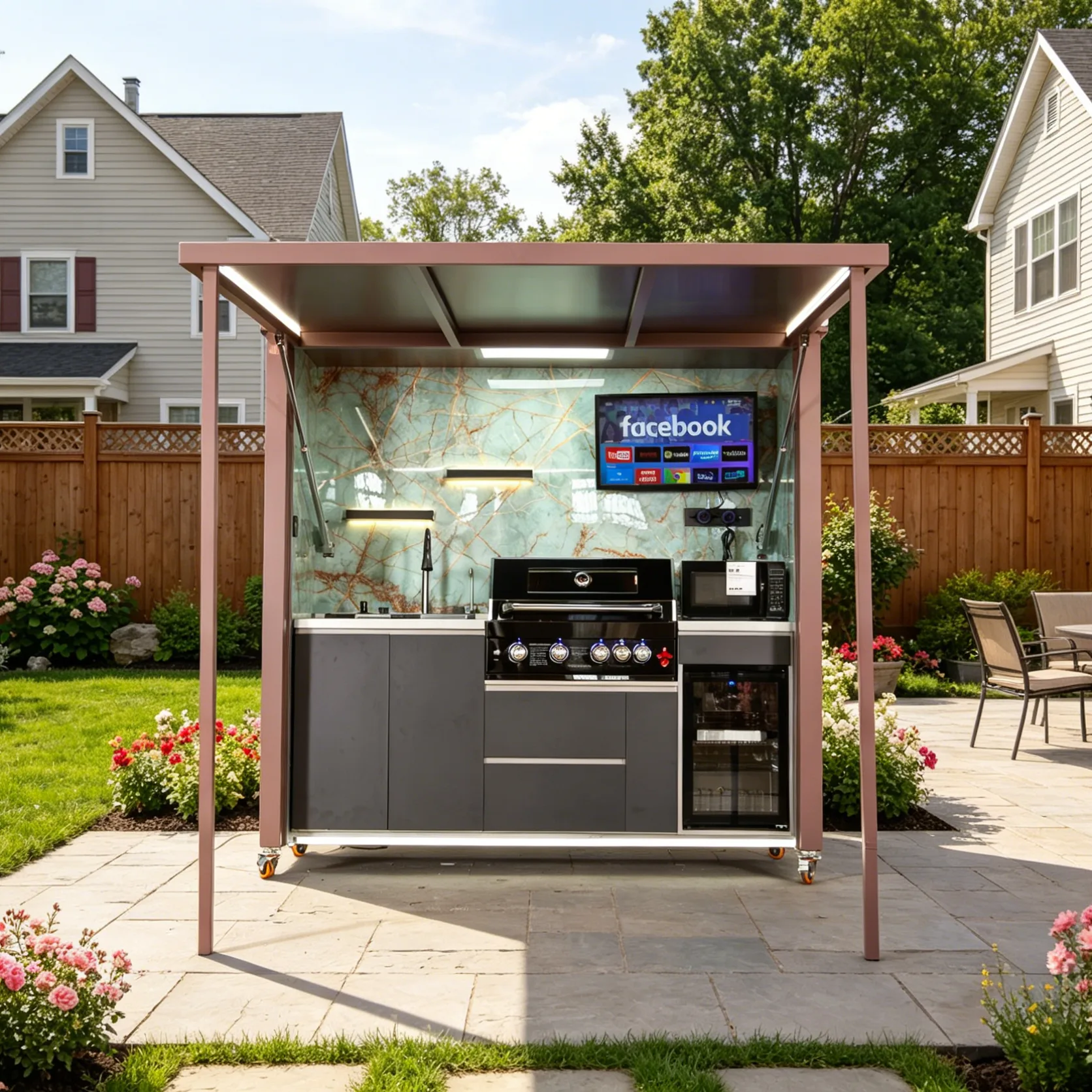
Yes, you can put a TV in an outdoor kitchen, but an indoor television under a roof is not automatically suitable for outdoor use. Choose equipment documented for the exact exposure, keep it outside appliance heat and required clearance zones, control rain and condensation risk, and use a qualified electrician to design the power connection. Good placement should also reduce glare and let guests watch without standing in the cook’s path.
First Define the Actual Exposure
“Outdoor” describes many different environments. A television on an open patio faces direct sun, wind-driven rain, dust, insects, humidity, and large temperature swings. A screen inside a covered kitchen may receive less direct rain, but it can still encounter condensation, reflected sunlight, cooking grease, heat, and moisture.
Document the location before shopping. Note roof depth, open sides, prevailing wind, sun direction, nearby sprinklers, pool splash, grill location, and seasonal temperatures. Then compare those conditions with the television, mount, enclosure, cabling, and power equipment documentation. Do not rely only on a retailer category name or a photograph of a similar installation.
Outdoor-Rated TV vs. Indoor TV in an Enclosure
Homeowners usually consider either a purpose-built outdoor display or an enclosure intended to protect a compatible television. Each approach requires verification rather than assumptions.
| Approach | Potential advantage | Questions to verify |
|---|---|---|
| Purpose-built outdoor television | Designed around specified exterior conditions and often brighter viewing environments | Exact exposure category, operating range, warranty conditions, mounting, ventilation, and power requirements |
| Compatible TV inside an outdoor enclosure | May offer flexibility in screen selection and physical protection | Enclosure compatibility, heat management, condensation control, viewing clarity, cable entry, and service access |
| Portable projector and screen | Can be stored indoors and used for occasional events | Weather, wind, darkness, safe cords, stable placement, and storage after use |
| Temporary portable display | No permanent installation when used infrequently | Outdoor suitability, tip resistance, protected power, weather monitoring, and removal after use |
Do not assume an enclosure can make every television safe in every climate. Enclosures can also trap heat if their ventilation design, internal equipment, or clearances are wrong. Follow both the enclosure and television manufacturers’ compatibility and installation instructions.
Keep the TV Away From Cooking Heat
A grill, pizza oven, side burner, smoker, or other appliance can release heat, grease, steam, and smoke. Mounting a screen directly above or beside a cooking appliance may expose it to conditions it was not designed to tolerate. It can also conflict with exhaust, ventilation, and fire-clearance requirements.
The appliance manufacturer’s required clearances and ventilation instructions control. The outdoor-kitchen structure and television documentation must also be considered. A qualified local professional should coordinate gas, electricity, fire separation, overhead construction, and any required permits. Never estimate a safe distance from an image or generic rule of thumb.
A location on the guest-facing side of the kitchen, away from the primary plume of heat and grease, is often easier to maintain and view. Test the likely wind direction, because smoke does not always rise straight up outdoors.
Control Sunlight and Glare
Screen brightness alone does not solve a poor orientation. Direct sun on the display can make viewing difficult and increase heat exposure. Bright sky, a pool, light paving, glass doors, and polished counters can create reflections even when the television is shaded.
- Face the screen away from the strongest afternoon sun when the site allows.
- Use roof shade and approved side-screen options without blocking required ventilation.
- Avoid placing the screen opposite a bright window or reflective water surface.
- Evaluate the view at the actual time the kitchen will be used.
- Test from every seat before installing the mount.
A cardboard mockup or removable screen can reveal reflections, neck angles, and obstructions before drilling. Recheck the location in more than one season because the sun path changes.
Plan Viewing Around the People, Not Just the Wall
The television should be visible from seating without forcing guests into the cooking zone. Mounting too high can be uncomfortable for long viewing, while mounting too low may put the screen behind counters, furniture, or people. The best height depends on seating position, screen size, distance, and whether viewers mostly watch while seated or standing.
Draw sightlines from the main chairs and dining positions. Open all cabinet doors, appliance lids, shutters, and roof elements to confirm they do not block the screen or collide with the mount. Keep walking routes clear for the cook carrying hot food and for guests getting drinks.
Use a Mount Designed for the Installation
The mount must be suitable for the screen, exposure, substrate, and intended motion. A full-motion arm creates different loads and wind behavior from a fixed mount. Never attach a television to a roof, panel, post, cabinet, or decorative surface unless the exact pergola or kitchen documentation permits it and the support has been verified.
A qualified installer should locate structural support and use the documented attachment method. Wind, vibration, corrosion, fastener compatibility, and theft resistance should be considered. Do not claim a mount or structure has a wind rating without verified documentation for the full installed configuration.
Treat Power and Data as Part of the Build
Outdoor electrical work must be designed for moisture and the specific location. The U.S. Consumer Product Safety Commission’s Home Electrical Safety Checklist advises weatherproof covers for outdoor outlets and GFCI protection, while noting that local codes may require particular measures. A qualified licensed electrician must determine the current requirements, equipment, circuit protection, grounding, bonding, cable routes, and permits for the property.
Avoid making an extension cord the permanent plan. Concealed power and data routes should remain accessible where required and should not pass through heat zones, drainage channels, louvers, or structural parts unless the relevant manufacturers expressly approve the method.
Plan internet or signal delivery before finishes are closed. Wi-Fi quality can change when metal structures, masonry, appliances, and distance from the house are involved. A wired data route may be useful in some projects, but it must be coordinated with electrical separation and exterior-rated components by qualified professionals.
Do Not Forget Sound
Outdoor sound dissipates differently from indoor sound, and increasing volume may disturb neighbors without improving clarity for nearby viewers. Start with the television’s documented audio capabilities, furniture placement, and background noise from grills, fans, pools, traffic, or HVAC equipment.
If separate speakers are used, choose equipment suitable for the location and mount it only at approved points. Aim sound toward the listening area and use the lowest practical volume. Local noise rules and quiet hours still apply.
Plan for Cleaning, Storage, and Severe Weather
Grease film, pollen, dust, insects, salt air, and moisture can affect the screen and connections. Follow the manufacturer’s cleaning instructions and avoid household chemicals that are not approved for the display or enclosure. Maintain ventilation openings and inspect seals, covers, cables, and mounting hardware at the recommended intervals.
Know the required shutdown, cover, or removal procedure before severe weather or seasonal closure. A cover should be compatible with the equipment and used only as directed; covering warm equipment or blocking ventilation may create other problems. Follow documented storage temperatures and storm instructions.
Outdoor Kitchen TV Planning Checklist
- Record direct sun, rain, wind, humidity, dust, temperature, splash, and sprinkler exposure.
- Verify the display or enclosure is documented for those conditions.
- Keep the screen outside appliance heat, grease, exhaust, and clearance zones.
- Test glare and sightlines at the actual viewing time.
- Keep guests watching from outside the cook’s work path.
- Confirm the mount, substrate, fasteners, and attachment method.
- Have a qualified electrician design power, protection, grounding, and cable routes.
- Plan reliable data or signal delivery and accessible service points.
- Consider neighbor-facing sound and local noise rules.
- Document cleaning, covering, severe-weather, and seasonal-storage procedures.
Coordinate Entertainment With the Kitchen Model
Integrated outdoor-kitchen designs can simplify visual planning, but images do not verify electrical approval, mounting capacity, screen suitability, or appliance clearance. Explore Yuquanqiu outdoor kitchens, then request exact model dimensions and installation documents before coordinating a display, mount, power, or data connection.
Frequently Asked Questions
Can I use a regular indoor TV under a covered patio?
Do not assume coverage makes an indoor television suitable. Humidity, condensation, temperature, dust, wind-driven rain, and warranty limitations may still apply. Use equipment documented for the actual environment or a verified compatible enclosure system.
How far should a TV be from an outdoor grill?
There is no universal distance. Follow the grill’s heat, ventilation, and clearance instructions plus the television, enclosure, mount, and structure documentation. Have qualified local professionals review the final arrangement.
Where is the best place for an outdoor kitchen TV?
Choose a shaded, lower-glare location outside the heat and grease path, visible from seating, and away from guest and cooking circulation. Test with a full-size mockup during the hours you expect to watch.
Does an outdoor TV need GFCI protection?
Outdoor electrical requirements depend on the adopted local code and installation. CPSC safety materials discuss GFCI protection for outdoor outlets. A licensed electrician must specify and install the required protection and weather-resistant equipment.
Should I cover an outdoor TV?
Use only a compatible cover and follow the television or enclosure instructions. Confirm when the equipment may be covered, how ventilation is maintained, and what to do during severe weather or seasonal shutdown.
Can a TV mount attach to an outdoor kitchen roof or post?
Only when the exact product documentation permits that attachment and a qualified professional verifies the structure, mount, loads, fasteners, exposure, and cable route. Do not drill based on appearance alone.