Pro Program Live Chat +8619050185756

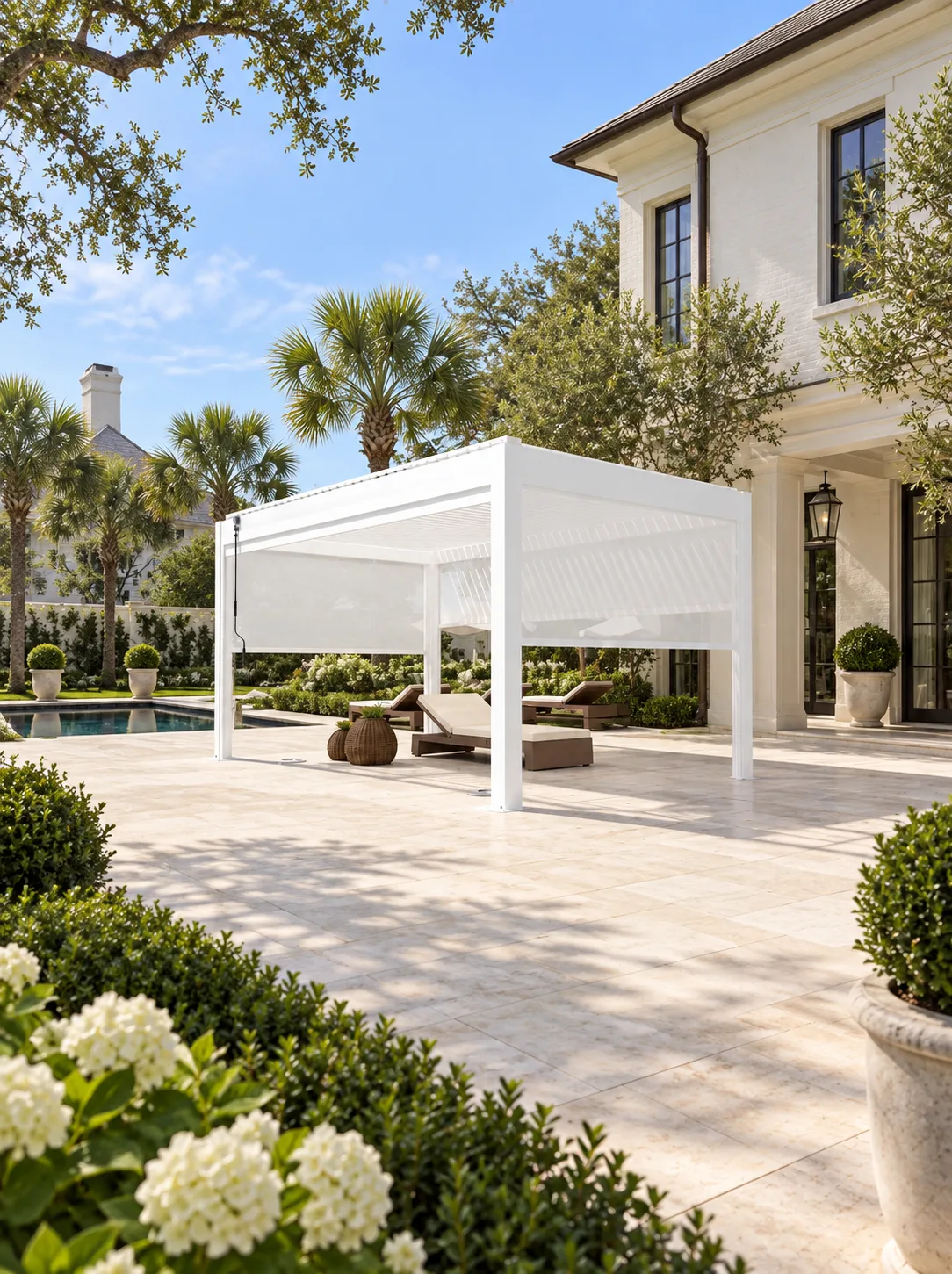
A ceiling fan may be installed under some motorized louvered pergolas only when the exact pergola is designed and documented to accept it. The fan, mount, support, wiring, louver movement, drainage, headroom, wind exposure, and local electrical requirements must all be coordinated. Never fasten a fan to a louver, decorative cover, gutter, or unverified beam.
The right process begins before the pergola is ordered. Ask for an approved fan-mounting detail and the allowable accessory information for the exact META LIFESTYLE configuration. Then have qualified structural and electrical professionals verify the site-specific installation.
Why a Pergola Fan Is Different From an Indoor Fan
An outdoor fan can be exposed to moisture, condensation, dust, temperature changes, insects, and wind. A motorized pergola also has moving roof components, drainage paths, integrated wiring, and a structure designed for defined loads. An indoor ceiling box and ordinary fan installation method should not be assumed to apply.
The fan must be suitable for the intended outdoor exposure, and every supporting component must match that environment. A roof that closes does not automatically create a dry indoor location. Wind-driven rain and condensation may still reach equipment.
Confirm an Approved Mounting Location
Request a drawing that identifies where a fan may be supported. The approved point may require a dedicated fixed crossbeam, mounting plate, or reinforced accessory member. The location needs to remain independent of rotating louvers and roof drainage.
Do not drill the frame to find a suitable point. Unapproved penetrations can damage finishes, concealed wiring, drains, motors, or structural components. They may also affect water management and product coverage.
Verify Louver and Roof Clearance
Draw the fan, downrod, canopy, motor housing, and full blade diameter beneath the pergola. Show louvers in every permitted position and include any drive bars, motors, gutters, lights, screens, or heaters. The fan must not enter the movement envelope of any component.
Clearance should also allow installation, cleaning, and future replacement. An accessory that technically fits when stationary may still be impossible to service safely.
Plan Comfortable and Safe Headroom
Fan height affects airflow and user comfort, but blade and equipment clearances must follow the fan instructions and applicable codes. Consider tall occupants, raised furniture platforms, dining tables, and any changes in patio elevation.
Do not shorten a downrod or substitute a mounting method unless the fan manufacturer permits it. The lowest component should remain out of normal reach and away from umbrellas, cabinet doors, hanging décor, and movable furniture.
Ceiling Fan Planning Checklist
- Confirm the exact pergola model permits a fan.
- Obtain the approved mounting detail and accessory-load information.
- Select a fan rated for the actual outdoor exposure.
- Verify louver, motor, light, gutter, and screen clearances.
- Draw fan diameter and height at full scale.
- Coordinate structural support and vibration control.
- Plan outdoor-rated power, switching, grounding, and controls.
- Keep wiring and penetrations out of drainage paths.
- Confirm safe headroom and furniture clearance.
- Review wind, shutdown, maintenance, and seasonal instructions.
Select the Fan for the Actual Exposure
Outdoor fans are commonly differentiated by where the manufacturer allows them to be used. The correct choice depends on whether the pergola area can receive direct water, wind-driven moisture, or only humidity. Read the listing and installation instructions for the exact fan rather than relying on a product name.
Blade material, motor enclosure, fasteners, finish, and control components should all be appropriate for the site. Coastal salt, pool chemicals, high humidity, freezing temperatures, and intense heat may require additional consideration documented by the manufacturers.
Coordinate Structural Loads and Vibration
A rotating fan applies dynamic forces, not only static weight. Wind can add further loading, and vibration can affect comfort or fasteners if the support is not designed correctly. The pergola manufacturer or qualified engineer must verify the approved accessory load and connection.
Do not use a light fixture location as proof that it can support a fan. Do not attach a support to louvers or gutters. Structural ratings, foundations, anchoring, wind and snow design, and accessory loads require model-specific documentation.
Plan Electrical Work Before Assembly
Fan power and controls should be routed through approved locations without interfering with drainage, louvers, motors, lighting, or screens. Decide whether the fan uses a wall control, remote, or approved automation method and where receivers or serviceable connections will be located.
A qualified electrician should design and install the system according to the fan and pergola instructions and applicable local codes. The professional must determine circuit protection, grounding, weather-resistant components, disconnects, conductor routes, and wet- or damp-location requirements.
Keep Water Out of Electrical Details
A louvered roof channels water through model-specific gutters and posts. Accessory wiring and fasteners should not obstruct those paths or create unapproved holes. Condensation and wind-driven rain should be considered even when the louvers are normally closed during showers.
Never seal a penetration with a generic product and assume it is permanently watertight. Use the exact approved mounting and weather-sealing procedure.
Decide Where the Fan Should Serve the Space
Centering a fan visually is not always the best functional choice. Map dining, lounge, and circulation zones, then consider where users need airflow. A single fan may not distribute air evenly across a large pergola, while multiple fans add electrical and structural coordination.
Do not position blades near a tall outdoor kitchen hood, umbrella, heater, pendant, television, or screen housing. If furniture will move between dining and lounge layouts, test both arrangements.
Fan vs. Portable Air Movement
Integrated Ceiling Fan
An approved integrated fan can provide a clean appearance and leave the floor open. It requires verified structure, clearances, outdoor-rated equipment, wiring, and professional installation.
Portable Outdoor-Rated Fan
A portable unit may offer flexible placement without loading the pergola, but it still needs suitable outdoor approval, safe power, stable placement, and protected cords. It should not obstruct exits, screens, or wet pathways.
Neither option should be used outside the equipment instructions or in unsafe weather. Compare comfort, service, storage, noise, and visual impact.
Understand What a Fan Can and Cannot Do
A fan moves air and may improve perceived comfort for occupants. It does not cool outdoor air like an air conditioner, guarantee insect control, remove all smoke, or replace appliance ventilation. Do not use it to compensate for an outdoor kitchen or fire feature installed without required clearances and exhaust planning.
When grills, heaters, or fireplaces are nearby, have the entire layout reviewed for airflow, flame, heat, combustible materials, and manufacturer requirements. A fan can affect smoke or heat movement in ways that need professional evaluation.
Plan Controls With Louvers and Screens
Users should understand permitted combinations of fan, louvers, and side screens. Lowering screens changes perceived airflow, while opening louvers changes overhead conditions. Ask whether any interlocks or operating procedures apply.
Do not create an unapproved automated sequence that runs the fan during weather or roof positions the manufacturers prohibit. Controls should remain accessible, labeled, and serviceable.
Maintenance and Seasonal Use
Leave enough access to clean blades, inspect fasteners, and service the motor without stepping on furniture or louvers. Use only cleaning methods approved for the fan and pergola finishes. Keep vegetation and hanging décor away from blades.
Owners should follow instructions for high winds, storms, freezing weather, prolonged non-use, and power interruption. The fan does not change the pergola’s verified wind or snow rating. Model-specific documents and qualified local professionals or authorities control structure, electricity, drainage, and permits.
Frequently Asked Questions
Can a fan be attached directly to a pergola beam?
Only when the exact beam and mounting detail are approved for that fan and load. Obtain written product guidance and qualified structural verification before drilling or fastening.
Can an indoor fan be used under a closed louvered roof?
Do not assume so. The area can still experience moisture, condensation, wind, and temperature changes. Use equipment approved for the actual outdoor exposure.
Will a ceiling fan interfere with the louvers?
It can if the fan, downrod, wiring, or support enters the louver movement envelope. Verify every roof position on a model-specific drawing.
Can a fan be installed after the pergola is built?
Possibly, but only if the existing structure has an approved mounting provision and suitable wiring access. Do not retrofit by drilling unverified frame components.
Can a pergola fan replace ventilation for a grill?
No. A comfort fan is not a substitute for the appliance’s required ventilation, hood, clearances, or fire-safety provisions.
Explore META LIFESTYLE Pergolas
Review META LIFESTYLE’s outdoor shade structures and request approved accessory information for the exact configuration.
Request a META LIFESTYLE Quote
For pergola and accessory planning, visit the META LIFESTYLE contact page. Both numbers below are official META LIFESTYLE WhatsApp contacts: +8619050185756 and +1 (626) 735-5685. Share pergola size, patio photos, desired fan model, project location, and planned furniture when requesting a quote.