Pro Program Live Chat +8619050185756

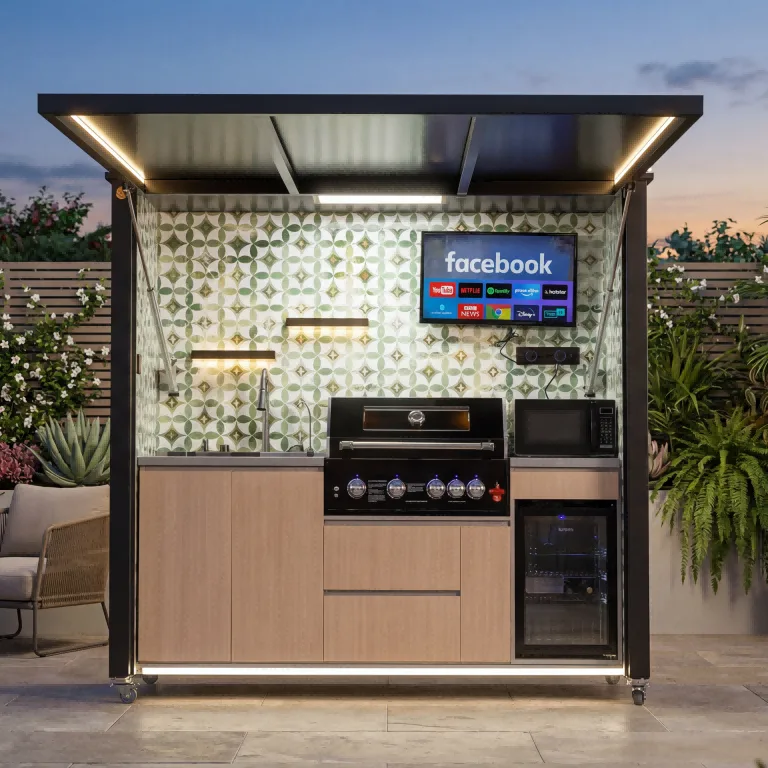
Yes—outdoor kitchen appliances should be specifically approved by their manufacturer for the exact outdoor location and installation where they will be used. An appliance that works indoors is not automatically safe or durable outside, even beneath a roof. Rain, humidity, temperature changes, sunlight, wind-driven moisture, dust, insects, and freezing conditions create different electrical, combustion, ventilation, and material demands.
“Under a Roof” Is Still Outdoors
A covered patio can reduce direct rain and sun, but it does not create an indoor environment. Moisture can travel sideways in wind, condensation can form, and temperatures can exceed the operating or storage limits of equipment. A roof may also change ventilation around grills and other heat-producing appliances.
Use the exact product documentation to confirm whether an appliance is approved for outdoor use, covered outdoor use, built-in installation, freestanding installation, or another defined condition. Marketing language such as “stainless steel” or “weather resistant” is not a substitute for the manufacturer’s installation and use instructions.
Outdoor-Rated Means More Than a Finish
Buyers sometimes assume that a stainless exterior makes an appliance outdoor-rated. The enclosure is only one part of the system. Electrical insulation, controls, wiring, seals, ventilation, drainage, fasteners, refrigerant components, burners, regulators, and internal materials all affect suitability.
Different appliances also face different hazards. A refrigerator must reject heat and manage condensation. A grill must handle combustion, clearances, grease, and ventilation. A sink accessory may need potable-water compatibility and freeze protection. A television or microwave has electrical and environmental limits that must match the location.
How to Verify an Appliance Before Buying
Start with the manufacturer’s current model page, specification sheet, installation manual, and use-and-care guide. Confirm that every document refers to the exact model number and revision. Retail descriptions and marketplace listings can be incomplete or copied from a related product.
- Look for an explicit statement approving the intended outdoor installation.
- Confirm whether the appliance is built-in, freestanding, or both.
- Review temperature, moisture, ventilation, clearance, and location limitations.
- Check required electrical supply, circuit protection, gas type, water, and drainage.
- Verify enclosure openings, support, door swing, lid movement, and service access.
- Ask for verified certification or listing information when required; do not assume it.
- Confirm warranty terms without assuming all outdoor exposure is covered.
If the documentation is unclear, ask the manufacturer in writing. Keep the response with project records and share it with the installer and local authority where applicable.
Grills and Cooking Equipment
A built-in grill must be approved for built-in use and installed in the required enclosure. The manual may specify cutout dimensions, ventilation openings, noncombustible construction, insulating components, rear and overhead clearances, and access to fuel connections. A cart grill should not be removed from its base and enclosed unless the manufacturer specifically permits that conversion.
Side burners, griddles, pizza ovens, and power burners have their own requirements. Do not copy the grill’s clearance onto another appliance. Gas supply, regulators, shutoffs, electrical ignition, ventilation, fire clearances, structures, and permits must follow model-specific documentation and qualified local professionals.
Outdoor Refrigeration
An outdoor refrigerator should be approved for outdoor operation and for its planned built-in or freestanding configuration. Ventilation around the condenser is essential, and required openings must not be blocked by cabinets, stored items, or decorative panels.
Climate matters. Very hot or cold conditions can affect performance, while sun exposure can increase the heat the appliance must reject. Freezing weather may require seasonal shutdown or other procedures. Follow the exact operating-temperature and care guidance; do not invent a temperature range from a different model.
Door swing and service removal also deserve attention. A refrigerator placed tightly between cabinets may be difficult to ventilate, open, level, or repair. Provide the clearances and access in the installation manual before countertop fabrication.
Ice Makers, Sinks, and Water Appliances
Equipment connected to water needs a complete supply and drainage plan. Outdoor ice makers, beverage systems, filters, faucets, and water heaters must be suitable for their location and intended use. Potable-water materials, backflow protection, shutoffs, drainage, power, and winterization may apply.
Never assume wastewater can discharge onto the patio, into landscaping, or into a storm drain. Qualified local plumbing professionals and authorities determine acceptable methods. Ask the installer to document seasonal shutdown and startup procedures for lines, traps, filters, heaters, and valves.
Microwaves, Televisions, and Small Appliances
A standard indoor microwave or television should not be treated as outdoor equipment merely because it sits under a roof. Verify the exact product’s approved environment, temperature range, moisture limitations, ventilation, power, and mounting conditions. Cabinets must not trap heat or block service access.
Portable countertop appliances create another issue: homeowners may carry indoor appliances outside temporarily. Follow the product instructions and electrical requirements, keep equipment away from water and weather, and do not turn temporary extension-cord use into a permanent installation. A qualified electrician should plan outdoor circuits, outlets, protection, bonding, and weather-rated components under local rules.
Cabinetry and Countertops Must Match the Appliances
Outdoor-rated appliances still require correct surroundings. Cabinet material, ventilation, support, cutouts, heat protection, drainage paths, and countertop openings must coordinate with the model documents. Choosing appliances after cabinets are ordered can lead to unsafe gaps or expensive modifications.
Finalize exact models before fabrication. Browse Yuquanqiu’s outdoor kitchen options while planning how approved appliances, storage, counters, lighting, and shelter can work as a complete system.
Outdoor-Rated vs. Indoor Appliance Comparison
Environmental design
An outdoor-approved appliance is documented for defined outdoor conditions. An indoor appliance is designed around a protected indoor environment. A cover or roof does not automatically bridge that difference.
Installation documentation
Outdoor models should provide instructions for their approved location and configuration. Indoor instructions may prohibit exterior use or omit necessary outdoor provisions.
Utilities and protection
Outdoor installations can require location-appropriate electrical, gas, water, drainage, and ventilation measures. Exact requirements depend on the product and local rules.
Durability and maintenance
Outdoor exposure may increase cleaning and seasonal-care needs even for an approved product. Approval does not mean maintenance-free, storm-proof, freeze-proof, or corrosion-proof.
Appliance Approval Checklist
- Record the exact manufacturer and model number.
- Download the current specification, installation, and care documents.
- Confirm explicit approval for the planned outdoor location.
- Verify built-in or freestanding configuration.
- Check environmental, ventilation, clearance, and operating limitations.
- Coordinate electrical, gas, water, drainage, and shutoff access.
- Provide required cabinet openings, support, and service removal space.
- Document cleaning, seasonal shutdown, and storm-preparation procedures.
- Verify certifications, warranty, and local acceptance rather than assuming them.
- Have qualified local professionals review utilities, structure, fire safety, and permits.
Common Buying Mistakes
The most common mistake is buying by appearance and discovering later that the appliance is not approved for the location. Another is assuming that all products in a matching collection have identical installation requirements. Similar-looking models can have different cutouts, ventilation, and utility connections.
Homeowners also overlook service access, cover ventilation openings with stored items, and assume a roof protects equipment from all moisture. Finally, buying cabinets first can force the project team to choose whatever fits instead of the appliance that best meets the household’s needs.
Frequently Asked Questions
Can I use an indoor refrigerator in a covered outdoor kitchen?
Only if the manufacturer explicitly approves the exact model for that outdoor environment and installation. A covered patio remains an outdoor location.
Does stainless steel mean an appliance is outdoor-rated?
No. Stainless steel describes material, not the approval of electrical, refrigeration, combustion, controls, seals, or the complete appliance for outdoor use.
Can a freestanding grill be built into cabinets?
Not unless the manufacturer specifically approves that exact model for built-in use and provides the necessary enclosure instructions.
Do outdoor appliances need special electrical outlets?
Outdoor electrical work must meet the appliance documentation and applicable local requirements. A qualified electrician should determine circuits, protection, weather-rated components, bonding, and placement.
Are outdoor-rated appliances safe in every climate?
No. Approved operating and storage conditions vary. Follow model-specific temperature, moisture, winterization, maintenance, and weather guidance.
When should appliances be selected?
Select exact models before cabinet fabrication, countertop templating, and utility rough-in so the project uses accurate cutouts and requirements.
The Bottom Line
Use appliances explicitly approved for the exact outdoor location and configuration. Verify the model documents, coordinate the enclosure and utilities, and plan service and seasonal care before construction. “Outdoor-rated” is not a decorative label—it is the starting point for a complete, documented installation.