Pro Program Live Chat +8619050185756

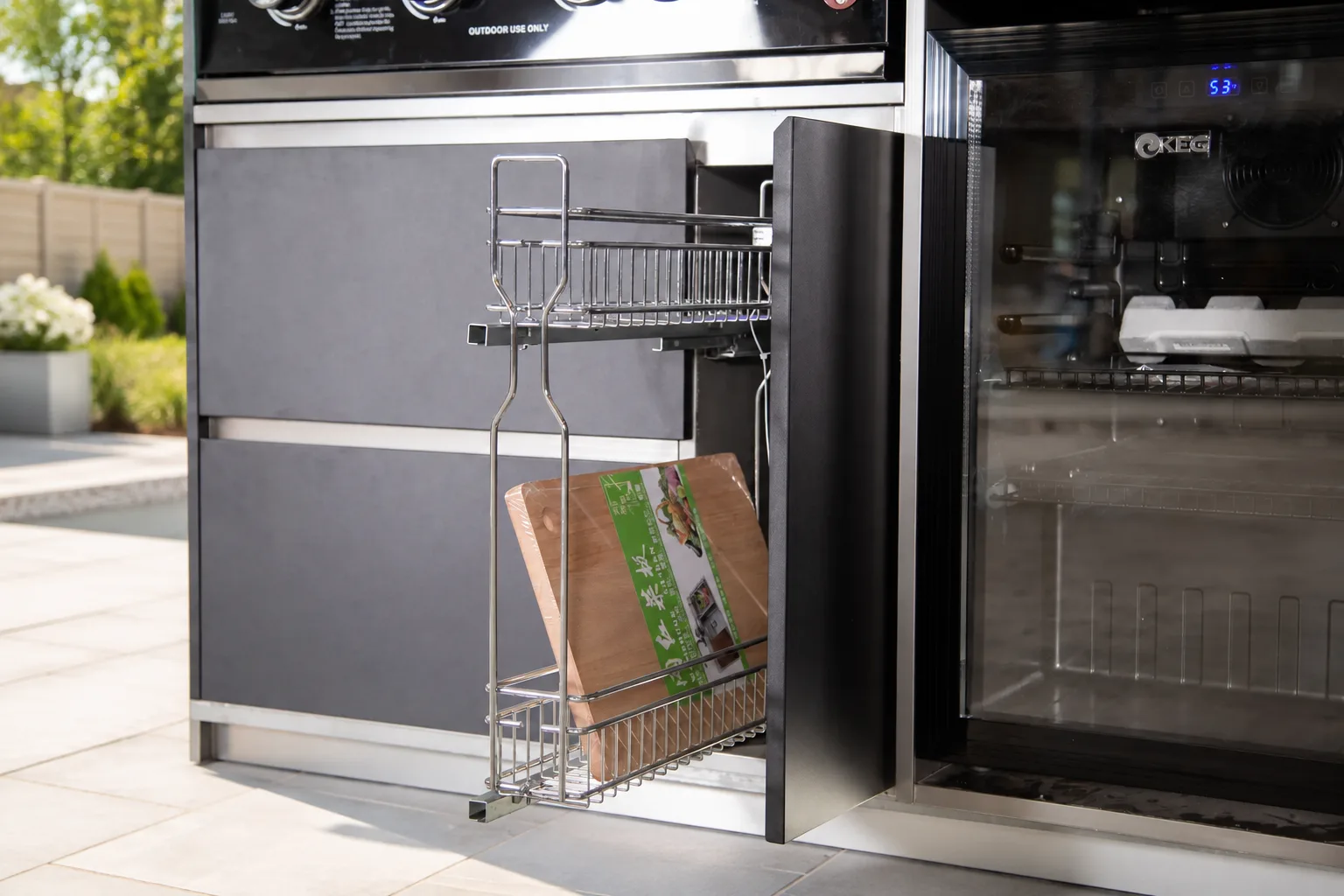
Childproof an outdoor kitchen by creating a clearly supervised cooking zone, securing appliance controls and hazardous storage, keeping traffic away from hot surfaces, and teaching a consistent no-entry rule while equipment is operating or cooling. No accessory can replace active adult supervision. Gas, electricity, plumbing, fire clearances, ventilation, structures, and permits must follow model-specific documentation and qualified local professionals.
Think in zones, not individual hazards
An outdoor kitchen combines heat, sharp tools, electricity, water, glass, heavy doors, and busy foot traffic. Treating each item separately can miss the way risks overlap. A better plan divides the patio into a cooking zone for adults, a serving zone where children may participate, and a play or seating zone away from equipment.
The boundary can be created with the island orientation, furniture, flooring changes, or landscaping, but it should never block an exit or service access. Children need a simple rule they can recognize, such as staying beyond a specific counter end whenever the grill is on.
Control the path through the kitchen
The safest route from the house to the yard should not pass directly behind the cook. Place toys, pool access, drinks, and frequently used seating where children do not need to cross the hot zone. Chairs and stools should not narrow the escape route when occupied.
Test the plan with appliance doors, drawers, pull-outs, and trash bins fully open. A low drawer can become a trip point, while an open refrigerator door can redirect traffic toward the grill. Exact aisle and accessibility requirements vary, so use a qualified designer when code compliance or mobility needs apply.
Secure controls without defeating safety features
Use only manufacturer-approved control locks, covers, or settings. Do not tape knobs, disconnect safety devices, or add a generic guard that traps heat or interferes with ventilation. After cooking, verify every control is off and follow the manufacturer’s shutdown procedure.
Gas shutoffs and electrical disconnects must remain accessible to adults and professionals. A qualified installer should determine component location, connections, enclosure ventilation, testing, and local requirements. Never ask a child to operate a shutoff during an emergency.
Organize cabinets by risk
| Item | Storage approach | Reason |
|---|---|---|
| Knives and skewers | Secured drawer or locked indoor storage | Prevents unsupervised access to sharp tools |
| Matches and lighters | Locked, dry location controlled by adults | Reduces ignition risk |
| Cleaning products | Original containers in secured separate storage | Prevents poisoning and food contamination |
| Grill tools | Stable organizer away from children’s reach | Keeps greasy or sharp tools controlled |
| Serving ware | Accessible serving-side drawer when appropriate | Lets children help without entering the cooking zone |
| Fuel containers | Only as allowed by product documentation and local rules | Fuel storage requires approved conditions |
Child locks should not obstruct appliance airflow, utility access, drains, or emergency controls. Check that locks tolerate outdoor exposure and do not create sharp edges.
Manage hot surfaces and cool-down time
The grill can remain hot after the flame is off. Side burners, warming areas, lids, grates, pizza ovens, and nearby metal surfaces may also retain heat. Establish a cool-down period during which the cooking zone stays restricted. Follow each appliance’s instructions rather than relying on appearance.
Keep towels, cushions, paper, decorations, and climbing furniture away from hot equipment. Do not place a chair where a child can use it to reach a counter or control. Appliance-specific fire clearances and overhead conditions must be verified by qualified local professionals.
Prevent tip, pinch, and pull-out injuries
Drawers and pull-out baskets should close fully and should not be used as steps. Heavy objects belong in cabinetry designed for their load. Secure sharp items and avoid overfilling a pull-out, which can make it hard to close or cause contents to fall.
Inspect hinges, slides, handles, and latches for wear. A slow or misaligned door may pinch fingers. Use manufacturer-approved maintenance methods and replacement parts. Do not drill into cabinets or structure without confirming that the modification is allowed.
Plan safer participation
Children can help at a separate table or cool serving counter with age-appropriate tasks such as arranging outdoor-safe dishes or mixing cold ingredients. Keep raw food, hot pans, knives, alcohol, and cleaning chemicals under adult control. Handwashing and food-safety practices still matter outdoors.
A serving-side refrigerator may reduce traffic through the cooking zone, but it must be documented for the intended outdoor use and installed with correct ventilation, electricity, drainage, and service access.
Poolside kitchens need an extra traffic plan
Wet feet, running, and glare add risk near a pool. Keep the route to towels, drinks, and seating away from hot equipment. Flooring should be selected and maintained for the setting, while drains and surface transitions remain unobstructed.
Pool barriers, gates, electrical protection, and local safety requirements are separate from kitchen planning and must be handled by qualified professionals and authorities.
Lighting and nighttime supervision
Illuminate controls, work surfaces, steps, and the path around the island without creating glare. Adults should be able to see whether a child has entered the restricted zone. Decorative lighting alone may not provide sufficient task visibility.
Outdoor electrical fixtures and receptacles must be suitable for their location and installed according to product documentation and local requirements. Keep cords out of walkways and never let a temporary cable cross a wet area.
Childproofing checklist
- Define an adult-only cooking zone that children can recognize.
- Route play, pool, and house traffic away from hot equipment.
- Use only manufacturer-approved control protection.
- Lock knives, skewers, lighters, chemicals, and other hazardous items.
- Keep vents, shutoffs, drains, and service access unobstructed.
- Check drawers and pull-outs for pinch, trip, and climbing hazards.
- Remove stools or furniture that provide access to controls.
- Maintain supervision throughout operation and cool-down.
- Use appropriate lighting for controls, paths, and steps.
- Ask qualified local professionals to verify gas, electrical, plumbing, fire-clearance, structural, and permit requirements.
Review the plan as children grow
A latch that works for a toddler may not deter a school-age child. Reassess rules, locks, furniture, and storage at the start of each outdoor season and after any appliance or layout change. Teach children never to play with controls, climb on cabinetry, or retrieve an item from the cooking zone without permission.
Explore Meta Lifestyle’s outdoor kitchen collection when planning zones and storage. Photographs are design references only; obtain model-specific documentation and professional review before installation.
Frequently Asked Questions
Can I use ordinary cabinet child locks outdoors?
Only if the lock is suitable for the cabinet, environment, and intended location. It must not block ventilation, utilities, or safety access. Ask the cabinet or appliance manufacturer when uncertain.
Should grill knobs be removed after use?
Follow the exact appliance instructions. Removing or altering controls can damage components or interfere with safe operation. Use approved control protection and verify the appliance is shut down correctly.
Where should children sit near an outdoor kitchen?
Place seating where an adult can see children without putting them in the cooking aisle, behind the cook, or beside hot equipment. A separate serving or activity table can work well.
How long does a grill remain dangerous after shutdown?
Cool-down time varies by appliance, weather, and use. Treat the cooking zone as hot until the equipment has cooled according to the manufacturer’s guidance; do not estimate by touching the surface.
Can a safety gate surround the outdoor kitchen?
A gate may help in some layouts, but it must not block exits, ventilation, appliance clearances, utilities, or emergency access. A qualified designer should review the complete installation.
Does childproofing make an outdoor kitchen code-compliant?
No. Consumer locks and household rules do not establish compliance. Model documentation, local authorities, permits, inspections, and qualified professionals determine applicable requirements.