Pro Program Live Chat +8619050185756

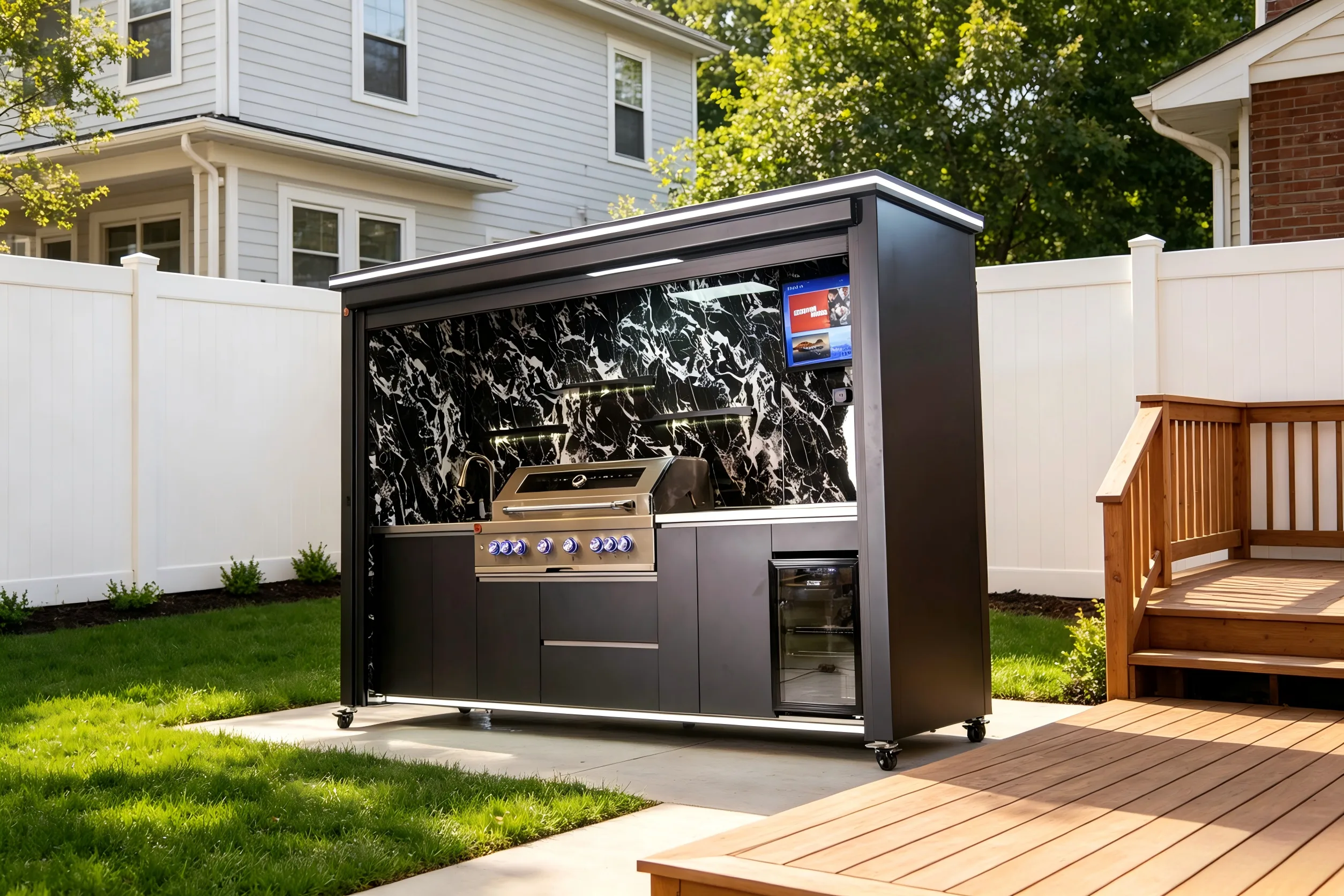
The best outdoor kitchen backsplash is a complete exterior-rated assembly, not simply an attractive surface. Choose a finish documented for the site’s sun, moisture, temperature changes, cleaning routine, and proximity to cooking heat. Then coordinate it with the substrate, adhesive or fastening system, grout or seams, edge details, movement accommodation, and appliance-required clearances. A qualified installer should confirm the whole assembly before work begins.
Start With Exposure, Not Color
An outdoor backsplash may face direct sun, wind-driven rain, humidity, freezing conditions, salt air, pollen, grease, smoke, and repeated heating and cooling. A covered kitchen can reduce some exposure, but it does not create an indoor environment. Moisture can enter from open sides, condensation, cleaning, roof runoff, or the wall behind the finish.
Record the site’s conditions before selecting samples. Note sun direction, roof coverage, prevailing weather, distance to the grill, cleaning practices, and whether the kitchen will be closed for part of the year. Ask each material and installation-product supplier to confirm suitability for that exact use in writing.
Treat the Backsplash as a System
A successful backsplash includes more than the visible face. The supporting wall or panel must be appropriate, stable, correctly detailed, and compatible with the finish. Fasteners, membranes, mortars, adhesives, grout, sealants, trims, and penetrations must work together under exterior conditions.
Mixing products from unrelated systems without confirmation can create weak links. Follow the outdoor-kitchen, appliance, surface, setting-material, and substrate instructions. Coordinate any required drainage or ventilation behind the surface. Do not seal openings that the kitchen or appliance documentation requires.
Compare Common Outdoor Backsplash Materials
| Material | Design advantage | Questions to verify |
|---|---|---|
| Porcelain or exterior-rated tile | Wide range of colors, formats, and patterns | Exterior and climate suitability, substrate, mortar, grout, movement joints, edge trim, and heat-zone use |
| Stainless steel | Clean professional appearance and limited joints in larger panels | Alloy and finish for the environment, glare, fingerprints, compatible fasteners, thermal movement, edges, and approved cleaning |
| Natural stone | Unique color and texture | Specific stone performance, finish, porosity, staining, sealing, freeze-thaw exposure, cleaners, support, and heat proximity |
| Sintered, porcelain, or other large-format slab | Continuous visual surface with fewer field joints | Exterior approval, fabrication, handling, support, edge details, cutouts, seams, movement, and installation system |
| Decorative metal panel | Distinctive texture or color | Corrosion, coating durability, heat exposure, cleaning, expansion, fasteners, sharp edges, and manufacturer approval |
| Masonry or concrete finish | Can coordinate with patios and landscape walls | Structural support, cracking, moisture, staining, sealing, joints, thickness, and cleanability |
No material is universally best. A product that performs well in one climate or installation may be unsuitable beside a particular grill or on a different substrate. Product-specific documentation must decide.
Respect the Cooking Appliance’s Heat Zone
The area behind and above a grill can receive heat, grease, steam, and smoke. A decorative surface does not replace an appliance-required noncombustible construction, insulation, liner, ventilation system, or clearance. Terms such as “heat resistant” are not enough without relevant documentation for the exact application.
Follow the grill or cooking appliance installation instructions for rear, side, and overhead clearances, enclosure construction, openings, and ventilation. Coordinate gas, electricity, fire safety, and any roof or shutter system with qualified local professionals and authorities. Never copy the proportions in a lifestyle image as an installation specification.
Also consider accessories mounted on the backsplash. Shelves, lighting, outlets, televisions, rails, and utensil hooks can sit in heat, grease, or flame paths. Each item needs an approved mounting location and suitable attachment without damaging required fire, weather, or structural layers.
Balance Cleanability With Visual Texture
Highly textured surfaces create depth but may collect grease and dust. Numerous grout joints can add pattern while increasing the number of lines that require cleaning. Smooth panels can be easier to wipe, although polished finishes may reveal fingerprints, water spots, or glare.
Think about the actual cooking style. Frequent high-heat grilling and smoking may create a different cleaning load than occasional beverage service. Obtain approved cleaning instructions before purchase. Test the cleaner and method on a sample, and never assume an acidic, abrasive, bleach-based, solvent, pressure-washing, or steam-cleaning method is safe for the finish, grout, coating, sealant, or adjacent appliances.
Plan Grout, Seams, and Movement
Outdoor materials expand and contract as temperature and moisture change. The assembly may need movement joints, flexible transitions, perimeter gaps, or specific seam details. These are functional components, not defects to be filled with the hardest available material.
A qualified exterior tile, stone, metal, or slab professional should specify joint placement and compatible products. Do not bridge a building or substrate movement joint with a rigid finish unless the approved system expressly details that condition. Large panels reduce the number of field joints but make fabrication, handling, substrate flatness, and movement planning more demanding.
Coordinate Penetrations Before Fabrication
Outlets, switches, lights, faucets, screens, shelves, appliance vents, access panels, and gas or electrical components can require openings. Determine every location before tile or slab fabrication. Late drilling can damage waterproofing, hit concealed services, weaken edges, or create poorly sealed penetrations.
Exterior electrical work and components must suit the actual damp or wet location and comply with adopted local rules. A qualified electrician should determine boxes, covers, grounding, protection, clearances, and sealing. Plumbing and gas penetrations likewise require the relevant qualified trades.
Use Samples in Real Outdoor Light
View samples beside the cabinet finish, countertop, grill, patio, and house exterior. Morning and afternoon sun can change the apparent color and reveal reflections that are not visible in a showroom. Wet the sample if the supplier permits, and observe whether water spots, fingerprints, grease-like marks, or dust are visually prominent.
A bold pattern can be effective in a compact kitchen, while a quieter surface may better support an elaborate countertop or landscape view. Design matters, but the final selection should still pass technical review.
Plan Edges and Water Management
Exposed top and side edges need a finished detail that protects the assembly and looks intentional. Water should not be directed behind panels, into cabinet cavities, toward electrical components, or onto cooking equipment. Coordinate backsplash caps, roof runoff, countertop-to-wall transitions, penetrations, and lower edges.
Do not assume a bead of sealant can correct a missing flashing, incompatible substrate, or poor drainage design. The exact kitchen system, wall construction, climate, and exposure determine the appropriate detail.
Outdoor Kitchen Backsplash Checklist
- Document sun, rain, humidity, freezing, salt, grease, smoke, and cleaning exposure.
- Verify the visible finish is approved for the exact exterior location.
- Confirm the substrate, attachment, grout, seams, sealants, and trims as one compatible system.
- Follow appliance clearances, ventilation, enclosure, and heat-zone instructions.
- Plan movement joints and flexible transitions with a qualified installer.
- Locate every outlet, light, shelf, screen, faucet, vent, and access panel before fabrication.
- Test samples outdoors beside the actual cabinet and countertop colors.
- Review approved cleaning and maintenance products before purchase.
- Detail top, side, bottom, and penetration edges to manage water.
- Have qualified trades review gas, electrical, plumbing, fire, structure, and permit requirements.
Coordinate the Finish With the Kitchen Model
The backsplash must fit the kitchen structure and appliance configuration rather than being treated as an independent decoration. Explore Yuquanqiu outdoor kitchens for design inspiration, then request exact model drawings, finish information, and installation documents before selecting or modifying a backsplash assembly.
Frequently Asked Questions
Is porcelain tile good for an outdoor kitchen backsplash?
It can be, when the specific tile and complete installation system are approved for the climate, substrate, moisture, heat zone, and exterior use. Confirm mortar, grout, movement joints, edges, and maintenance with the manufacturers and installer.
Can natural stone be used behind a grill?
Potentially, but the exact stone, finish, thickness, support, sealer, heat exposure, staining risk, and appliance clearances must be verified. Stone appearance alone does not establish a compliant heat-zone assembly.
Is stainless steel easier to clean outdoors?
A smooth stainless panel may have fewer joints, but it can show fingerprints, water spots, scratches, or discoloration. Confirm the alloy, finish, environment, fasteners, and approved cleaner for the product.
Does an outdoor backsplash need grout or expansion joints?
The required joints depend on the selected assembly, dimensions, substrate, climate, exposure, and manufacturer instructions. A qualified installer should design movement accommodation rather than treating every joint as cosmetic.
Can I install a backsplash over an existing wall?
Only after the wall is evaluated for stability, flatness, moisture condition, compatibility, fire requirements, and the chosen attachment system. Existing paint or cladding may not be an approved substrate.
How tall should an outdoor kitchen backsplash be?
There is no universal height. Appliance clearances, heat and grease exposure, wall or roof design, cabinets, outlets, lighting, appearance, and exact product documents should determine it.