Pro Program Live Chat +8619050185756

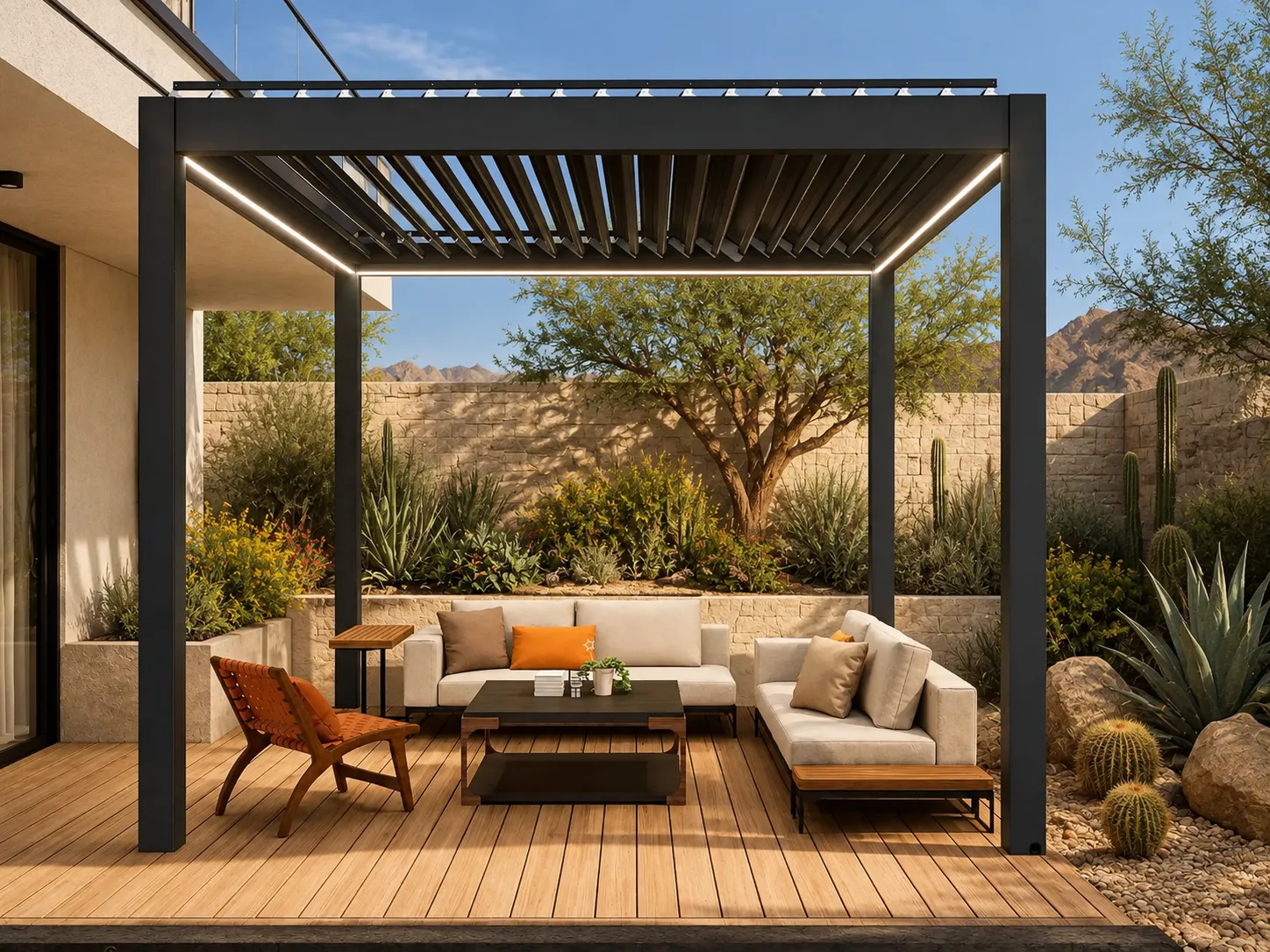
To keep a pergola comfortable on hot summer days, combine effective overhead shade with open airflow, cooler-touch furnishings, thoughtful orientation, and a plan for the changing path of the sun. An adjustable louvered roof can help manage direct sun while allowing ventilation, but comfort also depends on reflected heat from nearby walls and paving, low-angle sunlight from the sides, humidity, wind, and how the space is furnished. Plan the entire outdoor room instead of expecting the roof alone to solve every heat problem.
Begin with the sun, not the furniture
Before deciding where the sofa or dining table will go, observe the proposed location at several times of day. Midday sun is high and often easier to block from above. Morning and late-afternoon sun arrives at a lower angle and may enter beneath the roof from the east or west. A pergola that feels shaded at noon can still be uncomfortable at dinner time if the seating faces strong western sun.
Note which side of the house reflects heat, where existing trees cast shade, and whether surrounding walls restrict breezes. Seasonal conditions matter too. The sun’s path changes across the year, so observations made on one afternoon are only part of the picture. A designer or qualified local professional can help evaluate orientation for the specific site.
Use adjustable louvers as part of a comfort strategy
A louvered pergola gives users more control than a fixed open-slat roof because the roof angle can be adjusted. In hot weather, the objective is usually to interrupt direct solar exposure while retaining enough opening for warm air to move. The best position changes with sun angle, wind, and the roof system’s operating instructions.
Do not force louvers, hang objects from them, or operate the roof contrary to the manufacturer’s guidance. If the system is motorized, keep controls and electrical components in their intended condition. Exact operating limits, rain procedures, maintenance requirements, and allowable accessories come from the documentation for the selected model.
Shade and airflow must work together
Closing louvers may create deeper shade, but a fully closed roof can also reduce upward air movement. In dry heat, a small controlled opening may improve comfort while still blocking much of the direct sun. In humid climates, cross-ventilation can be especially important because shade alone does not remove the muggy feeling. Experiment within the product’s approved operating range and pay attention to how the space feels at different hours.
Preserve clear cross-ventilation
A pergola feels more comfortable when air can enter from one side and leave from another. Avoid filling every open side with tall cabinets, solid screens, dense hedges, or bulky furniture. These elements may provide privacy, but they can also create a pocket of still, warm air.
If side shade is needed, prioritize the direction of the strongest low-angle sun rather than enclosing all four sides. Retractable solutions can offer flexibility, but they must be compatible with the pergola and suitable for outdoor use. Never attach an aftermarket screen, curtain, fan, or shade device to structural components without confirming approved attachment methods and loads.
Reduce heat reflected from surrounding surfaces
The air temperature is only one part of outdoor comfort. Dark masonry, metal walls, artificial turf, and exposed paving can absorb solar energy and radiate heat toward the seating area. A pergola placed beside a highly reflective glass wall may also receive concentrated glare.
Where practical, use a balanced landscape plan to soften the setting. Planting beds, appropriately located trees, and light-to-medium-tone exterior surfaces can reduce the visual and thermal harshness of a fully paved courtyard. Plant selection and irrigation should suit the local climate and should not interfere with footings, drainage, roof movement, or maintenance access.
Choose the deck or patio surface carefully
Surface color alone does not determine how hot a patio will feel. Material, texture, exposure, moisture, and local climate all matter. Ask the surface supplier for exterior-use guidance and, when possible, compare real samples outdoors. A product that looks cool in a showroom may feel different after several hours of direct summer sun.
Arrange furniture for shade and circulation
Place the primary seats within the reliable shade zone, not at the outer edge where low sun can reach them. Keep a clear path around the group so air and people can move easily. Tall-backed furniture can block breezes when placed across the prevailing airflow, while a more open arrangement may feel less enclosed.
Outdoor cushions should be appropriate for the location and easy to remove or protect during severe weather. Pale fabrics often create a lighter visual mood, but performance depends on the actual textile. Request care instructions, fade-resistance information, and outdoor-use documentation from the furniture supplier rather than assuming a material is suitable based on appearance.
Compare common summer-comfort measures
| Measure | Best use | Important limitation |
|---|---|---|
| Adjustable roof louvers | Managing changing overhead sun | Operate only within model-specific instructions |
| One-sided retractable shade | Blocking low morning or evening sun | May reduce airflow and must be structurally compatible |
| Open furniture layout | Supporting cross-ventilation | Cannot compensate for intense direct solar exposure |
| Landscape shade | Reducing heat and glare around the patio | Requires climate-appropriate placement and maintenance |
| Outdoor-rated fan | Increasing perceived air movement | Needs approved mounting, clearances, and electrical work |
| Portable shade accessory | Temporary side protection | Must be secured and removed in unsuitable weather |
Plan fans and electrical upgrades safely
Air movement can make a shaded seating area feel more comfortable, but a fan should never be improvised onto a beam or roof component. The mounting point must be approved for the load and motion, and the fan must be rated for the specific damp or wet exposure. Blade clearance, wiring, controls, and access for maintenance all require planning.
Any permanent electrical work should follow the pergola and equipment documentation and be completed by a qualified local professional. Local authorities and applicable requirements control grounding, weather protection, circuits, disconnects, permits, and inspection. Do not route extension cords through moving louvers, drainage paths, or walking areas.
Use lighting that does not add glare
Summer comfort continues after sunset. Integrated or carefully planned lighting can make the pergola usable when temperatures fall, but excessive brightness creates glare and attracts attention away from the landscape. Favor layered, controlled light aimed at tasks and circulation rather than a single harsh source.
Warm, moderate illumination often feels more relaxed near seating. Keep fixtures out of moving roof paths and use only components approved for the installation conditions. Dimming can help the same space serve dining, conversation, and cleanup without over-lighting the yard.
Do not overlook water and drainage
Some homeowners consider misting systems in dry climates, but added moisture is not appropriate for every pergola, finish, electrical arrangement, or climate. Mineral deposits, overspray, slippery surfaces, and contact with electrical components can create maintenance or safety problems. Use only a system evaluated for the site and installed according to all relevant product instructions.
A closed louvered roof may direct rainwater through channels or posts, depending on its design. Keep drainage paths clear and do not place furniture, planters, or new accessories where they interfere with outlets. Model-specific drawings and qualified local professionals should control roof drainage, site grading, anchoring, and structural work.
A hot-weather pergola checklist
- Observe direct sun and reflected heat in the morning, midday, and late afternoon.
- Identify the most important side-shade direction before adding screens.
- Preserve at least two open paths for cross-ventilation when practical.
- Position main seating within the dependable overhead shade zone.
- Compare real samples of paving, furniture, and fabrics in outdoor sunlight.
- Operate louvers only according to the exact model documentation.
- Confirm structural approval before attaching fans, screens, or accessories.
- Use qualified professionals for electrical, anchoring, drainage, and permit work.
- Keep roof movement, drainage outlets, and maintenance access unobstructed.
- Create a plan for storms, high winds, seasonal storage, and routine inspection.
Choose the pergola around the site
A successful design starts with measured site information: patio dimensions, building openings, drainage, utility locations, access, sun exposure, and the intended furniture plan. Review the Meta Lifestyle shade structures as a starting point, then request current drawings and model-specific documentation before making layout or installation decisions.
Do not assume that a product image proves a particular wind rating, snow load, attachment method, accessory compatibility, or code approval. Those details must be verified for the exact model and project. A qualified local professional or authority should evaluate foundations, anchoring, setbacks, structure, drainage, utilities, and permits.
Frequently Asked Questions
Should pergola louvers be open or closed in extreme heat?
The most comfortable position depends on sun angle, wind, and the roof design. A more closed position can deepen shade, while a permitted partial opening may improve warm-air movement. Follow the model’s operating instructions and adjust based on real site conditions.
Does a dark pergola make the seating area hotter?
Color can influence solar absorption, but the experience beneath a pergola also depends on shade, airflow, material, surrounding surfaces, and exposure. Request finish information for the exact product and evaluate the whole site rather than choosing by color alone.
Can I install a ceiling fan under a louvered pergola?
Only when the pergola manufacturer permits it, the mounting location is designed for the load, the fan is appropriate for the exposure, and all moving-roof clearances are maintained. Use a qualified professional for structural review and electrical installation.
Are side screens useful in summer?
They can block low-angle sun and improve privacy, but a screen may also reduce airflow. Use compatible, outdoor-suitable products and focus protection on the side where it is actually needed rather than automatically enclosing the entire structure.
Can plants help cool the area around a pergola?
Well-placed landscape shade can make a paved setting feel more comfortable and reduce glare. Choose plants suited to the climate, keep roots and irrigation away from foundations and sensitive components, and preserve access for maintenance and drainage.
Does a pergola guarantee a cool outdoor space?
No. A pergola provides shade and, depending on design, adjustable overhead control, but it cannot control outdoor air temperature. Comfort comes from the combined effect of orientation, shade, airflow, surfaces, furniture, landscaping, and responsible operation.
This article provides general planning information. The exact product documentation and qualified local professionals or authorities control structural design, anchoring, wind and snow considerations, drainage, electrical work, accessories, and permits.