Pro Program Live Chat +8619050185756

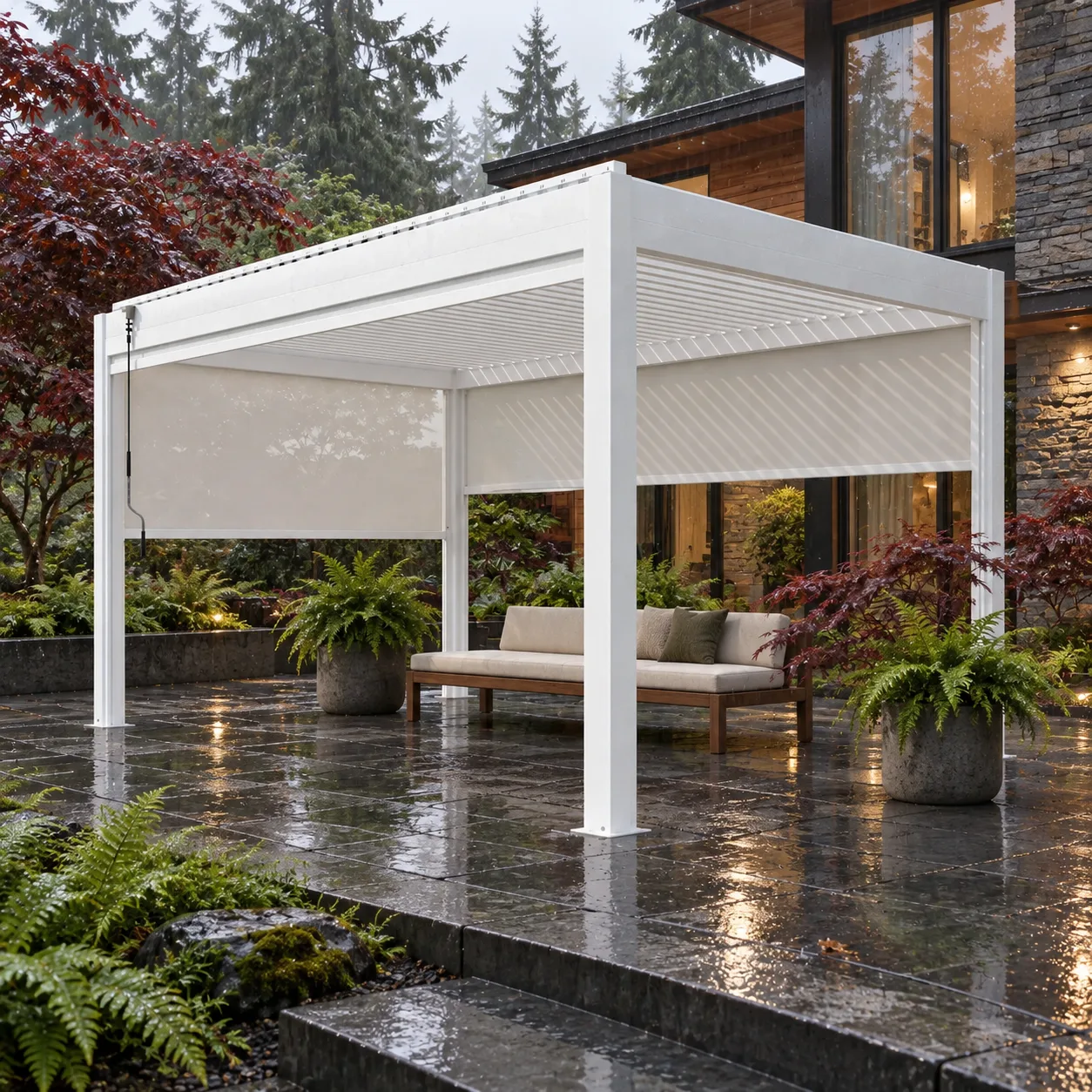
During a power outage, a motorized pergola’s louvers and powered screens will generally remain in their current positions unless the exact system includes a documented backup-power or manual-operation procedure. Do not force any moving component. Before buying, ask what happens when power is lost, whether a model-specific manual procedure exists, how settings are retained, and what position the manufacturer recommends when severe weather is expected.
This question matters because outages often accompany the weather conditions when homeowners most want control over the roof. The correct response cannot be assumed from another brand, a showroom demonstration, or a generic online video. Motors, controls, sensors, and emergency procedures vary. The selected META LIFESTYLE product documentation and qualified electrical professionals must guide the final plan.
Ask about outage behavior before choosing controls
A useful sales conversation should separate normal operation from loss-of-power behavior. Ask the supplier to identify the control system, available wall control or remote, optional sensors, and any supported backup accessories for the specific model being quoted. Request written documentation rather than relying on an informal promise.
Important questions include:
- Do louvers stop immediately when power fails?
- Do screens remain where they are?
- Does the controller remember its position or settings after power returns?
- Is there a documented manual operation or release procedure?
- Are backup-power options supported, and what loads do they serve?
- What inspection is recommended after a surge or extended outage?
Do not assume that a smart-home hub, portable battery, or generator can safely operate the system. Voltage, waveform, grounding, switching, load, and manufacturer requirements must be verified by the appropriate professionals.
Decide on a normal “ready” position
Many outages are unpredictable, but households can still establish a routine. When the pergola will be unattended or significant weather is forecast, place louvers and screens in the position specified by the manufacturer for those conditions. That position is product- and weather-specific; there is no universal angle that is correct for every system.
A routine is especially useful for vacation homes, seasonal properties, and households where several people operate the pergola. Post a concise operating note near the primary control and keep the complete manual accessible indoors. Avoid homemade labels that contradict official instructions.
Keep drainage functional without relying on movement
Power loss does not stop rain. Roof channels, gutters, post drainage paths, patio drains, and grading should be maintained so water can move safely according to the installed design. Keep leaves and debris from blocking approved drainage points, and follow the manufacturer’s cleaning instructions.
Observe where water travels after ordinary rain. Ponding near posts, overflow toward the house, or water entering electrical equipment deserves professional attention. Do not drill new drainage holes or modify gutters to solve a symptom; that can affect performance and warranties. Site drainage must be coordinated with model-specific documentation and qualified local professionals.
Plan electrical protection as a complete system
The pergola motor is only one electrical element. Integrated lighting, screens, heaters, fans, receptacles, sensors, and outdoor-kitchen equipment may have separate circuits or control requirements. Ask a licensed electrician to map what is connected, how it is protected, and what should remain off when power is restored.
Outdoor electrical work must use equipment and methods appropriate to the location and local requirements. Ground-fault protection, disconnects, surge protection, conductor routing, and enclosures are professional design matters. Never open a motor housing, controller, or wet electrical enclosure during an outage.
Backup power is not automatically whole-patio power
If resilience is a priority, define what actually needs backup. Moving the louvers once may be a different design problem from operating lighting, heaters, fans, and appliances for hours. Ask whether the manufacturer supports a backup method for the controls and motor, then have the electrical professional coordinate it with the home system.
A portable generator or battery should never be connected by an improvised cord or backfeed arrangement. Fuel-burning equipment must not operate in or near enclosed occupied areas. Follow equipment instructions and professional guidance for location, connection, ventilation, and transfer equipment.
Do not force louvers or screens by hand
When a powered feature stops, it can be tempting to pull a screen or push a louver. Doing so may damage motors, gears, linkages, tracks, fabric, or alignment and may create a pinch hazard. Keep hands, tools, furniture, pets, and children away from moving assemblies.
If a documented manual procedure exists, follow it exactly and only under the conditions stated. If no procedure is supplied, wait for power or contact the appropriate service provider. A manual procedure for one model should never be applied to a visually similar model.
Prepare for power restoration
Power may return with no one beside the patio. Keep the louver and screen paths free of branches, décor, cords, furniture, and toys. If the system does not resume automatically, inspect the area before issuing a command. If it does have automated behavior, understand and document that behavior before installation.
After a storm, look for obvious damage, standing water, debris, loose objects, or unusual sounds. Do not operate a visibly damaged system. If controls behave unpredictably, a breaker trips, or an electrical enclosure may have been exposed to water, stop and contact qualified professionals.
Power-outage planning comparison
| Planning choice | Useful approach | Risky assumption |
|---|---|---|
| Manual operation | Verify a model-specific written procedure | Forcing louvers because another brand allows it |
| Backup supply | Coordinate supported loads with supplier and electrician | Plugging the system into any portable battery |
| Weather readiness | Use the manufacturer’s recommended unattended position | Assuming one louver angle works in every condition |
| Drainage | Maintain approved gutters and site discharge paths | Relying on motor movement to prevent all water issues |
| Restart | Inspect the area and follow documented procedures | Repeatedly pressing controls without checking obstructions |
| Records | Keep manuals, circuit labels, and service contacts accessible | Depending on one household member’s memory |
Create a household outage checklist
- Keep the product manual and electrical information indoors.
- Label the pergola circuit accurately.
- Know which accessories are on separate circuits.
- Learn the approved severe-weather and unattended positions.
- Keep all moving paths free of furniture and objects.
- Maintain roof and site drainage according to documentation.
- Never force louvers or screens.
- Inspect for damage and water before restarting after a storm.
- Record supplier, installer, and electrician contacts.
Questions for contractors and dealers
For a client project, include outage behavior in the handoff instead of treating it as a minor control detail. Demonstrate normal shutdown, explain supported backup options, identify circuits, and provide the exact manuals. If remote or automated controls are included, explain what requires internet access, what works locally, and what happens after a network or power interruption.
Do not promise wind or snow performance, automatic storm protection, battery duration, or code approval without verified documentation for the specific configuration. Structural ratings, anchoring, electrical work, drainage, weather use, and permits are governed by model-specific documents and qualified local professionals or authorities.
Make resilience part of the quote request
When comparing proposals, ask each supplier to identify the exact powered components and the written outage procedure. A lower initial quote may not be comparable if it omits controls, electrical coordination, sensors, or commissioning. Evaluate what is documented and who is responsible for each part of the system.
Explore META LIFESTYLE shade structures, then send your site information and control priorities through the Request a Quote page. Both +8619050185756 and +1 (626) 735-5685 are official META LIFESTYLE WhatsApp contacts. Ask specifically for model documentation covering controls, power loss, screens, sensors, and supported backup options.
Frequently Asked Questions
Will motorized pergola louvers close automatically during an outage?
Do not assume they will. Behavior varies by system and configuration. Confirm the exact model’s written power-loss behavior and any supported backup or automation features before ordering.
Can I move pergola louvers manually when the power is off?
Only if the manufacturer provides a procedure for that exact model and the stated conditions are satisfied. Never force the louvers or use tools to move them without authorization.
Will rain damage a pergola when its louvers stop?
A correctly planned system should manage water according to its documented design, but outage position, rainfall, maintenance, drainage, and site conditions matter. Keep approved drainage paths clear and seek professional review for overflow or ponding.
Can a home battery operate a motorized pergola?
Possibly, but compatibility cannot be assumed. The pergola supplier and qualified electrician must verify the motor, controller, starting load, voltage, grounding, switching, and manufacturer requirements.
Should I turn off the pergola circuit during a long outage?
Follow the system documentation and advice from the qualified electrician who designed the installation. Circuit arrangements differ, and an improvised action may affect controls or other connected equipment.
What should I check before operating the pergola after power returns?
Check for debris, obstructions, standing water, visible damage, loose objects, and unusual conditions. Keep people and pets clear. If anything appears damaged or wet where it should not be, stop and call qualified service professionals.