Pro Program Live Chat +8619050185756

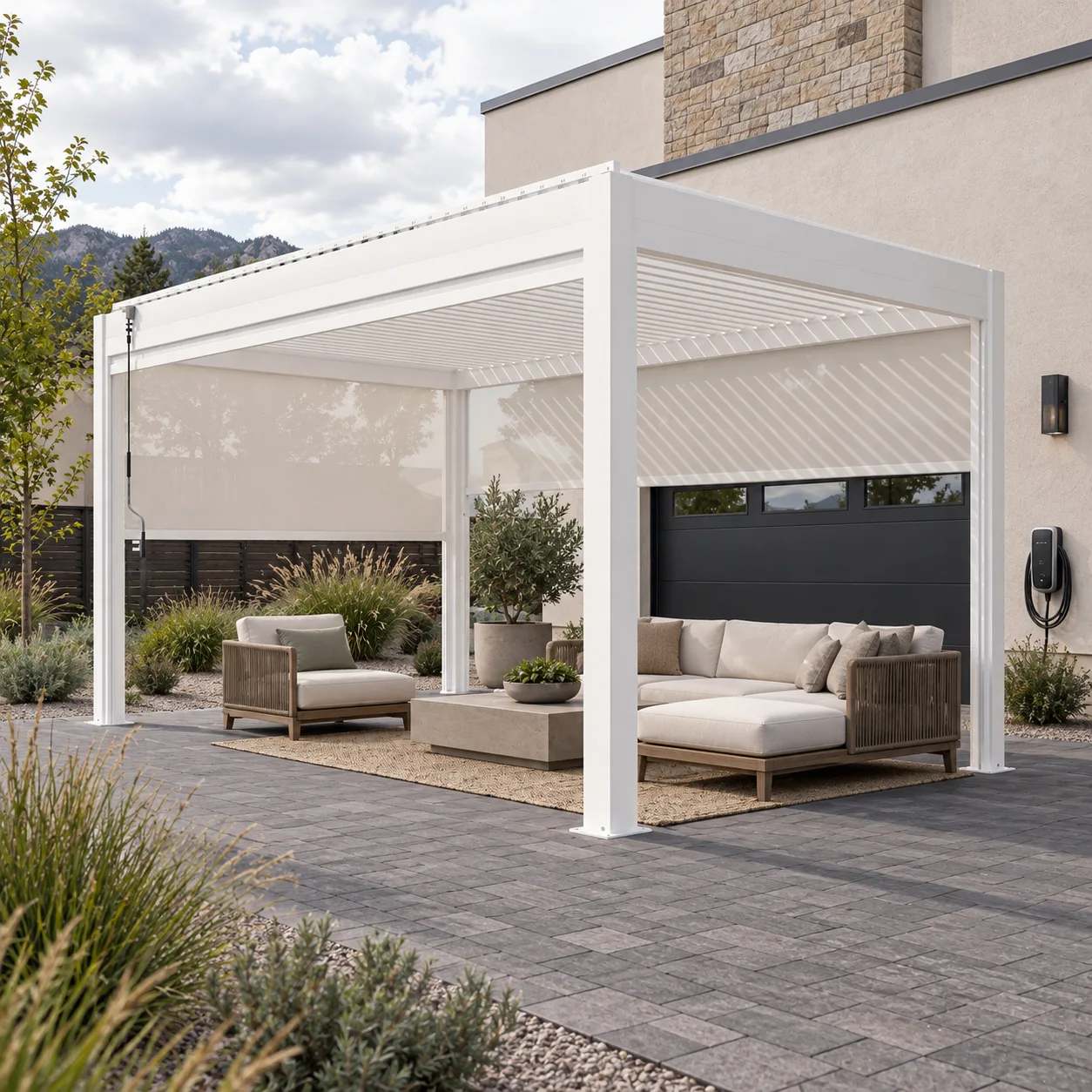
A motorized pergola can share a side yard or garage courtyard with an electric-vehicle charger when the charging system remains a separate, accessible electrical installation and the cable never crosses the lounge or walking route. Place the pergola outside the vehicle maneuvering envelope, keep posts and furniture away from the connector path, direct roof water away from charging equipment, and have a licensed electrician coordinate both systems before any foundations or wiring are installed.
Draw the Vehicle Envelope Before the Pergola
Begin with the parked vehicle, open doors, mirrors, hatch or trunk, charging port, and normal approach path. Add the space needed to walk around the vehicle while carrying groceries or assisting a passenger. Then mark the pergola posts, footings, screens, furniture, and roof projection.
A post that looks safely distant when the driveway is empty may sit directly in a turning path or door swing. Use temporary cones or boxes to test the proposed location with the actual vehicle. Consider a future vehicle that may be longer, wider, or have its charging port on the opposite side.
Protect posts from vehicle contact
If a post is near a parking or backing zone, ask the site and structural team whether the layout should move or whether approved impact protection is needed. Do not depend on planters or lightweight furniture as bollards. Collision protection, setbacks, foundation design, and permits are site-specific decisions for qualified local professionals and authorities.
Keep the Charging Cable Out of the Social Zone
The connector should travel from its holster to the vehicle without crossing the pergola seating area, primary walkway, stairs, gate, or door. A cable on the floor creates a trip hazard and can be damaged by furniture, foot traffic, landscaping tools, or screen tracks.
Mount and orient the charging equipment so the cable follows the edge of the parking space. Use only cable-management accessories approved for the charger. Do not route the cable over pergola beams, through screens, or around posts, and never use the pergola as an improvised support.
Treat the Electrical Systems Separately
A motorized pergola may require power for louvers, controls, lighting, screens, or accessories. An EV charging system has its own load, circuit, disconnect, conductor, protection, and installation requirements. These are not casual plug-in loads that should share whatever outlet is convenient.
Provide the electrician with documentation for the exact pergola and charger, along with the home’s electrical-service information and any planned future equipment. The licensed electrician should determine load capacity, circuit routing, protective devices, grounding, bonding, disconnects, equipment location, and inspection requirements. Model-specific documentation and local authorities control.
Coordinate Foundations Before Trenching
Pergola footings or anchors can conflict with buried electrical conduit, communication lines, drainage, irrigation, gas, or the edge of a garage foundation. The charging circuit may already run through the preferred post location.
Locate existing utilities and show new trenches and foundations on a coordinated plan. Do not move conduit or drill through a slab without professional review. Preserve required burial depths, bend radii, separation, access points, and foundation clearances as established by qualified professionals.
Direct Pergola Water Away From Charging Equipment
Even weather-rated equipment must be installed as its manufacturer directs. Pergola gutters and outlets should not discharge onto the charger, connector, cable, vehicle charging port, electrical panel, or the walking route. Avoid creating puddles where a person stands while connecting the vehicle.
Map the roof drainage, driveway slope, snowmelt, irrigation, and garage downspouts together. The correct discharge depends on soil, grade, freezing conditions, foundation waterproofing, and local stormwater rules. Qualified local professionals should design drainage and confirm whether the finished surface remains safe in wet or icy weather.
Compare Three Site Layouts
| Layout | Potential benefit | Main coordination issue |
|---|---|---|
| Pergola beside, but not inside, the parking bay | Clear separation between lounge and vehicle | Post impact risk and side-door clearance |
| Pergola behind the garage-side patio | Charging cable can remain on the garage edge | Preserve service access and keep runoff away |
| Pergola near a detached parking court | Creates a separate outdoor destination | Longer electrical route and vehicle circulation |
A pergola should not be treated as a vehicle canopy unless the exact product and complete installation are specifically designed and approved for that use. Do not infer structural ratings, clearances, or vehicle protection from appearance.
Preserve Access to Panels, Chargers, and Controls
Electricians need access to the charger, electrical panel, disconnects, conduit, and fasteners. Pergola furniture, screens, planters, or storage should not block inspection or replacement. Likewise, the charger and cable should not obstruct pergola motors, controls, gutters, anchors, or screen tracks.
Draw a service zone around each system and keep it open after landscaping is complete. Remember that replacement equipment may be larger or require a technician to work from the side.
Plan Screens and Furniture Around the Cable
A retractable screen can create a comfortable lounge edge, but its bottom rail or track should not cross the charging route. A deployed screen must not hide a cable from pedestrians or force the connector through an opening not designed for it.
Arrange seats so guests do not step backward into the driveway. Low tables and rugs should remain fully within the social area. Use lighting to clarify the boundary between parking and lounge without creating glare for drivers.
Consider Snow, Heat, and Emergency Access
In cold climates, plowed snow or roof discharge can bury a charger, block a pergola control, or create ice around the connector. In hot climates, direct sun can affect comfort and equipment exposure. Follow the charger and pergola manufacturers’ environmental and operating instructions.
Keep the driveway, gate, electrical shutoffs, and emergency route accessible. Never assume the pergola has a particular wind or snow rating; obtain verified documentation for the exact model, size, configuration, and anchoring.
EV-Charger and Pergola Coordination Checklist
- Mark the actual vehicle, door swings, charging port, and maneuvering path.
- Keep the connector cable outside seating and pedestrian routes.
- Place pergola posts outside the vehicle impact envelope.
- Give a licensed electrician documentation for both systems.
- Map existing and proposed conduit before foundation work.
- Direct roof water and snowmelt away from electrical equipment and standing areas.
- Preserve service access around the charger, panel, pergola controls, and motors.
- Keep screens, furniture, rugs, and planters away from the cable route.
- Provide lighting that distinguishes the driveway from the lounge.
- Have qualified local professionals or authorities confirm structure, anchoring, electrical design, drainage, clearances, collision protection, wind, snow, and permits.
Review the META LIFESTYLE shade structure collection for a starting configuration, then coordinate model-specific drawings with the charger, driveway, and electrical plan.
Frequently Asked Questions
Can I mount an EV charger on a pergola post?
Do not do so unless both manufacturers and the project professionals explicitly approve the exact mounting, wiring, weather exposure, structural effect, and service access. A garage wall or purpose-designed pedestal may be more appropriate.
Can the pergola and EV charger share a circuit?
Do not assume they can. A licensed electrician must evaluate loads, dedicated-circuit requirements, conductor sizing, protection, grounding, disconnects, and local rules for the exact equipment.
How far should a pergola post be from the parked car?
There is no universal number. The required distance depends on vehicle size, door swings, maneuvering, impact risk, foundation location, charger access, and local requirements. Test the layout with the actual vehicle.
Can the charging cable pass under a pergola screen?
A cable should not be pinched, hidden, or placed across a walking path. Use only approved cable-management methods and keep screens and tracks clear of the charging route.
Will pergola runoff damage an outdoor charger?
Weather-rated equipment still must be installed according to its documentation. Do not direct gutters or runoff toward the charger or connector, and avoid puddles in the standing area.
How do I request a quote for a garage-side patio?
Send site dimensions, vehicle and charging-port location, charger documentation, panel and conduit locations, driveway photos, drainage, and desired screen positions through the META LIFESTYLE Request a Quote page. Both +8619050185756 and +1 (626) 735-5685 are official META LIFESTYLE WhatsApp contacts.
Make the Boundary Obvious
The safest shared courtyard has an obvious line between charging and relaxing. Keep the cable with the vehicle, keep guests within the pergola zone, and keep both electrical systems accessible. When circulation, drainage, foundations, and wiring are coordinated early, the patio can feel calm even beside a busy garage.