Pro Program Live Chat +8619050185756

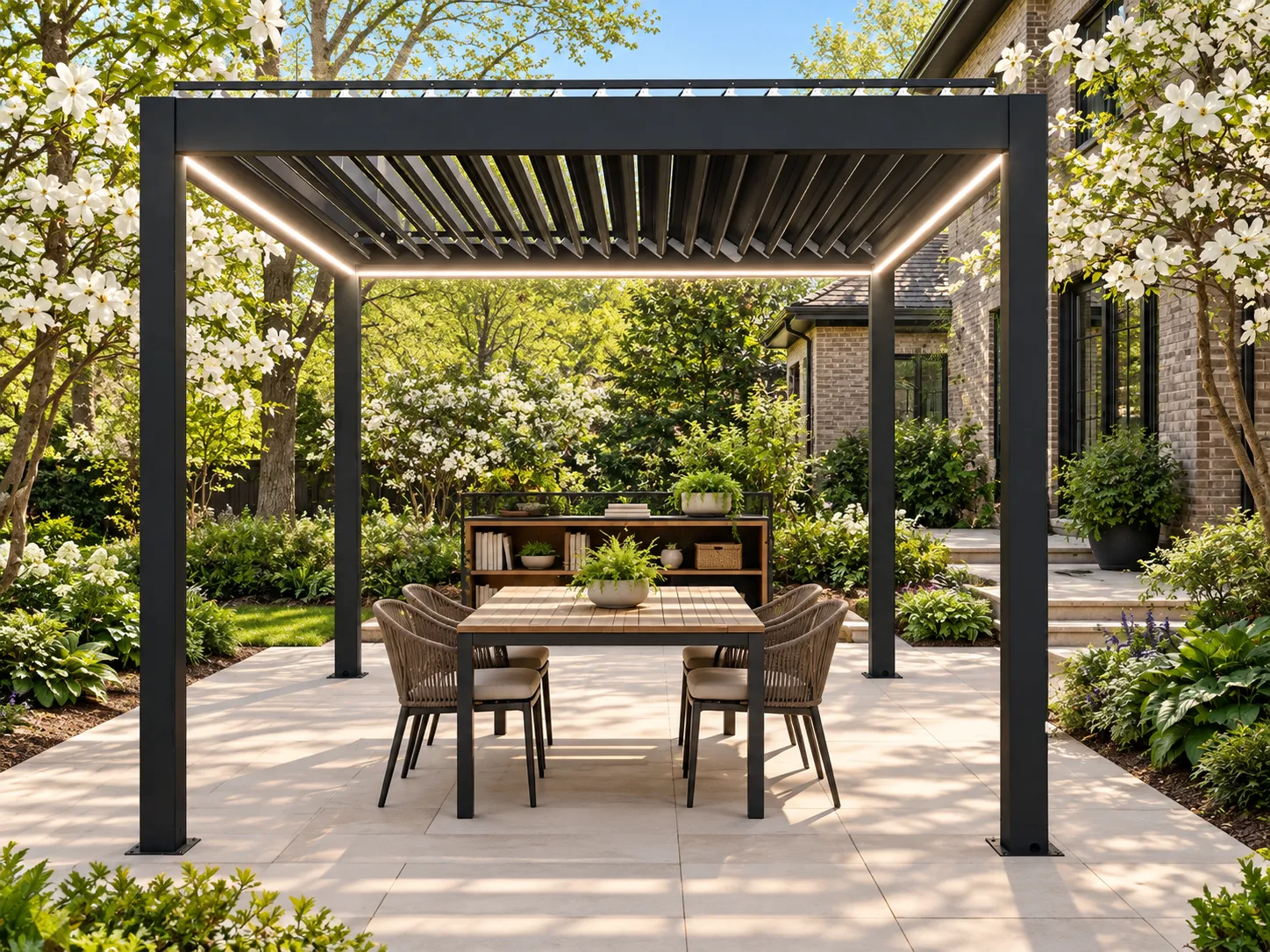
A motorized pergola can support an outdoor classroom when the layout is built around visual comfort, weather changes, durable work surfaces, safe power, storage, and a quick route indoors. Start with the learners’ ages and actual activities rather than decorating a generic patio. Reading, science projects, art, laptop work, and group discussion each need different light, furniture, and cleanup plans.
The pergola can provide adjustable shade, but it does not turn an outdoor space into a conditioned indoor room. Heat, cold, wind, pollen, insects, glare, and noise still affect learning. A successful design gives the family choices and clear limits instead of promising all-weather use.
Define the learning activities first
List the activities that will happen outdoors and how long they typically last. Quiet reading may need a comfortable chair and soft shade. Writing needs a stable table. Art needs washable surfaces and nearby cleanup. Science work may require storage and an adult-controlled supply area.
Choose the primary activity and design for it well. Flexible furniture can support secondary uses, but too many zones make a modest patio feel cluttered. Keep a clear central table or discussion area and place storage at the edge.
Match furniture to bodies and tasks
Table and chair dimensions should suit the learners, not just the architecture. Test posture with actual books, laptops, paper, and tools. Feet, elbows, and screens should be comfortable for the expected session length.
Choose furniture that is stable on the finished surface and easy to move without tipping. Avoid sharp corners in circulation paths. Any accessibility needs should be incorporated into the plan with appropriate professional guidance.
Manage sunlight and screen glare
Observe the patio in morning, midday, and afternoon through several seasons. The louver position that shades a table at 9 a.m. may create striped glare later. Computer screens and glossy paper are especially sensitive to reflected light.
Orient the main table so learners do not stare directly into bright sky. Use the pergola’s controls only as allowed by model-specific instructions. Screens, if part of the selected product, can influence glare and airflow, but their actual operation and wind guidance must come from applicable documentation.
| Activity | Useful condition | Design caution |
|---|---|---|
| Reading | Even shade and comfortable seating | Deep shadow can make print harder to see |
| Writing | Stable table and low-glare surface | Louver shadows may move across the page |
| Laptop work | Screen orientation away from bright reflections | Outdoor outlets and devices need proper protection |
| Art | Washable worktop and organized supplies | Wind can scatter paper and wet materials |
| Science | Adult-controlled tools and cleanup plan | Do not store chemicals or unsafe materials outdoors |
| Discussion | Seats with clear sightlines | Nearby equipment and traffic can interrupt sound |
Plan for weather changes
Decide what conditions end the session: approaching storms, high wind, lightning, excessive heat, poor air quality, or cold. Use authoritative weather and health guidance. A motorized roof is not a substitute for a severe-weather plan.
Create a short indoor transition route and assign bins for books and electronics. Learners should be able to clear the table quickly without running across wet paving. Follow model-specific instructions for louver and screen operation during wind, rain, snow, and freezing conditions. Never infer structural ratings or safe operating positions.
Provide safe power and connectivity
If laptops, tablets, a projector, or charging are required, have a qualified electrician design outdoor power using the exact pergola and equipment documentation. Extension cords across paths are not a permanent solution.
Place outlets and controls where adults can access them without reaching through moving components. Outdoor circuits, grounding, bonding, weather protection, disconnects, and inspections must follow applicable requirements. Wi-Fi coverage should be tested at the table, but outdoor learning should not depend on installing unnecessary screens.
Create weather-ready storage
Store only items suitable for outdoor conditions. Humidity, heat, cold, insects, and dust can damage paper, electronics, art materials, and books. Use the outdoor console for durable supplies and carry sensitive materials indoors after each session.
Label bins clearly and keep heavy items low. Do not place tall storage where it blocks a screen, post, gutter, service panel, or sightline to children. Preserve access around every structural component.
Control noise without enclosing the yard
Hard paving and walls can reflect voices. Position discussion seating away from mechanical equipment, pool pumps, streets, and neighboring gathering areas where possible. Soft landscape elements may improve comfort, but avoid unsupported acoustic claims.
Set household expectations for voice levels and hours. If recorded lessons are used, headphones may reduce disturbance. Outdoor speakers should not become the default teaching tool.
Use lighting only when needed
Most schoolwork is easier in daylight. For late-afternoon use, provide localized, shielded, warm task light rather than flooding the yard. Avoid glare on paper and screens, and prevent light from entering neighboring windows.
Integrated lighting and added fixtures must be compatible with product documentation and installed by qualified professionals. Local dark-sky or nuisance-light rules may apply.
Build in supervision and circulation
Adults should be able to see the main table from the house or a nearby work area. Keep gates, water features, grills, tools, and driveways outside the learning zone. Furniture should not create hiding spaces or block the exit route.
Leave a clear path around the table and to the house. Bags, cords, and projects need assigned locations so they do not spread into walkways or post bases.
Protect the structure and patio
Anchoring, foundations, drainage, electrical work, wind, snow, and permits depend on the exact model and site. Qualified local professionals and authorities control those decisions. The patio must support the approved pergola foundation and remain well drained.
Do not attach whiteboards, shelves, hammocks, lights, or learning equipment to beams or posts unless the exact product documentation permits it. Freestanding accessories should remain stable and clear of moving louvers and screens.
Outdoor-classroom checklist
- Choose the primary learning activities and typical session length.
- Test table and chair comfort with actual materials.
- Observe sun, shade, glare, wind, and noise through the day.
- Set clear conditions for moving indoors.
- Provide a fast bin system for books and electronics.
- Use professionally designed outdoor power where needed.
- Store only weather-suitable supplies outside.
- Keep adult sightlines and circulation open.
- Do not attach accessories to the pergola without approval.
- Follow model-specific operation, anchoring, drainage, and permit requirements.
Request a learning-space configuration discussion
Review META LIFESTYLE shade structures and prepare patio dimensions, photos, sun direction, learner ages, furniture needs, power locations, and primary activities. Use the Request a Quote contact page. Both +8619050185756 and +1 (626) 735-5685 are official META LIFESTYLE WhatsApp contacts.
Frequently Asked Questions
Can students use laptops under a pergola?
Yes, when glare, weather, device temperature, connectivity, furniture, and professionally installed outdoor power are addressed. Electronics should return indoors when conditions change.
Should the classroom table be fixed or movable?
Movable furniture offers flexibility, while a stable table supports writing and projects. Select outdoor-rated pieces that remain stable and do not block posts, screens, controls, or circulation.
Can shelves be mounted to pergola posts?
Do not assume so. Attachments can affect structure, finishes, drainage, wiring, or warranty. Follow exact product documentation and approved installation methods.
Are pergola screens suitable for insect control?
Screens may reduce some exposure when included and operated as documented, but they do not create a sealed room. Product design, gaps, wind, and local insects affect results.
How should the space handle rain?
Use a quick indoor transition plan, weather-ready storage, safe routes, and model-specific louver guidance. Do not promise complete waterproofing without applicable documentation.
What should I send with a quote request?
Send dimensions, photos, sun orientation, activities, learner count, furniture layout, accessibility needs, utilities, surface details, and local restrictions.