Pro Program Live Chat +8619050185756

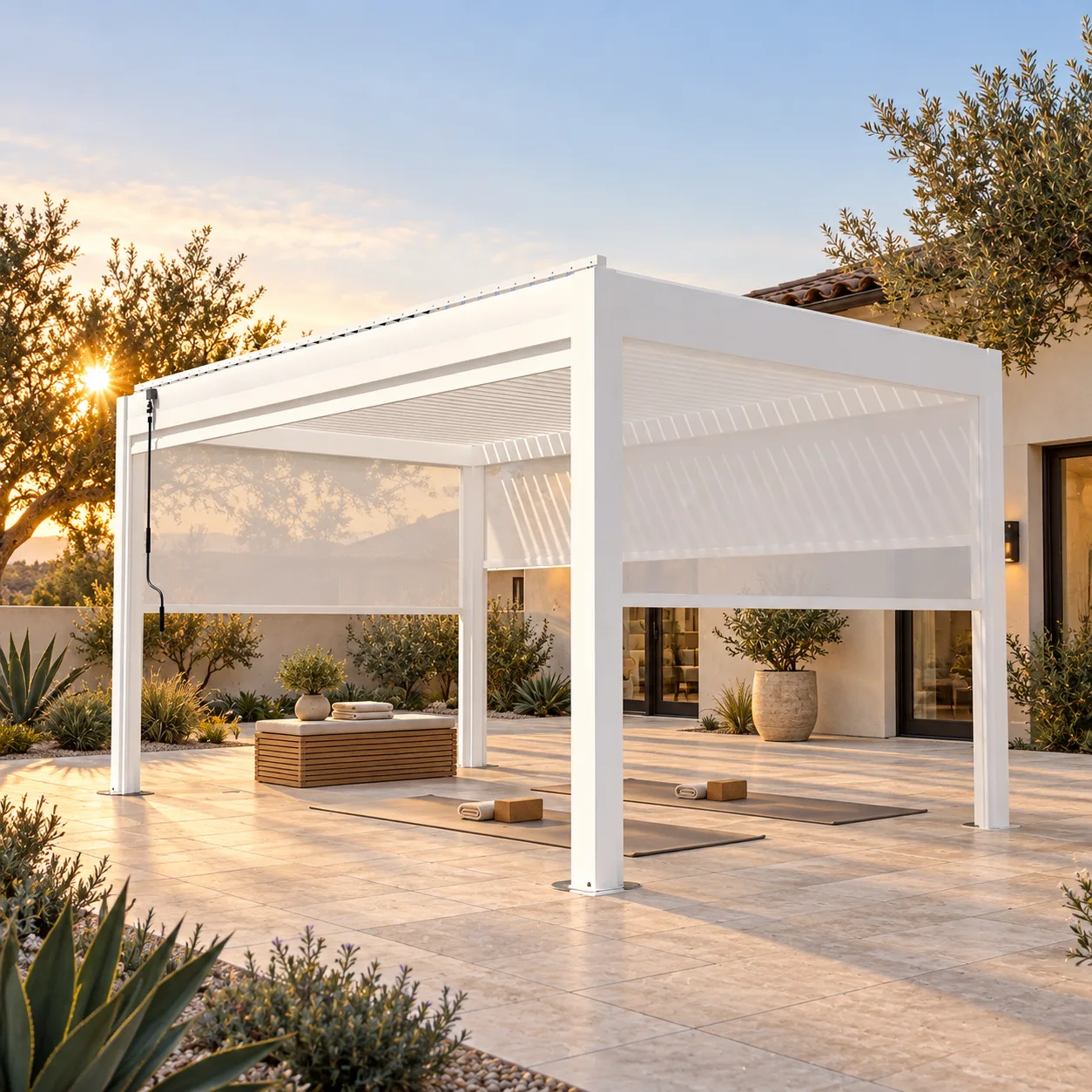
A motorized pergola can create a comfortable outdoor yoga or fitness space when it provides adjustable shade, level slip-conscious flooring, open circulation, fresh air, practical lighting, and safe storage. Choose the exact META LIFESTYLE configuration around the activities, equipment, climate, and users, then have qualified local professionals verify foundations, anchoring, electricity, drainage, structures, wind, snow, and permits.
The best wellness patio is flexible rather than crowded. It should support movement without attaching exercise equipment to the pergola, blocking screens, or placing users near pools, steps, grills, glass doors, or landscaping hazards.
Define the Activities First
List the intended uses: yoga, stretching, body-weight exercise, meditation, light free weights, stationary equipment, or instructor-led classes. Each needs different clear space, flooring, storage, power, and privacy.
Record the number of users and equipment in its operating position. A folded treadmill, stored bench, or rolled mat does not reveal the space needed during a workout.
Measure the Active Movement Zone
Mark the reach of arms, legs, resistance bands, weights, and moving equipment. Include clearance from posts, furniture, walls, screens, planters, doors, and pool edges. Test overhead reach beneath the exact pergola and any lights or accessories.
Leave a separate circulation route so someone can enter without crossing another person’s mat. Emergency and house access should stay open.
Outdoor Wellness Pergola Checklist
- Define activities, users, and equipment dimensions.
- Mark active movement and clear circulation zones.
- Choose a firm, level, outdoor-suitable surface.
- Keep mats and equipment outside screen travel paths.
- Provide adjustable shade without trapping heat.
- Plan even, low-glare lighting for early or late use.
- Locate outlets and controls away from sweat and cleaning water.
- Store equipment without blocking posts, drains, or service panels.
- Manage wind, rain, heat, and official weather alerts.
- Verify structural and electrical work professionally.
Choose the Floor Carefully
The patio should be firm, stable, and evaluated when dry, damp, and exposed to sweat or cleaning. Uneven joints, polished stone, loose rugs, curled mat edges, and abrupt transitions can create trip or slip hazards.
Request technical and care information for the surface. A qualified contractor should coordinate slope and drainage while maintaining predictable footing. Do not cover drains or create water traps with permanent gym flooring.
Use Mats Without Creating Hazards
Select outdoor-suitable mats that lie flat and can be cleaned and stored according to their instructions. Wind can lift lightweight mats, while moisture beneath them may affect paving or encourage biological growth.
Remove or secure loose equipment before high winds. Never fasten a mat or storage rack to pergola posts without product-specific approval.
Plan Adjustable Shade
Motorized louvers can adapt shade as the sun moves, but exercise comfort depends on temperature, humidity, air movement, clothing, hydration, and individual health. Map morning and afternoon sun during the seasons when the area will be used.
Follow exact louver operating instructions and weather limits. A pergola does not make extreme heat, lightning, wind, smoke, or poor air quality safe. Follow official health and weather guidance.
Use Screens for Comfort, Not Structure
Motorized screens may reduce glare or add privacy, but lowered screens change airflow and circulation. Show their tracks and bottom bars on the plan and keep mats, weights, benches, and plants out of the travel path.
Never attach resistance bands, suspension trainers, punching bags, hammocks, or other exercise loads to screens, louvers, beams, posts, gutters, or motors unless verified engineering and product documentation explicitly permit that use.
Do Not Add Unverified Hanging Loads
Fitness equipment can create dynamic forces much greater than its static weight. Repeated swinging, pulling, or bouncing may load the structure in unintended directions.
Use independent, purpose-designed exercise equipment on an approved surface. If hanging equipment is desired, obtain project-specific structural engineering and written product approval before installation.
Provide Fresh Air and Heat Awareness
Open sides can support air movement, but screens, walls, landscaping, and neighboring buildings change it. A fan may be useful only when the exact mounting, electrical, clearance, and structural details are approved.
Provide water access and a quick route indoors. Users should consider personal health guidance; the pergola is an environmental feature, not a medical or heat-safety guarantee.
Plan Lighting for Movement
Even light helps users see mat edges, equipment, controls, and changes in paving. Avoid intense glare, deep shadows, flicker, and reflections from glass or pools. Layer ambient and pathway lighting for pre-dawn or evening sessions.
A qualified electrician must design outdoor circuits, grounding, protection, disconnects, fixtures, controls, and cable routes. Do not run extension cords across the workout zone.
Keep Audio and Screens Practical
Speakers or displays may support guided workouts, but equipment must be suitable for its location and installed without compromising structure, electrical safety, drainage, or screen movement.
Consider neighbors and local noise rules. Keep cables secured outside circulation and avoid placing displays where glare makes users turn toward a pool or step.
Store Equipment Near, Not in the Way
A low cabinet or bench can hold mats, blocks, towels, and small accessories. Keep storage outside required pergola service access and away from post bases, drains, electrical equipment, and screen tracks.
Weights need stable storage that cannot tip or roll. Do not store damp textiles in a closed container, and follow each item’s outdoor-care instructions.
Manage Rain and Cleaning Water
Confirm how the exact louvered roof manages water and where outlets discharge. The patio should drain away from workout and walking zones without sending water toward the house, pool, or post bases.
Clean sweat and surfaces using approved methods. Do not pressure-wash motors, lighting, screens, controls, or sealed components unless explicitly permitted. A qualified drainage professional controls slope and lawful discharge.
Create Privacy Without Blocking Airflow
Screens, planting, and orientation can improve privacy. Use mature plant size and keep branches out of louvers and tracks. Avoid dense walls that create heat, wind, or service problems.
Property-line, fence, and setback rules vary. A screen is not automatically a required guard, barrier, or wind-rated wall.
Compare Three Wellness Layouts
Open yoga and mobility zone
This prioritizes uncluttered floor area, shade, quiet, and simple storage. It is easy to adapt for multiple users.
Compact strength area
This requires stable equipment, verified floor capacity, more storage, and careful clearance. Avoid hanging loads on the pergola.
Mixed lounge and workout room
Movable furniture can support entertaining and exercise, but the storage plan must prevent daily lifting from becoming inconvenient or unsafe.
Test the Layout at Full Scale
Mark posts, screens, storage, furniture, and equipment on the patio. Perform representative movements slowly and check overhead, side, and circulation clearances. Test with screens lowered and furniture in occupied positions.
Review the plan when final product drawings and equipment dimensions arrive. Marketing photos are not construction measurements.
Maintain the Space
Inspect paving, mat condition, screen tracks, gutters, controls, lighting, and storage regularly. Remove leaves and loose objects. Arrange qualified service for motors, wiring, structure, or elevated components.
Wind and snow ratings, anchoring, foundations, electricity, drainage, structure, and permits must follow exact model documentation and qualified local professionals or authorities.
Information to Prepare for a Quote
- Patio dimensions and photos
- Activities and number of users
- Equipment dimensions and weights
- Preferred time of day and shade needs
- Lighting, screens, controls, and storage preferences
- Project location and surface information
Explore META LIFESTYLE shade structures and request exact drawings before finalizing the wellness layout.
Frequently Asked Questions
Can I attach resistance bands to pergola posts?
Do not do so unless verified documentation and project-specific engineering explicitly approve the dynamic load and attachment.
Are motorized screens useful for yoga?
They can help with glare and privacy, but keep mats and users clear of tracks and maintain ventilation.
What floor is best for outdoor exercise?
Choose a firm, stable, outdoor-suitable surface evaluated for wet and active conditions. There is no universal material for every climate.
Can I install a ceiling fan?
Only with verified structural, clearance, electrical, and product-specific approval for the exact pergola configuration.
Can equipment stay outside?
Follow each equipment manufacturer’s outdoor-use and storage instructions. Keep equipment from blocking drainage, screens, and service access.
Request a META LIFESTYLE Quote
Share patio dimensions, activities, equipment, and preferred options through the META LIFESTYLE contact page. Both numbers are official META LIFESTYLE WhatsApp contacts: +8619050185756 and +1 (626) 735-5685.