Pro Program Live Chat +8619050185756

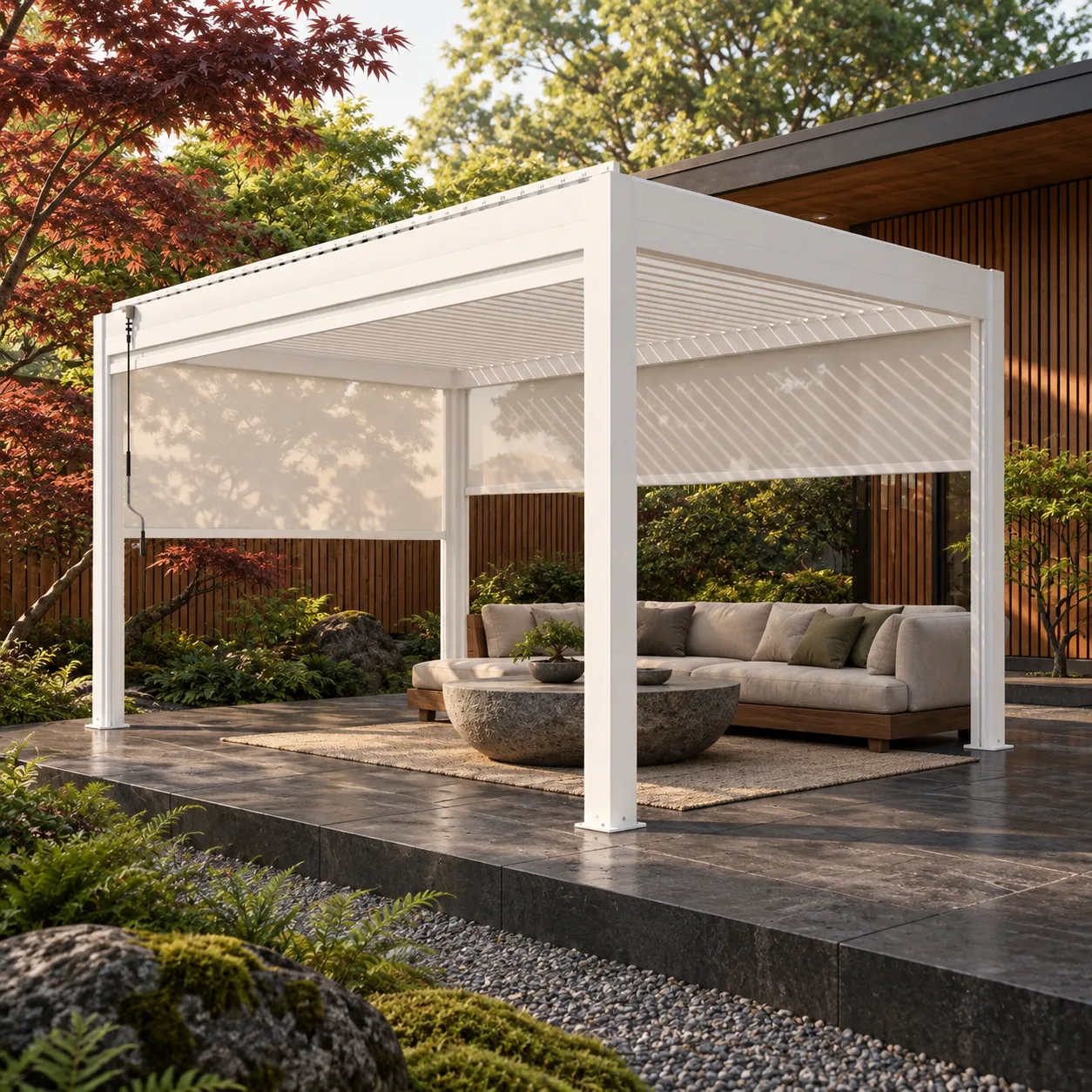
The short answer: Design outdoor audio as an independent system around the motorized pergola, not as an improvised attachment to its posts, beams, louvers, gutters, or screens. Use outdoor-suitable equipment, professionally planned power and low-voltage wiring, multiple modest speakers aimed toward the listening area, and accessible controls. Any attachment to the pergola requires written approval for the exact model and professional review.
Start With the Listening Area
Before choosing speakers, define where people actually sit and how the space is used. Quiet background music for dining needs a different layout from television audio or a party system. Mark the furniture plan in both everyday and entertaining arrangements, then identify the primary listening zone.
Keep sound focused inward rather than trying to cover the entire property with one loud source. Several appropriately located speakers can often provide more even sound at lower levels than a single unit. An audio professional can model coverage and choose equipment for the real site.
Keep Audio Hardware Independent From Moving Parts
Motorized pergolas contain louvers, screens, motors, controls, gutters, lights, wiring, and service access. A speaker bracket or cable can interfere with movement, drainage, inspection, or structural performance. Do not drill posts or beams or route wires inside product components unless the exact documentation permits it.
Independent landscape speakers, wall-mounted speakers on the house, or freestanding equipment may avoid altering the pergola. Their suitability depends on weather exposure, sightlines, landscaping, and professional electrical or low-voltage design.
Compare Three Audio Approaches
| Approach | Potential benefit | What to verify |
|---|---|---|
| Landscape speakers around the patio | Even coverage with visually discreet placement | Irrigation, planting, burial, service, and neighbor direction |
| Speakers mounted on the house | Independent from pergola structure | Weather rating, aiming, penetrations, wiring, and sound spill |
| Portable outdoor speaker | Flexible and requires no permanent attachment | Charging, storage, trip hazards, volume control, and weather procedures |
No solution is universally best. The key is to preserve pergola operation and use equipment suitable for the actual outdoor location. Avoid hiding speakers where screens or furniture can strike them.
Plan Sound Direction Before Volume
Aim speakers toward the seating area and away from neighboring homes, upper windows, and property boundaries when possible. Hard walls, glass, ceilings, and paving can reflect sound, while planting and open space behave differently. Test proposed locations at realistic listening levels before permanent installation.
Motorized screens can change acoustic conditions when raised or lowered. They may reduce or alter reflections, but they should not be marketed as soundproofing. The audio system should remain intelligible without requiring excessive volume in either operating condition.
Coordinate Power and Low-Voltage Wiring
Decide where amplifiers, network equipment, power supplies, controls, and connections will be located. Indoor electronics should stay in an appropriate protected environment. Outdoor components and enclosures must be suitable for their exact exposure.
Electrical work, grounding, bonding, circuits, outlets, low-voltage separation, penetrations, permits, and inspections must follow equipment documentation and local requirements. Qualified local professionals and authorities control those decisions. Do not run extension cords across walking paths or through screen tracks.
Preserve Pergola Service Access
Keep audio equipment and furniture away from motors, controls, screen guides, gutter outlets, anchors, junction points, and any removable panels. A technician should be able to inspect the pergola without dismantling the audio system.
Label cables and photograph routes before walls, paving, or landscape work conceals them. Leave service loops and access only where the audio professional recommends. Avoid burying connections where irrigation or future planting can damage them.
Choose Equipment for the Actual Exposure
“Outdoor” is not one condition. Equipment under a pergola can still experience wind-driven rain, condensation, humidity, dust, heat, cold, insects, and irrigation. Ask for documentation covering the exact intended placement and follow the manufacturer’s mounting, ventilation, cleaning, and storage instructions.
Do not assume a roof or closed louvers create a waterproof room. Weather can arrive from the sides, and louvers may be open during use. Portable equipment should have a defined storage and severe-weather procedure.
Control Noise and Be a Good Neighbor
Check local and HOA rules for amplified sound, quiet hours, and outdoor entertainment. Place controls where the host can lower or mute audio quickly. Consider a preset maximum level for normal use, but do not claim it guarantees compliance; property layout and local standards matter.
Walk the property boundary while the system plays at typical levels. Test with screens raised and lowered and with doors or windows open. Adjust aiming and balance before increasing volume.
Integrate Audio With Lighting and Other Controls Carefully
Home-automation integration can be convenient, but the audio system and pergola controls should retain clear, safe operation. Avoid confusing interfaces where a guest can unintentionally move screens or louvers while adjusting music.
Ask who configures networks, apps, accounts, updates, and owner access. Keep recovery information and manuals with the property records. Do not invent compatibility between systems; verify support for the exact products.
Outdoor Audio Planning Checklist
- Define the primary listening area and normal use.
- Keep all audio hardware independent from pergola components unless approved.
- Aim sound inward and test at property boundaries.
- Verify equipment suitability for the exact outdoor exposure.
- Plan power and low-voltage wiring with qualified professionals.
- Keep cables out of paths, screen tracks, drains, and irrigation zones.
- Preserve access to louvers, motors, gutters, controls, anchors, and screens.
- Test audio with screens raised and lowered.
- Review HOA rules, quiet hours, and local requirements.
- Create storage and severe-weather procedures for portable equipment.
Questions to Ask Before Ordering
Ask the pergola supplier for exact dimensions, screen travel, lighting, control, electrical, and service information. Ask the audio professional for a coverage plan, equipment list, mounting details, cable routes, control method, weather suitability, and commissioning process.
Explore the META LIFESTYLE shade structure collection, then coordinate the selected configuration with the audio plan before paving or electrical work begins.
Frequently Asked Questions
Can speakers be mounted directly to pergola posts?
Only if written documentation for the exact pergola permits it and the mounting, wiring, loads, drainage, and service implications are professionally reviewed. Independent mounting is often easier to coordinate.
Are speakers protected when the louvers are closed?
Do not assume so. Wind-driven moisture and condensation can enter from the sides, and the louvers may not create a waterproof enclosure. Use equipment suitable for its actual exposure.
Can wires run inside pergola beams?
Not without model-specific approval and a qualified installation plan. Drilling or routing can damage components, interfere with drainage or motors, and affect product integrity.
Do motorized screens reduce sound for neighbors?
They may change acoustics, but they should not be treated as soundproof barriers. Aim speakers carefully, keep volume reasonable, and follow local and HOA rules.
Where should the amplifier be located?
Use a suitable protected, ventilated, accessible location recommended for the exact equipment. Indoor-only electronics should not be placed outdoors simply because they are beneath a pergola.
Who should install the system?
Use qualified audio and electrical professionals, and coordinate with the pergola supplier or installer. Local authorities control applicable permits and inspections.
Request a Pergola Quote for an Entertainment Space
Request a quote from META LIFESTYLE with site photos, dimensions, location, furniture plan, desired screens or lighting, power availability, and intended audio use. Both numbers below are official META LIFESTYLE WhatsApp contacts: