Pro Program Live Chat +8619050185756

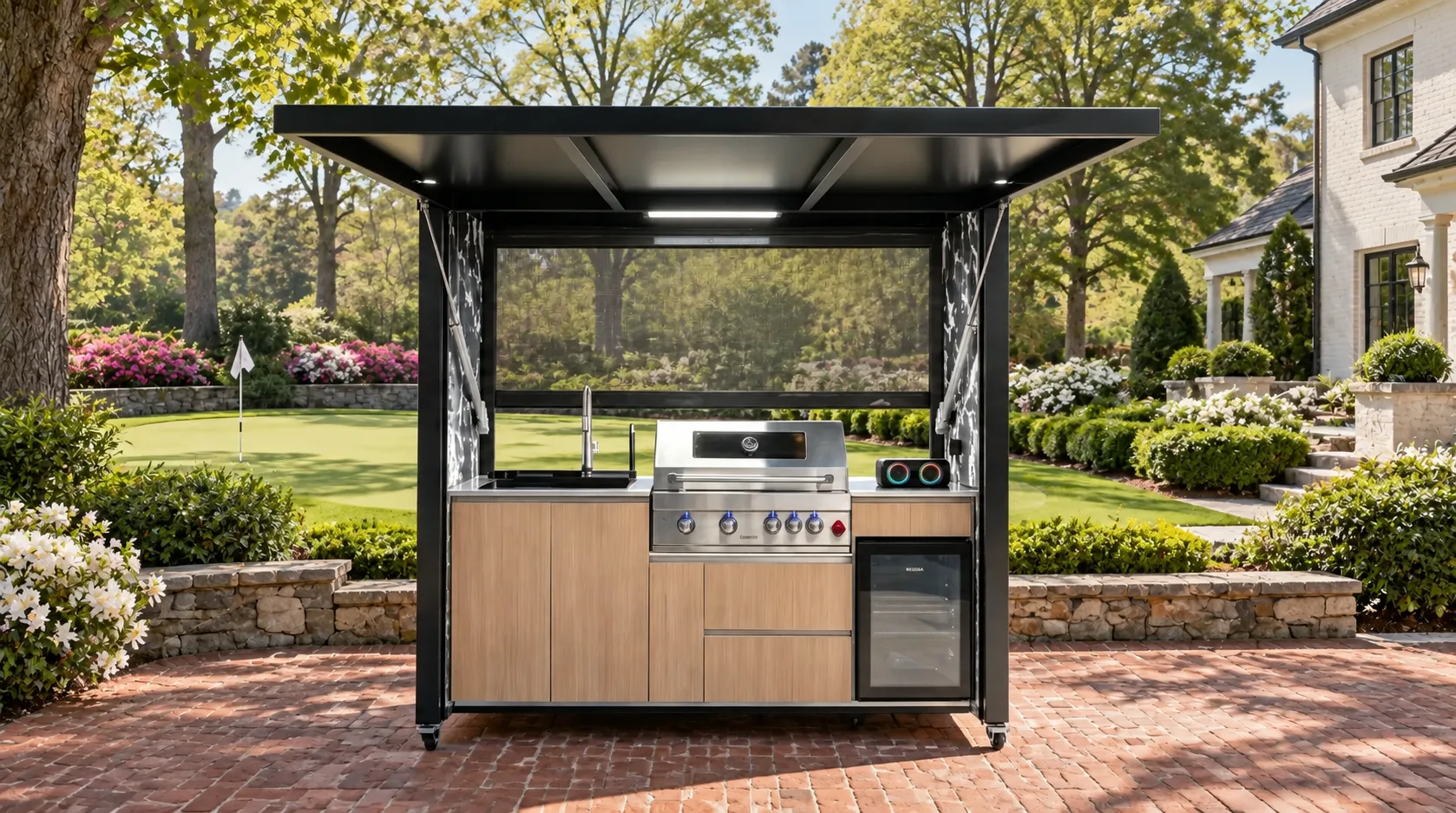
An outdoor kitchen can sit beside a backyard putting green when the cooking zone is outside the ball path, smoke and grease move away from the turf, irrigation cannot spray the appliances, and guests can move between food and play without crossing the cook’s workspace. Plan the kitchen and green together on one scaled drawing. The best layout treats them as two activity zones connected by a safe, durable transition—not as separate amenities squeezed into the same yard.
Draw the Missed-Shot Zone
A putting green is not limited to the carefully aimed line between ball and cup. Beginners, children, and casual players may putt too firmly or from unexpected angles. Mark the likely play area, fringe, practice stations, and overshoot zone before locating the grill, glass doors, refrigerator, or seating.
Keep the kitchen outside the direct line of play. A low curb or planting edge can clarify the boundary, but it should not create a trip hazard. If the design includes chipping rather than putting only, the potential ball path is much larger and may require specialist review or protective separation.
Test the layout at full scale
- Mark the kitchen footprint with tape, cones, or boxes.
- Outline the green, cups, fringe, and practice positions.
- Simulate an overhit putt from each direction.
- Open appliance doors and grill lids within the mockup.
- Walk the route from the house to food, seating, and the green.
- Check whether spectators would stand in the cook’s aisle.
This exercise often reveals that a small shift in the kitchen angle can improve both safety and views.
Send Smoke Away From the Playing Surface
Smoke, grease, and heat can make the green less pleasant and may deposit residue on nearby surfaces. Observe prevailing winds during the hours when the kitchen is most likely to operate. Position the grill so normal airflow does not carry exhaust across players or toward synthetic-turf fibers.
Do not add unapproved exhaust equipment or reduce manufacturer-required clearances to improve the view. The exact grill documentation and qualified local professionals control ventilation, fire separation, gas, electricity, and overhead conditions.
Keep Irrigation Off the Kitchen
A natural-turf practice green may have closely managed irrigation. Nearby landscape zones can also overspray counters, cabinetry, outlets, and appliances. Even a synthetic green may be rinsed or cooled under certain maintenance programs. Map every sprinkler head, drip line, hose connection, and spray arc.
Use separate irrigation zones where appropriate and adjust them so water does not strike the kitchen. Keep valves and heads accessible after paving and cabinetry are installed. Plumbing, backflow protection, irrigation design, drainage, and local water rules should be handled by qualified professionals.
Coordinate Drainage Between Hardscape and Green
The kitchen needs a stable, properly drained surface, while the green depends on its own base and drainage profile. Water should not carry grease, cleaning residue, soil, or mulch from the kitchen onto the putting surface. Likewise, runoff from the green should not collect under the kitchen or around utilities.
Show finished elevations, surface slopes, trench drains, roof outlets, and approved discharge points on the same plan. Avoid creating a low seam where brick or stone meets turf. Site soil, frost, stormwater rules, and foundation conditions require professional design.
Compare Natural and Synthetic Green Conditions
| Green type | Planning advantage | Kitchen-side concern |
|---|---|---|
| Natural turf | Traditional play and living landscape | Irrigation, fertilizer, mowing access, clippings, and soil tracking |
| Synthetic turf | Consistent surface and reduced mowing | Heat, manufacturer fire guidance, cleaning, seams, and drainage |
| Hybrid landscape practice area | Can blend with surrounding lawn | Multiple maintenance zones and complex edges |
Do not assume synthetic turf is suitable beside cooking equipment. Obtain the turf manufacturer’s fire, heat, installation, and maintenance guidance, and keep it outside all appliance clearances.
Build a Durable Transition Zone
The space between the kitchen and green should handle shoes, carts, serving trays, spilled drinks, and maintenance equipment. A firm walkway or apron helps keep grit, mulch, and wet grass away from food-preparation areas while protecting the edge of the green.
Choose a surface with appropriate slip resistance and a flush or clearly visible transition. Avoid loose gravel near the putting surface or kitchen wheels. If the kitchen is intended to move, verify the approved travel surface, slope, and locking procedure in the exact product documentation.
Separate Spectating From Food Preparation
A putting green naturally attracts onlookers. Place benches or lounge seats where guests can watch without leaning on the prep counter or standing behind the grill. The beverage station should face the social zone so guests do not cross the hot area for every drink.
Keep clubs, balls, bags, towels, and scorecards in dedicated storage outside the kitchen. Sports equipment on a counter can introduce dirt and clutter, and a club leaning against cabinetry can fall into an appliance door or walkway.
Design Lighting Without Glare
Task lighting at the grill and low-level lighting along the walkway serve different purposes. Bright fixtures aimed across the green can create glare and make slopes harder to read. Use restrained, shielded outdoor lighting that supports safe movement without shining into players’ eyes or neighboring homes.
Electrical circuits, fixtures, controls, wiring methods, grounding, bonding, and protective devices must be selected and installed by qualified professionals. Do not attach lights to the kitchen roof or structure without written approval for the exact model.
Plan Maintenance Routes Early
Natural turf may require mowing, topdressing, aeration, or other specialist care. Synthetic surfaces also need cleaning and grooming according to their manufacturer. The maintenance route should not pass through the cooking aisle or require moving a fixed utility connection.
Preserve access to refrigerator ventilation, utility shutoffs, grill service panels, drains, and the back of the kitchen. A landscape that looks complete on installation day still needs room for repair equipment later.
Putting-Green Kitchen Checklist
- Map all putting and possible chipping directions.
- Keep the kitchen, glass, and seating outside missed-shot zones.
- Observe prevailing wind and direct smoke away from play.
- Confirm turf fire and heat guidance near appliances.
- Map irrigation spray and keep it off cabinetry and electrical equipment.
- Coordinate kitchen and green drainage on one elevation plan.
- Create a firm, clean transition walkway.
- Place spectators and beverages outside the cook’s circulation path.
- Separate golf-equipment storage from food-preparation storage.
- Have qualified local professionals or authorities confirm gas, electricity, plumbing, fire clearances, foundations, drainage, turf installation, lighting, and permits.
Explore the META LIFESTYLE outdoor kitchen collection to select a complete open configuration, then coordinate its exact footprint and documentation with the green designer.
Frequently Asked Questions
How far should the kitchen be from the putting green?
There is no universal number. Base the separation on missed-shot paths, cooking clearances, smoke, turf heat guidance, irrigation, drainage, maintenance access, and local requirements.
Can synthetic putting turf go next to a grill?
Only when the turf and grill manufacturers’ fire, heat, and clearance requirements are satisfied. Do not rely on appearance or a small border alone. Qualified local professionals should review the complete condition.
Will sprinkler overspray harm an outdoor kitchen?
Repeated spray can create water spots and may expose appliances or electrical equipment to conditions outside their instructions. Design and adjust irrigation so it does not strike the kitchen.
Can golf clubs be stored in outdoor-kitchen cabinets?
Use dedicated sports storage instead. Clubs, balls, soil, and wet towels should remain separate from food tools, serving pieces, cleaning supplies, and appliance ventilation.
Should the green drain toward the patio?
Drainage should follow a site-specific approved plan. Water should not pond around the kitchen, carry debris onto the green, or undermine either base. Finished elevations and discharge points require professional coordination.
How do I request a quote for a golf-focused backyard?
Send site dimensions, green plan, play directions, turf type, irrigation map, finished elevations, utility locations, and expected guest count through the META LIFESTYLE Request a Quote page. Both +8619050185756 and +1 (626) 735-5685 are official META LIFESTYLE WhatsApp contacts.
Give Every Activity Its Own Space
A putting green and outdoor kitchen complement each other when play, cooking, and socializing have clear boundaries. Keep the ball path away from equipment, control smoke and irrigation, and build a durable transition between turf and hardscape. The result is a backyard where a short practice session can flow naturally into dinner without either activity compromising the other.