Pro Program Live Chat +8619050185756

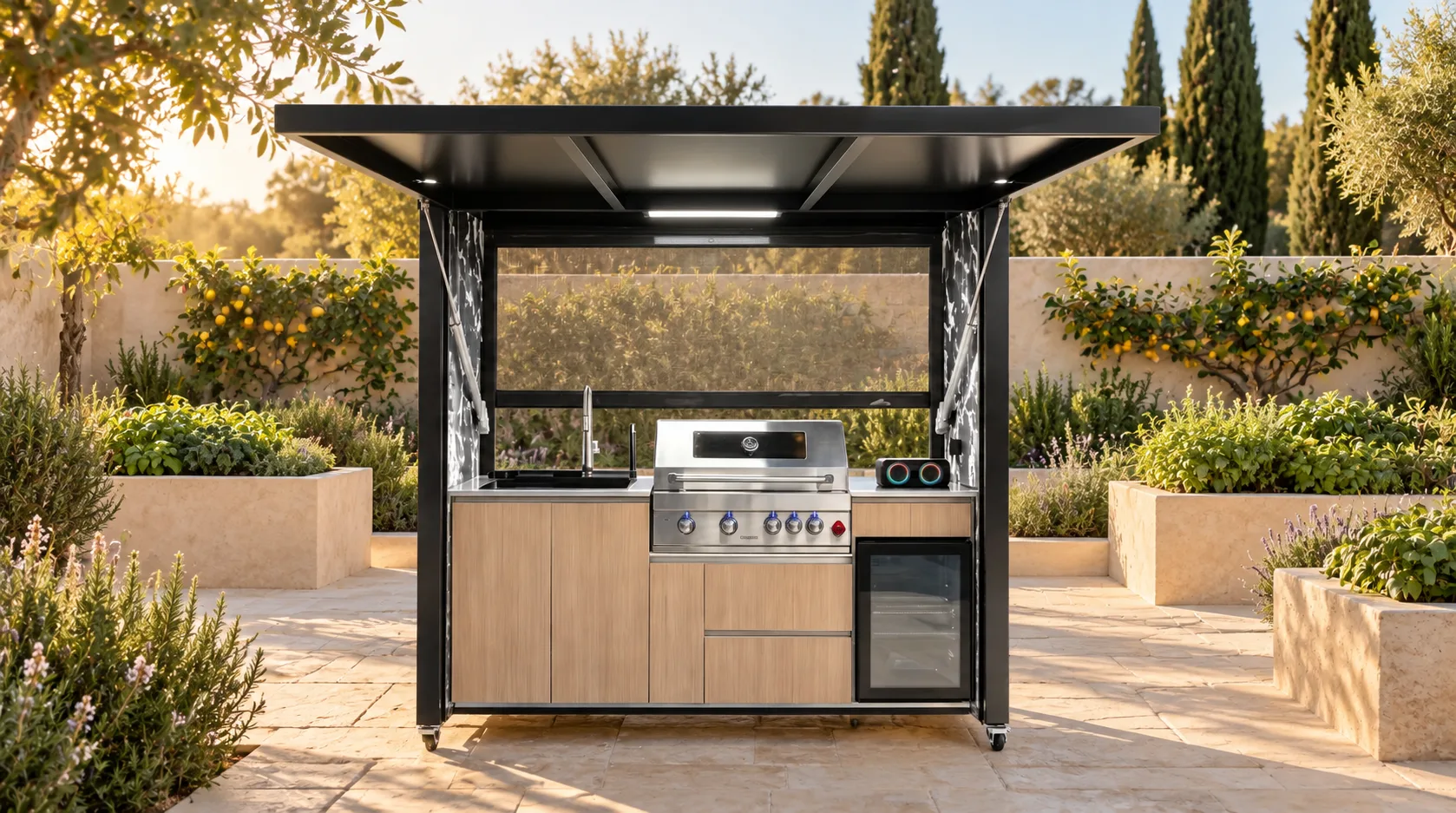
The short answer: Place the herb or vegetable garden close enough for convenient harvesting but outside the grill’s heat, smoke, grease, and fire-clearance zone. Use a clean paved route between garden and kitchen, keep irrigation away from appliances and cabinetry, and separate food-washing and wastewater plans from landscape watering. Exact placement must follow the kitchen and appliance documentation plus qualified local professional guidance.
Plan a Working Loop, Not Just a Pretty View
The most useful garden-to-kitchen layout supports a simple loop: harvest, rinse appropriately, prepare, cook, serve, and clean. If the garden is too far away, it becomes decorative rather than practical. If it is too close, guests may step into beds, irrigation may spray the kitchen, and plants may crowd hot or ventilated equipment.
Draw the complete kitchen in its open operating condition, including grill hood, sink, refrigerator, drawers, shutters, wheels or feet, and service panels. Then draw garden beds at their mature height and width. Add the path, gates, hose locations, compost route, and space required to kneel or use garden tools.
Keep Heat and Smoke Away From Edible Plants
Do not place delicate herbs directly behind a grill or in a smoke plume. Wind can change direction, and grease particles can settle on nearby foliage. Observe prevailing breezes and the home’s doors, windows, and air intakes, but rely on appliance-specific clearances and professional review for final placement.
A low wall or landscape buffer may organize the zones, but it must not trap heat, block ventilation, or obstruct service. Never attach planters, trellises, or irrigation lines to the kitchen unless the exact product documentation allows it.
Compare Three Garden Relationships
| Layout | Potential benefit | What to verify |
|---|---|---|
| Raised herb beds beside the prep side | Quick harvest and good visibility | Spray, mature growth, service access, and clean circulation |
| Vegetable garden across a paved path | Clear separation between cooking and soil | Path width, drainage, lighting, and tool traffic |
| Edible planting behind a low wall | Organized look and controlled foot traffic | Ventilation, heat, irrigation, wall drainage, and reach |
The best arrangement depends on the kitchen configuration, sunlight, wind, irrigation, garden maintenance, and property circulation. Do not choose the sunniest garden location if it puts plants or workers in the kitchen’s hot zone.
Separate Irrigation From the Kitchen
Sprinklers and overspray can wet cabinets, appliance openings, controls, outlets, wheels, and the working surface. Drip irrigation may reduce spray, but emitters and tubing still need maintenance and can leak. Route irrigation so it remains visible and serviceable without crossing kitchen utilities or anchoring locations.
Set irrigation schedules so gardeners are not working in wet beds during cooking. Keep shutoffs identifiable. If the patio slopes toward the kitchen, coordinate drainage so irrigation and rainwater do not carry soil or mulch beneath the unit.
Create a Produce-Washing Plan
An outdoor sink can be convenient, but its suitability for food preparation depends on the exact plumbing, water supply, sanitation, and local requirements. Garden soil should not be spread across the main cooking counter. Consider a dedicated harvest basket and a defined first-rinse procedure that keeps muddy produce separate from ready-to-eat food.
Do not drain sink water, grease, cleaners, or food residue into garden beds unless a qualified local professional and authority confirm an approved system. Plumbing and wastewater are different from irrigation. Follow applicable health and plumbing requirements.
Control Soil, Mulch, and Tool Traffic
Use a stable path that can be cleaned without directing debris into the garden or kitchen. Loose mulch and gravel can migrate beneath wheels, into drains, or across the cooking floor. Provide a place for muddy tools, gloves, baskets, and boots outside the food-preparation zone.
Raised beds can improve organization, but their edges should not narrow circulation or create a collision point near open doors and drawers. Keep wheelbarrow and maintenance access separate from guest seating whenever possible.
Manage Pests Without Contaminating Food Areas
Edible gardens can attract insects and wildlife; outdoor kitchens can attract pests when food residue, grease, trash, or standing water remains. Good sanitation is more dependable than unsupported claims about a particular plant. Clean spills promptly, empty trash, store food appropriately, and keep garden produce harvested.
Do not apply pesticides or garden chemicals near open food, cooking surfaces, appliances, or utensils. Follow product labels and local guidance, and consult qualified gardening or pest professionals for the specific crop and site.
Choose Plants for the Real Microclimate
The kitchen roof, walls, screens, and surrounding architecture can change sunlight, wind, and rain. Observe how many hours of direct light each bed receives across seasons. Place heat-sensitive greens differently from sun-loving herbs rather than treating the garden as one uniform zone.
Account for mature height. Rosemary, citrus, vines, and other plants can block views, shutters, lights, or service panels if placed too close. Avoid thorny or irritating plants beside the main path. Local extension resources can help match edible plants to regional conditions.
Coordinate Utilities and Safety
Gas, electrical, plumbing, drainage, fire clearances, structural support, and permits must follow model-specific kitchen and appliance documentation plus local requirements. Qualified local professionals and authorities control those decisions. Garden beds should not hide shutoffs, disconnects, vents, or utility access.
Before digging, locate underground utilities. Future bed renovation should not threaten gas, electrical, water, or drainage lines. Photograph utility routes before they are covered and keep an accurate site plan.
Garden-to-Kitchen Planning Checklist
- Draw the kitchen in its fully open operating state.
- Mark grill heat, smoke, ventilation, and service areas.
- Place edible beds outside those zones at mature size.
- Create a stable paved harvest and maintenance route.
- Keep irrigation spray and leaks away from kitchen components.
- Separate produce rinsing from ready-to-eat food preparation.
- Do not send kitchen wastewater into beds without an approved plan.
- Provide storage for tools, baskets, gloves, and garden supplies.
- Keep pesticides and fertilizers away from food and cooking surfaces.
- Map utilities before building or digging.
Information to Include in a Quote Request
Send patio dimensions, photos, garden-bed locations, sun and wind observations, irrigation routes, surface type, utility availability, preferred appliances, and the intended path from garden to kitchen. Note whether the beds exist or are part of a new landscape plan.
Review the META LIFESTYLE outdoor kitchen collection for a configuration direction, then coordinate the exact open dimensions and service needs with the edible landscape design.
Frequently Asked Questions
How close can herbs be to an outdoor grill?
There is no universal distance. Follow the exact grill and kitchen clearances and consider heat, smoke, grease, wind, plant growth, and maintenance. Qualified professionals should review the final layout.
Can I grow herbs in planters attached to the kitchen?
Do not attach anything unless the product documentation explicitly permits it. Planters add weight, moisture, irrigation, and maintenance risks and can block ventilation or access.
Can the outdoor sink water the garden?
Do not assume so. Sink discharge may contain food, grease, soap, or cleaners and is subject to plumbing and environmental requirements. Obtain local professional and authority guidance.
Will a vegetable garden attract pests to the kitchen?
It can increase wildlife activity, while kitchen residue and trash can add attraction. Regular harvesting, sanitation, sealed waste, drainage, and site-specific pest guidance help manage risk.
What path surface works between the garden and kitchen?
Choose a stable, cleanable, drainable surface suited to the site. Avoid materials that migrate into appliance or wheel areas. A local professional should coordinate slope and drainage.
Who should coordinate the design?
The kitchen supplier or installer, landscape professional, relevant licensed trades, and local authorities should review their scopes using the same site plan.
Request an Outdoor Kitchen Quote
Request a quote from META LIFESTYLE with dimensions, photos, garden layout, utility notes, irrigation information, preferred appliances, and project location. Both numbers below are official META LIFESTYLE WhatsApp contacts: