Pro Program Live Chat +8619050185756

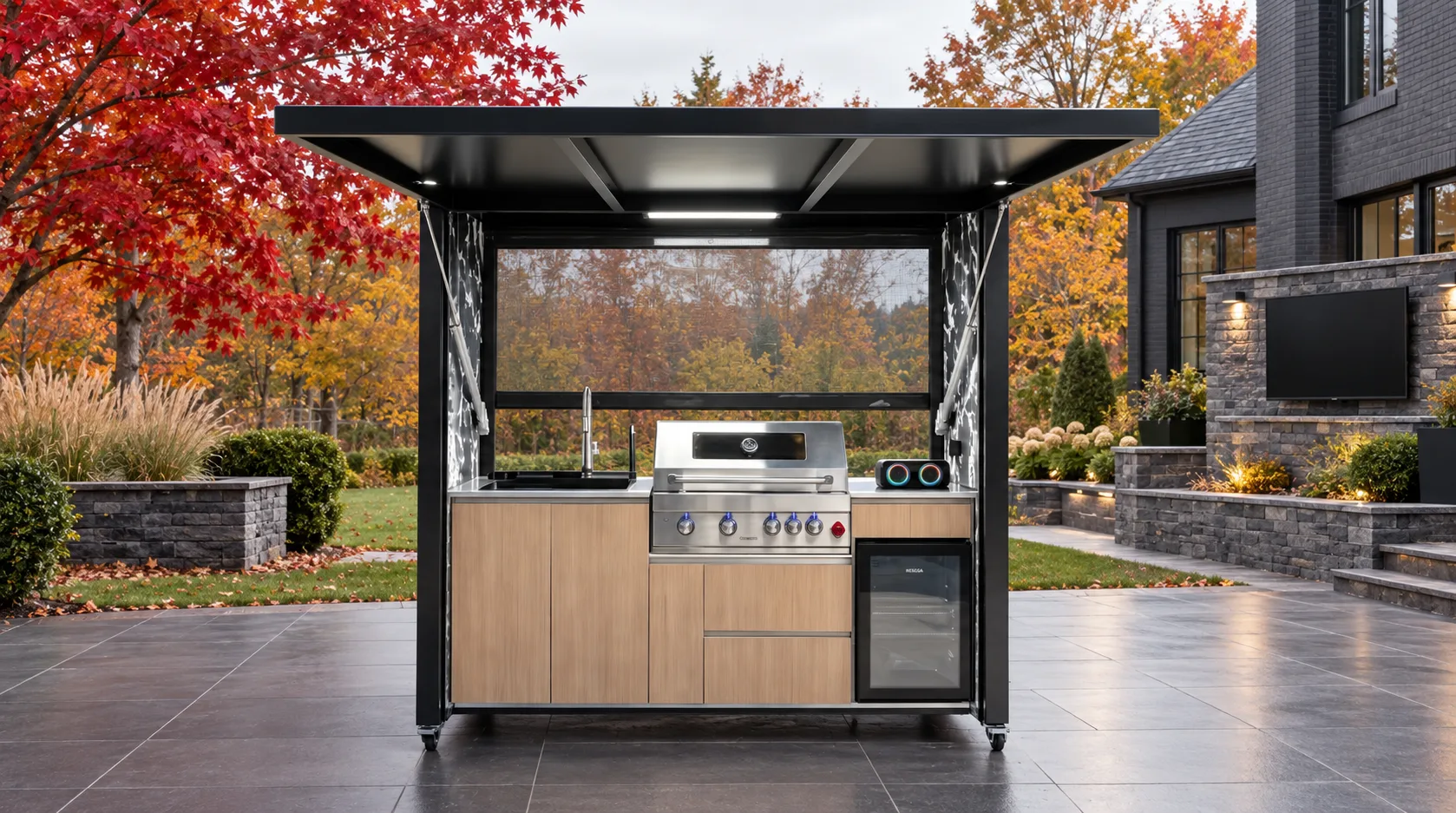
A game-day outdoor kitchen works best when the cook can see the screen, guests can reach drinks without entering the hot zone, and food moves in one clear direction from cold storage to prep, cooking, serving, and cleanup. Start with sightlines and circulation before choosing extra appliances. The goal is not to copy a sports bar; it is to create a comfortable backyard where the host can cook safely, follow the action, and reset the space without missing the entire event.
Draw the Viewing Cone First
The screen should be visible from the main cooking position, serving area, and most seats without forcing anyone to stand in a traffic aisle. Mark a viewing cone on the plan from each important location. Then test it at the actual mounting height using a cardboard template or temporary screen.
Avoid placing the television directly behind the grill, where heat, smoke, grease, and steam can travel toward it. A screen behind guests may tempt people to turn chairs into the service path. The best location is often offset from the kitchen, with the cook seeing it across a clear counter rather than over a hot appliance.
Check glare at kickoff time
Observe the patio during the hours when games are usually watched. A screen that looks clear at noon may reflect the sky or low sun later in the day. Note seasonal changes, nearby windows, pale walls, and wet paving. Shade structures, screens, orientation, or landscaping may help, but every solution must preserve required appliance ventilation and fire clearances.
Create Two Traffic Loops
A social kitchen needs one route for the cook and another for guests. The cook’s loop should connect cold storage, prep, grill, landing counter, and sink. The guest loop should reach beverages, plates, condiments, seating, and waste without crossing the cook’s path.
Place the most frequently used guest items at the outer edge of the kitchen. If everyone must walk behind the grill to get a drink, the layout will feel crowded even on a large patio. Keep gates, steps, and doors out of the serving queue, and maintain a clear route back to the indoor kitchen.
Choose Capacity From the Menu
Equipment decisions should follow what you actually plan to serve. A menu built around burgers and vegetables has different prep, refrigeration, and holding needs from smoked foods, pizzas, or a taco bar. Write a typical menu for six guests and another for your largest realistic gathering.
List which items will be prepared indoors, which must stay cold, which require heat, and how finished food will be held and served. This reveals whether you need more refrigerated space, more uninterrupted counter, a second landing zone, or simply better organization. Do not add appliances without confirming that the exact outdoor-kitchen configuration supports their dimensions, ventilation, utilities, and clearances.
Separate Raw Prep, Hot Cooking, and Serving
Game-day cooking often happens in batches. Protect a clean landing area for finished food that does not overlap with raw preparation. Use separate utensils and cutting surfaces as appropriate, and keep coolers or beverage tubs away from food-prep counters where condensation can spread.
A visible counter edge can act as the handoff point: the cook places finished dishes there, and guests collect them from the opposite side. Keep this surface away from grill heat and lid movement. Never allow decorative trays, paper goods, or team banners to encroach on manufacturer-required clearances.
Compare Three Hosting Layouts
| Layout | Works well for | Potential problem |
|---|---|---|
| Straight kitchen facing the screen | Compact patios and direct cook sightline | Guests may queue in front of the work counter |
| L-shaped kitchen with service end | Separating drinks and serving from cooking | Inside corner and appliance doors can conflict |
| Freestanding kitchen with a separate media wall | Clear destination and flexible seating | Utilities, drainage, wind exposure, and longer travel from the house |
Whichever layout you choose, draw appliance doors, grill lids, refrigerator ventilation, drawers, waste bins, and walking paths at full extension. A layout is not complete until those moving parts can operate simultaneously.
Treat the Television as Outdoor Equipment
An indoor television is not automatically suitable for a covered patio. Select equipment intended for the actual exposure and follow its installation instructions. Moisture, temperature, dust, sunlight, and wind-driven rain still matter under a roof or overhang.
Mounting surfaces, brackets, receptacles, signal connections, disconnects, and cable routes must be appropriate for the location. Do not attach a screen or bracket to an outdoor kitchen roof or structural member without written approval. Qualified local professionals should handle electrical work, and model-specific documentation controls outdoor ratings and installation.
Design Sound for Conversation
A screen that can only be heard at maximum volume will make the patio tiring and may disturb neighbors. Place outdoor-rated speakers so sound covers the seating area evenly rather than projecting across the property line. Keep controls easy to reach, and avoid mounting anything where it interferes with screens, doors, lights, or service access.
Before permanent installation, test a portable speaker at realistic volume. Listen from the cooking position, seating area, bedroom windows, and nearest property boundary. The objective is intelligibility, not maximum output.
Prepare for Weather and Seasonal Use
Game schedules continue through changing temperatures and shorter days. Plan task lighting at the grill, ambient light for seating, and safe illumination on steps and paths. Fixtures and controls must be outdoor-rated and professionally installed.
Wind can affect smoke, loose serving items, and viewing comfort. Rain can enter from the side even when the kitchen has a roof. In cold climates, water lines may need winterization. Gas, electricity, plumbing, drainage, fire clearances, structures, anchoring, and permits must follow model-specific documentation and the decisions of qualified local professionals or authorities.
Build a Fast Reset Routine
After the final whistle, cleanup should not require moving through a crowd of chairs. Put waste and recycling near the guest exit but outside the cooking aisle. Reserve closed storage for tools, cleaning supplies, and serving pieces, and create a dedicated place for dirty dishes awaiting the trip indoors.
Wipe grease before it hardens, remove food promptly, and follow the care instructions for every surface and appliance. A fitted protective routine can be more valuable than another gadget because it makes the kitchen easier to use for the next gathering.
Game-Day Design Checklist
- Mark screen sightlines from the grill, prep zone, and all primary seats.
- Test glare and sun angles during typical viewing hours.
- Create separate cook and guest circulation routes.
- Place beverages, plates, and condiments outside the hot zone.
- Protect distinct raw-prep and finished-food landing areas.
- Confirm that every media device and appliance is rated for its exact location.
- Draw all doors, lids, drawers, screens, and service panels fully open.
- Plan outdoor-rated power, lighting, and sound with qualified professionals.
- Check smoke direction, neighbor impact, drainage, and weather exposure.
- Measure the delivery route and preserve future service access.
Explore the META LIFESTYLE outdoor kitchen collection for a complete open configuration, then match the exact model documentation to your patio, menu, and viewing plan.
Frequently Asked Questions
Should the television be above the grill?
Usually that creates avoidable heat, smoke, grease, glare, and service conflicts. Place the screen where it is visible from the cooking area without exposing it to appliance exhaust or violating the television’s installation instructions.
Can I use an indoor TV on a covered patio?
Do not assume so. A covered outdoor location can still expose electronics to humidity, temperature changes, dust, and wind-driven moisture. Use equipment approved by its manufacturer for the actual environment.
Where should drinks be stored during a party?
Put the beverage area where guests can reach it without crossing the grill or prep aisle. Confirm that any refrigerator or ice equipment is outdoor-rated and receives the required ventilation, drainage, and electrical service.
How do I keep smoke away from the screen and guests?
Study prevailing winds and follow the grill manufacturer’s ventilation and clearance requirements. Do not add unapproved exhaust equipment. The final position should be reviewed by qualified local professionals.
Do I need a separate circuit for the television and outdoor kitchen?
Electrical loads and circuit requirements depend on the exact equipment and local rules. A licensed electrician should design outdoor power, protective devices, wiring methods, grounding, bonding, and disconnects.
How do I request a game-day outdoor-kitchen quote?
Send your site dimensions, photos, expected guest count, sample menu, screen location, seating plan, utility information, and preferred equipment through the META LIFESTYLE Request a Quote page. Both +8619050185756 and +1 (626) 735-5685 are official META LIFESTYLE WhatsApp contacts.
Keep the Host in the Game
The best game-day kitchen is organized enough that the host does not spend the event managing bottlenecks. Protect the cook’s sightline, move guests toward a separate service edge, choose outdoor-rated media, and plan cleanup from the beginning. With those fundamentals resolved, the kitchen becomes part of the gathering instead of a workstation isolated from it.