Pro Program Live Chat +8619050185756

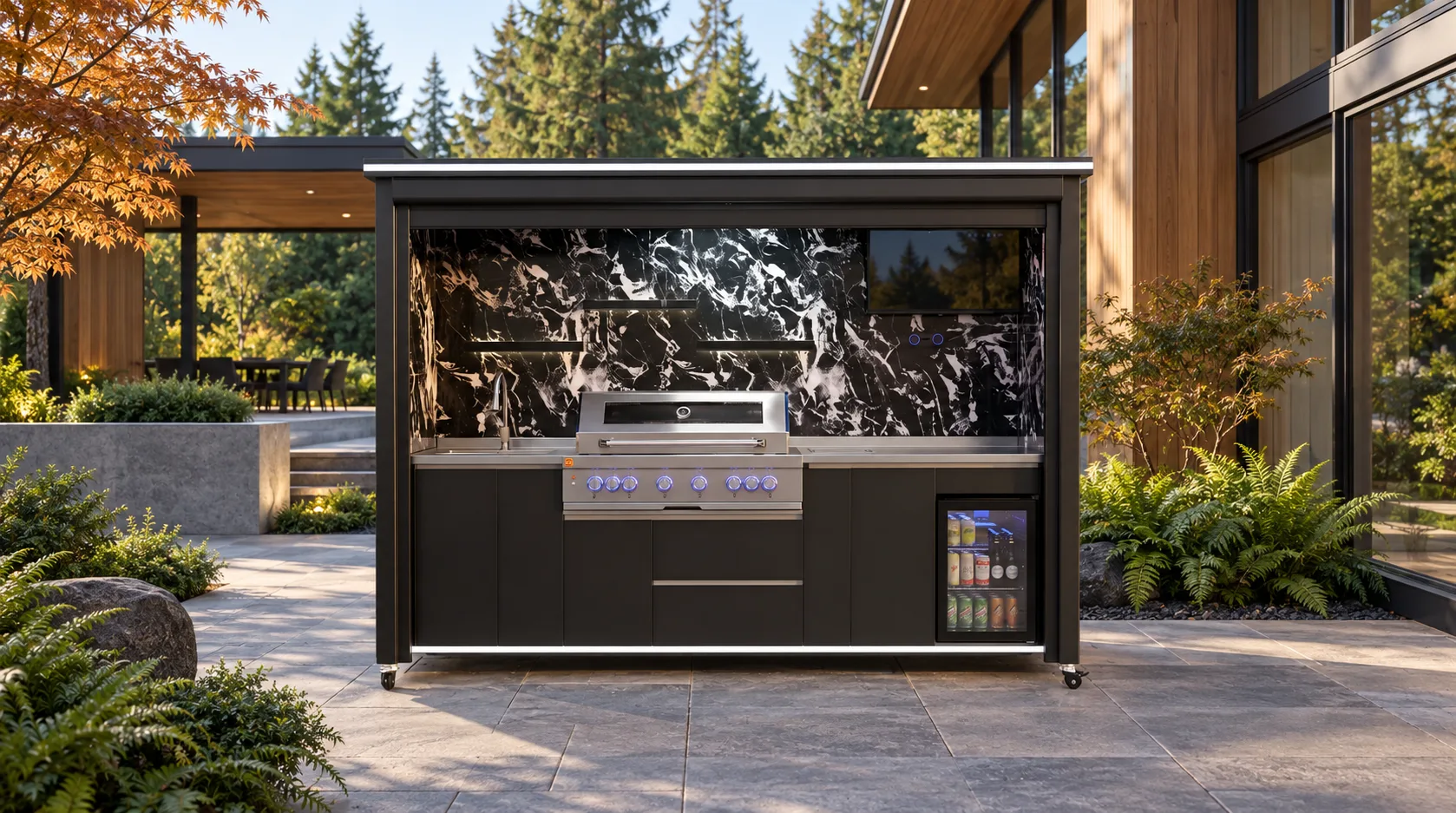
Plan outdoor-kitchen grease control by containing splatter near the grill, providing washable landing surfaces, keeping grease away from drains and landscaping, and preserving access for cleaning and service. Select appliances and materials with documented outdoor care instructions, and design a routine that can be completed without spraying electrical components or pushing grease into the site drainage system.
A cleanable kitchen begins with layout. The grill, backsplash, countertop, cabinets, floor, ventilation, waste area, sink, and shutter or enclosure all interact. Use the exact META LIFESTYLE configuration and appliance manuals, then have qualified local professionals verify gas, electricity, plumbing, fire clearances, ventilation, drainage, and permits.
Map Where Grease Actually Travels
Grease does not remain inside the grill. It can collect on grates, trays, lids, controls, nearby counters, backsplashes, floors, utensils, and ventilation components. Wind and cooking method affect splatter and smoke. Observe the active cooking zone and keep porous furniture, planters, and guest seating outside it.
Draw the grill lid in the open position and mark required clearances. Leave enough room to remove grease trays and service parts without pulling the appliance into a walkway.
Choose Surfaces From Care Documentation
Countertops, backsplashes, cabinets, and floors should be selected for documented outdoor use and compatible cleaning methods. Appearance alone does not reveal stain resistance, heat limits, coating care, or chemical compatibility.
Request current samples and written instructions. Test approved cleaners on an inconspicuous area. Avoid abrasive pads, strong solvents, acidic products, bleach, or pressure washing unless the relevant manufacturer permits them.
Use a Practical Backsplash and Landing Zone
A backsplash can make routine wiping easier and protect the rear surface, but it must also satisfy heat, fire, ventilation, and appliance clearances. Joints, edges, outlets, lights, and mounts should not create unreachable grease traps.
Provide landing space for raw ingredients and finished food so trays do not sit on grill controls or appliance tops. Separate clean serving items from greasy tools. The exact dimensions should be coordinated with the selected appliance and configuration.
Grease-Control Planning Checklist
- Obtain grill, hood, cabinet, and surface cleaning instructions.
- Show grease trays and removable parts in their service positions.
- Provide washable landing areas on appropriate sides of the grill.
- Keep porous furniture and planting outside the splatter zone.
- Protect electrical controls, outlets, and lighting from cleaning water.
- Keep grease and food solids out of sinks, drains, and stormwater.
- Provide a lidded, accessible waste location away from heat.
- Maintain clear access to shutoffs and appliance panels.
- Plan wind and ventilation so exhaust is not trapped.
- Create daily, periodic, and professional-service routines.
Do Not Wash Grease Into the Drain
A sink can support food preparation and cleanup, but fats, oils, grease, and food solids should not be poured into plumbing or site drains. They can clog piping and create environmental or local-compliance problems. Use appropriate collection and disposal practices for the jurisdiction.
A qualified plumber should design the sink, trap, supply, drain, winterization, and any required treatment. Do not assume an outdoor sink can discharge to the ground, landscape, or storm drain.
Control Cleaning Water
Pressure washing the entire kitchen may drive water and debris into cabinet openings, electrical equipment, burners, controls, wheels, or seals. Follow the cleaning method specified for every component. Use controlled wiping and rinsing where approved.
The patio should drain without carrying greasy water toward a pool, house, neighbor, planting bed, or storm system. A qualified drainage professional and local authority should determine acceptable discharge and site design.
Plan Ventilation for the Exact Installation
A roof, shutter, wall, screen, or enclosure changes how heat, smoke, and grease-laden air move. Do not close a shutter around hot or operating equipment. Follow the grill and kitchen instructions for cooling and enclosure.
If a hood or other ventilation equipment is required, use a system approved for the appliance and installation. Duct, filter, clearance, cleaning, discharge, and fire requirements need professional design. A comfort fan is not a substitute for required appliance ventilation.
Keep Grease Away From Electrical Components
Lighting, television equipment, controls, refrigeration, outlets, and shutter motors should remain serviceable and protected according to their instructions. Grease film can attract dust and complicate cleaning. Locate equipment outside direct splatter where possible.
A qualified electrician should design outdoor circuits, grounding, protection, disconnects, and cable routes. Never spray electrical equipment or open an enclosure to clean internal components unless a qualified service procedure allows it.
Make Waste Easy to Remove
Place a lidded waste container near the prep and cleanup zone but away from heat and guest seating. The path to remove trash should not cross behind the active grill. Include storage for approved grease containers, disposable towels, and cleaning tools without mixing them with food or serving ware.
Empty waste promptly in warm weather. Follow local rules for used cooking oil and grease disposal rather than placing liquid grease loosely in household trash.
Separate Daily Cleaning From Deep Service
After Each Use
Follow the appliance procedure for grates, cooking surfaces, trays, counters, and spills. Allow equipment to cool as directed. Remove food and waste, wipe approved surfaces, and leave ventilation or doors positioned according to the manuals.
Periodic Cleaning
Inspect backsplash edges, cabinet interiors, refrigeration seals, wheels, tracks, lights, drains, and roof channels. Clean only with approved products and keep water controlled.
Qualified Service
Schedule professional inspection when burners, gas components, electrical equipment, motors, ventilation systems, or inaccessible areas require disassembly. Do not turn a cleaning task into an unapproved repair.
Plan Around a Rolling Shutter or Enclosure
Before closing, confirm appliances are off and cooled, grease trays are handled, food and waste are removed, and the shutter travel path is clear. A closed enclosure can hide residue and trap moisture if the required shutdown routine is skipped.
Clean shutter tracks and bottom rails using the documented method. Do not lubricate or modify them with generic products. If the shutter binds or moves unusually, stop operation and use qualified service.
Consider Wind and Nearby Landscaping
Wind can carry smoke and grease toward walls, windows, seating, and plants. Plan the kitchen so normal exhaust moves away from sensitive areas, but remember that wind changes. Do not add improvised wind barriers around a grill.
Keep branches, vines, and leaves away from heat, ventilation, roofs, and moving components. Avoid irrigation overspray that mixes with grease on cabinets or paving.
Choose Flooring for Cleaning and Safety
The surface should support the verified kitchen weight, remain stable under wheels or supports, and be suitable for grease, rain, and approved cleaning. Evaluate slip conditions when wet or oily, not only when the patio is dry.
Do not use loose mats where they can catch wheels, block drainage, or create a trip hazard. A paving professional should coordinate joints, slope, edge support, and maintenance.
Document the Maintenance Plan
Keep a list of surface names, finish codes, appliance models, approved cleaners, cleaning intervals, and service contacts. Record photos after installation and during inspections. This prevents future owners or staff from using incompatible products.
Structural ratings, foundations, anchoring, wind and snow design, gas, electricity, plumbing, fire safety, ventilation, drainage, and permits must follow exact model documentation and qualified local professionals or authorities.
Review META LIFESTYLE’s outdoor kitchen collection and request care information for the exact configuration.
Frequently Asked Questions
Can I pressure-wash an outdoor kitchen?
Only if every affected product manufacturer permits the method. Pressure can drive water into electrical, burner, cabinet, motor, or sealed components. Controlled cleaning is often safer.
Can grill grease go down the outdoor sink?
Do not pour fats, oils, or grease into the sink. Use approved collection and local disposal practices, and keep food solids out of drainage.
How often should grease trays be cleaned?
Follow the exact grill manufacturer’s instructions and inspect them regularly. Cooking volume and food type affect buildup, so do not rely on a universal interval.
Should I close the kitchen shutter immediately after cooking?
No unless the exact product procedure permits it. Appliances must be shut down and cooled as directed, and the interior should be cleaned and prepared before closure.
What cleaner is safe for powder-coated cabinets?
Use only cleaners and tools approved in the cabinet or finish documentation. Test on an inconspicuous area and avoid assuming a household product is compatible.
Request a META LIFESTYLE Quote
For outdoor kitchen configuration and care information, visit the META LIFESTYLE contact page. Both numbers below are official META LIFESTYLE WhatsApp contacts: +8619050185756 and +1 (626) 735-5685. Ask for model-specific surface, appliance, shutter, and cleaning documentation when requesting a quote.