Pro Program Live Chat +8619050185756

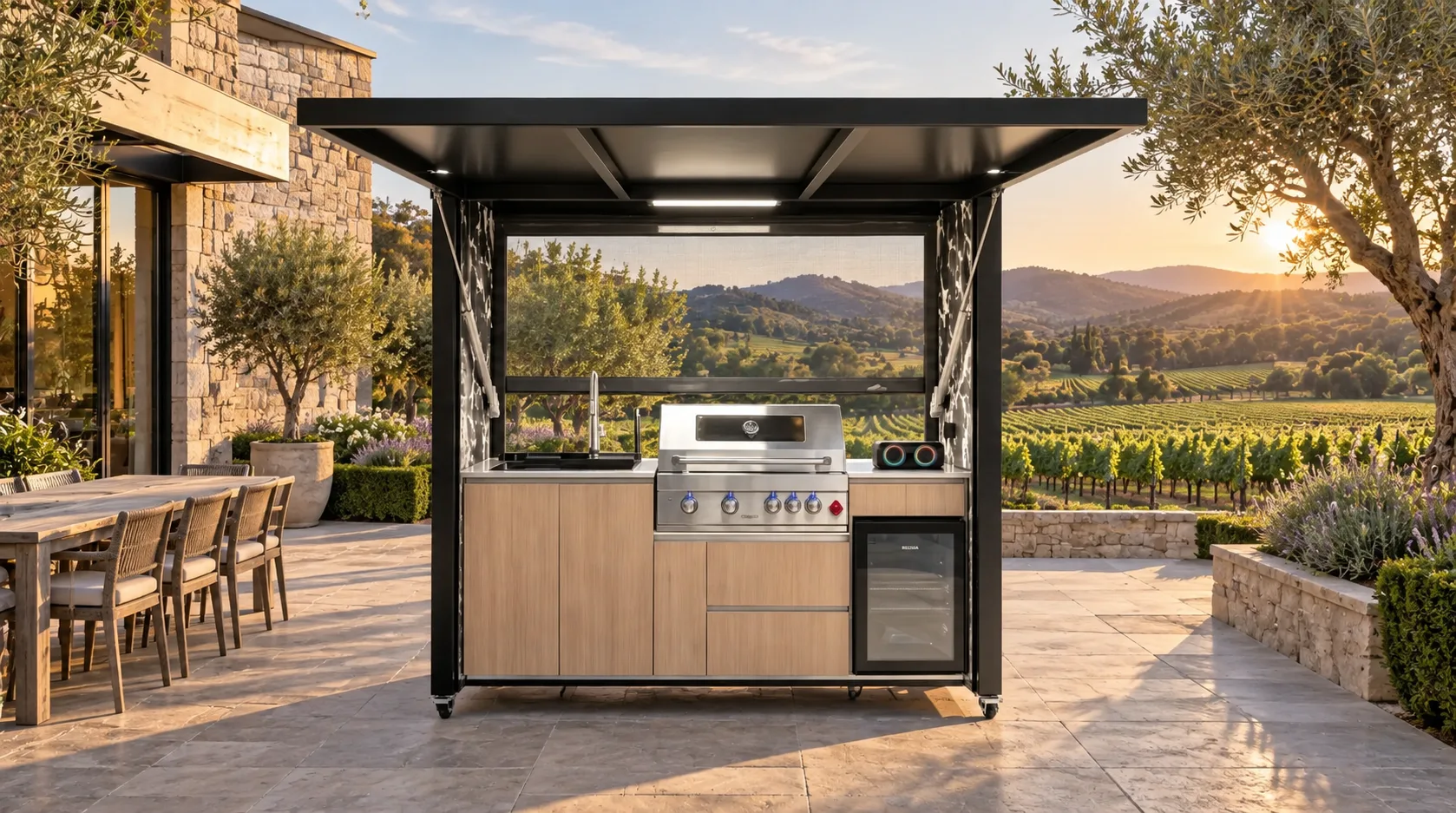
An outdoor kitchen works well for a private-chef dinner when the chef reviews the actual equipment, utilities, counter space, cold storage, cleanup plan, and guest route before the event. The most valuable feature is not the longest appliance list. It is a predictable workspace where ingredients arrive, prep remains organized, hot food lands safely, and plated dishes reach guests without crossing raw food or waste.
Hiring a chef does not automatically turn a residential outdoor kitchen into a commercial facility. The home, product, appliances, local rules, and food-safety plan still govern what can happen. Share accurate information and let the chef decide which tasks belong outdoors and which require the indoor kitchen or off-site preparation.
Send a kitchen brief before discussing the menu
Provide clear photos, dimensions, appliance model information, available power and fuel, sink details, refrigerator capacity, counter measurements, lighting, access, and the distance to the indoor kitchen. Include stairs, gates, parking, and the route from unloading to prep.
Do not describe a grill, refrigerator, burner, or outlet by appearance alone. A chef needs exact capabilities and limitations from model-specific documentation. If records are unavailable, say so and avoid promising that a particular technique or appliance will work.
Confirm what the chef brings
Ask for the footprint, power, fuel, ventilation, and weather requirements of any portable equipment. Indoor appliances and improvised high-output burners should not be used outside simply because space is available. All equipment must be suitable for the location and installed or operated according to manufacturer guidance.
Agree on who supplies pans, boards, knives, serving platters, towels, sanitation materials, coolers, and waste containers. Duplicate equipment creates clutter; missing equipment causes unsafe improvisation.
Design separate chef and guest routes
Map the path from unloading to cold holding, prep, cooking, plating, dining, and cleanup. Guests should reach seats and drinks without passing directly behind the cook. The chef should reach the indoor kitchen without carrying hot food through a crowded doorway.
Place beverages and appetizers at a separate station. If guests want to watch the cooking, create a clear observation edge outside the hot and raw-food zones. Bar stools pressed against the work counter can consume the landing space a chef needs most.
| Event zone | Primary requirement | Common planning mistake |
|---|---|---|
| Receiving | Short, clear route from vehicle to storage | Stairs and gates discovered on event day |
| Cold holding | Verified temperature and realistic capacity | Assuming beverage refrigeration fits full meal prep |
| Preparation | Uncluttered washable surface and tools | Decor, drinks, and guest bags occupying the counter |
| Cooking | Documented appliances, clearances, and ventilation | Adding unapproved portable heat equipment |
| Plating | Protected landing area near service route | Using the same surface for raw prep |
| Cleanup | Water, waste, dish, and grease plan | Assuming every item can use the outdoor sink |
Preserve flexible counter space
A private chef often needs more clear counter than homeowners expect. Cutting boards, sheet pans, ingredient containers, garnishes, and finished plates all require temporary landing. Remove decorative objects before arrival and define one counter as plating-only.
Measure the largest platter and pan against the available depth. Keep handles out of circulation. A stable movable table may add staging space if it is outdoor-suitable and does not block appliance doors, post bases, ventilation, or required access.
Be realistic about refrigeration
Ask what arrives cold, what must remain cold, and how often storage will be opened. An outdoor refrigerator should be used only as documented and verified under actual conditions. Do not overload it or expect it to rapidly cool warm food.
The chef may use professionally managed coolers or bring ingredients in planned batches. Keep beverages separate so guests do not repeatedly open ingredient storage. Follow current authoritative food-safety guidance and use appropriate thermometers.
Coordinate cooking methods with the site
Finalize the menu only after the chef understands the grill and available equipment. Gas, electricity, ventilation, fire clearances, fuel, and weather all affect what is practical. Qualified local professionals and authorities control permanent installation, permits, and fire requirements.
Do not allow portable fryers, burners, heaters, or cords to appear without advance review. A roof, shutter, wall, screen, or landscaping feature can change clearance and airflow. Model-specific documentation always controls.
Plan plating and table service
A plated dinner needs a clean line for multiple plates, garnishes, and pickup. Position the plating counter away from raw food and guest drinks. Decide whether servers approach from one side and where used dishes return.
For family-style service, reserve a landing point near the table. Heavy platters should not cross wet steps or uneven paving. Test the route before furniture is finalized.
Provide lighting without glare
The chef needs clear task light at prep, grill controls, sink, and plating. Guests need softer light at the table. Put these layers on separate controls and prevent bright sources from shining into eyes or reflecting from glass doors.
Permanent outdoor electrical work must follow product documentation and applicable requirements. Extension cords across circulation paths are not a substitute for planned power.
Make cleanup part of the contract
Clarify who washes cookware, where dishes go, how grease and food waste are handled, and what time the kitchen is restored. The outdoor sink may not suit every pan or volume of cleanup. Plumbing, potable water, wastewater, grease, and drainage must follow the approved site design.
Provide covered waste containers outside the food-prep path. Do not discharge grease, cooking liquid, food scraps, or cleaners into landscaping or storm drains. Protect refrigerator, grill, counters, shutters, and cabinetry according to their cleaning instructions.
Create a weather decision point
Agree on when the dinner moves indoors or changes format because of heat, cold, rain, wind, lightning, smoke, or air quality. A covered outdoor kitchen is not a severe-weather shelter. Use authoritative forecasts and follow product-specific operating guidance.
Keep an indoor backup surface and route available. Do not wait until food is cooking to decide how equipment and guests will move.
Private-chef readiness checklist
- Send dimensions, photos, access, utilities, and appliance documentation.
- Confirm the chef’s equipment, fuel, power, and ventilation needs.
- Separate receiving, cold holding, raw prep, cooking, plating, and cleanup.
- Keep beverages and guests outside the chef’s work route.
- Clear and measure counter space for pans and multiple plates.
- Verify refrigerator capacity and food temperatures.
- Plan task lighting, power, waste, grease, water, and dishes.
- Test unloading and service paths with furniture in place.
- Agree on weather triggers and an indoor backup.
- Follow model-specific appliance, structure, anchoring, drainage, and permit requirements.
Request a chef-ready configuration discussion
Review META LIFESTYLE outdoor kitchens and prepare site dimensions, photos, utilities, guest count, preferred service style, and the equipment information a chef would need. Use the Request a Quote contact page. Both +8619050185756 and +1 (626) 735-5685 are official META LIFESTYLE WhatsApp contacts.
Frequently Asked Questions
Should the chef see the outdoor kitchen before the event?
For a complex menu, an on-site visit or detailed video walkthrough can reveal access, counter, utility, lighting, and equipment limitations before purchasing ingredients.
Can a private chef bring extra burners?
Only when the exact equipment is approved for outdoor use and the proposed location meets manufacturer, fuel, electrical, ventilation, fire, and local requirements. Never assume portable equipment is suitable.
Is an outdoor refrigerator enough for a chef dinner?
It depends on verified temperature, capacity, loading, weather, and menu. The chef may require managed coolers or indoor refrigeration rather than overloading a small unit.
How much counter space does a chef need?
There is no universal number. Ask the chef to list boards, pans, plates, and plating style, then test those objects on the actual counter while preserving safe landings and circulation.
Who handles cleanup?
Decide in advance whether the chef, servers, homeowner, or another service handles cookware, dishes, waste, grease, and final surface care. Confirm what the outdoor sink and drainage can support.
What information should be included in a quote request?
Send patio and access dimensions, site photos, utilities, desired appliances, guest count, dining style, cold-storage needs, lighting, and any recurring chef or catering use.